
Scroll through skincare content for five minutes and you'll hit a wall of acid warnings. Acids thin your skin. Mixing them wrecks your barrier. One wrong move and you're peeling like a snake. If you've felt nervous about trying an AHA, BHA, or PHA because of what you've read online, you're not alone.
These are some of the most common skincare acids myths we hear at Skinmart. The truth is more reassuring, and more interesting, than the fear-based posts suggest. Sarah Peacock, our CIDESCO-certified skin therapist with 22 years of clinical experience, breaks down what's actually happening on your skin when you use acids, and where these myths come from in the first place.
Myth One: Do Acids Really Thin Your Skin?
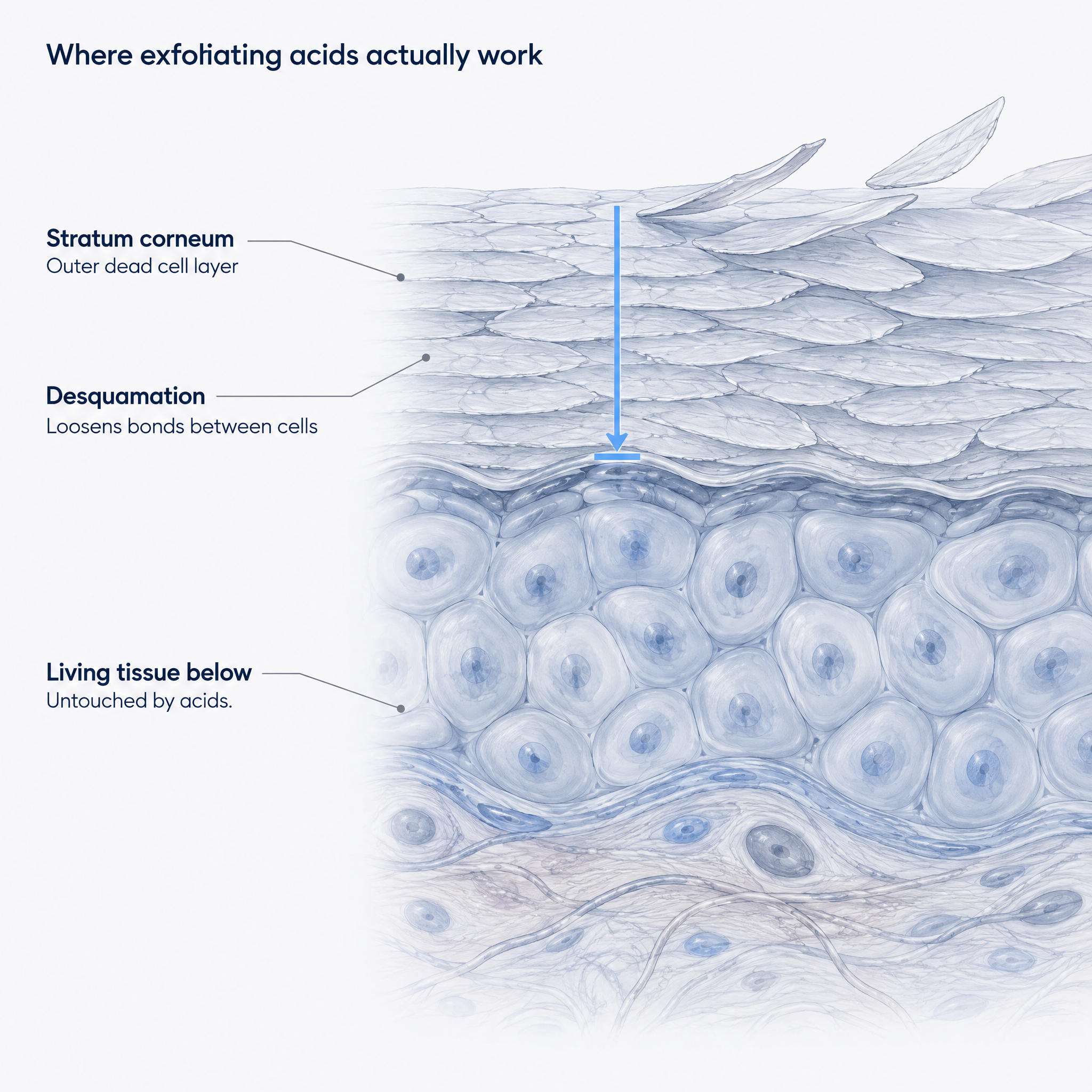
This is the biggest skincare acids myth out there, and it's backwards. Acids don't thin your skin. They work on your stratum corneum, the outer layer of dead skin cells sitting on the surface. Think of it as the top layer of a brick wall that's ready to come off anyway.
AHAs (alpha hydroxy acids like glycolic and lactic acid) and BHAs (beta hydroxy acids like salicylic acid) loosen the bonds between these dead cells. This process is called desquamation, which is just the scientific word for skin shedding. Removing this dead layer doesn't thin your skin. It reveals the healthy skin sitting underneath.
"Confusion often comes from short-term redness or sensitivity," says Sarah Peacock. "People assume that means their skin is getting thinner. In fact, regular low-strength acid use has been shown to support collagen production and improve skin thickness over time." A 2020 review in the Journal of Cosmetic Dermatology found consistent AHA use improved skin firmness and texture, not the opposite.
The real risk isn't the acid itself. It's using too much, too often, without giving your skin room to adjust. That's a different problem, and it's worth understanding properly.
Key Takeaways
- Skincare acids myths, like the idea that acids thin your skin, cause over-exfoliation automatically, or can never be mixed, don't hold up to science.
- Acids such as AHAs, BHAs, and PHAs work on your skin's outer layer of dead cells, not living tissue, so they support renewal rather than damage.
- Over-exfoliation is real, but it comes from using too much, too often, not from acids themselves.
- Mixing acids can work well once your skin has built tolerance, though starting with one at a time is saf...
Myth Two: Is Over-Exfoliation Actually a Risk?
Yes, but not for the reason most people think. Over-exfoliation happens when you use acids too often, at too high a strength, without building tolerance first. Your skin barrier, the protective layer that keeps moisture in and irritants out, needs time to adapt.
Signs of over-exfoliation include ongoing redness, tightness, stinging with products you used to tolerate, and dryness that won't improve. This isn't the acid damaging your skin permanently. It's your barrier telling you to slow down. You can read more about the warning signs in this guide to common exfoliation mistakes.
"Most over-exfoliation I see comes from good intentions," Sarah explains. "People assume more is better, so they use an AHA and a BHA and a physical scrub, all in the same week. Your skin can't tell the difference between three gentle exfoliants and one harsh one. It just knows it's had too much."
The fix is simple. Start with one acid, two to three times a week, and build up slowly. Give your skin four to six weeks before judging results or adding anything new.
Myth Three: Can You Mix AHAs, BHAs, and PHAs?
This is where things get genuinely useful to understand. Mixing acids isn't dangerous by default. It's about timing, concentration, and knowing your skin's current tolerance.
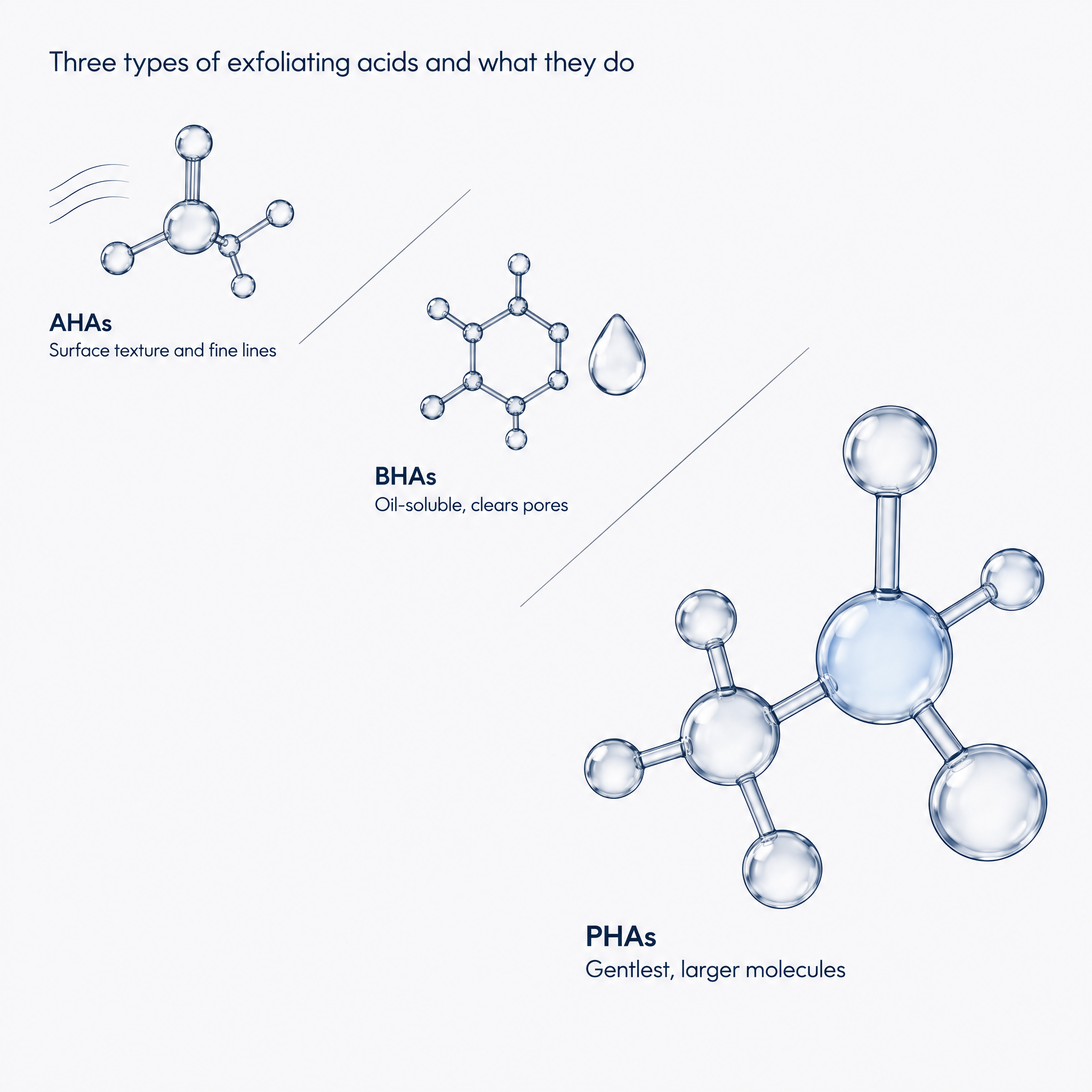
AHAs work on the skin's surface and suit texture, dullness, and fine lines. BHAs are oil-soluble, which means they can get into pores to clear congestion. PHAs (polyhydroxy acids) are the gentlest option, with larger molecules that exfoliate slowly, making them a good starting point for sensitive skin. You can read more about what salicylic acid actually does for your skin if congestion is your main concern.
"I often recommend alternating rather than combining when someone is new to acids," says Sarah. "A BHA in the morning and an AHA at night can work well once your skin has built tolerance. But if you're just starting out, one acid at a time is the smarter approach." This staged approach shapes every acid recommendation in our Skin Blueprint™ assessments.
The exception is layering acids with other strong actives, like retinoids, on the same night. That combination can increase irritation, especially early on. Space them out until your skin shows it's ready for more.
Where Do These Skincare Acids Myths Come From?
Most acid fear comes from a few bad experiences going viral. Someone uses a high-strength peel at home, has a reaction, and posts about it. The story spreads faster than the nuance ever does.
There's also a marketing problem. Some brands promote "gentle" products by implying acids are inherently harsh, even when their own formulas contain them. This creates confusion about what's actually risky versus what's just unfamiliar. For a full breakdown of at-home options, this guide on at-home chemical peels is a good place to start.
"Fear sells just as well as hope does," Sarah notes. "But it doesn't help anyone build a routine that actually works for their skin. My job is to explain the mechanism, not the headline, so people can make an informed choice."
What Does Safe, Effective Acid Use Actually Look Like?
Safe acid use starts with matching the acid to your skin, not the strength to your ego. If you're new to acids, a low-strength PHA or lactic acid is a gentle entry point. If congestion is your concern, a low-strength BHA suits oily or blackhead-prone skin.
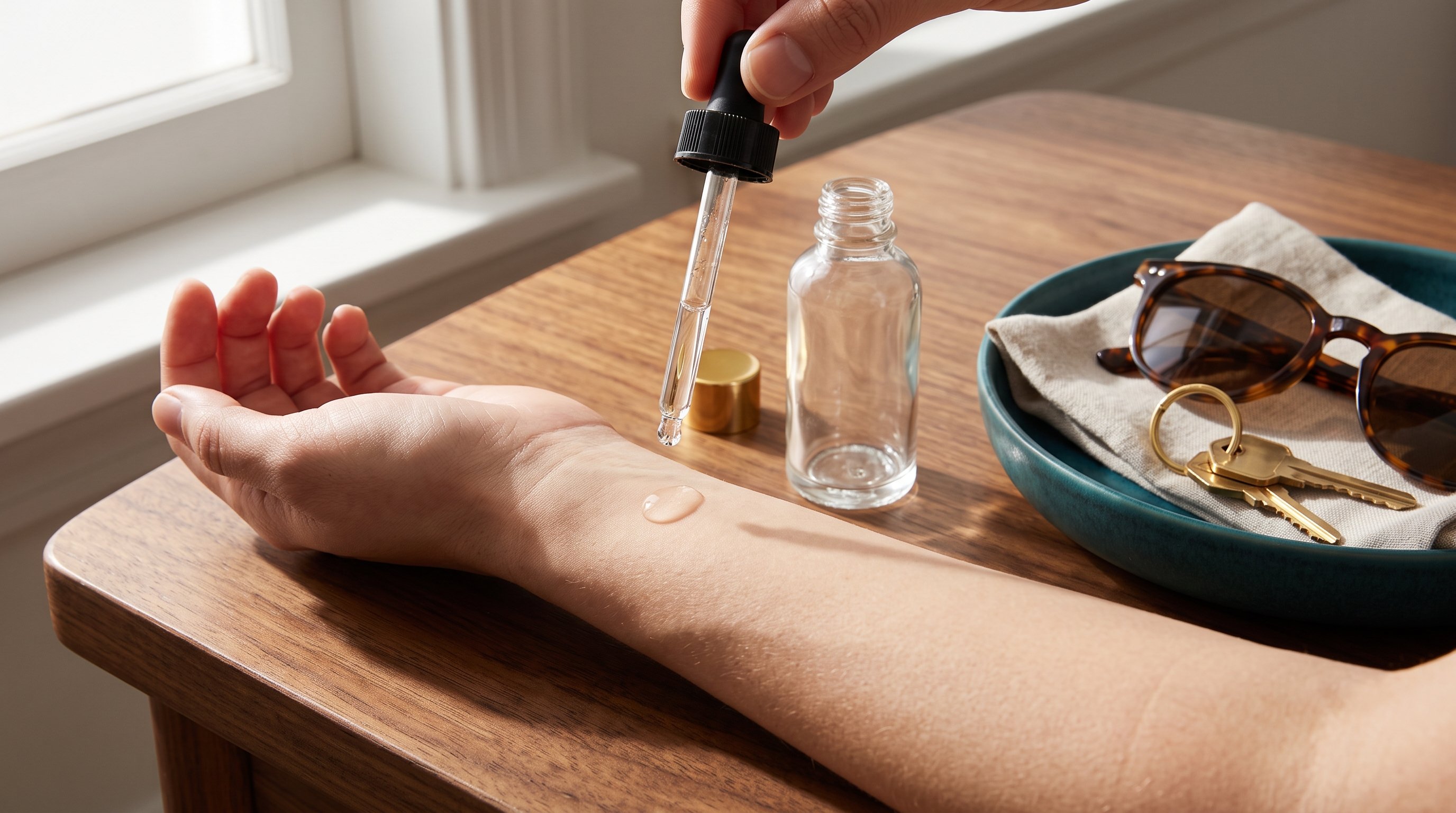
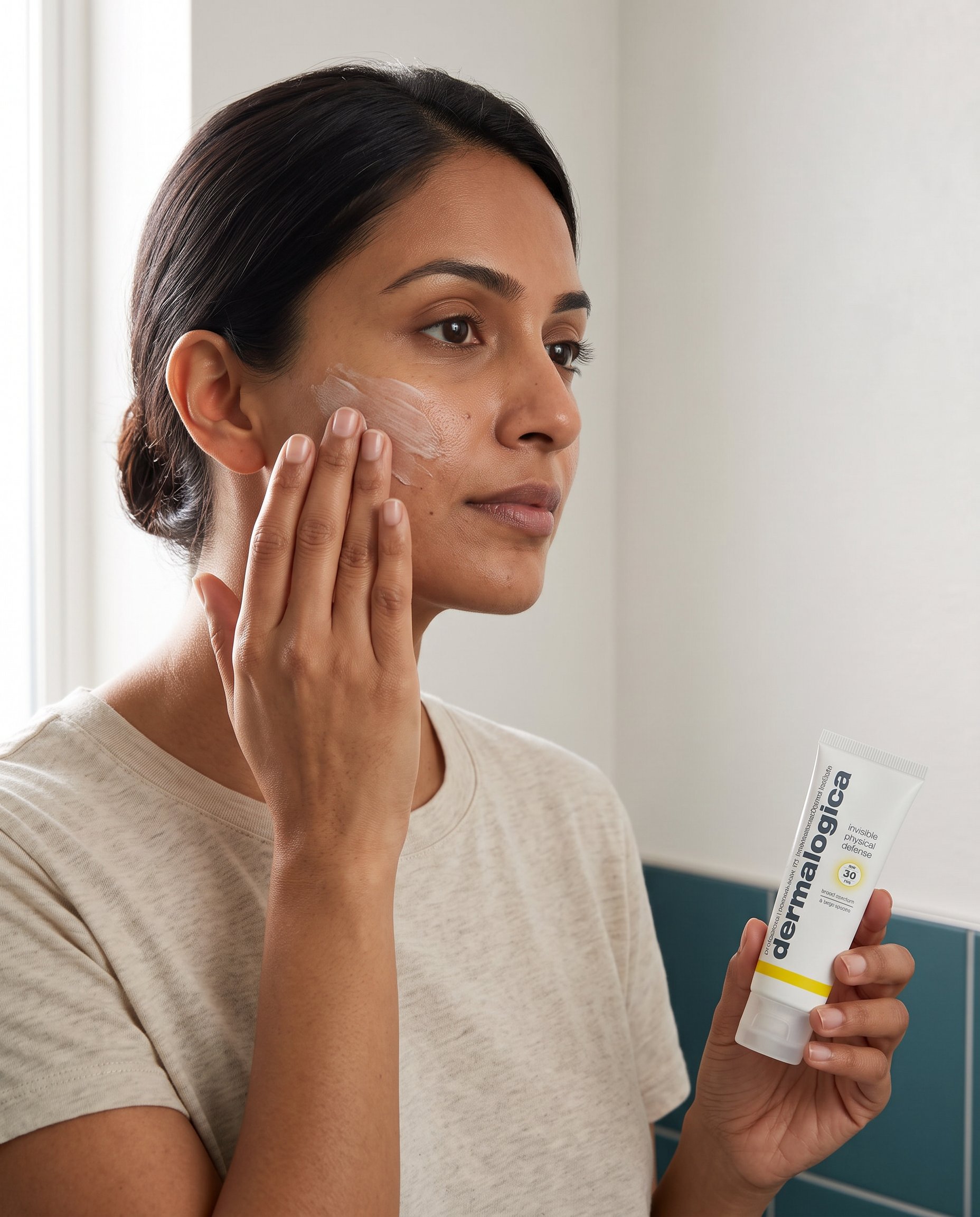
Patch test first. Apply a small amount to your inner arm or jaw and wait 24 hours before using it on your whole face. Start with two applications a week, and always wear SPF the next day, since acids can increase sun sensitivity.
Give your skin time before changing anything. Four to six weeks of consistent, correct use tells you more than any single week ever will. If you're unsure where to start, our guide to choosing the right exfoliation method walks through the options by skin type.
Every skin type responds differently to acids, which is exactly why one-size-fits-all advice doesn't work. You can explore our range of AHA, BHA, and PHA exfoliants to see the options, though the right starting point still depends on your skin's current state, not what's trending.
Skincare acids myths thrive because fear travels faster than nuance. The science is clear: used correctly, acids support your skin's natural renewal process instead of damaging it. The real risk isn't the acid itself, it's guessing at strength, frequency, and combinations without understanding your own skin first.
That's exactly the gap Sarah Peacock's clinical experience and the Skin Blueprint™ are built to close. Instead of following whatever's trending, you get guidance based on your skin's actual needs. If you're curious about where AHAs, BHAs, or PHAs might fit into your routine, our exfoliants collection is a good place to start exploring, with no pressure to buy before you understand why.


