
Open any professional skincare range in Australia and you'll find niacinamide in almost every serum, moisturiser, and treatment. That's not a coincidence or a trend. It's because this single ingredient does more heavy lifting than almost anything else in your routine.
If you've searched for a niacinamide serum in Australia, you've probably noticed it's everywhere, from budget ranges to clinical brands like Dermalogica, Medik8, and ASAP. But why does one ingredient get this much attention? The answer sits in the research. Niacinamide has one of the strongest evidence bases in skincare, backed by studies on barrier repair, oil control, pigmentation, and inflammation. Let's look at what the science actually shows, so you can judge for yourself whether it deserves a spot in your routine.
What Is Niacinamide, and Why Does It Do So Much?
Niacinamide is a form of vitamin B3. Once it's absorbed into your skin, it converts into NAD+ and NADP+, the same molecules covered in our deep dive on NAD+ and epigenetic skincare. These are molecules your cells use as fuel for over 400 different processes, including repair, energy production, and defence against damage.
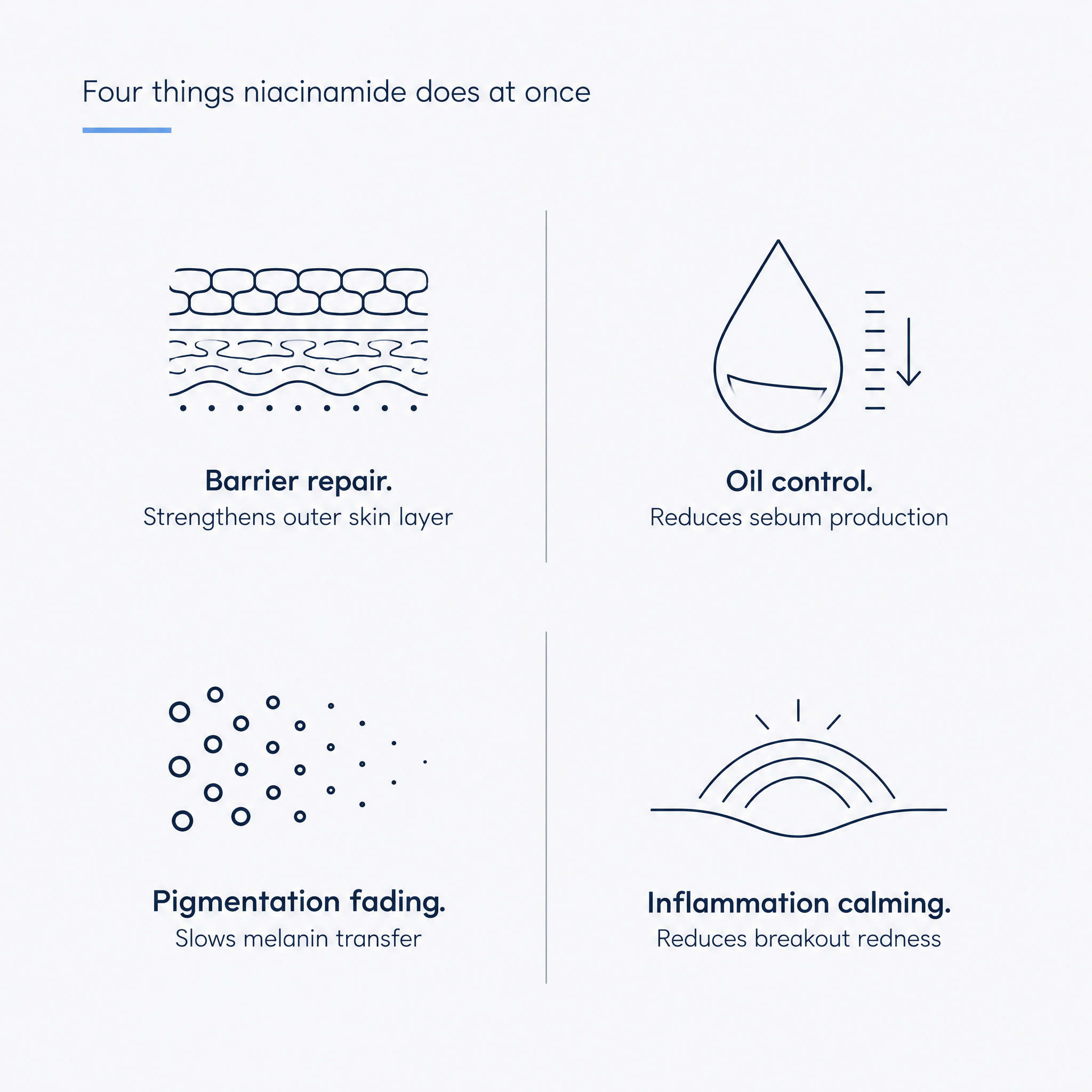
This is why niacinamide isn't a one-trick ingredient. Instead of targeting a single concern, it supports several skin functions at once: strengthening your barrier, calming inflammation, managing oil, and slowing pigmentation. Most actives do one job well. Niacinamide does four.
This multitasking ability is exactly why it appears in so many serums and boosters across professional Australian skincare brands. Understanding how it works helps you judge whether a product is using niacinamide effectively, or just listing it on the label.
How Does Niacinamide Repair Your Skin Barrier?
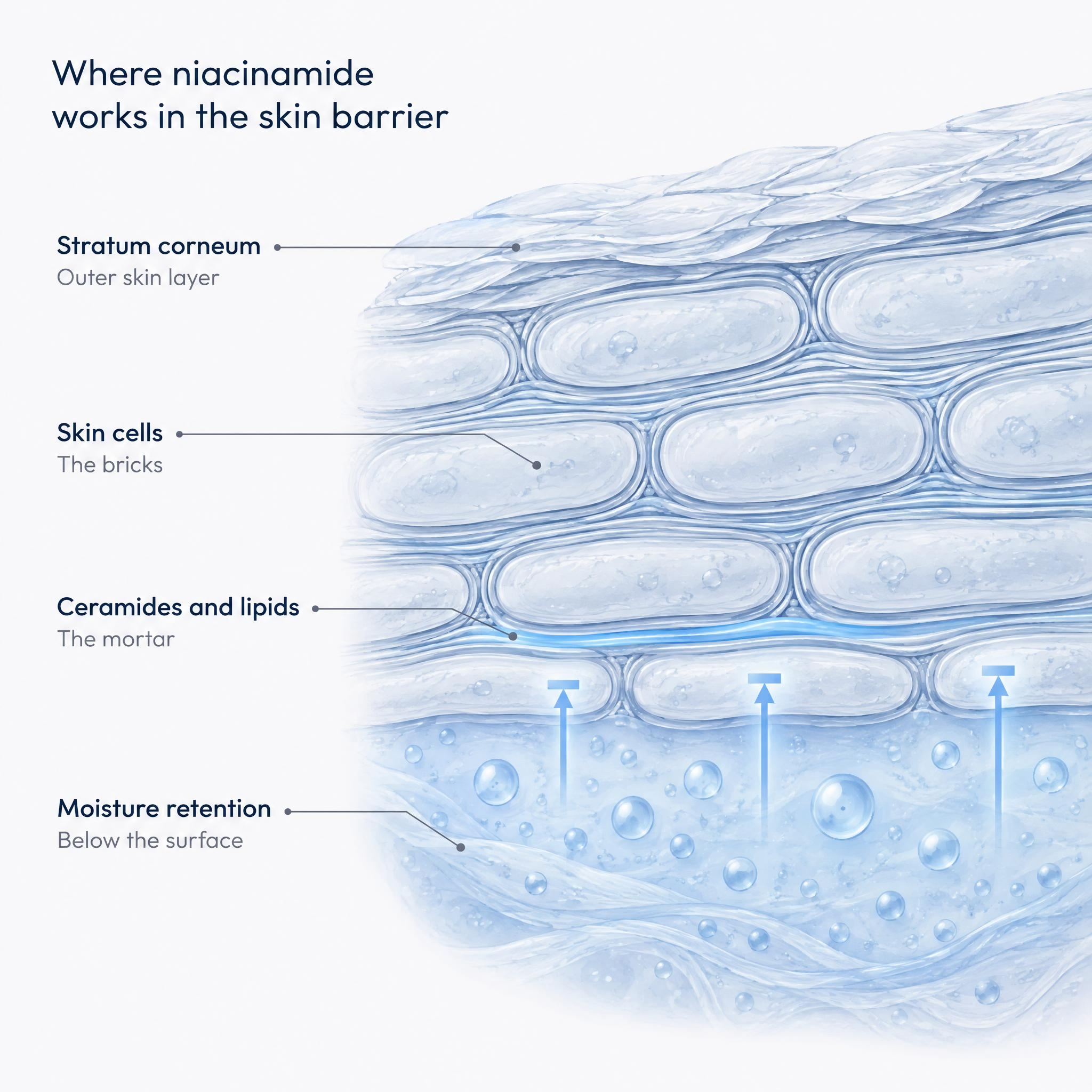
Your skin barrier is your stratum corneum, the outer layer of your skin. Think of it as a brick wall: skin cells are the bricks, and lipids like ceramides are the mortar holding them together. When this wall weakens, moisture escapes and irritants get in more easily. If you want a deeper look at this process, our guide to ceramides and barrier repair covers why this lipid layer is so essential.
Niacinamide directly supports this wall. Research by Tanno et al. (2000) found that niacinamide increases ceramide and fatty acid production in the skin. In that study, a 2% concentration reduced water loss through the skin by 24%, and higher concentrations reduced it by up to 42%.
This barrier support matters more than most people realise, especially if you're dealing with dryness or dehydration. A stronger barrier means better hydration retention and less sensitivity to weather, actives, and daily stress, and it pairs well with hydrating actives like the ones covered in our guide to hyaluronic acid. You'll usually notice this benefit first, often within one to two weeks of consistent use.
Key Takeaways
- Niacinamide is vitamin B3.
- Research shows it repairs your skin barrier, reduces oil, fades pigmentation, and calms inflammation, all at once.
- Studies show 2-5% niacinamide cuts water loss by up to 42% and reduces sebum by 30-50%.
- Higher strengths, around 5%, reduce pigmentation and fine lines over 8-12 weeks.
- This is why niacinamide appears in professional formulas from Dermalogica, Medik8, and ASAP.
Can Niacinamide Control Oil and Reduce Breakouts?
If you deal with an oily T-zone or regular breakouts, niacinamide's oil-regulating effect is one of its most useful benefits. Draelos et al. (2006) found that niacinamide reduced sebum, the oil your skin naturally produces, by 30-50% over several weeks of twice-daily use.
Niacinamide also calms the inflammation that drives breakouts. Shalita et al. (1995) tested 4% niacinamide gel and found a 52% reduction in inflammatory acne lesions after eight weeks, a result comparable to some prescription treatments, but with far less irritation.
This dual action, less oil and less inflammation, is why niacinamide is a common ingredient for congested or breakout-prone skin. It won't replace a targeted acne treatment on its own, but it's a strong supporting player in almost any routine dealing with excess oil, alongside options like salicylic acid for deeper pore congestion or gentle exfoliants covered in our guide to AHAs.
Does Niacinamide Fade Pigmentation and Uneven Tone?
Pigmentation forms when melanin, your skin's natural pigment, transfers from melanocyte cells into surface skin cells. Niacinamide slows this process. Hakozaki et al. (2002) found that niacinamide reduced this transfer by 35-68%, leading to a 35% reduction in the intensity of dark spots after eight weeks.
Bissett et al. (2005) confirmed this with a 12-week trial of 5% niacinamide. Participants saw a 20% reduction in visible hyperpigmentation, along with a 23% improvement in fine lines. Navarrete-Solís et al. (2011) even compared niacinamide directly to hydroquinone, a common prescription lightening agent, for melasma. Niacinamide achieved 44% improvement, with far less irritation. For a broader comparison of tone-evening actives, see our guide to kojic acid and depigmenting agents.
If uneven tone is your main concern, this is worth understanding fully. Our guide on treating pigmentation breaks down how niacinamide fits alongside other brightening actives. The key takeaway: pigmentation is slow to shift because it follows your skin's natural turnover cycle, so results typically show up around week 8, not week 2.

Featured: Mesoestetic Age Element Anti-Wrinkle Concentrate
Bakuchiol stimulates collagen production and accelerates cell renewal with a retinol-comparable mechanism — without retinol's associated irritation.
Shop NowWhy Is Niacinamide in Almost Every Professional Formula?
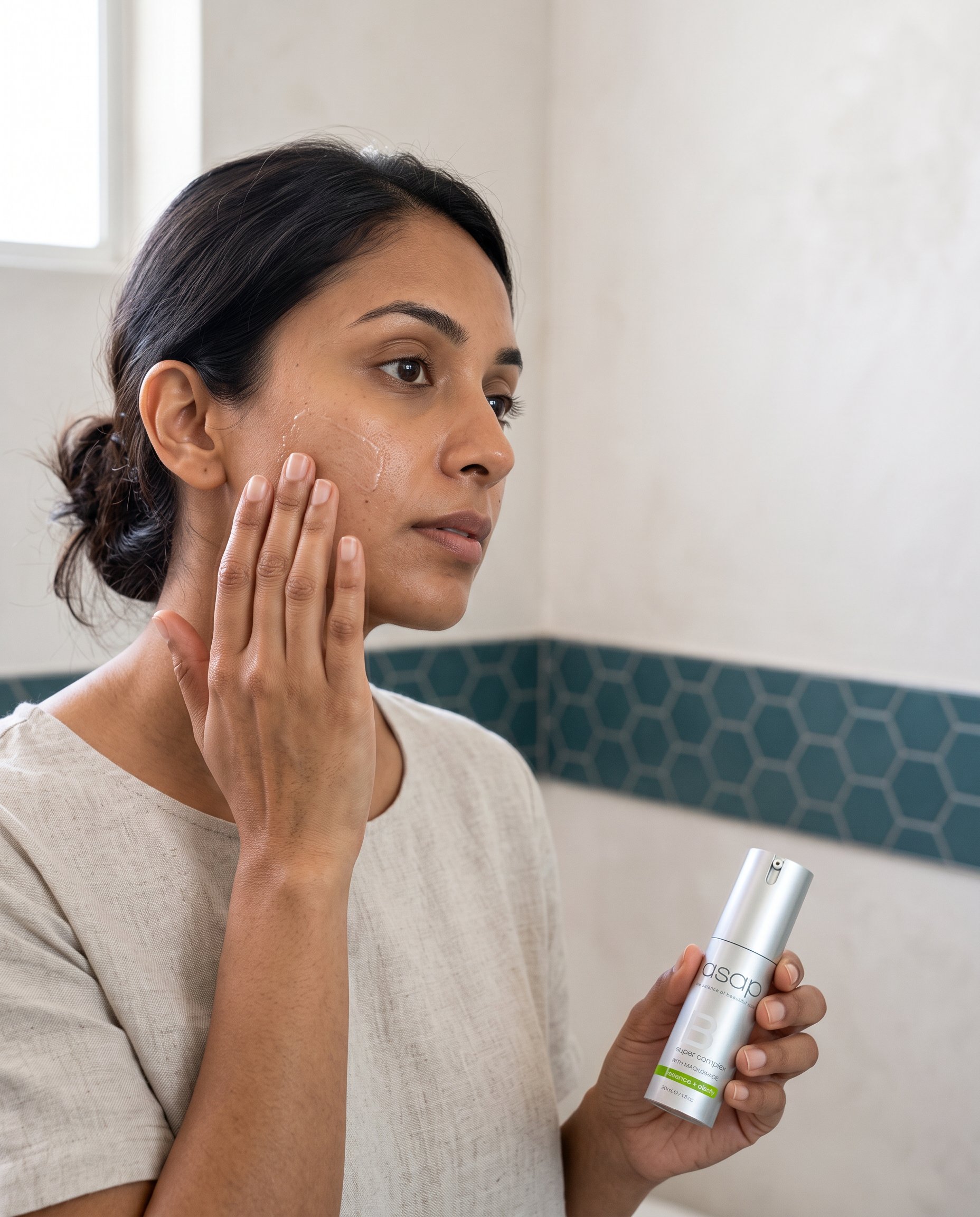
Walk through any clinical skincare range and niacinamide shows up again and again. ASAP's Advanced B Serum is built entirely around niacinamide as its core active, targeting tone and texture. Dermalogica's Powerbright range uses niacinamide alongside other actives to fade pigmentation and even skin tone. Medik8 includes niacinamide in barrier-focused formulations to support oil balance and skin resilience.
Part of this popularity comes down to compatibility. Niacinamide is stable across a wide pH range and plays well with almost everything, including vitamin C and retinoids like those compared in our retinol vs retinal vs tretinoin guide. If you're deciding which brightening serum to pair it with, our complete guide to vitamin C serums explains how the two actives complement each other. The old idea that niacinamide and vitamin C cancel each other out has been debunked. That concern only ever applied to unstable old formulas at high heat, not the products on shelves today.
This flexibility is exactly why formulators lean on it so heavily. It's rare to find an active that supports barrier function, calms inflammation, manages oil, and fades pigmentation, all without fighting other ingredients in your routine. For a broader look at how actives work together, our piece on layering serums is a useful companion read.
What Niacinamide Concentration Should You Choose?
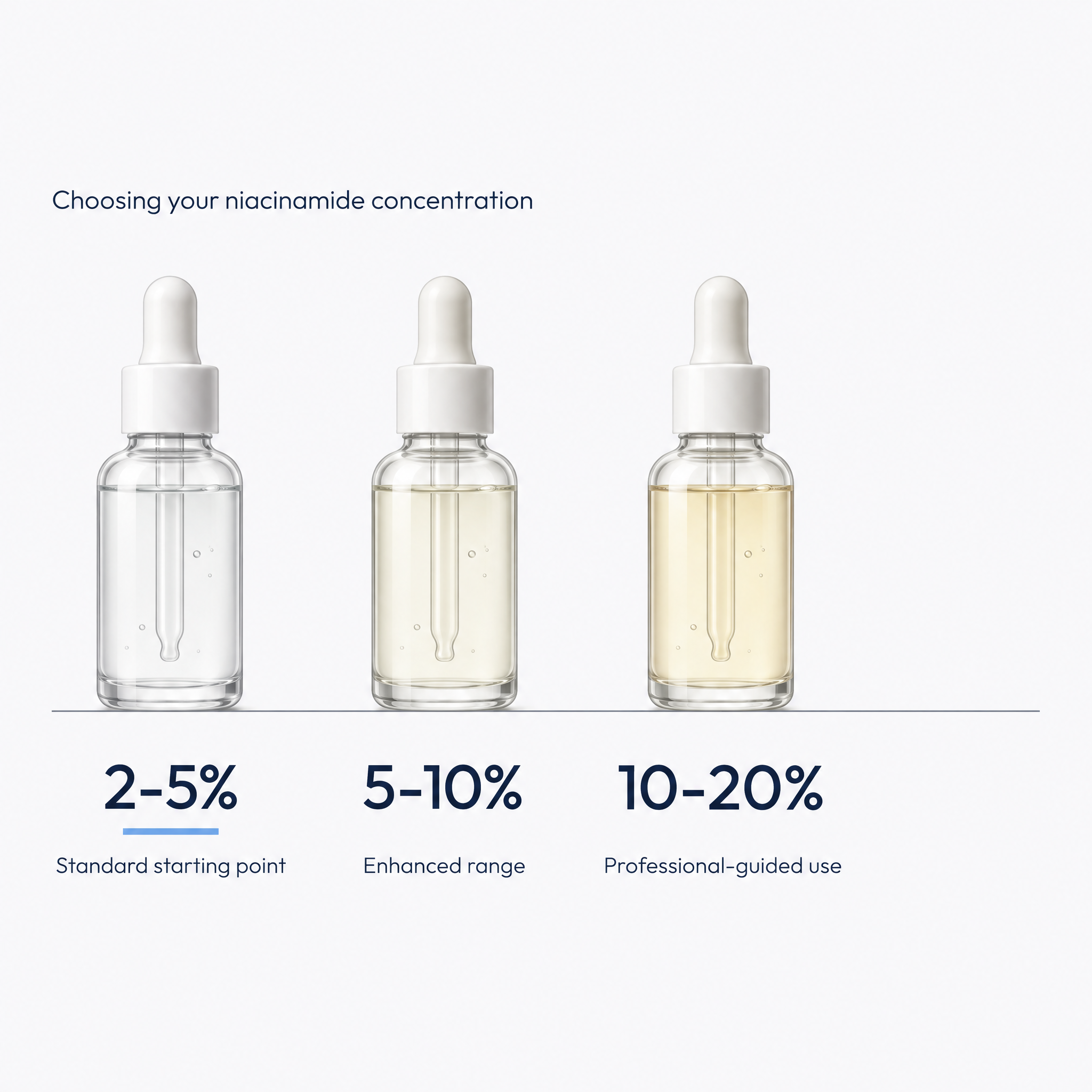
Concentration matters more than most labels let on. Research points to three general ranges. Two to five percent is the standard starting point, shown to deliver barrier support, oil control, and mild pigmentation benefits with very low irritation risk.

Five to ten percent is considered the enhanced range. This is where Bissett's 5% studies and Hakozaki's pigmentation results sit, delivering stronger results for tone, texture, and fine lines. Ten to twenty percent is rarely necessary and typically reserved for professional-guided treatment plans, since higher strength doesn't always mean better results, just a higher chance of irritation. If you're dealing with rosacea or acne-related redness alongside pigmentation, our guide to azelaic acid covers a gentler alternative worth comparing.
If you're new to active ingredients, our guide to understanding actives is a good place to start before adding niacinamide to your shelf. Matching concentration to your skin's current tolerance, rather than chasing the highest number, is what actually drives results.
How Should You Use Niacinamide for Best Results?
Apply niacinamide serum after cleansing, before heavier creams, and always finish your morning routine with sunscreen, covered in detail in our guide to SPF science and Australian sun protection. If you're new to it, start once daily in the evening for one to two weeks to check tolerance, then move to twice daily.
Timelines follow a predictable pattern based on the research. Weeks one to two bring improved hydration and comfort. Weeks two to four show reduced oil and a more mattified look. Weeks four to eight bring smoother texture. Weeks eight to twelve deliver the pigmentation fading most people are chasing.
This timeline isn't a guess, it reflects how your skin's natural repair and turnover cycles actually work. Committing to 8-12 weeks, rather than switching products after two weeks, is the single biggest factor separating people who see results from people who don't.
Featured: ASAP Super C Complex
20% L-ascorbic acid inhibits tyrosinase activity, reducing melanin production and visibly evening skin tone with consistent use.
Shop NowNiacinamide earns its place in professional skincare through decades of clinical research, not marketing. It repairs your barrier, calms inflammation, manages oil, and fades pigmentation, all backed by studies with measurable, repeatable results. That's a rare combination for a single ingredient.
The part that trips people up isn't whether niacinamide works. It's whether the concentration, formulation, and routine around it actually suit their skin. A 2% niacinamide moisturiser and a 10% niacinamide serum serve very different purposes, and using the wrong one for your skin's needs is how good ingredients get written off too early.
If you're not sure which concentration, brand, or combination is right for your skin specifically, that's exactly what your Skin Blueprint is built to work out. Start yours today, and we'll help you build a routine around what your skin actually needs, not just what's trending.


