
If you follow skincare science, you have probably seen the word exosomes appearing more often. It shows up in clinical research, professional treatment menus, and now in daily-use products. But what are exosomes, exactly? And does the science behind them hold up?
We have looked at the research carefully. Exosomes are one of the more genuinely interesting developments in age-positive skincare right now. They are not a trend built on marketing language. They are rooted in cell biology that scientists have been studying for decades. This guide explains what exosomes are, how exosome-based skincare works, what you can realistically expect, and how to add an exosome treatment to your routine.
What Are Exosomes and What Do They Do in Your Skin?
Every living cell in your body communicates with nearby cells. One of the main ways skin cells do this is by releasing tiny particles called exosomes. Think of them as sealed envelopes.
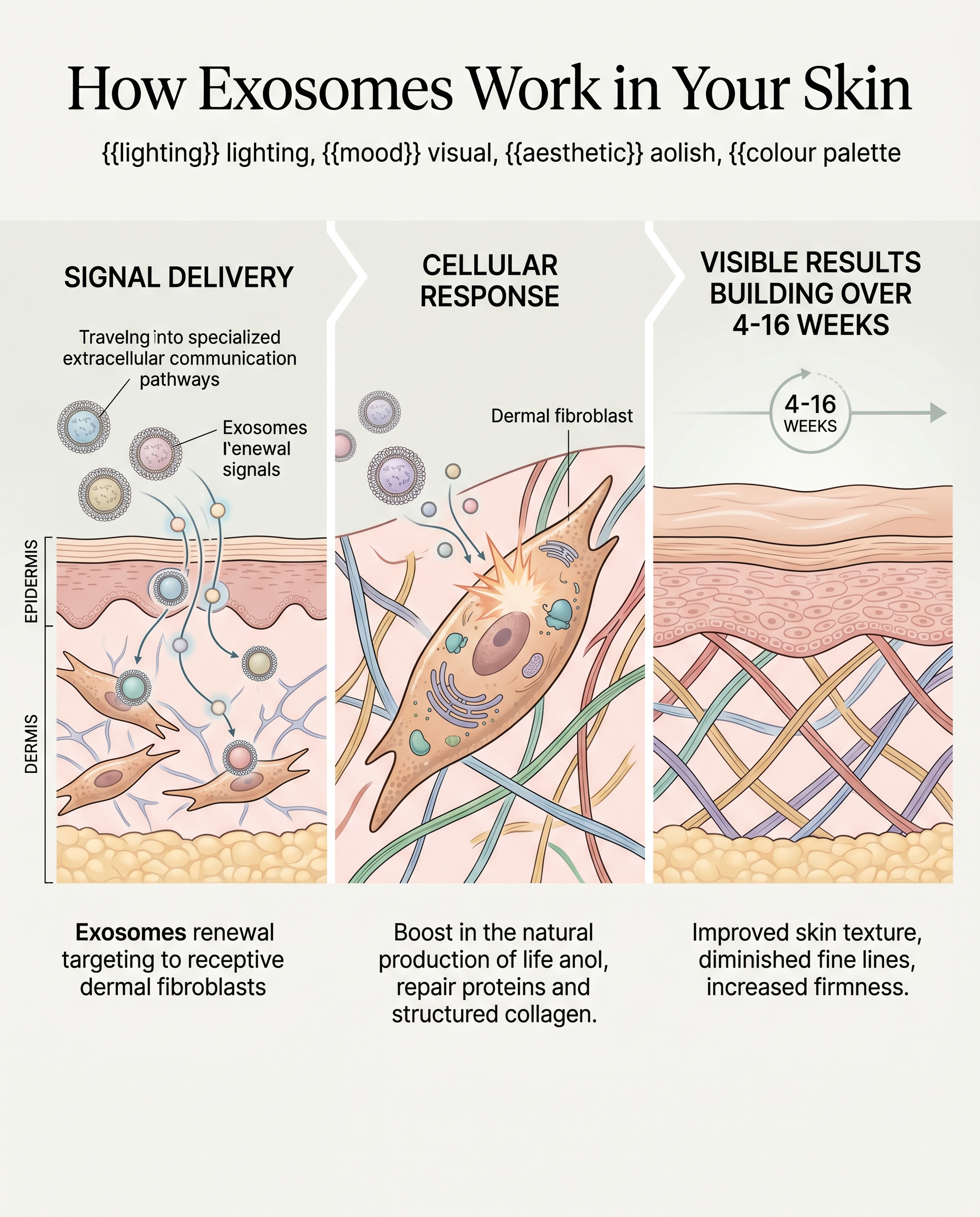
Each exosome carries a payload of proteins, lipids (fats), and small pieces of genetic material called microRNA. When an exosome reaches a neighbouring cell, it delivers its message. That message can tell the receiving cell to produce more collagen, speed up repair, or calm an inflammatory response.
Exosomes are extremely small, ranging from about 30 to 150 nanometres in diameter. To put that in context, a human hair is roughly 80,000 nanometres wide. Their small size is part of what makes them interesting for skincare. They can pass through the outer layers of skin more easily than many larger molecules.
As skin ages, the quality and volume of these cellular signals decline. Cells still send messages, but the instructions become less clear. Renewal slows.
Collagen production drops. Recovery from daily environmental stress takes longer. Exosome-based skincare aims to support and restore that signalling, helping your skin behave more like it did when those communication pathways were working at full capacity.
How Do Exosome Treatments Work on the Skin?
Exosome treatments in skincare do not contain live cells. This is an important distinction. The exosomes used in topical products are derived from plant stem cells or other biological sources, then carefully processed and stabilised. What you are applying is the signalling payload, not the cell itself.

When you apply an exosome treatment, those particles interact with your skin cells. They deliver growth factors and proteins that encourage your skin's own renewal processes. They do not force change. They support and amplify what your skin already knows how to do.
This is why the approach fits well with an age-positive philosophy. You are not overriding your skin's biology. You are giving it better instructions to work with.
This mechanism is different from how retinoids or exfoliating acids work. Retinoids directly influence gene expression and speed up cell turnover. Exosomes work upstream of that, at the level of cellular communication. The two approaches are complementary rather than competing. Many skin scientists believe combining them could produce better long-term results than either alone.
It is also worth noting that exosome research is still evolving. The most robust clinical data comes from medical and wound-healing contexts. Topical skincare applications are newer territory. The science is promising and grounded in solid cell biology, but we think it is important to be honest about where the evidence currently sits.
Key Takeaways
- Exosomes are tiny messenger particles that skin cells use to communicate with each other.
- In skincare, exosome-based treatments aim to support your skin's own renewal and repair signals.
- They are not live cells.
- They carry proteins, lipids, and genetic instructions that may help ageing or stressed skin behave more like younger skin.
- Results build gradually over weeks.
Why Are Exosomes Relevant to Skin Ageing?
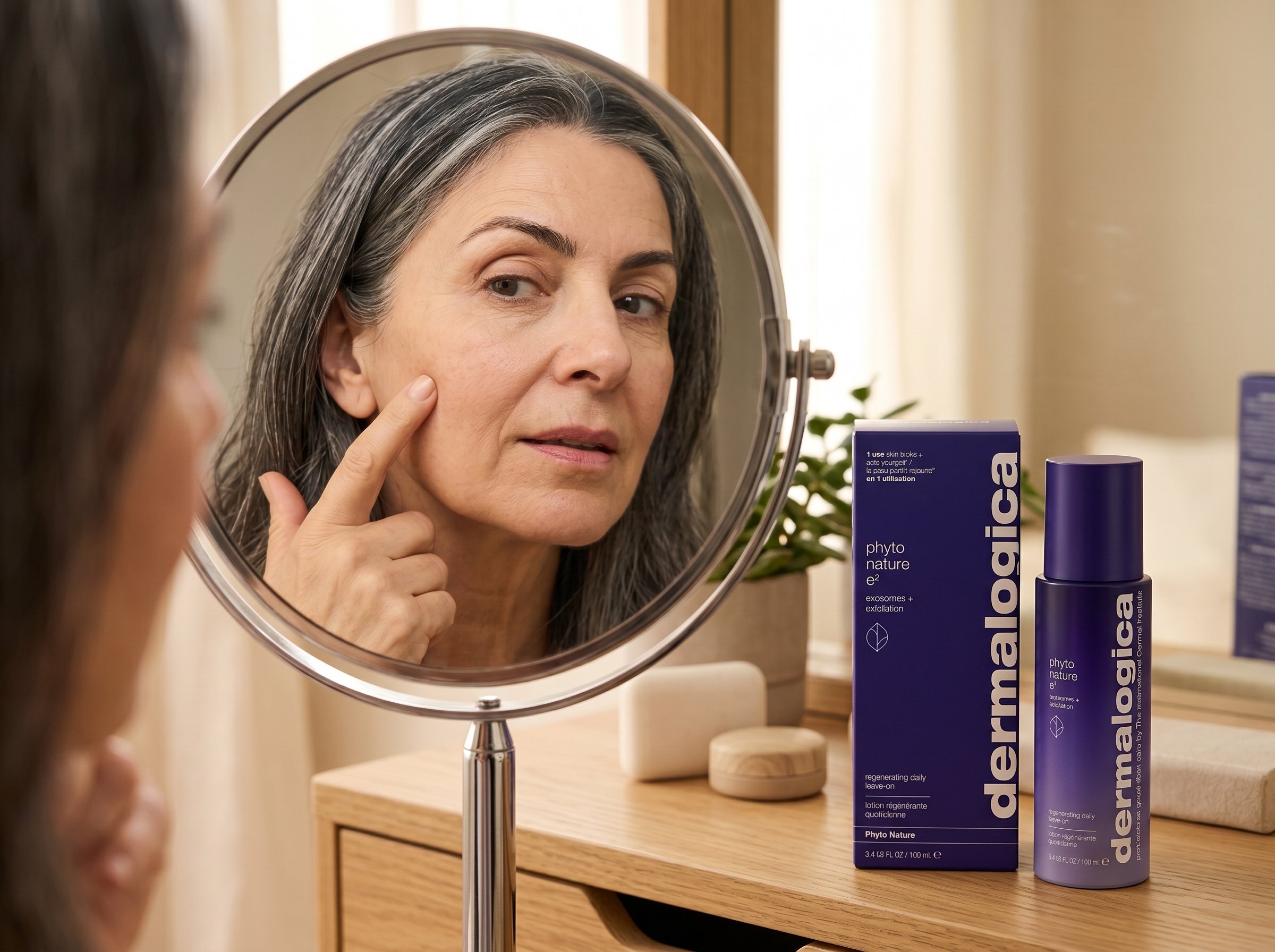
Skin ageing happens at multiple levels at once. On the surface, you see changes in texture, tone, and firmness. Underneath, the changes are cellular. Collagen fibres break down faster than they are replaced.
Skin cells take longer to renew. The barrier, the outermost layer of skin that keeps moisture in and irritants out, becomes less efficient. And the communication between cells becomes less precise.
Senescent cells, sometimes called zombie cells, are part of this picture. These are cells that have stopped dividing but have not been cleared away. They release inflammatory compounds that affect the behaviour of healthy cells nearby. Exosomes from younger or healthier cell sources may help interrupt this cycle by delivering renewal signals that counteract some of these effects.
This is also why exosomes are attracting attention in recovery and post-procedure skincare. After any stress to the skin, whether from sun exposure, professional treatments, or environmental damage, clear cellular communication is essential for efficient repair. Supporting those signals at the right time may speed up recovery and reduce the visible signs of stress on the skin.
If you are curious about how other cutting-edge ingredients support skin at the cellular level, our guide on DNA technology in skincare covers related territory worth reading alongside this one.
What Can You Realistically Expect From an Exosome Treatment?
Exosomes are not an overnight fix. Because they work at the level of cellular communication, the benefits build gradually. Most people using an exosome treatment consistently will start to notice changes in skin texture and resilience after four to six weeks. More visible improvements in firmness and radiance typically develop over three to four months.
The changes tend to feel cumulative. Your skin may recover faster from environmental stress. It may respond better to other actives in your routine. Over time, the overall quality of your skin, its tone, smoothness, and bounce, improves as cellular renewal becomes more efficient.
What exosomes are not suited for is replacing proven actives like retinoids, vitamin C, or well-formulated peptides. They work best as an addition to a routine that already has strong foundations. If your routine is missing a daily SPF, a reliable moisturiser, or a consistent cleanser, those gaps matter more than any advanced active. Build the base first.
It is also worth being realistic about product concentration and formulation quality. Not all exosome products are equal. The source of the exosomes, how they are stabilised, and how they are delivered into the skin all affect whether you get meaningful results. This is why we look carefully at the evidence behind specific formulations before recommending them.

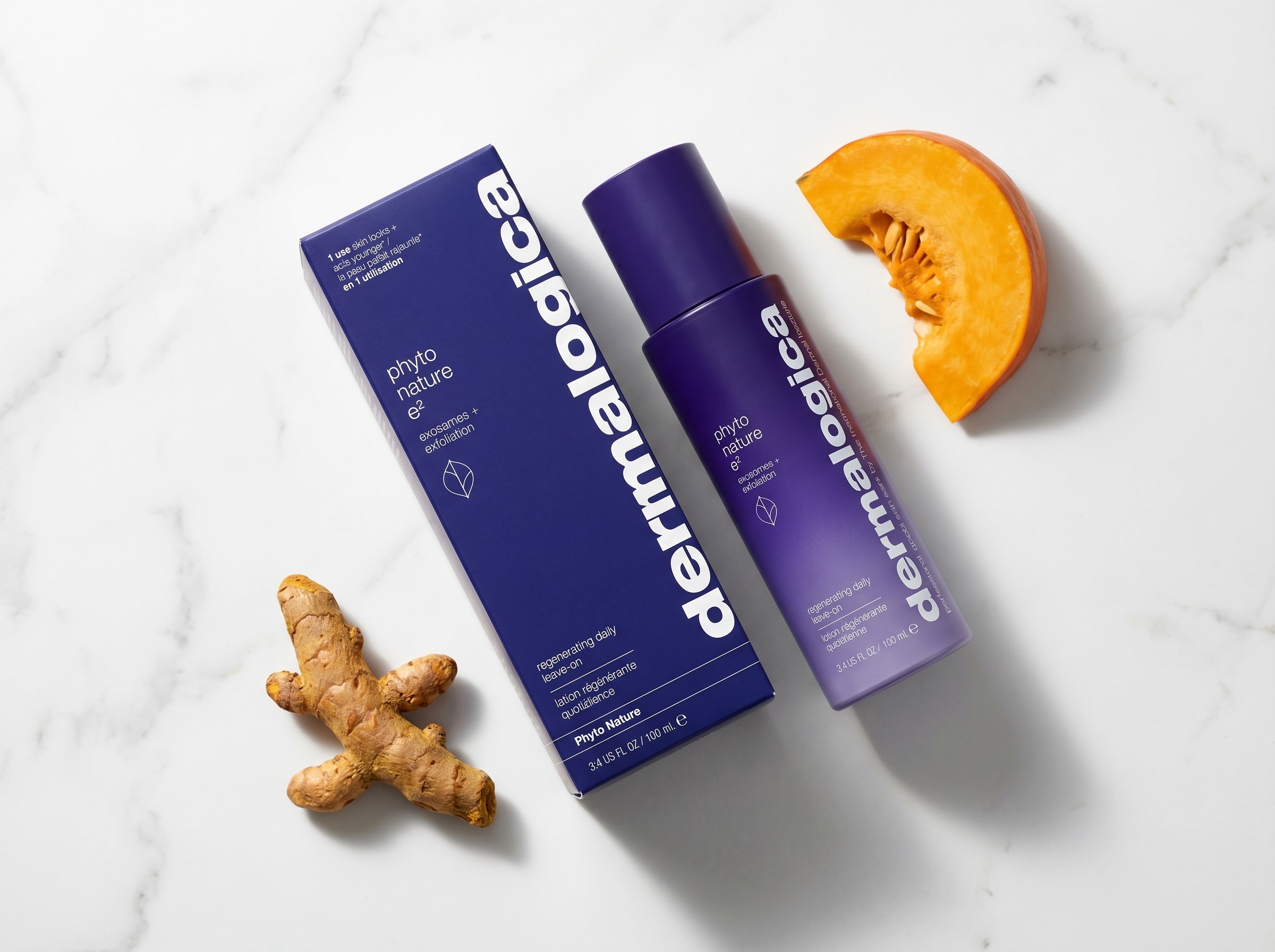
Featured: Dermalogica Phyto Nature E² Regenerating Daily Exosome Leave-on Treatment
Plant-derived exosomes deliver bioactive signals that help modulate skin ageing pathways at a cellular level
Shop NowA Closer Look: Dermalogica Phyto Nature E2 Regenerating Daily Exosome Leave-on Treatment
The Dermalogica Phyto Nature E2 Regenerating Daily Exosome Leave-on Treatment is one of the first daily leave-on treatments to bring exosome technology into an accessible home-care format. It uses turmeric stem cell exosomes (listed as Curcuma Longa Callus Conditioned Media) as its primary active. Turmeric has a strong evidence base as an antioxidant and anti-inflammatory ingredient. Using it as the source material for stem cell-derived exosomes means the signalling payload carries those beneficial properties into the cellular communication process.
The second key active is pumpkin ferment enzymes (Lactobacillus/Pumpkin Fruit Ferment Filtrate). These are enzymatic exfoliants, meaning they work as biological catalysts to break down the bonds holding dead skin cells on the surface. Enzymatic exfoliants are gentler than acid-based exfoliants because they act selectively on dead cells only, leaving healthy tissue intact. Including them in this formulation serves a practical purpose. By gently clearing surface buildup, the enzymes help the exosomes reach deeper layers of skin where they can do their best work.
The formula also contains acetyl glucosamine, a compound that supports collagen synthesis and helps even skin tone over time. Together, these three actives create a treatment that works on multiple levels: cellular communication, surface renewal, and structural support. It is designed for daily use, making it straightforward to build into an existing routine without adding complexity.
How to Use an Exosome Treatment in Your Skincare Routine
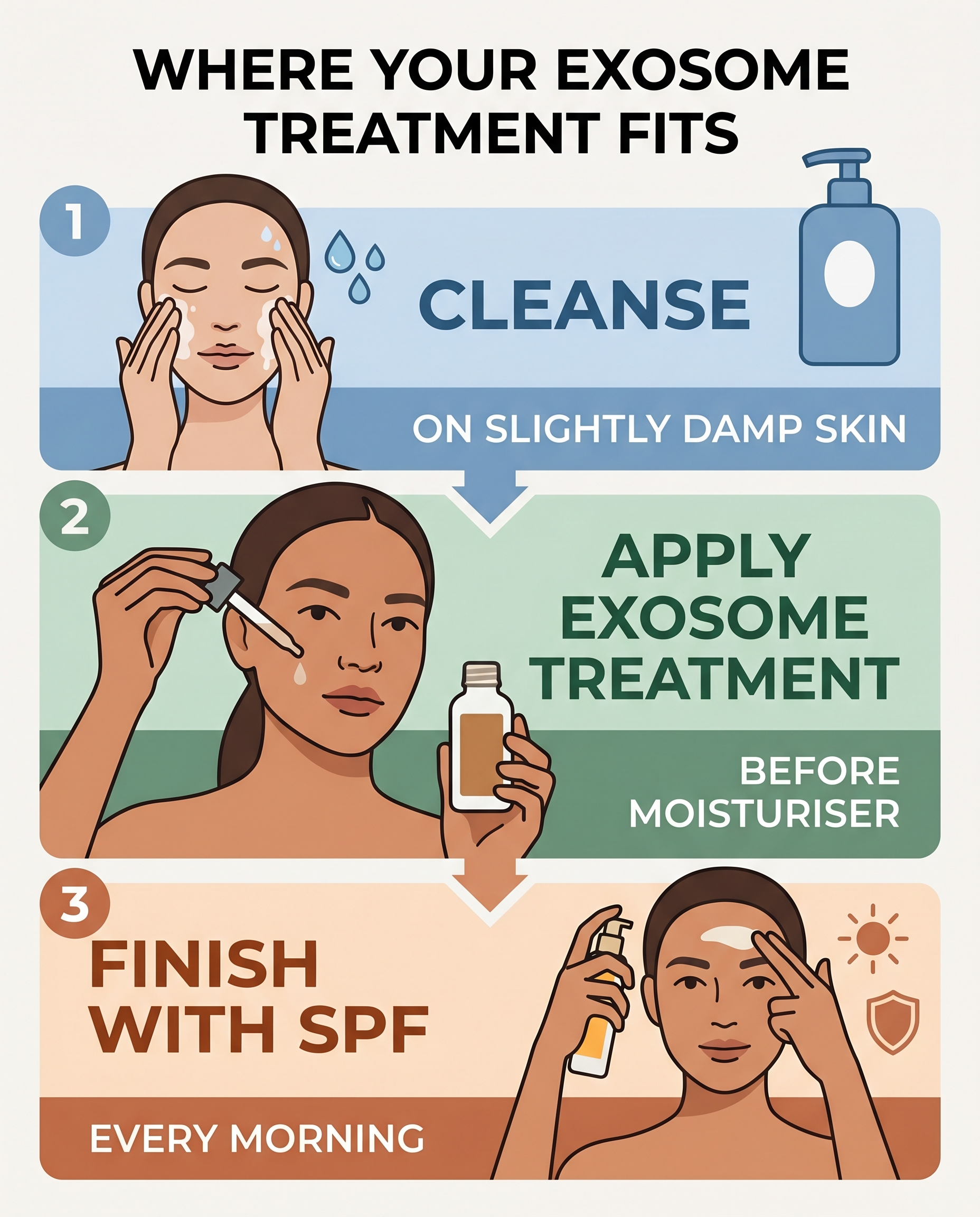
Placement matters when you are adding an active treatment to your routine. As a general rule, you want to apply treatments from thinnest to thickest texture, with the most active ingredients going on first so they reach the skin directly. The Dermalogica Phyto Nature E2 sits after cleansing and toning but before your moisturiser and SPF.
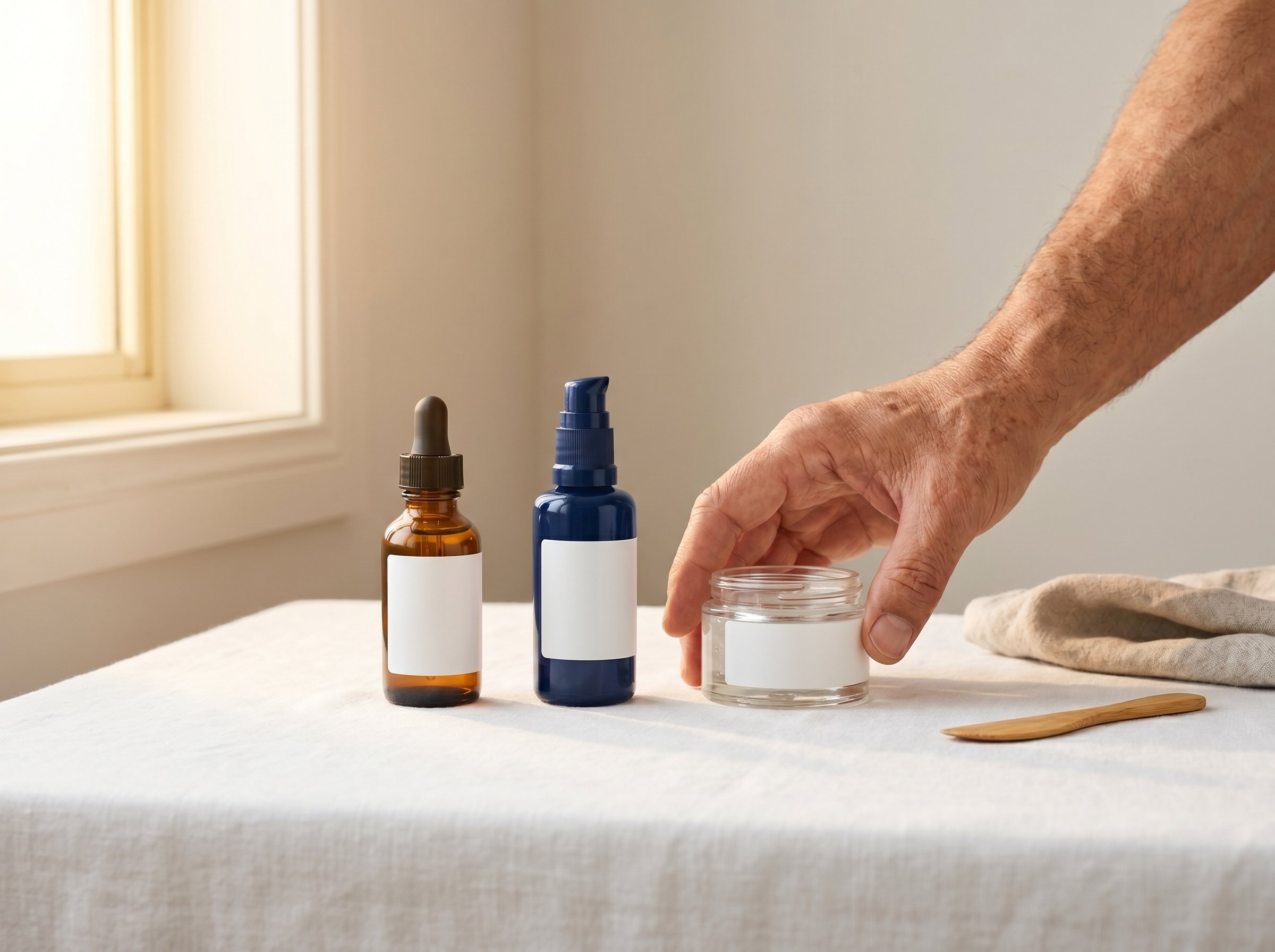
A simple morning routine with this treatment looks like this. Cleanse, then apply any hydrating toner or essence if you use one. Apply the Phyto Nature E2 to clean, slightly damp skin.
Follow with your moisturiser, then SPF. At night, after cleansing, you can apply the treatment before your serum or moisturiser. If you are using a retinoid at night, apply the exosome treatment first and allow it to absorb before layering your retinoid on top.
Because the formula includes pumpkin ferment enzymes, you do not need a separate exfoliating step on the nights you use this product. Avoid layering it with strong acid exfoliants like glycolic or lactic acid on the same application. That combination can over-exfoliate the surface and reduce the effectiveness of both actives. If you use chemical exfoliants regularly, alternate them on different nights.
If you are newer to active ingredients and want to understand how layering works more broadly, our guide on using products in the right order is a good starting point before you build a more advanced routine.
How Do Exosomes Compare to Other Age-Positive Actives?
It helps to understand where exosomes sit relative to the actives you may already know. Retinoids work by directly influencing how skin cells divide and produce collagen. They have the most extensive research of any age-positive ingredient and show visible results in four to six weeks for most people.
Vitamin C is an antioxidant that protects skin from daily environmental damage and supports collagen production. Peptides are short chains of amino acids that signal the skin to produce structural proteins. Each of these works through a different pathway.
Exosomes sit at a different level again. Rather than targeting a single pathway, they carry a broad range of signals that support overall cellular function. This makes them less about treating a specific concern and more about supporting the whole system. The analogy we find useful: retinoids are like a targeted intervention. Meanwhile, exosomes are more like improving the communication network that all those interventions rely on.
For most people, the practical answer is that exosomes work best alongside proven actives, not instead of them. If you are already using a retinoid and want to explore what comes next, exosome technology is one of the more evidence-grounded options available right now. If you are still building your routine foundations, understanding active ingredients first will help you get more from everything you apply.
Exosomes represent one of the more genuinely exciting frontiers in age-positive skincare science. They are not a miracle ingredient. They are a well-grounded approach to one of the real drivers of skin ageing: the gradual decline in how clearly your skin cells communicate with each other. When that communication improves, everything else in your routine tends to work better too.
The Dermalogica Phyto Nature E2 Regenerating Daily Exosome Leave-on Treatment is a thoughtful formulation that brings this technology into a practical daily format. Turmeric stem cell exosomes, pumpkin ferment enzymes, and acetyl glucosamine work together to support renewal, clear the surface, and strengthen skin structure over time. If you are at the stage of your skin journey where you are looking for what comes after the proven basics, this is worth your attention. Talk to one of our skin therapists who can help you find out whether an exosome treatment fits where your skin is right now, and what else might belong in your plan.


