
Every autumn, your skin is dealing with two problems at once. Summer left behind months of sunscreen, sweat and excess oil. Now the cooler air and indoor heating are stressing your moisture barrier. The result? Skin that looks dull, feels tight, breaks out in unusual spots, or flushes red at the slightest thing.
This is your seasonal guide to an autumn skincare routine in Australia that actually makes sense. We'll look at what's happening in your skin, how to read the signs, and which steps to take first. Because the order matters more than most people realise.
What Does Autumn Actually Do to Your Skin?
Think of your skin's outer layer as a brick wall. The skin cells are the bricks. The lipid barrier, made up of natural fats called ceramides, is the mortar holding everything together. In summer, heat and humidity keep that mortar fairly soft and pliable. When autumn arrives, dropping temperatures and dry indoor heating pull moisture out of the mortar fast.
This process is called transepidermal water loss (TEWL). It just means water is escaping through your skin faster than it should. Your barrier becomes less effective, and skin starts to feel tight, look dull, or react to products it handled fine in summer. Research shows that low humidity environments increase TEWL and reduce skin hydration levels noticeably, even over just a few weeks.
At the same time, summer leaves a residue. Months of layering SPF, sweating through workouts, and higher sebum production create a build-up on the skin's surface. This dulls your complexion and blocks absorption. Barrier products can't get through congested skin properly. That's why the sequence matters so much this time of year.
Key Takeaways
- An autumn skincare routine needs to do two things: clear summer congestion and repair a stressed moisture barrier.
- Summer leaves behind build-up from sunscreen, sweat and sebum.
- Cooler air and indoor heating then weaken your skin's protective layer, causing dryness and sensitivity.
- The key is sequence, gentle exfoliation first to clear the congestion, then barrier-focused hydration to lock moisture in.
- Getting this order right means your skin can actually absorb what you put on it.
How to Read What Your Skin Is Telling You Right Now
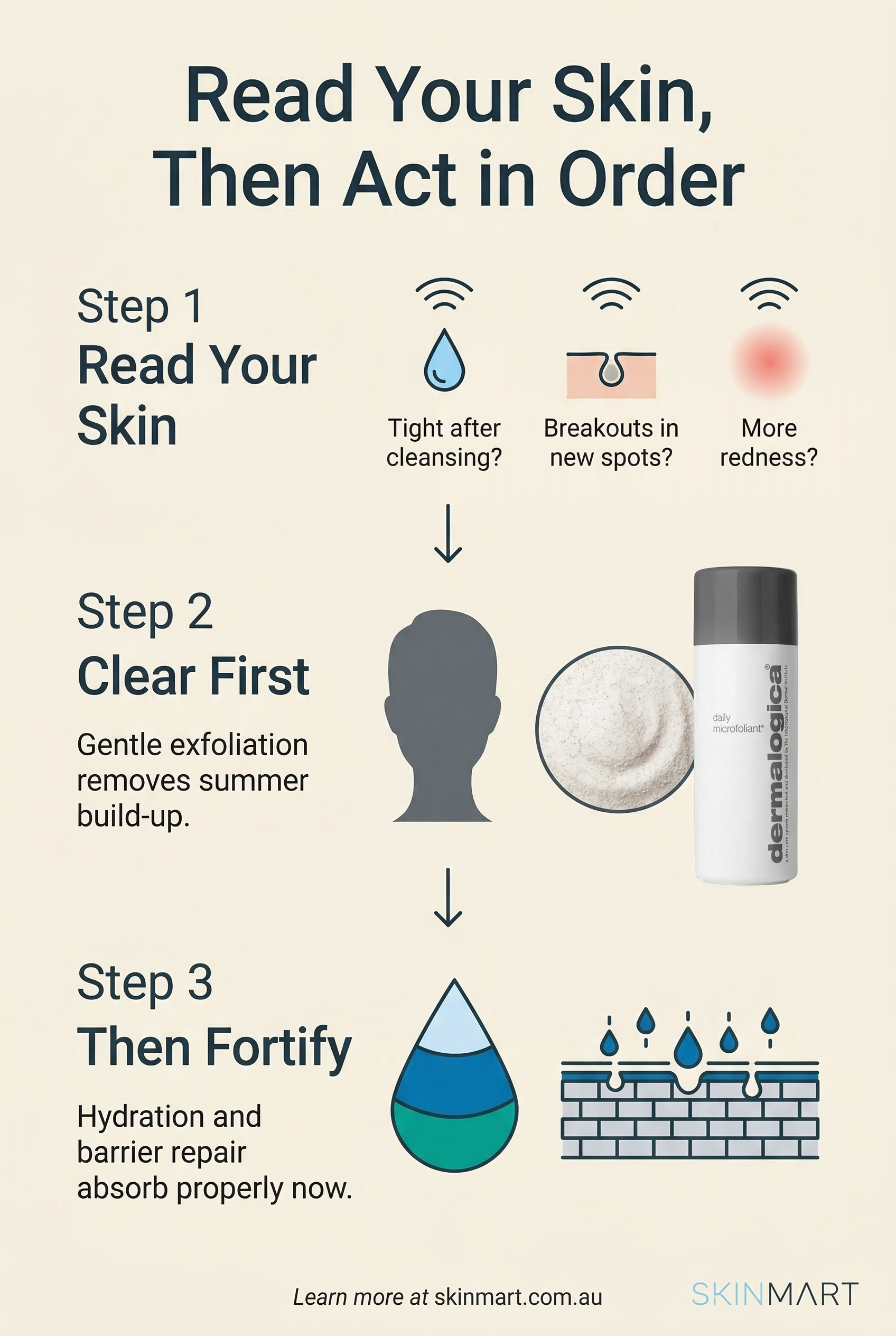
Before you change anything in your routine, take a moment to check in with your skin. These three signals each point to a different priority.
If your skin feels tight within an hour of cleansing, your barrier is already under stress. Dehydration is the main concern. Focus on repairing and sealing moisture before you introduce any active ingredients. Reaching for exfoliants or acids at this stage will make things worse, not better.
If breakouts are appearing in unusual places, like along the jawline, cheeks, or forehead when that's not typical for you, that's most likely congestion from summer build-up. Your skin needs gentle clearing before it can absorb anything new. Exfoliation mistakes are common at this stage, so the type and timing of exfoliation matters.
If redness or sensitivity has increased, barrier repair takes clear priority over any actives. Acids, retinols and strong exfoliants all stress a compromised barrier further. Calm and strengthen first. Everything else can wait. Understanding whether your skin is dry or dehydrated will also help you choose the right products here.
Step One: Clear the Summer Congestion Gently
The goal in the first week or two of your autumn routine is to clear the surface without stripping it. Harsh scrubs or strong acid exfoliants will damage a barrier that's already under seasonal stress. What you want is something that works efficiently but gently.

Two products stand out here, and the right one depends on your skin type.
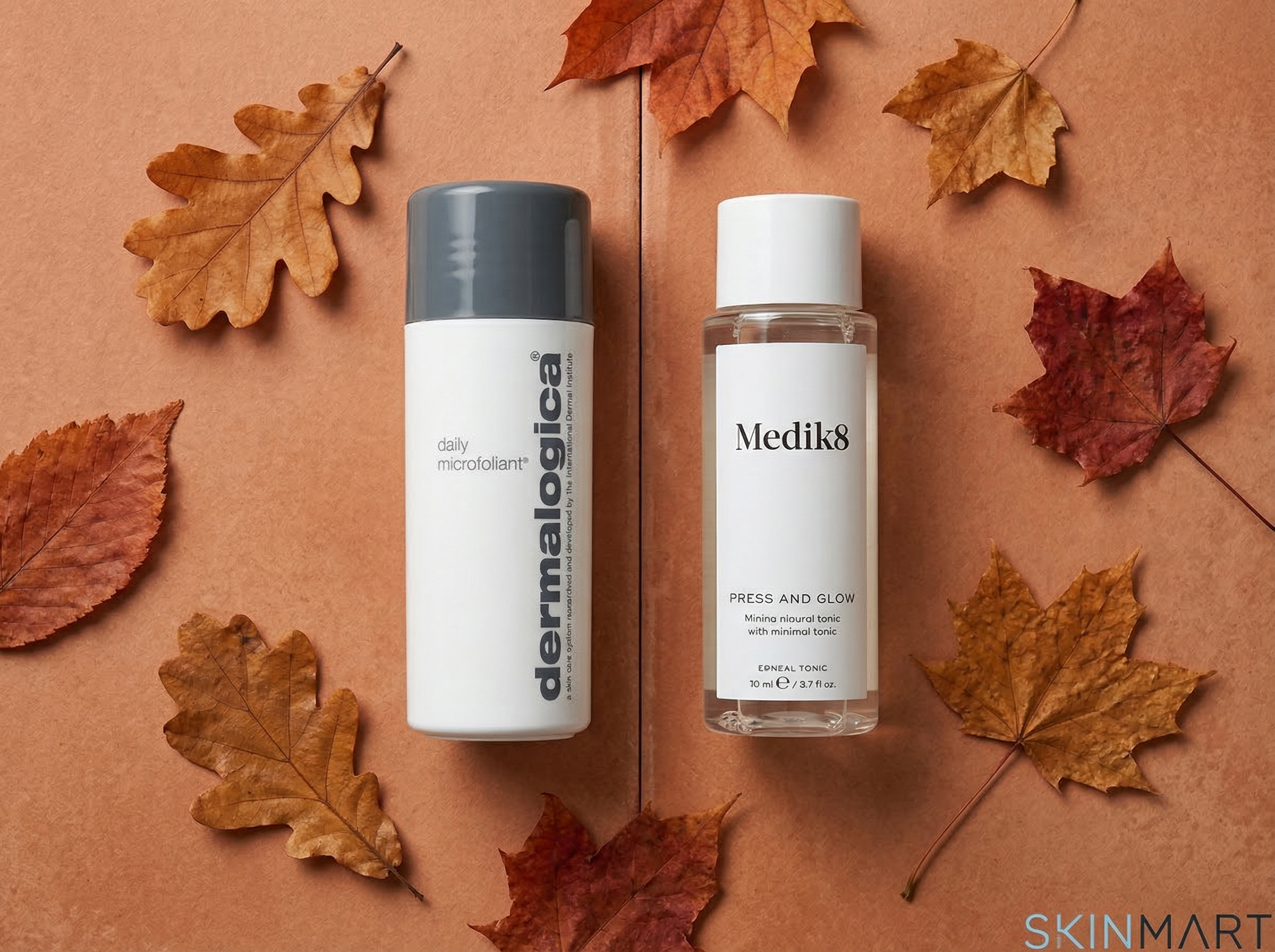
The Dermalogica Daily Microfoliant is a rice-based powder exfoliant that activates with water. It uses a mix of physical and enzymatic action to clear dead cells and surface build-up. It's well suited to skin that's oily, congested, or prone to uneven texture. Because it's rice-based and activated by you, it's gentler than most daily exfoliants. Use it two to three times a week in autumn, not daily, to avoid over-exfoliating a barrier that's already adjusting to the season.
If your skin is more on the sensitive or dehydrated side, the Medik8 Press and Glow is worth considering instead. It uses gluconolactone, a polyhydroxy acid (PHA) that exfoliates more gently than AHAs like glycolic acid. PHAs have a larger molecule size, so they work at the surface rather than reaching deeply. This makes Press and Glow a smart choice when your skin needs clearing but can't tolerate anything too active.
It also contains glycerin, which draws moisture into the skin as it works.

Featured: Dermalogica Daily Microfoliant
Discover how Dermalogica Daily Microfoliant can help with your skincare routine.
Shop NowStep Two: Repair and Fortify Your Moisture Barrier
Once the surface is clear, your skin can actually absorb what you give it. This is where barrier repair becomes the focus. Dehydrated skin needs two things: humectants to draw water in, and barrier-supporting ingredients to seal it there.
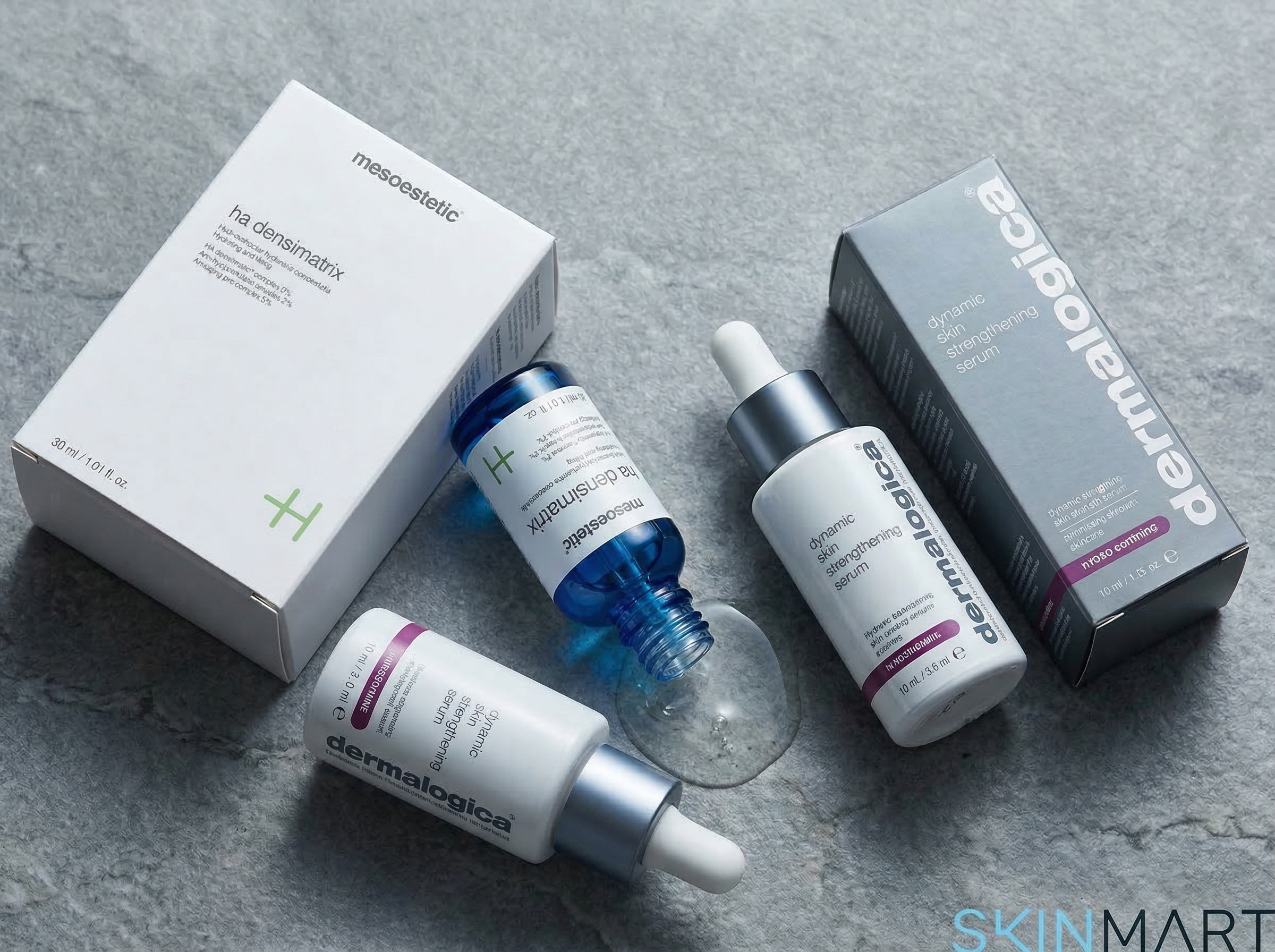
Hyaluronic acid is the most well-known humectant. It holds up to 1000 times its weight in water, making it highly effective for plumping and hydrating skin. The Mesoestetic ha densimatrix uses three forms of hyaluronic acid at different molecular weights. Larger molecules sit on the surface and reduce water loss.
Smaller molecules reach deeper to hydrate from within. Using multiple forms together gives broader, longer-lasting hydration than a single-weight formula. This is a strong option for skin showing real dehydration signs like fine lines that weren't there in summer, or a dull, flat complexion.
For skin that needs both hydration and structural support, the Dermalogica Dynamic Skin Strengthening Serum works on the barrier itself. It contains squalane, a lipid that closely mirrors your skin's natural oils, along with ingredients that support the skin's structural proteins. Think of it as reinforcing the mortar in that brick wall. It's a good fit if your skin is reacting more than usual, feeling fragile, or if you've noticed that products that used to work fine are now causing irritation. That's often a sign the barrier has weakened, not that the products have changed.
When your skin is in recovery mode, a weekly mask can speed things up. The Dermalogica MultiVitamin Power Recovery Masque delivers a concentrated hit of vitamins and peptides to stressed skin. Peptides are short chains of amino acids that signal your skin to behave more like younger, healthier skin. Used once a week after cleansing, this mask supports the repair process between your daily steps. Masques are often underused in cooler months, but this is exactly when they earn their place in a routine.
What Else Is Affecting Your Skin This Autumn?
Products only go so far. Two lifestyle factors have a real impact on how your skin handles seasonal change, and both are worth paying attention to.
Gut health is more connected to skin than most people expect. The gut and skin share an immune relationship sometimes called the gut-skin axis. When gut bacteria are out of balance, swelling can show up on the skin as breakouts, redness, or sensitivity.
Autumn is a good time to check in on your diet. Fermented foods, fibre-rich vegetables, and reducing processed sugars all support a healthier gut environment. Your diet can directly affect breakouts, and the research on this connection keeps growing.
Your environment indoors matters just as much as outdoors. Central heating drops indoor humidity greatly. Low humidity air pulls moisture from your skin all day and night. Simple steps like using a humidifier in your bedroom, drinking enough water, and avoiding very hot showers all reduce the stress on your barrier. Hot water strips the skin's natural lipid layer faster than most people realise. Lukewarm water and a gentle cleanser are a small change that makes a real difference through autumn and into winter.

Featured: Dermalogica MultiVitamin Power Recovery Masque
Discover how Dermalogica MultiVitamin Power Recovery Masque can help with your skincare routine.
Shop NowAutumn asks your skin to do two things at once: shed summer's build-up and adapt to a new environment. The mistake most people make is jumping straight to heavy moisturisers without clearing the congestion first, or exfoliating without considering how stressed the barrier already is. Getting the sequence right, clear first, then fortify, is what makes the difference between a routine that works and one that just adds to the confusion.
If you're still not sure which step your skin needs most right now, that's completely normal. Skin is individual, and what works for someone else may not be right for yours. Start your free Skinmart Skin Consulation and get honest, personalised guidance built around your skin, not around what someone wants to sell you.
Step-by-Step Guide
-
1
Step One: Clear the Summer Congestion Gently
The goal in the first week or two of your autumn routine is to clear the surface without stripping it. Harsh scrubs or strong acid exfoliants will damage a barrier that's already under seasonal stress. What you want is something that works efficiently but gently.
Two products stand out here, and the right one depends on your skin type.
The Dermalogica Daily Microfoliant is a rice-based powder exfoliant that activates with water. It uses a mix of physical and enzymatic action to clear dead cells and surface build-up. It's well suited to skin that's oily, congested, or prone to uneven texture. Because it's rice-based and activated by you, it's gentler than most daily exfoliants. Use it two to three times a week in autumn, not daily, to avoid over-exfoliating a barrier that's already adjusting to the season.
If your skin is more on the sensitive or dehydrated side, the Medik8 Press and Glow is worth considering instead. It uses gluconolactone, a polyhydroxy acid (PHA) that exfoliates more gently than AHAs like glycolic acid. PHAs have a larger molecule size, so they work at the surface rather than reaching deeply. This makes Press and Glow a smart choice when your skin needs clearing but can't tolerate anything too active.
It also contains glycerin, which draws moisture into the skin as it works.
-
2
Step Two: Repair and Fortify Your Moisture Barrier
Once the surface is clear, your skin can actually absorb what you give it. This is where barrier repair becomes the focus. Dehydrated skin needs two things: humectants to draw water in, and barrier-supporting ingredients to seal it there.
Hyaluronic acid is the most well-known humectant. It holds up to 1000 times its weight in water, making it highly effective for plumping and hydrating skin. The Mesoestetic ha densimatrix uses three forms of hyaluronic acid at different molecular weights. Larger molecules sit on the surface and reduce water loss.
Smaller molecules reach deeper to hydrate from within. Using multiple forms together gives broader, longer-lasting hydration than a single-weight formula. This is a strong option for skin showing real dehydration signs like fine lines that weren't there in summer, or a dull, flat complexion.
For skin that needs both hydration and structural support, the Dermalogica Dynamic Skin Strengthening Serum works on the barrier itself. It contains squalane, a lipid that closely mirrors your skin's natural oils, along with ingredients that support the skin's structural proteins. Think of it as reinforcing the mortar in that brick wall. It's a good fit if your skin is reacting more than usual, feeling fragile, or if you've noticed that products that used to work fine are now causing irritation. That's often a sign the barrier has weakened, not that the products have changed.
When your skin is in recovery mode, a weekly mask can speed things up. The Dermalogica MultiVitamin Power Recovery Masque delivers a concentrated hit of vitamins and peptides to stressed skin. Peptides are short chains of amino acids that signal your skin to behave more like younger, healthier skin. Used once a week after cleansing, this mask supports the repair process between your daily steps. Masques are often underused in cooler months, but this is exactly when they earn their place in a routine.


