
Most people shopping for eye cream are looking for something to smooth wrinkles. But if your undereyes look hollow, shadowed, or sunken, wrinkles are not your real problem. The issue is deeper than that.
Undereye hollowing is a structural concern. The skin beneath your eyes has lost density, and no surface treatment can rebuild what's been lost at a deeper level. This post explains exactly what's happening, why it matters, and what actually works. This is the central piece in our undereye hub. Every other post in this series links back here because this is where the reframe starts.
What Is Undereye Hollowing?
Undereye hollowing is what happens when the skin beneath your eyes loses its internal structure. The area starts to look sunken, shadowed, or concave. You might notice a dark, curved shadow that runs from the inner corner of your eye outward. It looks like a hollow bowl sitting just under your lower lash line.
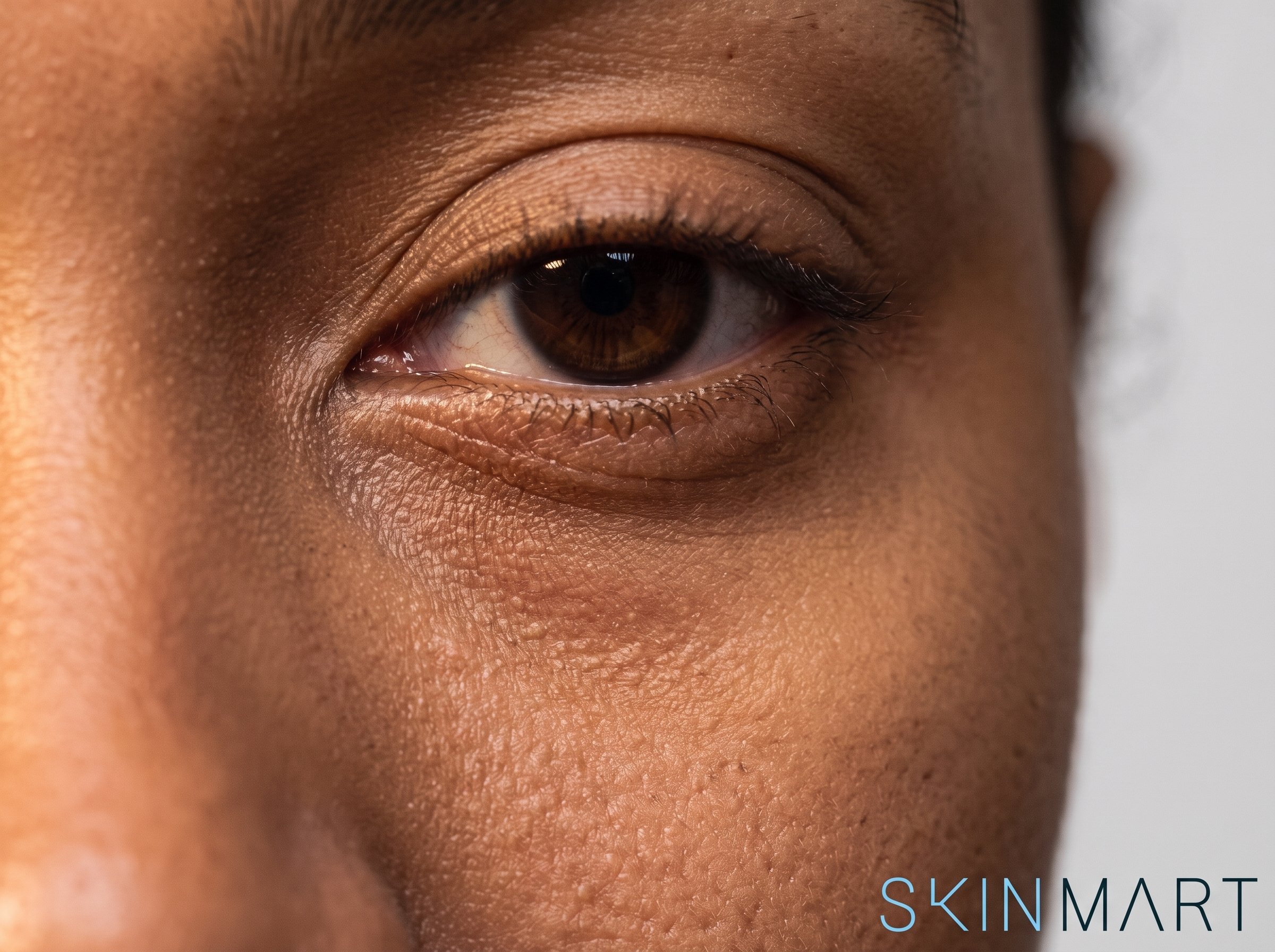
This is different from wrinkles. Wrinkles are surface creases caused by repeated muscle movement and collagen loss at the skin's outer layers. Hollowing is a deeper problem. It happens when the dermis (the middle layer of your skin, below the surface) loses density and volume. The skin collapses inward rather than creasing outward.
The shadow you see is caused by light and structure, not pigment. When the undereye area is full and dense, light reflects evenly. When it's hollow, light hits the edge of the depression and casts a shadow.
That's why brightening creams rarely help. You're not treating a dark patch. You're dealing with a structural shadow.
Why Does Hollowing Happen?
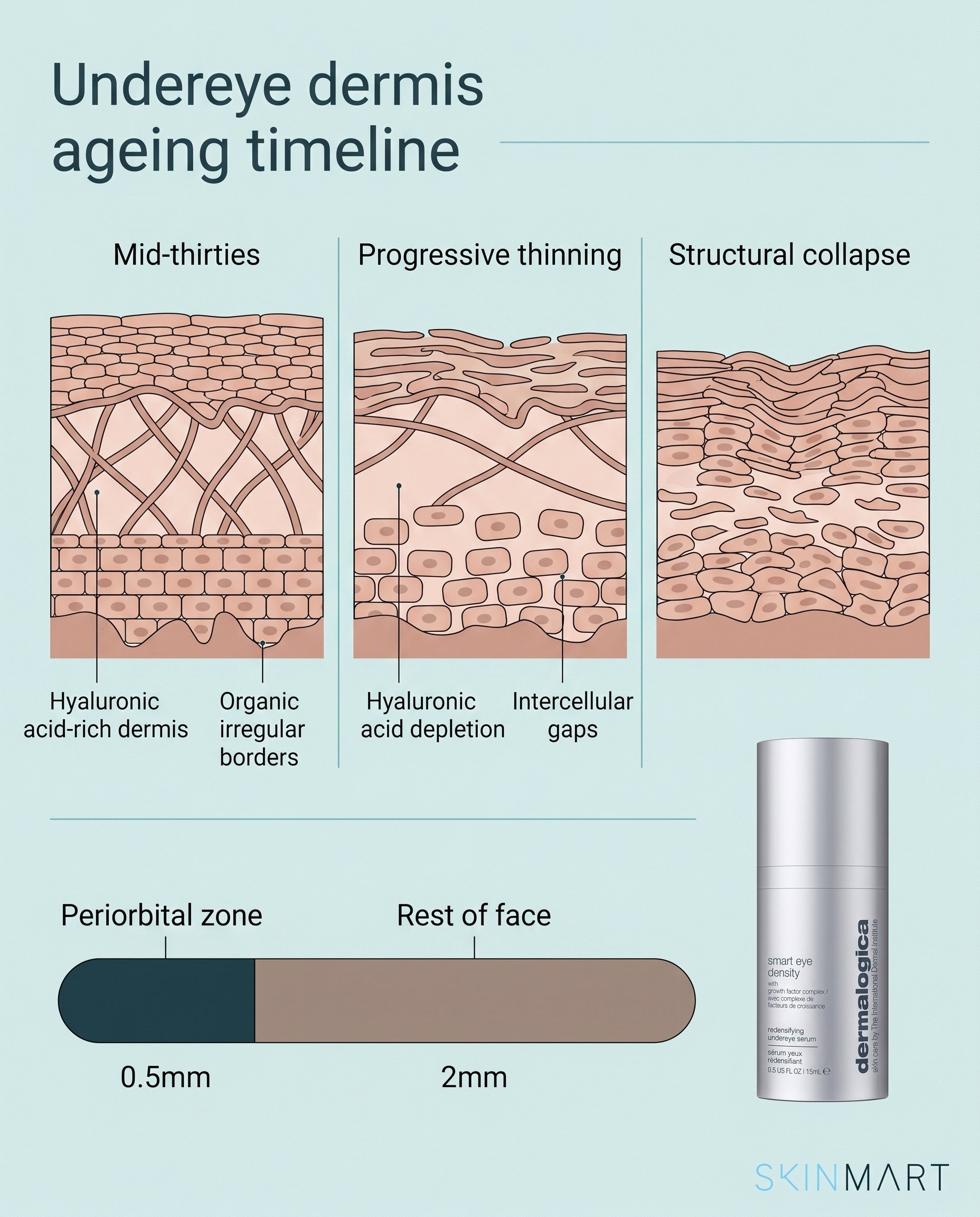
The undereye area is one of the first places to show structural ageing. The skin here is the thinnest on your face, about 0.5mm compared to 2mm elsewhere. It has fewer oil glands, less fat, and a smaller collagen network to draw on. So when the natural ageing process begins to reduce collagen and hyaluronic acid (a moisture-binding molecule your skin makes naturally), this area feels it first.
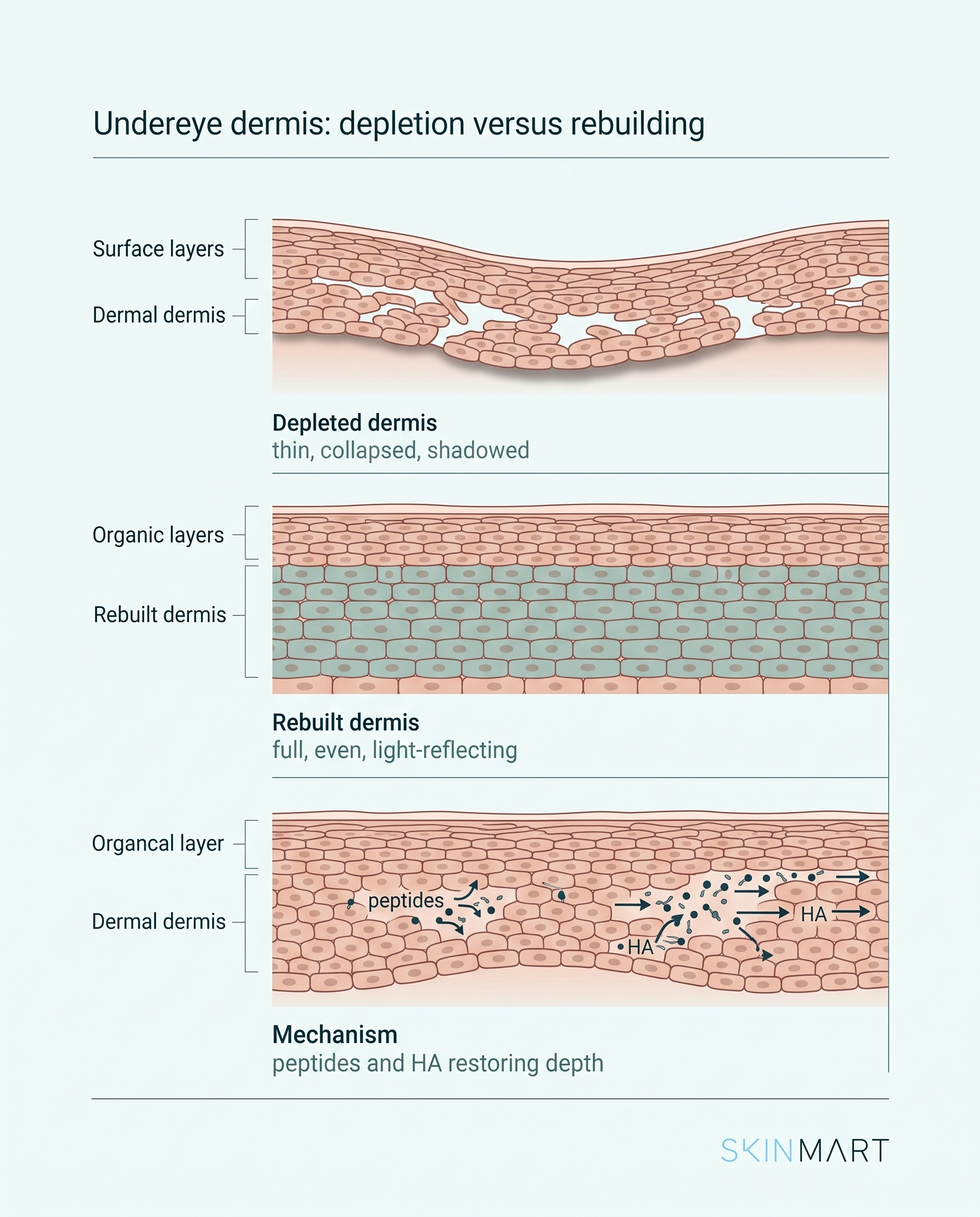
From your mid-thirties onward, collagen production slows. Your skin makes less of it each year. The collagen fibres that remain also become thinner and less organised. This reduces the skin's internal scaffolding. Without that structure, the undereye skin starts to sink.
Hyaluronic acid loss compounds the problem. Hyaluronic acid holds water inside the skin. When levels drop, the dermis becomes less plump and less resilient. The undereye area deflates. Combined with collagen loss, this creates the hollow, shadowed look that no amount of concealer fully covers.
Sun exposure, poor sleep, dehydration, and lifestyle factors all speed this process up. But the root cause is structural, not surface-level. That's the key insight this whole series is built around.
Key Takeaways
- Undereye hollowing happens when the skin beneath your eyes loses density and structural support over time.
- This creates a sunken, shadowed look that no wrinkle cream can fix.
- The cause is collagen and hyaluronic acid depletion in the dermal layer, not surface lines.
- Addressing it means rebuilding density from within the skin, not treating the surface.
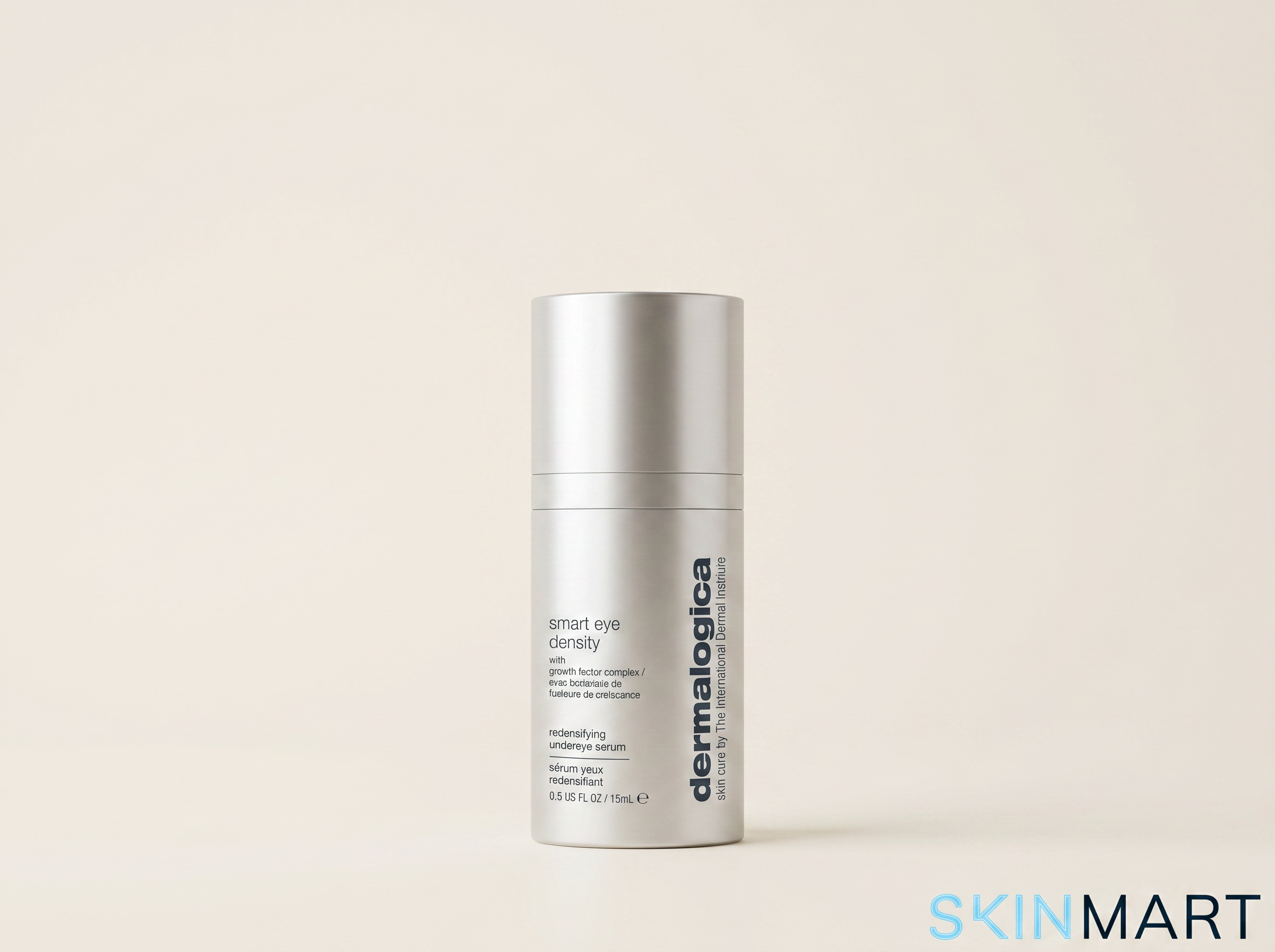
- The Dermalogica Smart Eye Density Booster is formulated to target this structural loss, improving density and plumping the undereye area from t...
Why Most Eye Products Miss the Mark
Walk into any pharmacy or beauty retailer and you'll find dozens of eye creams. Most of them are formulated to target the surface. They moisturise, they brighten, they temporarily plump with humectants (ingredients that draw water to the skin's surface). For fine lines caused by dryness, this can help.
But for hollowing, surface hydration is not enough. You need ingredients that work at the dermal level, rebuilding density from within the skin rather than sitting on top of it. Most eye creams don't do this. They're not formulated to penetrate deeply enough, and they don't contain the right actives to stimulate structural rebuilding.
This is why so many people feel frustrated with eye products. They're using the right category, just the wrong approach. If your concern is hollowing, you need something that targets the dermis, not just the surface. We explore this in more depth in our post on The Delivery Lie: Why Your Eye Products Aren't Working.
What Does Rebuilding Density Actually Mean?
Density, in skin terms, refers to the thickness and structural integrity of the dermis. A dense dermis has a strong collagen network, healthy levels of hyaluronic acid, and good cellular activity. It holds its shape. It reflects light evenly. It looks full and supported.
When we talk about rebuilding density, we mean stimulating the skin to produce more collagen and retain more moisture at a dermal level. This is different from adding volume from outside the skin, which is what dermal fillers do. Density rebuilding works from within. The skin becomes thicker and more structured over time through consistent use of the right actives.
Clinical studies on the Dermalogica Smart Eye Density Booster show a 129% increase in skin density with consistent use. That number comes from measuring actual dermal thickness, not surface hydration. This is a meaningful structural change, not a temporary plumping effect.
It's worth being clear about what this product does and doesn't do. It improves the appearance of fine lines by plumping and rebuilding density. It is not a retinol replacement or a deep wrinkle eraser. It won't restore volume lost from fat pad atrophy, which is a different concern requiring clinical treatment. What it does is address the structural collapse that causes hollowing, and it does that well.
The Smart Eye Density Booster: What Makes It Different
The Dermalogica Smart Eye Density Booster is formulated specifically for the undereye area. It targets structural density loss, not surface symptoms. The formula works at the dermal level to stimulate collagen production and improve the skin's ability to retain moisture over time.
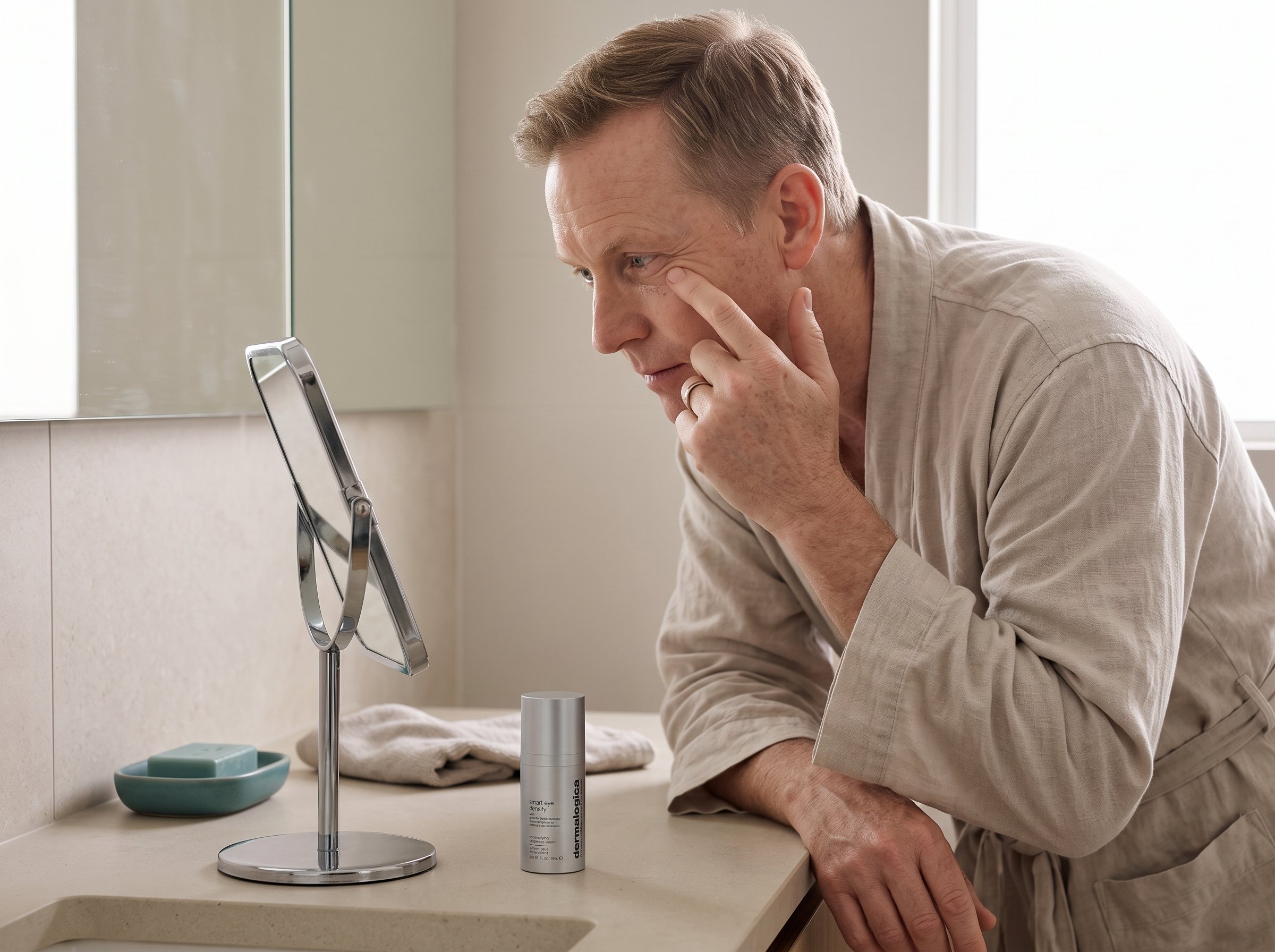
Key actives include peptides (short chains of amino acids that signal the skin to produce more collagen) and hyaluronic acid at multiple molecular weights. The smaller molecules penetrate deeper into the dermis. The larger ones sit closer to the surface and hold moisture there. Together, they address both the structural deficit and the surface dehydration that makes hollowing look worse.
The texture is lightweight and absorbs quickly. It layers well under eye cream or SPF. You apply it with your ring finger using gentle tapping motions, working from the inner corner outward, following the direction of lymphatic flow. This technique reduces puffiness and ensures even coverage without dragging the delicate skin.
Results build over time. Most people notice improved hydration and a softer look within the first few weeks. The structural improvement, the actual density increase, becomes more visible over 8 to 12 weeks of consistent use. Good skincare requires patience, and this is no different.
How Hollowing Connects to Your Broader Eye Concerns
Hollowing rarely exists on its own. It often shows up alongside fine lines, dark circles, and puffiness. These concerns look different but share the same root: structural and cellular change in the undereye skin over time.
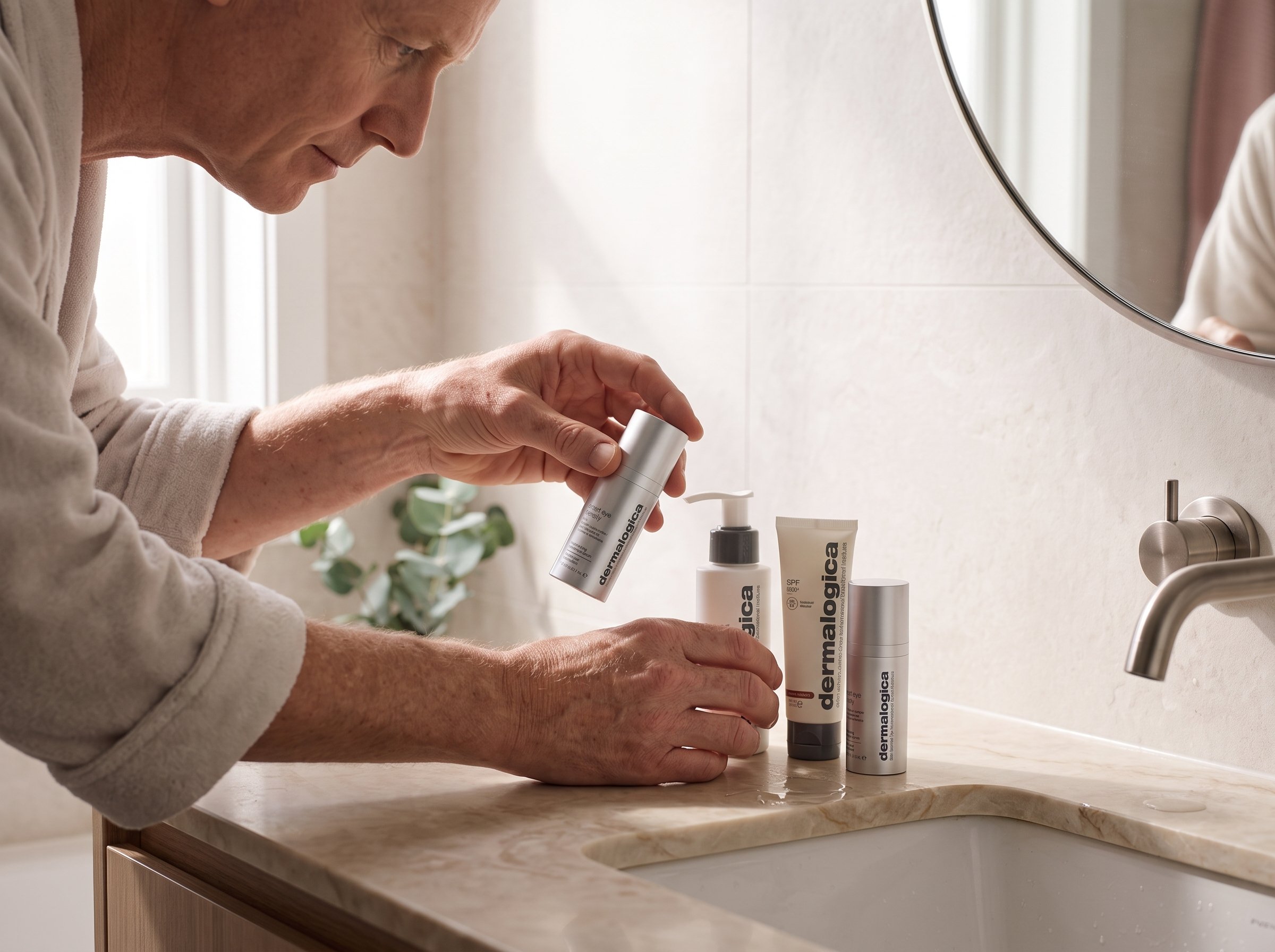
Fine lines in this area are partly caused by the same density loss that creates hollowing. When the dermis thins, the surface creases more easily. Rebuilding density from within also improves the appearance of these lines. We explore this in detail in our post on Fine Lines: Density, Light and Shadow.
Dark circles have three distinct causes, one of which is the shadowing created by hollowing. If your dark circles are structural rather than pigment-based, treating density is the right approach. Read more in Dark Circles: Three Causes, One Product.
If your skin is also dehydrated, the hollowing will look more pronounced. Dehydration reduces the skin's ability to plump from within, making structural loss more visible. Our post on The Australian Double-Dry explains why dehydration and dryness are different problems and how to address both.
Who Should Use the Smart Eye Density Booster?
This product is best suited to people who are noticing hollowing, shadowing, or a sunken appearance beneath their eyes. It works well for those in their mid-thirties and beyond, when structural density loss becomes more visible. It's also relevant for anyone whose fine lines are partly caused by thinning skin rather than surface dryness alone.
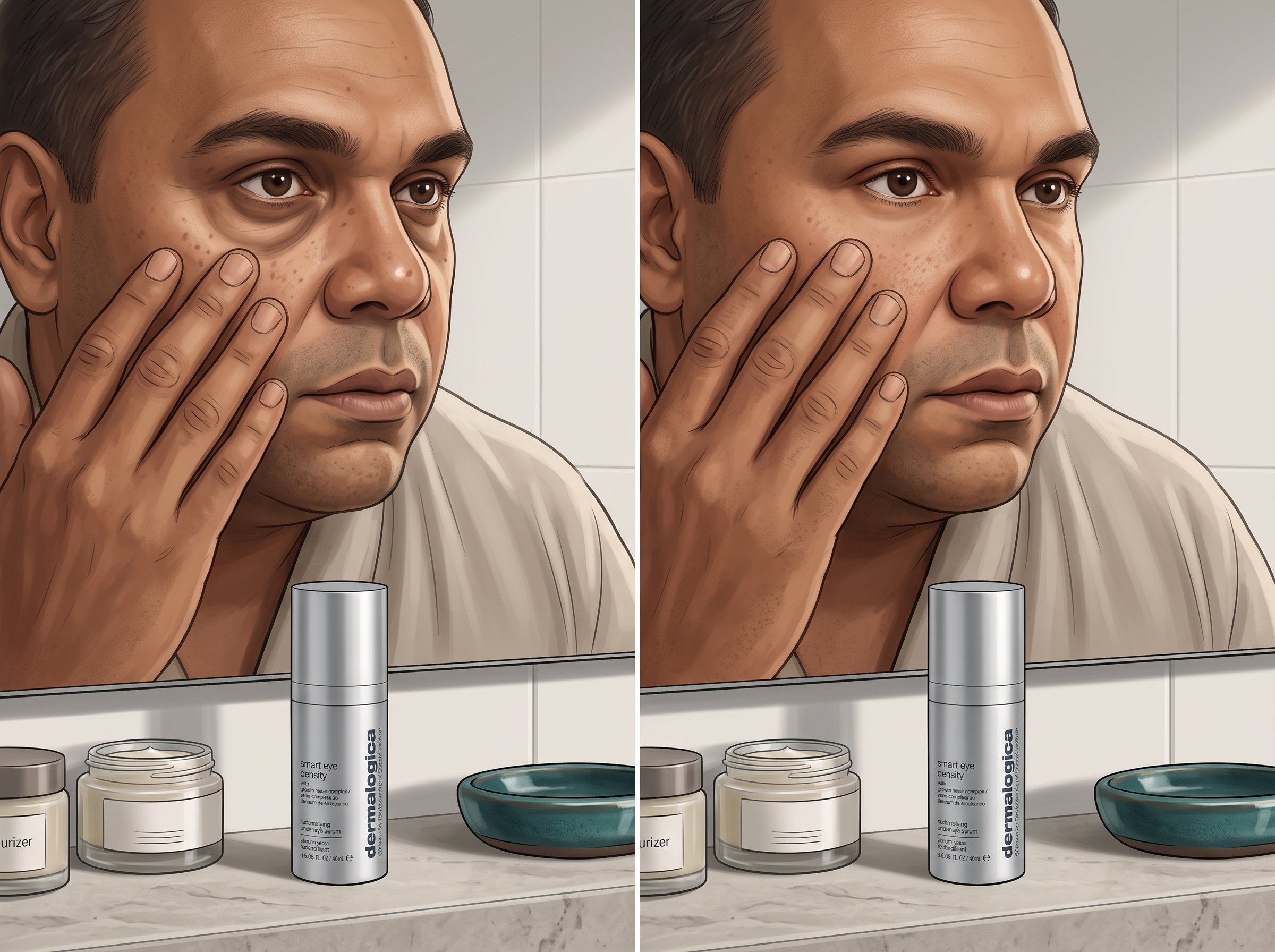
It is not the right product if you are pregnant or breastfeeding. In that case, please speak with your GP before starting any new active skincare. It is also not a substitute for clinical treatment if you have significant fat pad atrophy or deep structural volume loss. For those concerns, a consultation with a qualified cosmetic practitioner is the appropriate next step.
If you're unsure whether hollowing is your primary concern, start with our Honest Buying Guide: What to Expect (and What Not To). It will help you work out which angle is most relevant for your skin before you commit to anything.
Undereye hollowing is not a wrinkle problem. It is a structural one. The skin beneath your eyes has lost density, and the shadow you see is the result of that collapse, not surface pigment or simple dryness. Treating it means working at the level of the dermis, rebuilding collagen and hyaluronic acid from within, not just moisturising the surface.
The Dermalogica Smart Eye Density Booster is formulated to do exactly that. If you've been frustrated by eye products that don't seem to make a real difference, this reframe is the starting point. Shop now book a skin consultation, or explore the rest of our undereye hub to understand every layer of what's happening beneath your eyes.


