
You have spent real money on eye products. You have applied them carefully, every morning and night, for months. And your skin looks exactly the same. Before you blame the ingredients or your skin, there is something worth knowing: the problem is almost never the peptides. It is how they are being delivered.
This is what we call the delivery lie. It is the gap between what a product promises on the label and what actually reaches your skin. Understanding this gap changes everything about how you choose eye products. And for sensitive skin especially, it explains why so many well-reviewed serums cause irritation or simply do nothing at all.
What Does 'Delivery' Actually Mean in Skincare?
When a skincare product is applied to your skin, the active ingredients need to travel through your skin's outer barrier to reach their target. This process is called penetration, and it is far harder than most brands let on. Your skin is designed to keep things out. That is its job. A well-formulated product works with your skin's biology, not against it.
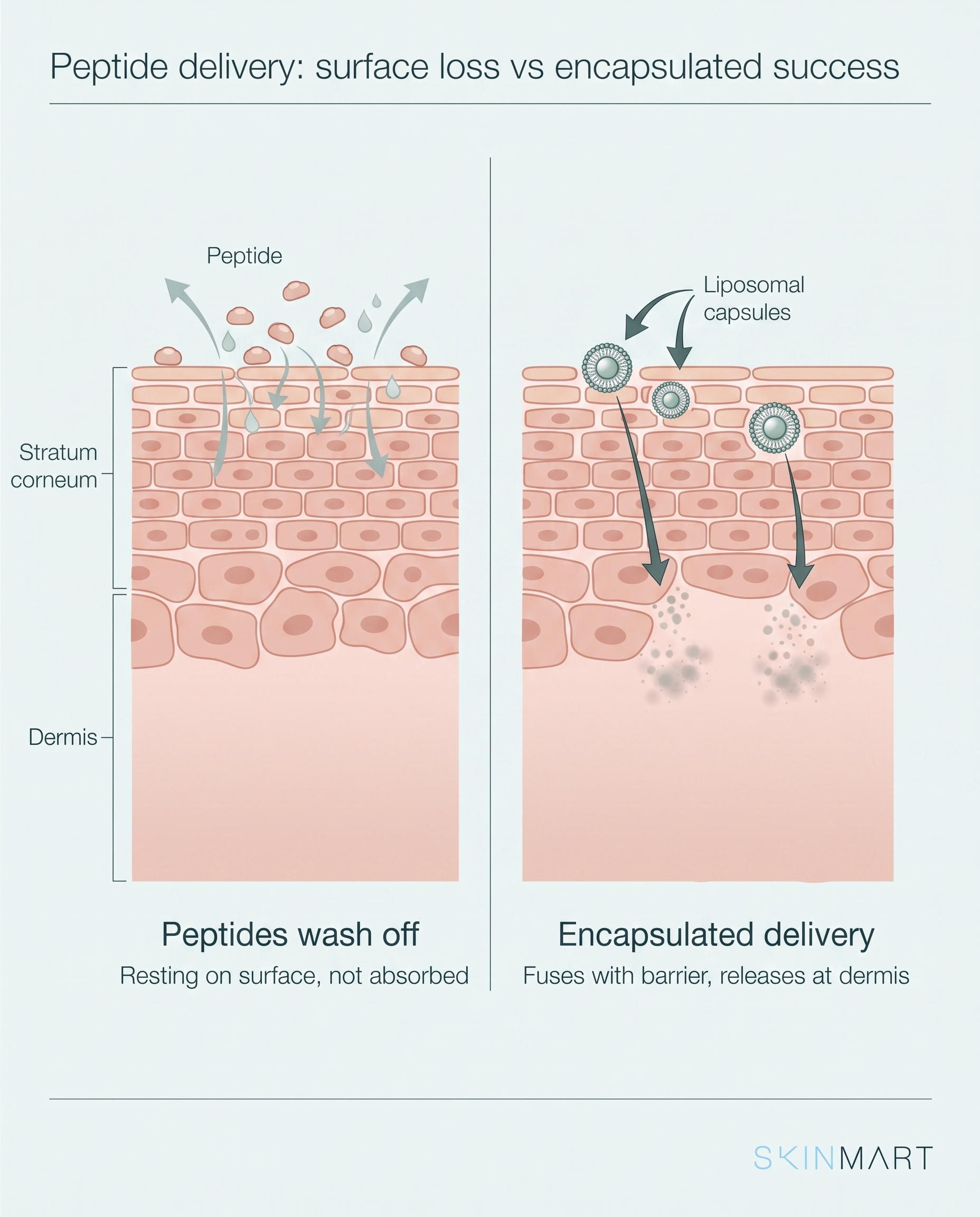
The stratum corneum is your skin's outermost layer. Think of it as a tightly packed wall of cells held together by lipids (natural fats). Most molecules are simply too large or too unstable to pass through it on their own. This is where delivery systems come in. A delivery system is the method a formula uses to carry active ingredients through this barrier and into the skin layers where they can actually do something.
Without a good delivery system, even the most expensive peptides in your eye serum may never get past the surface. They sit on top of your skin, feel nice, and then wash off. That is the delivery lie in action.
Why Is the Eye Area So Different From the Rest of Your Face?
The skin around your eyes is about ten times thinner than the skin on your cheeks. It has fewer oil glands, less structural support, and a weaker barrier function overall. This makes it both more vulnerable to irritation and harder to treat effectively. Many products formulated for the face are simply too harsh, too large in molecule size, or too poorly designed to work in this area.
For sensitive skin, this matters even more. A delivery system that pushes actives through skin too aggressively can cause stinging, redness, or puffiness around the eyes. But a system that is too gentle may not deliver anything at all. The goal is precision: getting the right ingredients to the right depth without disturbing the skin around them.
This is why eye-specific formulations exist as a category. It is not marketing. The eye area genuinely requires a different approach to delivery than the rest of your face.
Key Takeaways
- Most eye products fail not because of their ingredients, but because of how those ingredients are delivered.
- Peptides and actives need to reach the right skin layer to work.
- Many formulations sit on the surface and never penetrate.
- The skin around your eyes is thinner and more sensitive than the rest of your face, so it needs a gentler, smarter delivery system.
- Products built with encapsulation technology or lipid-compatible carriers are far more likely to deliver real results.
The Problem With Most Peptide Eye Products
Peptides are short chains of amino acids that signal your skin to behave in certain ways. Some tell it to produce more collagen. Others help firm and plump the skin.

They are among the most studied and respected actives in modern skincare. But here is the catch: peptides are large, water-loving molecules. Getting them through the lipid-rich stratum corneum is genuinely difficult.
Most standard eye creams and serums use a basic water-and-emulsifier base. This works fine for hydration. But it does not help peptides cross the skin barrier. The peptides stay on the surface, feel moisturising, and then disappear. You see no structural change because the active never reached the layer where structural change happens.
This is not a flaw in peptides. It is a flaw in how they are formulated. A peptide delivered in a liposomal system (tiny fat-based capsules that mimic your skin's own lipid structure) behaves very differently.
It fuses with the barrier, carries its payload inside, and releases the active where it is needed. Same ingredient. Completely different result.
How Sensitive Skin Makes This Even More Complex
If your skin is reactive or sensitive, you have probably tried an eye product that caused irritation. You may have assumed you were reacting to the active ingredient. In many cases, you were actually reacting to the delivery system itself. Penetration enhancers, alcohol carriers, and certain emulsifiers are common irritants used to help ingredients absorb faster. They work, but they are not kind to sensitive skin.
This creates a frustrating situation. Sensitive skin needs gentler delivery. But gentler delivery often means less penetration, which means fewer results. The solution is not to choose between efficacy and tolerance. It is to find formulations that use smarter delivery rather than more aggressive delivery.
Encapsulated actives, ceramide-based carriers, and time-release systems are all examples of delivery technology that improves penetration without stressing the barrier. For sensitive skin around the eyes, this is not a nice-to-have. It is the difference between a product that works and one that does nothing, or worse, causes a reaction.

Featured: Mesoestetic Essential After Care Kit
The stabilised vitamin C complex in Skin Balance serum — combining ascorbic acid, ascorbyl palmitate, and ferulic acid — delivers antioxidant prote...
Shop NowWhat Good Eye Product Delivery Actually Looks Like
A well-delivered eye product has a few things in common. First, it uses a carrier system that is compatible with your skin's natural lipids. This means the formula can merge with the barrier rather than trying to force its way through.
Second, it protects unstable actives from breaking down before they reach their target. Many peptides and antioxidants degrade quickly when exposed to air or light. Encapsulation protects them during that journey.
Third, a smart delivery system controls the release of actives over time. Rather than flooding the skin with a concentrated hit of ingredient all at once, time-release technology delivers a steady, manageable dose. This is especially important for sensitive skin. Less irritation, more consistent results.
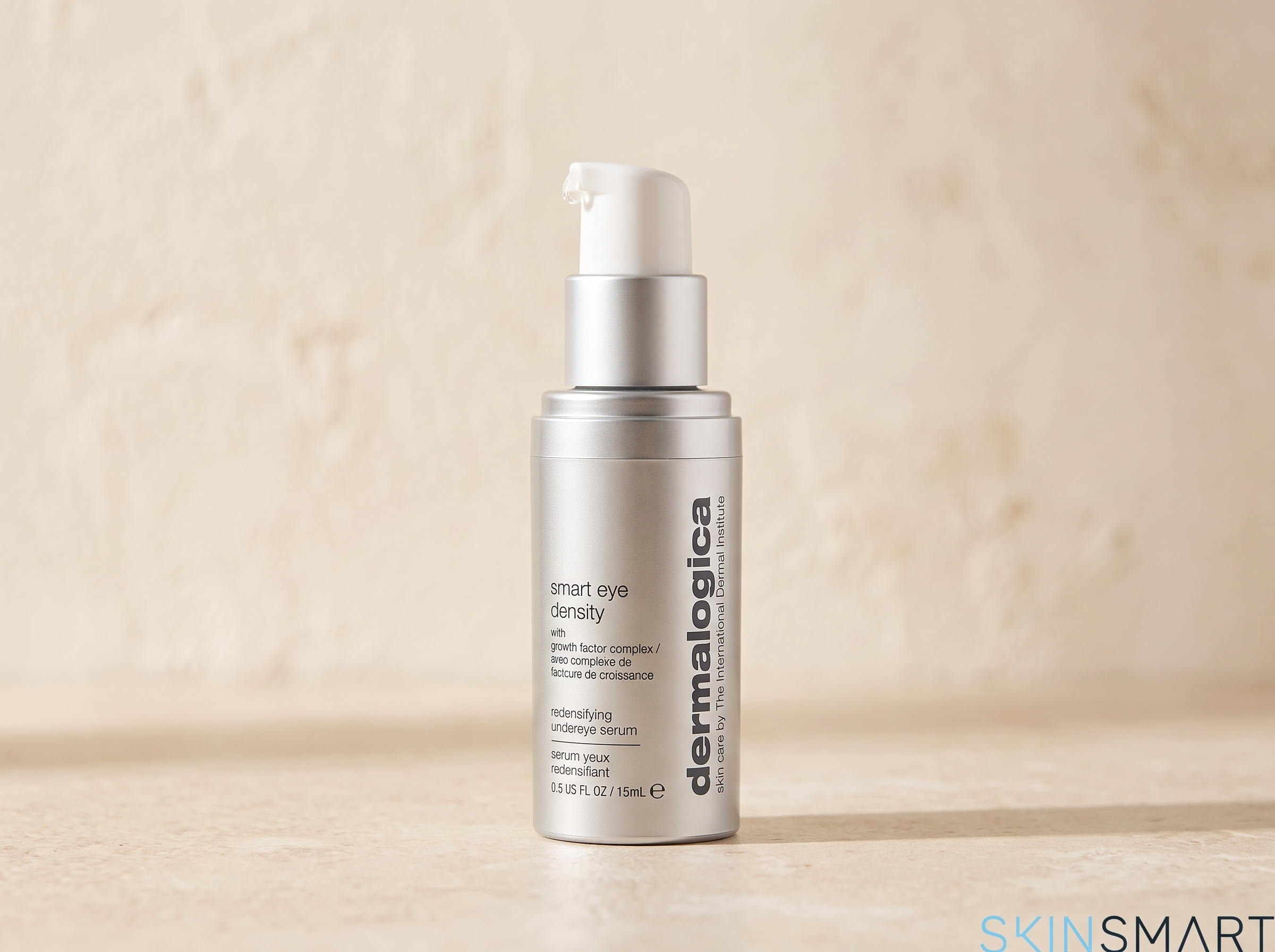
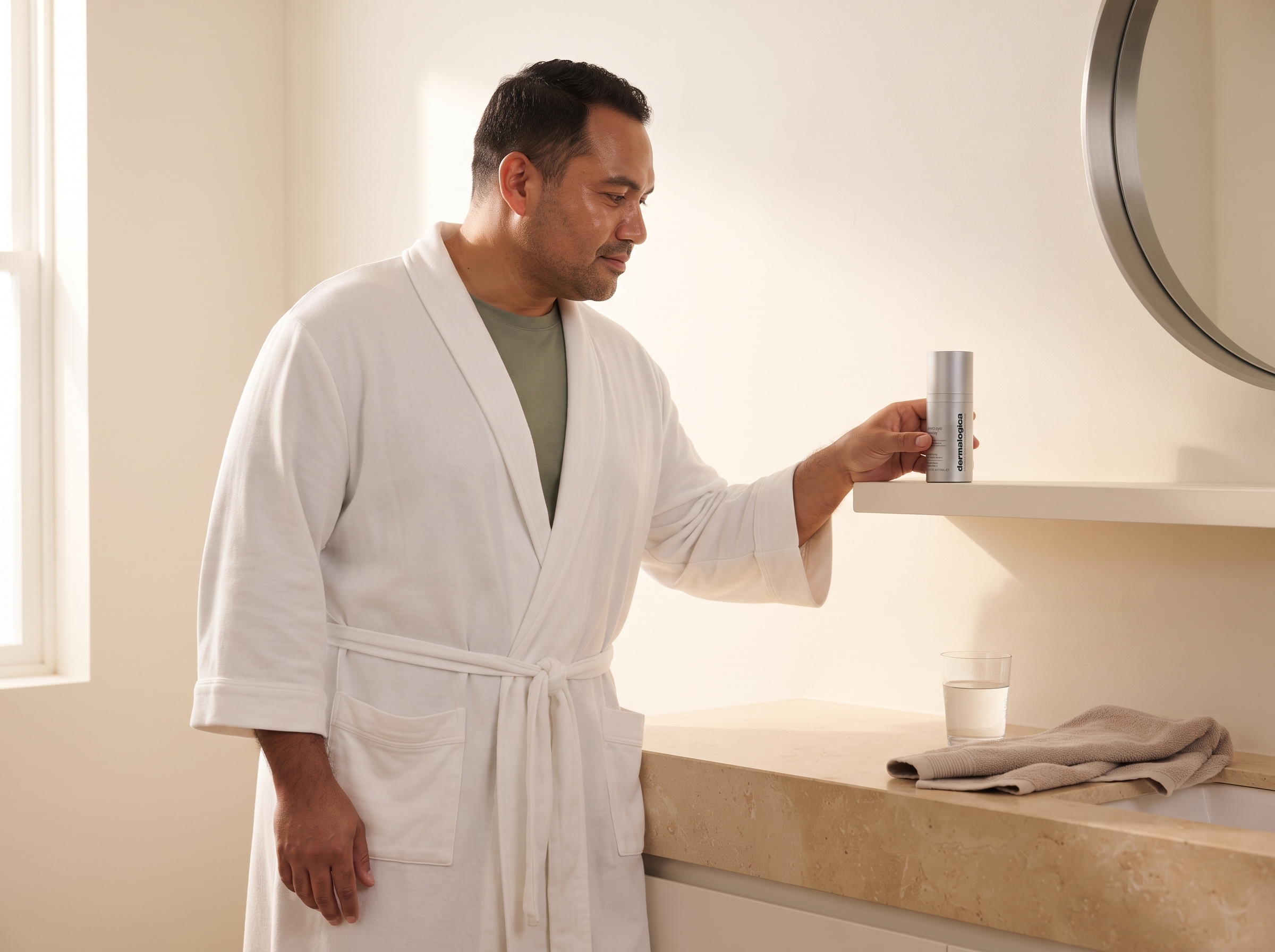
The Dermalogica Smart Eye Density Booster is built around exactly this kind of delivery intelligence. It uses a multi-peptide system designed to reach the dermal layer where density and firmness are actually built. The formula is lightweight enough for the delicate eye area and gentle enough for sensitive skin, without compromising on how far the actives travel.
The 'Hollow Not Wrinkled' Reframe: Why Delivery Matters to Structure
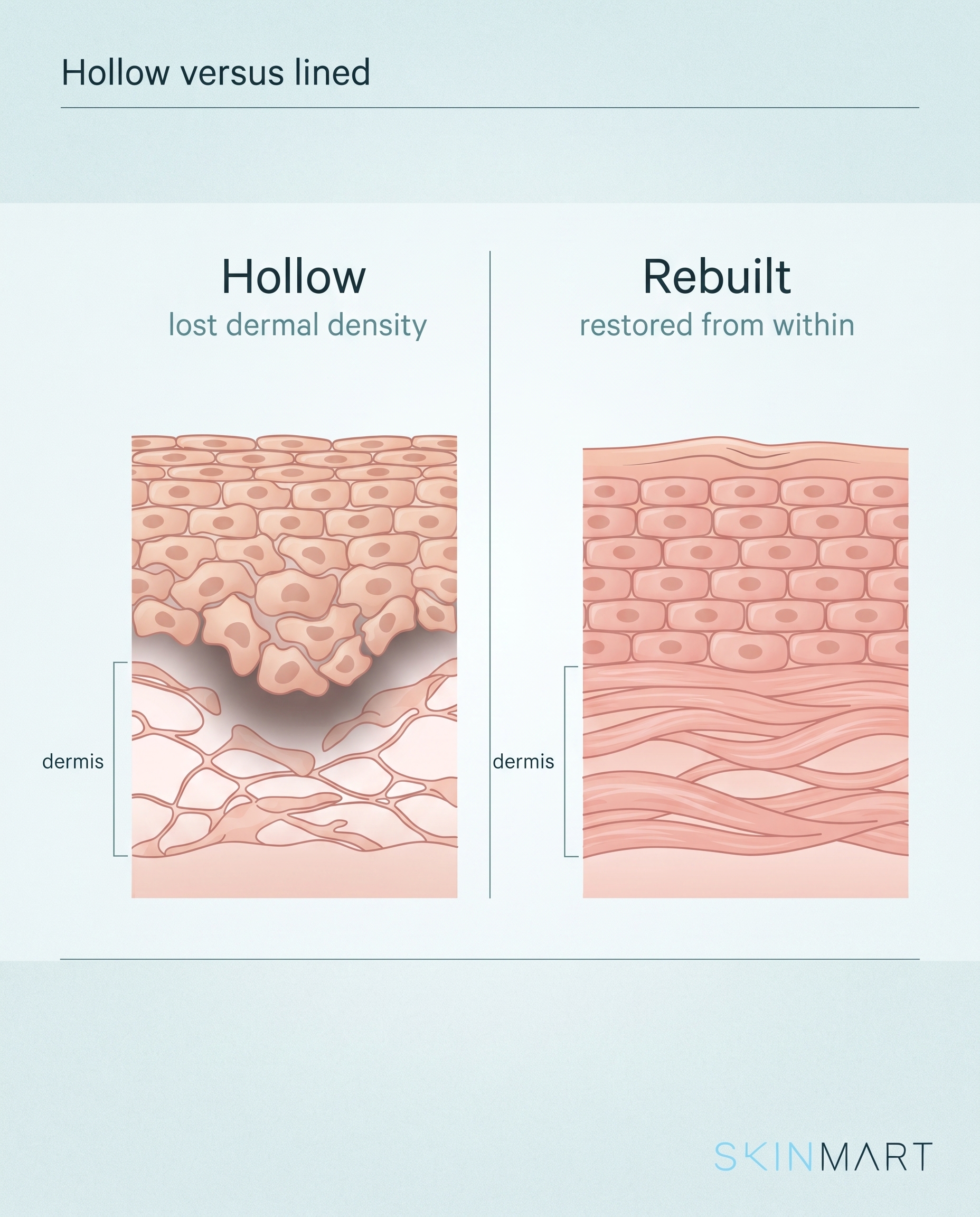
Here is something most eye product marketing gets wrong. The lines and shadows under your eyes are often not caused by surface wrinkles. They are caused by a loss of density in the skin itself. As the skin thins and loses structural proteins like collagen and elastin, it becomes hollow. Light falls differently on hollow skin, creating shadows that read as dark circles and deep lines.

Treating the surface of hollow skin with a basic moisturiser is like painting over a dent. You might smooth things slightly, but the structure underneath has not changed. To genuinely improve the appearance of the under-eye area, you need actives that reach the dermal layer where structural support is built and maintained.
This is why delivery is not a technical detail. It is the whole point. A product that cannot reach the dermis cannot address the structural loss that causes hollowing.
The Smart Eye Density Booster is not positioned as a wrinkle eraser or a retinol replacement. It is designed to rebuild density from within, using a delivery system that actually gets the actives there. The surface improvement follows the structural one.
How to Know If Your Current Eye Product Is Delivering
There are a few signs that a product is not delivering well. If you have been using an eye serum consistently for eight weeks or more with no visible change, delivery may be the issue. If the product pills or leaves a film on the skin, it is likely sitting on the surface rather than absorbing. If you experience immediate stinging or redness, the delivery system may be too aggressive for your barrier.
Signs of good delivery are more gradual. You will notice improved texture and firmness over four to six weeks. The skin will feel more resilient, not just temporarily plump. Puffiness may reduce as circulation and drainage improve. These changes are slow because they reflect real structural shifts, not surface hydration.
If you are not sure whether your current routine is working, that is worth paying attention to. Our Skin Consultation assessment looks at your skin, your current products, and your concerns together. It helps identify whether you have a delivery mismatch, a routine gap, or simply need more time. Sometimes the answer is not a new product. We will tell you that too.

Featured: Vida Glow Natural Marine Collagen Blueberry Sachets
Hydrolysed marine collagen peptides are absorbed through the gut and detected in the bloodstream, where they stimulate fibroblasts to increase coll...
Shop NowIf your eye products have not been working, the most likely reason is not the ingredients. It is the delivery. Peptides, antioxidants, and structural actives are only as good as the system that carries them into your skin. For sensitive skin especially, the delivery system is the product. Getting this right changes what is possible for the under-eye area.
The Dermalogica Smart Eye Density Booster was built with this understanding at its core. It is not a surface fix or a temporary plump. It is a delivery-first formulation designed to reach the layer where density is actually built.
Not sure if it is right for your skin? Book your skin consultation and we will tell you honestly.


