You apply a hydrating serum. Your skin feels plump for a few hours. Then the tightness comes back.
Sound familiar? If you've been chasing lasting hydration without success, the issue probably isn't the amount of moisture you're applying. It's whether your skin can actually move that moisture where it needs to go.
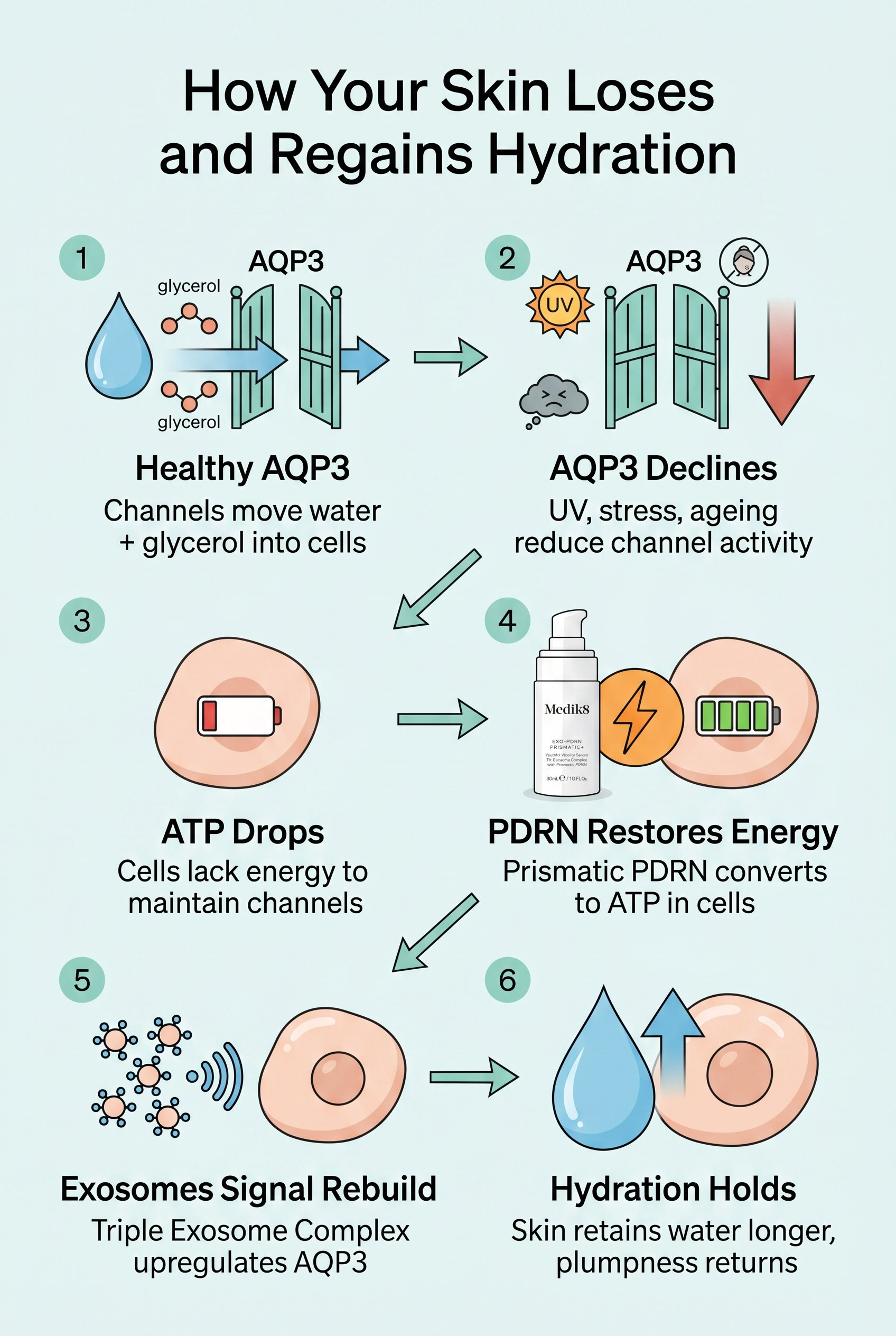
Your skin has a built-in water-transport system. Tiny channels called aquaporins (say: ah-kwah-POR-ins) act like microscopic pipes, moving water in and out of your skin cells. When these channels work well, your skin stays balanced and plump.
When they don't, no amount of hyaluronic acid or moisturiser fully fixes the problem. Exo-PDRN Prismatic+ is built around this exact mechanism. Here's what that means for your skin.
What Are Aquaporins and Why Does Aquaporin-3 Matter?
Aquaporins are proteins that sit in the wall of your skin cells. They act as selective gates, controlling how water flows in and out. Your skin contains several types, but aquaporin-3 (AQP3) is the most important for hydration.
It doesn't just move water. It also transports glycerol, a key building block of your skin's natural moisturising factors (NMFs). NMFs are the compounds your skin makes to hold onto water from the inside.
When AQP3 levels drop, two things happen at once. Your cells lose water faster. And your skin produces fewer NMFs, so it becomes less able to attract water back.
This is why dehydrated skin feels different from dry skin. It's not about oil. It's about your skin's internal plumbing losing efficiency.
Research shows that UV exposure, pollution, stress, and ageing all reduce AQP3 expression. That means the channels become fewer and less active over time. Surface moisturisers can temporarily fill the gap, but they don't restore the system itself.
Key Takeaways
- Exo-PDRN Prismatic+ restores skin hydration by targeting aquaporin-3, the water channel that moves moisture through your skin cells.
- Its Prismatic PDRN complex restores cellular energy (ATP), which powers aquaporin-3 activity.
- Its Triple Exosome Complex then signals cells to produce more of these channels.
- Together, they rebuild your skin's ability to transport and hold water, rather than just adding surface moisture that fades within hours.
Why Most Hydration Products Don't Fix the Root Problem
Standard hydrating products work by attracting water to the skin's surface or slowing water loss through the outer layer. Hyaluronic acid pulls moisture from the air. Occlusives create a seal. These approaches have real value, but they work around the problem rather than solving it. If your aquaporin channels are underperforming, water still escapes from deeper layers faster than surface products can replace it.

Think of it like a leaking pipe. You can keep mopping the floor, or you can fix the pipe. Most hydration products mop the floor.
That's not a flaw in the products. It's a gap in what they were designed to do. As we explain in our article on how serums work, the right active ingredients need to target the right layer at the right level to create real change.
What's needed is something that works at the cellular level. Something that restores the energy your skin needs to run its water-transport system properly. That's where the mechanism behind Exo-PDRN Prismatic+ becomes relevant.
How Exo-PDRN Prismatic+ Targets Your Water-Transport System
Exo-PDRN Prismatic+ uses two key technologies that work together: Prismatic PDRN and a Triple Exosome Complex. Each one plays a distinct role in restoring aquaporin-3 function.

Prismatic PDRN stands for Polydeoxyribonucleotide. PDRN is a chain of nucleotides, the same building blocks found in your DNA. When applied to skin, PDRN is taken up by cells and converted into adenosine triphosphate, or ATP. ATP is your cell's energy currency.
Without enough ATP, cells can't carry out their basic jobs, including producing and maintaining aquaporin channels. This is the "energy, not just signals" angle that makes PDRN different from most peptides. It doesn't just send a signal. It provides the fuel your cells need to act on it.
The Triple Exosome Complex works alongside PDRN by delivering biological signals directly to skin cells. Exosomes (say: EK-so-sohmz) are tiny messenger particles released by cells. They carry proteins and genetic material that tell receiving cells what to do.
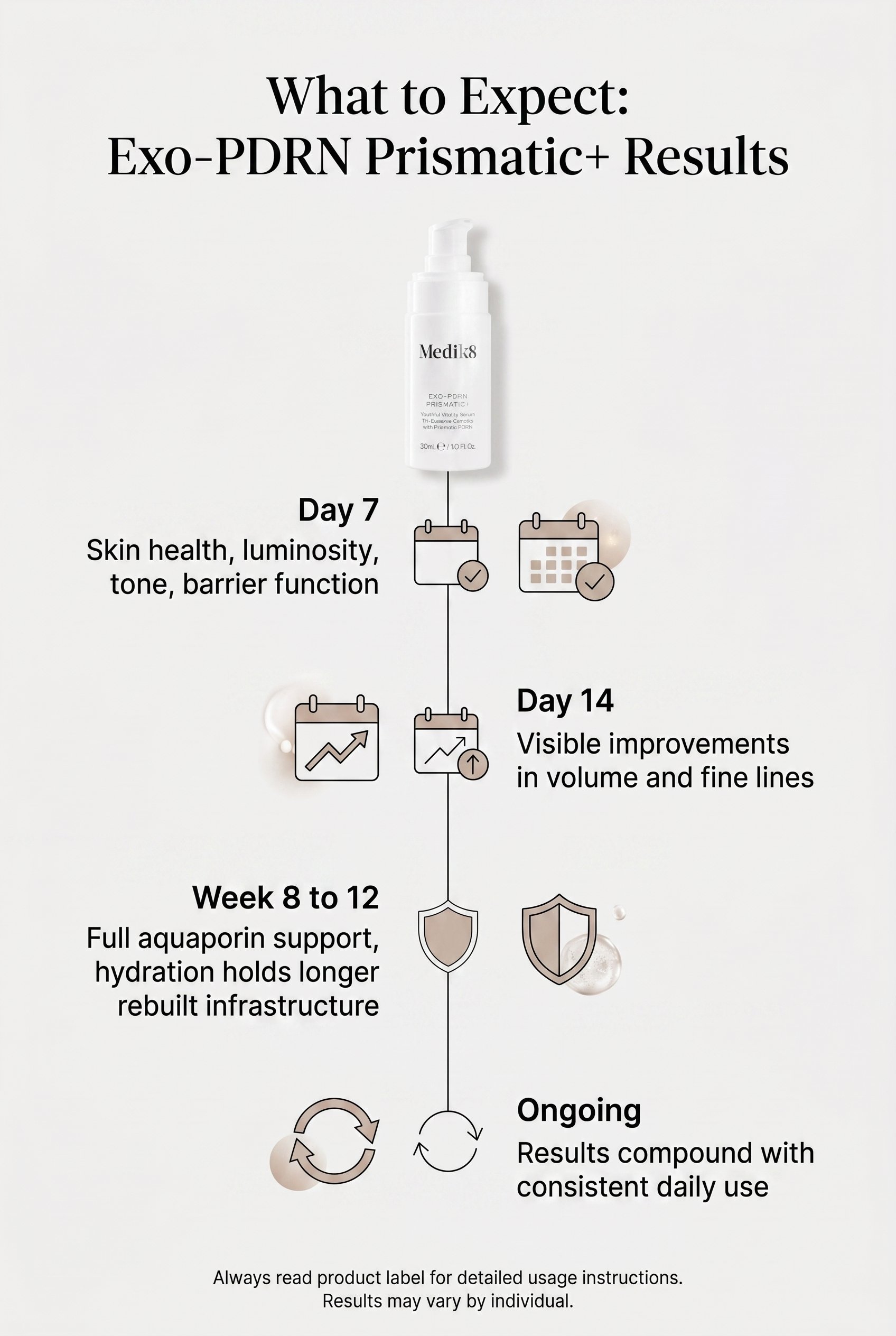
In this formula, the exosome complex signals cells to upregulate, meaning increase production of, aquaporin-3 channels. Clinical data from the product's ex vivo testing (testing on real skin tissue outside the body) shows over 50% improvement in cell activity. Separate assessments found visible improvements in skin health, luminosity, and barrier function within 7 days.
The result is a two-part approach: restore the energy so cells can work, then signal them to rebuild the channels they've lost. Surface moisture is still part of your routine. But now your skin has the infrastructure to use it properly.

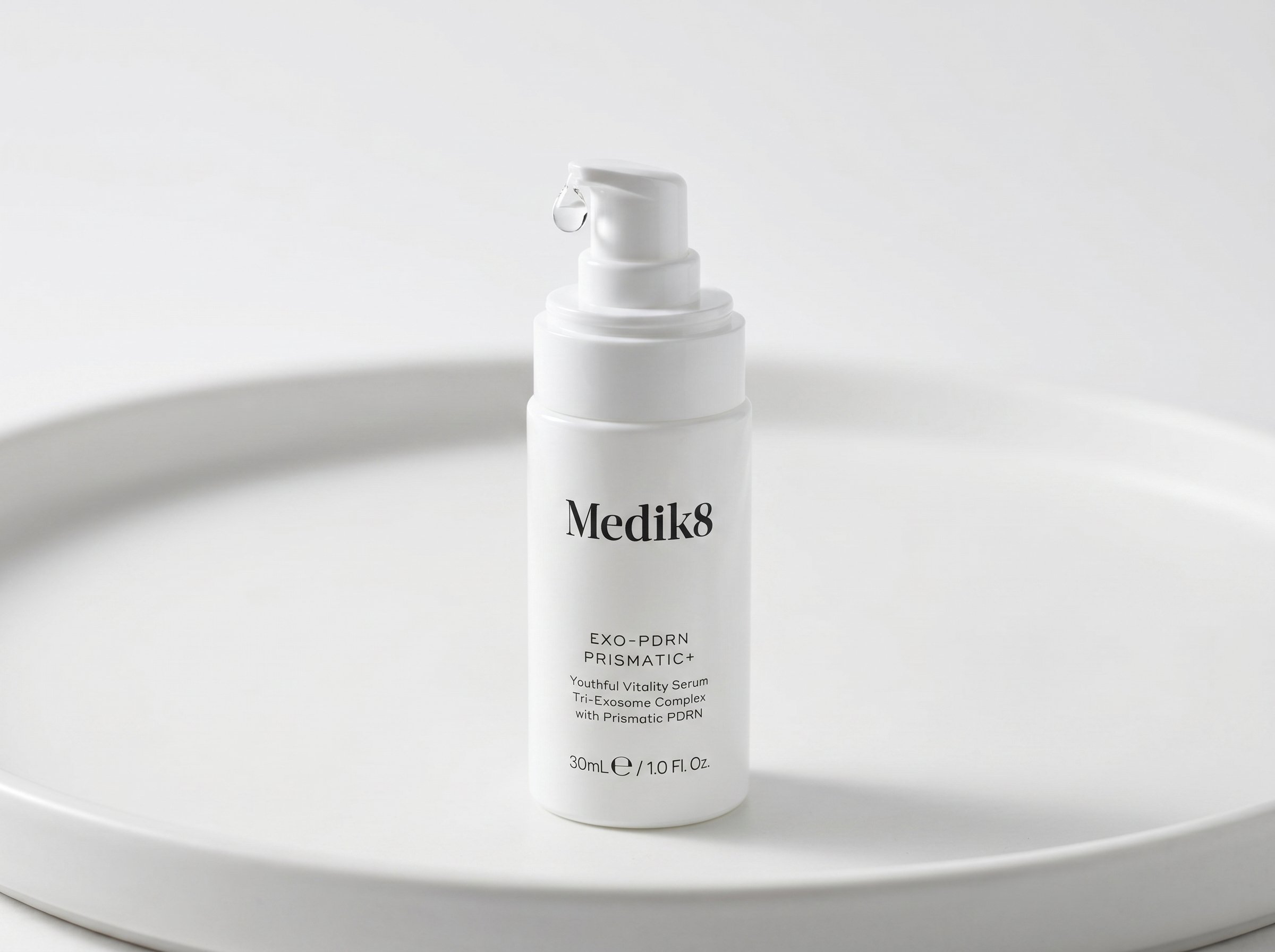
Featured: Exo-PDRN Prismatic+
A full-spectrum face serum that boosts skin's natural rejuvenation by over 50%.
Shop NowWhat This Means for Dehydrated Skin in Practice
If your skin feels tight by mid-morning, looks dull despite layering serums, or loses hydration faster in air-conditioned or heated spaces, these are signs your water-transport system needs support. It's not a reflection of how much effort you're putting in. It's a cellular issue that surface products weren't designed to address.
Supporting aquaporin-3 function changes the pattern. Instead of chasing hydration throughout the day, your skin becomes better at holding onto what you give it. Plumpness lasts longer. Tightness becomes less frequent. And the products you already use, your serums and moisturisers, work better because the underlying system is functioning again.
It's also worth knowing that your skin's repair activity peaks overnight. Applying Exo-PDRN Prismatic+ in the evening, when cell regeneration is most active, may support better outcomes. Your skin is already doing the work. This product gives it the energy and signals to do it more effectively.
For those who want to understand the full picture of how dehydration affects the skin at a cellular level, our article on dry versus dehydrated skin is a useful starting point before adding any new active to your routine.
Is Exo-PDRN Prismatic+ Right for You?
This product suits people whose skin is experiencing chronic dehydration that hasn't responded well to standard hydrating products. It's a good fit if you're already using a solid routine but still can't hold onto moisture. It works well alongside your existing hydrating serums and moisturisers rather than replacing them.
It's not suited to everyone. Those with active acne, severely compromised barriers, or known nucleotide sensitivities should seek personalised guidance before starting. If you're unsure whether this fits your skin's current state, booking a skin consulation gives you a clear picture before you commit to anything.
The clinical data shows measurable results within 7 days for skin health, luminosity, and barrier function. Improvements in volume and fine lines appear by 14 days. These are meaningful timelines, but consistent use matters. Rebuilding cellular infrastructure takes patience. The results compound over weeks, not hours.
Lasting hydration isn't about applying more products. It's about whether your skin has the infrastructure to use what you give it. Aquaporin-3 channels are the core of that infrastructure, and when they decline, no surface moisturiser fully compensates. Exo-PDRN Prismatic+ works at the level where the problem actually starts: restoring cellular energy through PDRN and signalling channel rebuilding through its Triple Exosome Complex.
If you've been doing everything right and still can't hold onto hydration, this is worth understanding. Book your skin consultation to get a clear picture of what your skin actually needs. Or, if you're ready to explore the product, shop Exo-PDRN Prismatic+ now and see the clinical data for yourself.


