
If your skin stays red no matter what you try, you are not imagining it. Chronic redness is not just surface-level flushing. It is a sign that your skin's inflammatory response has become stuck in a loop, firing signals that never fully switch off.
Most calming products work by soothing the surface. That helps in the short term. But if the underlying inflammatory cascade keeps running, the redness keeps coming back.
Exo-PDRN Prismatic+ takes a different approach. It targets the mechanism behind chronic redness, the adenosine receptors and cytokine signals that control how your skin responds to inflammation. This post explains exactly how that works, and why it matters for skin that has been reactive for a long time.
Why Does Chronic Redness Keep Coming Back?
Your skin has a built-in alarm system. When it detects a threat, UV exposure, irritants, stress, or injury, it triggers an inflammatory response. Immune cells release chemical messengers called cytokines (proteins that tell other cells what to do).

Blood vessels widen. Redness appears. This is normal and useful.
The problem starts when this alarm does not switch off. In skin experiencing chronic redness, the inflammatory cascade keeps running even after the original trigger is gone. One key reason is a protein called NF-kB (nuclear factor kappa B).
Think of NF-kB as the master switch for inflammation. When it stays active for too long, it keeps producing pro-inflammatory cytokines, and your skin stays red, sensitive, and reactive. You can read more about how stress keeps this cycle going and why calming the system requires more than surface-level care.
Standard calming ingredients can reduce surface irritation. But they rarely address the upstream signals that keep the inflammatory loop running. That is the gap Exo-PDRN Prismatic+ is designed to fill.
Key Takeaways
- Exo-PDRN Prismatic+ suppresses inflammatory cascades through two main pathways.
- First, its PDRN (Polydeoxyribonucleotide) activates adenosine receptors, which helps turn down the signals that keep skin stuck in inflammation mode.
- Second, its Triple Exosome Complex delivers targeted molecules that reduce cytokine production, the chemical messengers that drive chronic redness.
- Together, these actions calm inflammation at the source while actively supporting skin repair, without triggering the b...
What Is Adenosine Receptor Activation and Why Does It Matter?
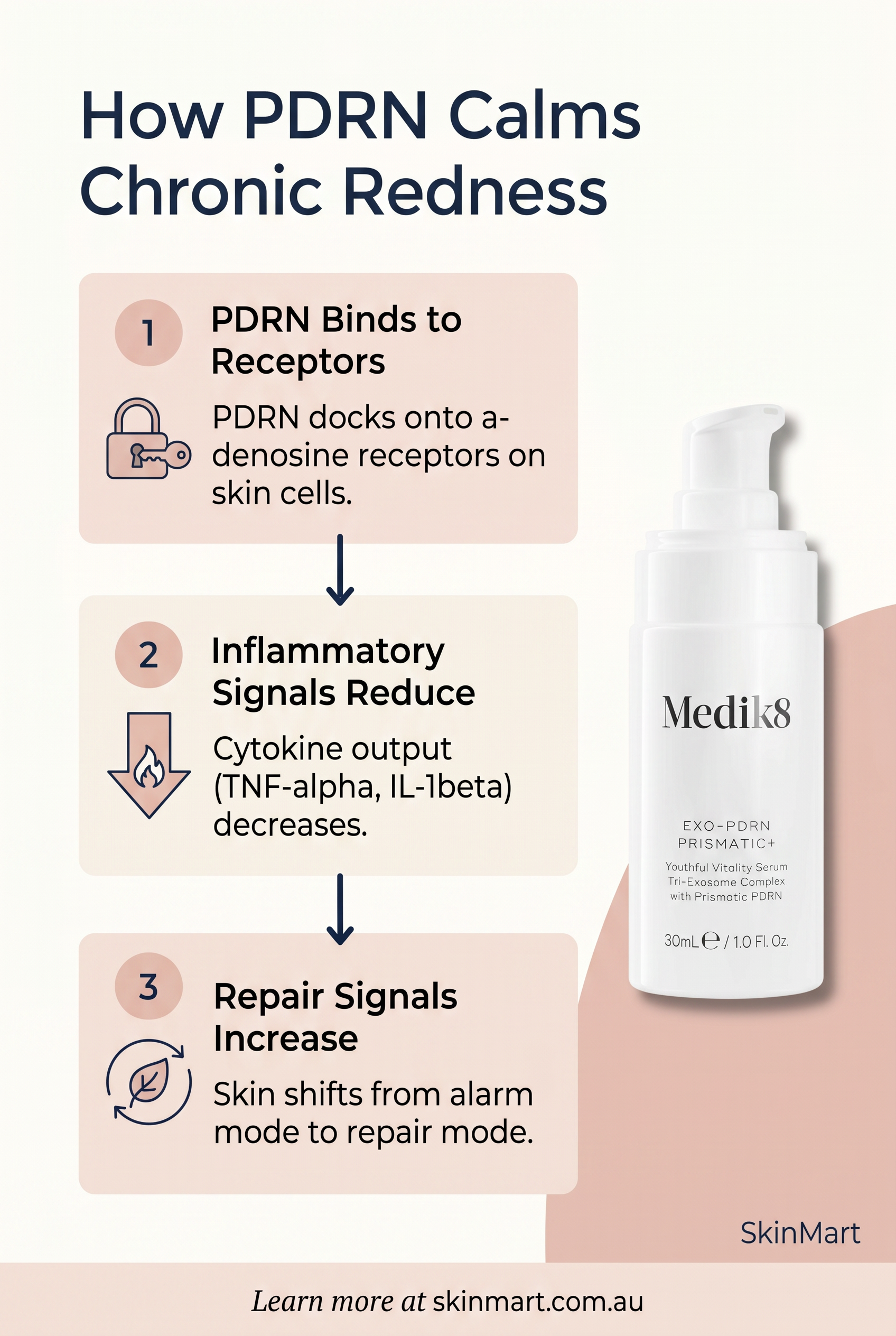
PDRN stands for Polydeoxyribonucleotide. It is a fragment of DNA that your skin cells can actually use. When applied topically, PDRN binds to adenosine receptors on the surface of skin cells. Adenosine receptors are like docking stations, when the right molecule connects, they trigger a chain of responses inside the cell.
One of those responses is a reduction in pro-inflammatory signalling. Activating these receptors helps lower the production of cytokines like TNF-alpha and IL-1beta, two key drivers of chronic redness. At the same time, adenosine receptor activation supports tissue repair and helps restore normal cell function. So instead of just quieting the alarm, PDRN helps your skin learn to respond more proportionally to future triggers. This is what we mean by regeneration without the damage phase, the skin is being rebuilt while inflammation is being calmed, not after it.
This is also why PDRN has been widely used in post-procedure recovery. In studies, 98% of participants agreed that Exo-PDRN Prismatic+ was effective after cosmetic procedures, environments where the barrier is already compromised and inflammation is a real risk. If it can work there, it is well suited to skin that is chronically reactive.
How Do Exosomes Help Calm Inflammatory Signals?
Exosomes are tiny vesicles, think of them as microscopic delivery parcels, released by cells to carry messages to other cells. The Triple Exosome Complex in Exo-PDRN Prismatic+ uses this natural communication system to deliver targeted anti-inflammatory signals directly into the skin.

Specifically, exosomes carry microRNA and growth factors that help modulate (change and regulate) cytokine production. They can signal skin cells to reduce the output of inflammatory messengers and increase the output of repair signals. This is different from simply blocking inflammation, it is guiding the skin's own biology toward a calmer, more balanced state. For skin experiencing chronic redness, this distinction matters.
You want your skin to respond appropriately to real threats, not to suppress all inflammatory capacity. Exosome-mediated signalling supports that balance. If you are curious about how active ingredients interact with your skin at a cellular level, our article on active ingredients and whether they are right for you is a useful starting point.
The combination of PDRN and exosomes in one serum creates a two-part approach: PDRN activates the adenosine pathway to reduce upstream inflammatory signalling. Meanwhile, exosomes deliver targeted repair instructions to skin cells. Both mechanisms work together, and the clinical data reflects this. Users saw improvements in skin health, luminosity, and barrier function within seven days, and continued improvements in skin volume and texture by day fourteen.

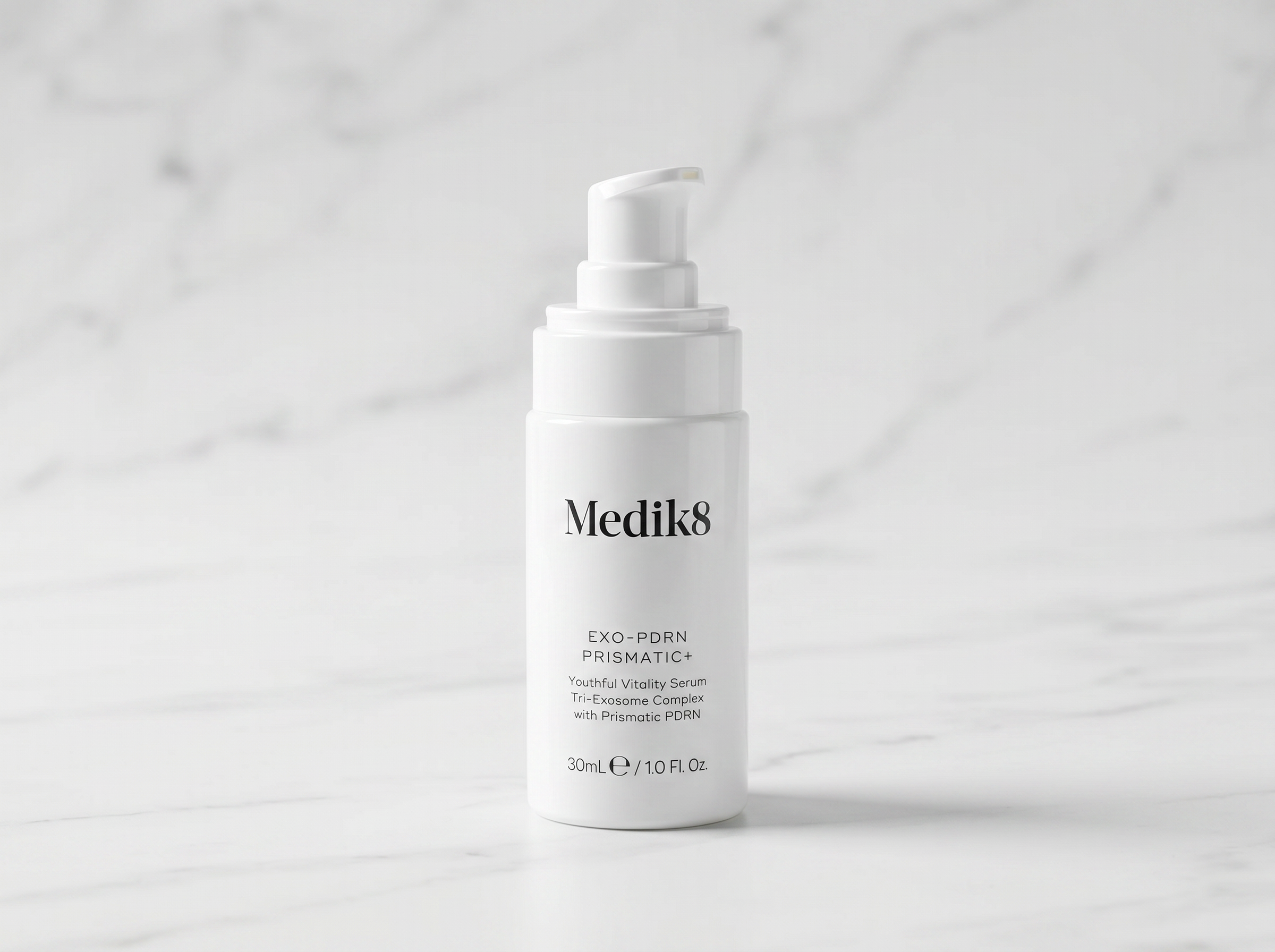
Featured: Exo-PDRN Prismatic+
A full-spectrum face serum that boosts skin's natural rejuvenation by over 50%.
Shop Now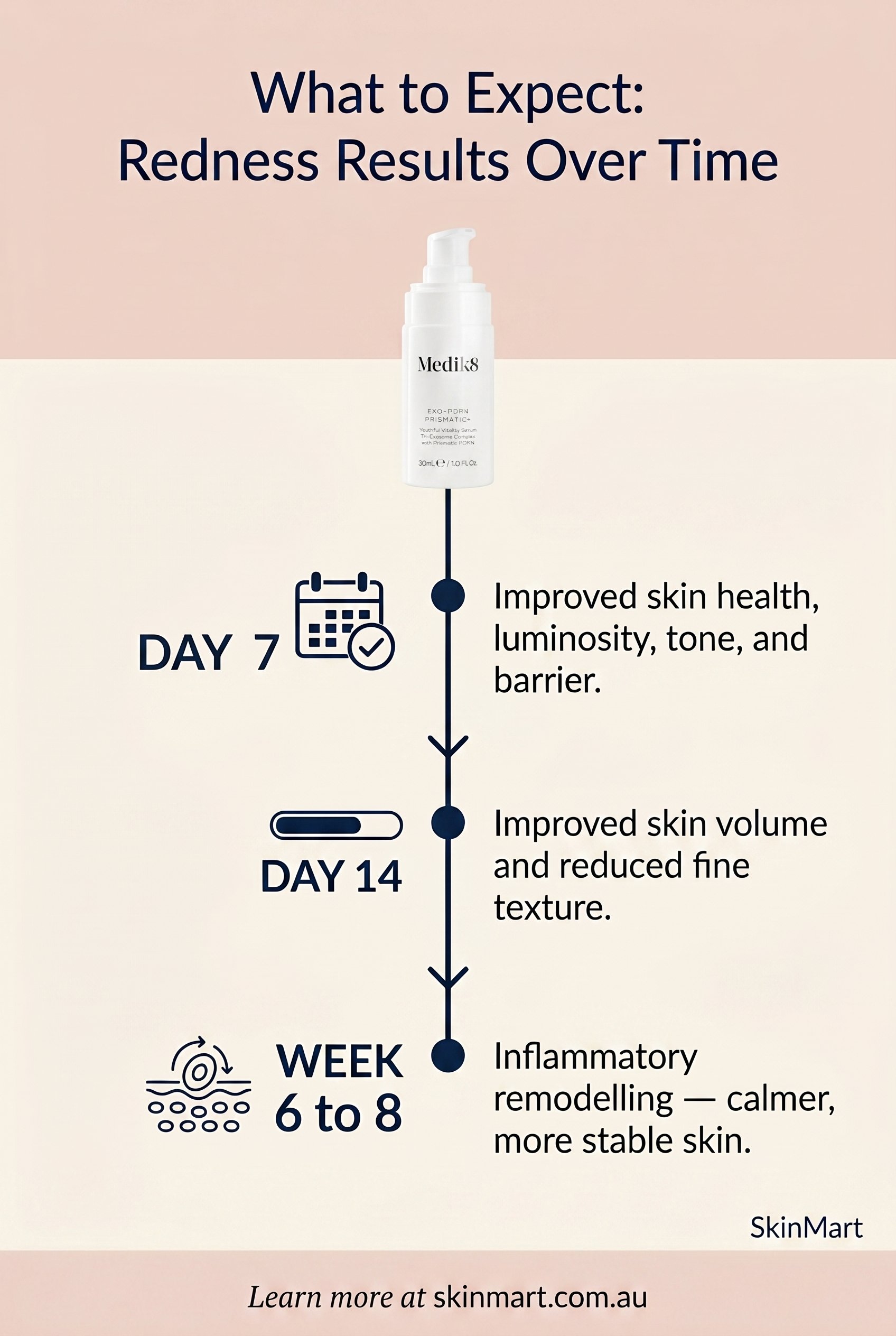
Is This Approach Right for Your Skin?
Exo-PDRN Prismatic+ is designed for skin that is stuck in a cycle of chronic redness and reactivity. It suits people who have tried calming products without lasting results, and who want to address the root cause rather than manage the surface. It is also validated for use after professional treatments like laser, peels, or microneedling, where barrier compromise and post-procedure redness are expected.
It is not the right fit for everyone. If your skin barrier is severely compromised right now, it is worth stabilising that first before introducing new actives. If you have a known nucleotide sensitivity, PDRN is not suitable for you. And if you are looking for instant results, this is not that kind of product, meaningful inflammatory remodelling takes consistent use over several weeks. Using products in the right order also matters when you are layering actives, so routine integration is worth thinking through carefully.
For those who do fit the profile, the mechanism is genuinely differentiated. Most calming products work downstream, after inflammation has already been triggered. Exo-PDRN Prismatic+ works upstream, at the receptor and signalling level, to reduce how often and how intensely that inflammatory response fires. Over time, that leads to more stable, less reactive skin, not just calmer skin on a good day.
How to Add Exo-PDRN Prismatic+ to Your Routine
Exo-PDRN Prismatic+ works as a serum, applied after cleansing and before moisturiser. For skin experiencing chronic redness, morning application makes sense, you are setting up your skin's inflammatory tone for the day ahead. Evening use can be added once your skin is comfortable with the product.
Because this serum is designed to work without barrier disruption, it layers well with other actives. If you are using niacinamide for cytokine regulation or azelaic acid for additional anti-inflammatory support, Exo-PDRN Prismatic+ can sit alongside these without conflict. The key is introducing it steadily, give your skin two to three weeks to show its initial response before making any changes to the rest of your routine. You can also explore how layering actives strategically can improve your overall results.
Visible calming effects can appear within the first week for some users. But the deeper work, retraining your skin's inflammatory response patterns, takes six to eight weeks of consistent use. Think of it as building a new baseline for your skin, not just putting out a fire.
Chronic redness is not a surface problem. It is a sign that your skin's inflammatory system is stuck, and calming the surface without addressing the underlying cascade means the redness keeps returning. Exo-PDRN Prismatic+ works differently. By activating adenosine receptors and using exosome-mediated signalling to guide cytokine production, it targets the mechanism behind chronic redness rather than just the visible result.
If you have been managing redness reactively, soothing flare-ups as they happen, this is an approach worth understanding properly. A skin consultation can help you assess whether it fits your current skin picture, and what else might be contributing to your inflammatory patterns. Shop Exo-PDRN Prismatic+ now or book your skin consultation to get guidance built around your skin specifically.


