Eyebags. That tired, puffy look under your eyes that shows up no matter how much concealer you use. If you've noticed them getting worse as you get older, you're not imagining things.
The good news is that eyebags aren't a mystery. Three things drive them most: how well you sleep, how your skin ages, and how much stress you carry. Once you understand these factors, you can make smart choices that actually help. Here are seven things worth knowing about eyebags, and what you can do about them.
Why Do Eyebags Get Worse As You Age?
Eyebags often get more noticeable with age, and there's a real reason why. Skin around your eyes is thinner than skin anywhere else on your face. It also has fewer oil glands and less collagen, the protein that keeps skin firm and bouncy.
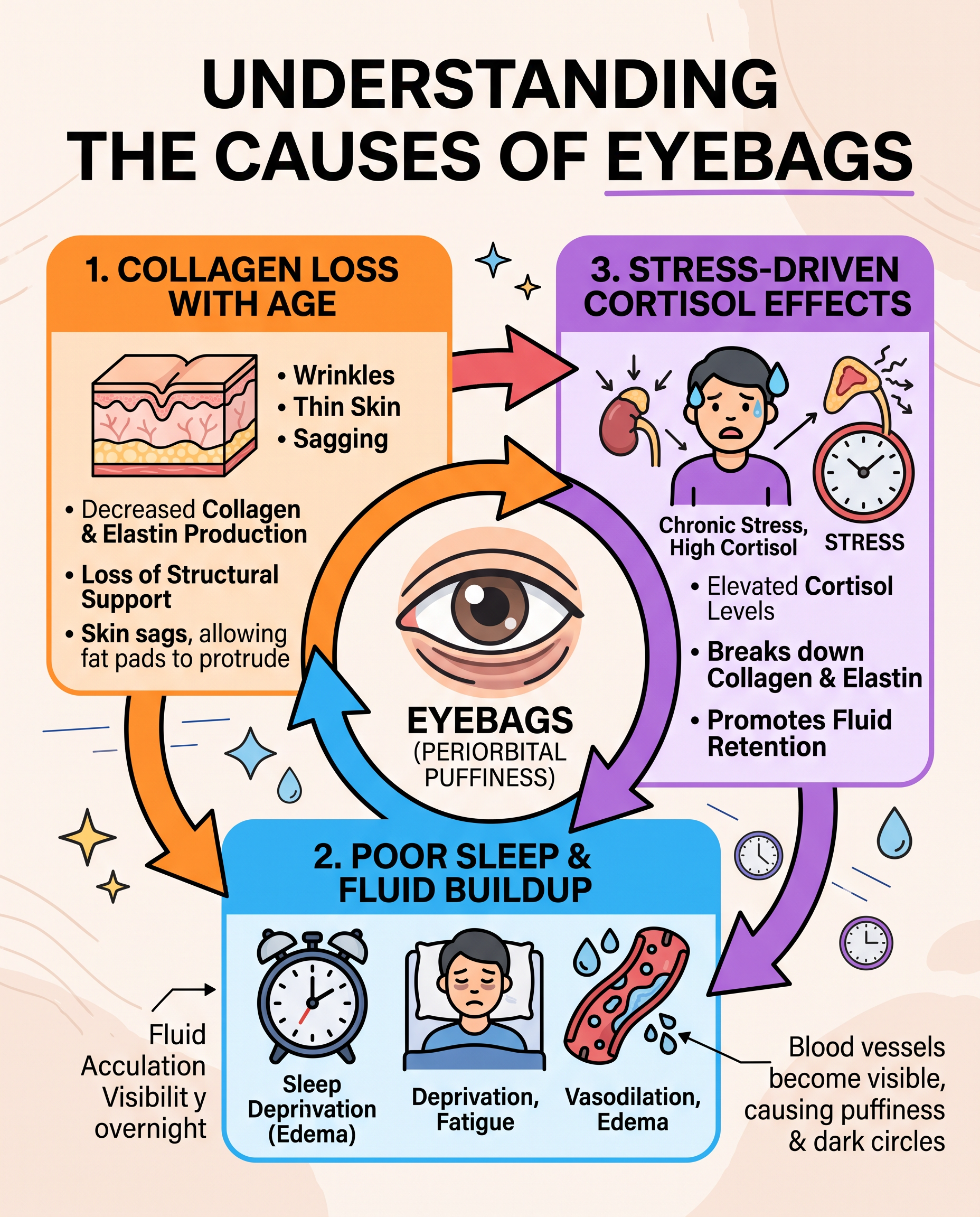
As you age, collagen production naturally slows down. This makes the skin under your eyes even thinner and more likely to sag. At the same time, the fat pad that normally cushions your eye area can shift forward, creating that puffy, shadowed look.
This process is a normal part of ageing. You can't stop it completely, but you can slow it down. Our guide on whether ageing is all in the genes explains more about what you can and can't control.
How Does Poor Sleep Cause Puffy Eyes?
Sleep is one of the biggest factors behind puffy, tired eyes. While you sleep, your body manages fluid balance and blood flow. When sleep is short or poor, fluid can pool under your eyes overnight.
Poor sleep also widens the blood vessels under your thin eye skin. This makes dark circles more visible and can make puffiness look worse. People who sleep poorly tend to show more visible under-eye changes than people who sleep well.
Your skin also follows a natural body clock, called your circadian rhythm. This clock controls repair and renewal, and it works best with consistent sleep. Learn more in our article on how your circadian rhythm affects your skin, or check out our top night treatments for extra support while you sleep.
Key Takeaways
- Eyebags form from a mix of poor sleep, skin ageing, and stress.
- As you age, skin under your eyes thins and loses collagen, the protein that keeps skin firm.
- Poor sleep raises fluid buildup and makes blood vessels more visible.
- Stress raises cortisol, a hormone that affects blood flow and skin repair.
- You can't stop ageing, but good sleep habits, stress management, and targeted eye care with peptides and caffeine can reduce eyebags and slow how fast they show up.
Can Stress Really Show Up Under Your Eyes?
Stress doesn't just affect your mood. It shows up on your face too, especially around your eyes. When you're stressed, your body releases cortisol, a hormone that manages your stress response.
High cortisol levels can affect blood flow and slow down skin repair. Over time, this can make your under-eye area look duller and more puffy. Ongoing stress can also disrupt your sleep, which adds to the problem.
Managing stress isn't always simple, but small changes help. Our post on stress and the skin covers this connection in more detail, and no need to stress over your eyes offers more targeted tips.
Is It Genetics, Fluid, or Something Else?
Not every case of eyebags comes down to sleep or age. Genetics play a role too. Some people are simply born with thinner skin or a more visible fat pad under their eyes.
Fluid retention is another factor. Eating salty food, drinking alcohol, or dealing with allergies can all cause extra fluid to build up under your eyes. This often shows up as morning puffiness that fades during the day.
If eyebags run in your family, you may notice them earlier than others. That doesn't mean you can't improve how they look. It just means your approach might need to combine a few different strategies.
What Ingredients Actually Help With Eyebags?
Some ingredients are especially good at targeting puffiness and dark circles. Caffeine is a common one. It tightens blood vessels, which can reduce swelling and make dark circles less visible.

Peptides, small chains of amino acids, help support collagen production. This can firm up thin skin over time. Hyaluronic acid draws in moisture, plumping the skin and softening the look of fine lines.
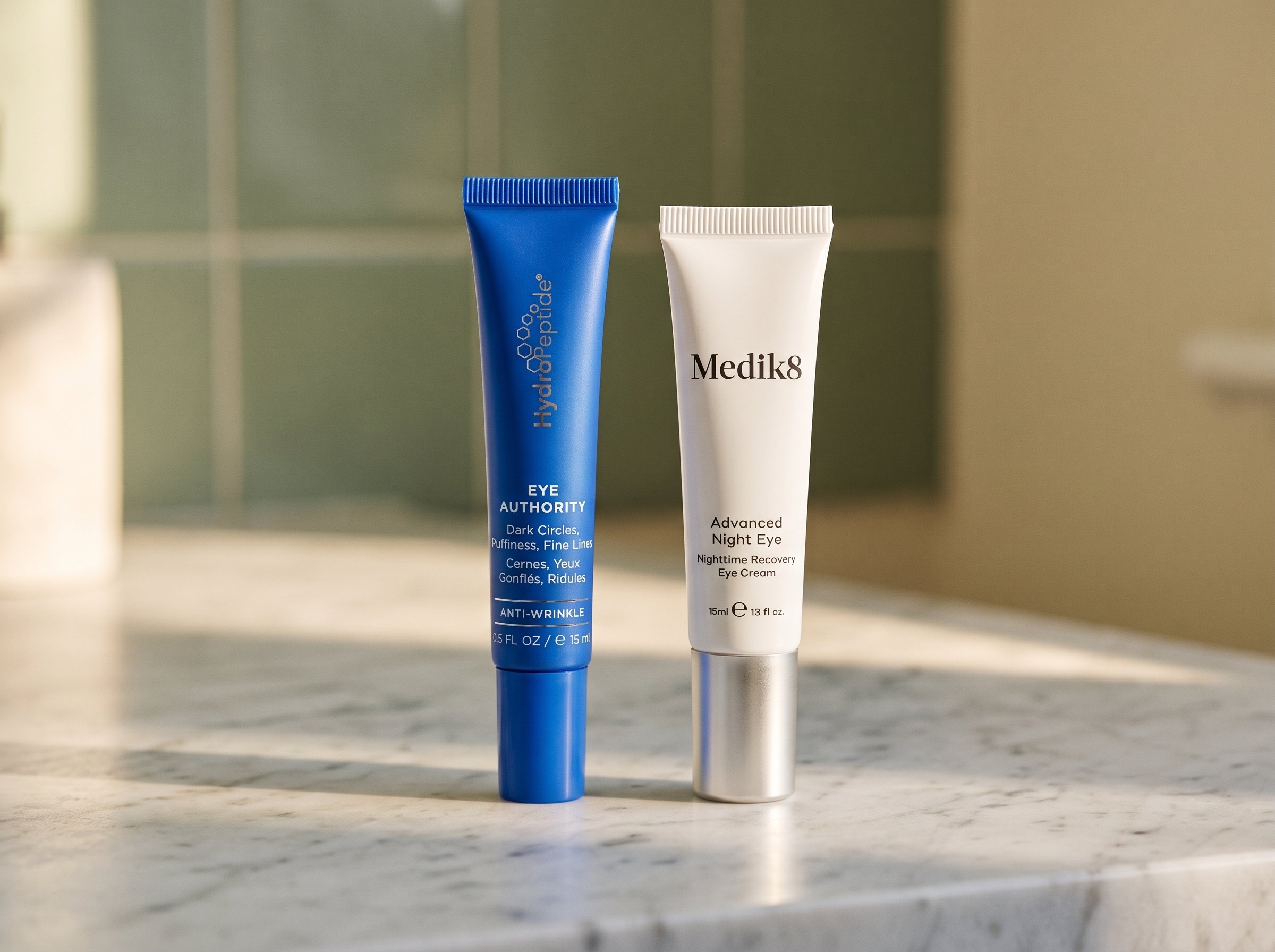
Look for eye products built with these ingredients in mind. HydroPeptide Eye Authority combines peptides with brightening actives to support tired-looking eyes. Medik8 Advanced Night Eye works overnight to support repair while you sleep.
Want to know how to choose the right formula for you? Read our guide on how to choose the right eye cream, or explore more tips in how to get rid of dark circles and puffy eyes.
What Lifestyle Habits Reduce Eyebags Long Term?
Good skincare helps, but daily habits matter just as much. Try to keep a consistent sleep schedule, even on weekends. This supports your skin's natural repair clock.
Cut back on salty food, especially in the evening, to reduce overnight fluid buildup. Staying hydrated during the day, rather than right before bed, also helps.
Simple stress relief, like short walks, breathing exercises, or time away from screens, can lower cortisol over time. Small, steady changes often make a bigger difference than one big fix.
When Should You See a Professional About Eyebags?
Most eyebags are a normal part of life. But sometimes, they point to something else. See a doctor if your eyebags appear suddenly, only affect one eye, or come with pain or redness.
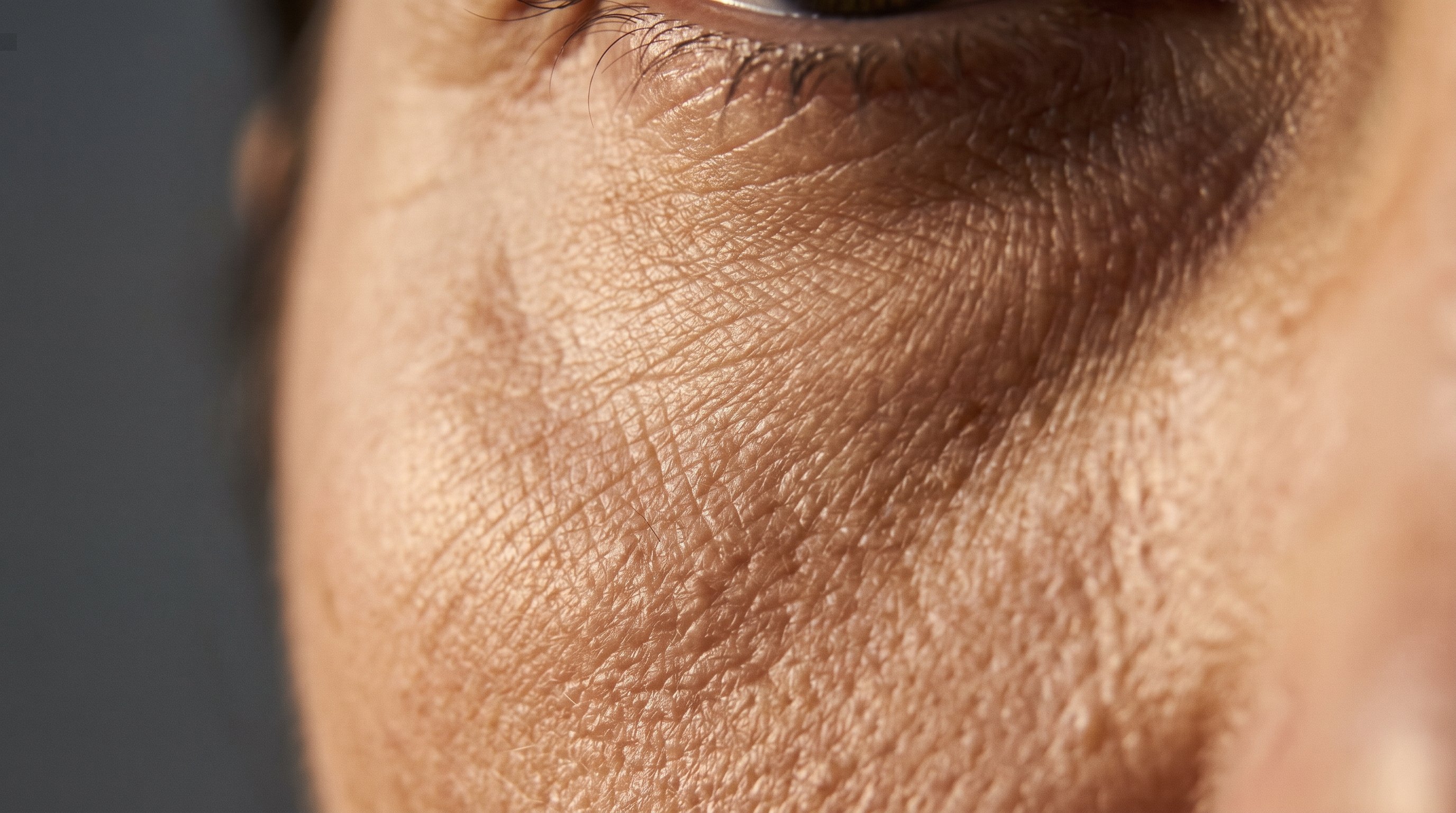
Persistent swelling that doesn't improve with sleep or lifestyle changes may need a closer look. Conditions like allergies, thyroid issues, or fluid retention from other causes can sometimes play a role.
If you're unsure what's causing your eyebags, a skin professional can help you find the right next step. Understanding the cause is the first step toward the right plan.
Eyebags are rarely about just one thing. Sleep, ageing, stress, and genetics all play a part, often at the same time. Understanding these factors helps you see why your eyebags show up, and why they change over the years.
You can't stop ageing, and you can't erase stress completely. But you can support your skin with good sleep habits, smart stress management, and eye care built around ingredients like peptides and caffeine. Small, consistent steps add up to real change over time.


