
You rug up in thermals, grab your goggles, and head for the slopes. Sunscreen probably isn't the first thing on your mind. So it can come as a shock when you get home with a red, stinging face, even though it felt freezing all day. If you've ever wondered, can I get sunburnt in the snow, the answer is yes, and it can happen faster than you'd think.
Snow doesn't just sit there looking pretty. It bounces UV rays straight back at your skin, on top of the UV already coming from the sun. Add in higher altitude, and your skin faces a tougher day than it would at the beach. Understanding this helps you plan properly, so your next snow trip leaves you with good memories, not a painful reminder for days after.
Why Does Snow Make Sunburn Worse?
Snow is one of the most reflective surfaces on Earth. It can bounce back up to 80% of the UV rays that hit it. Compare that to sand, which reflects only about 15%, or grass, which reflects less than 5%.
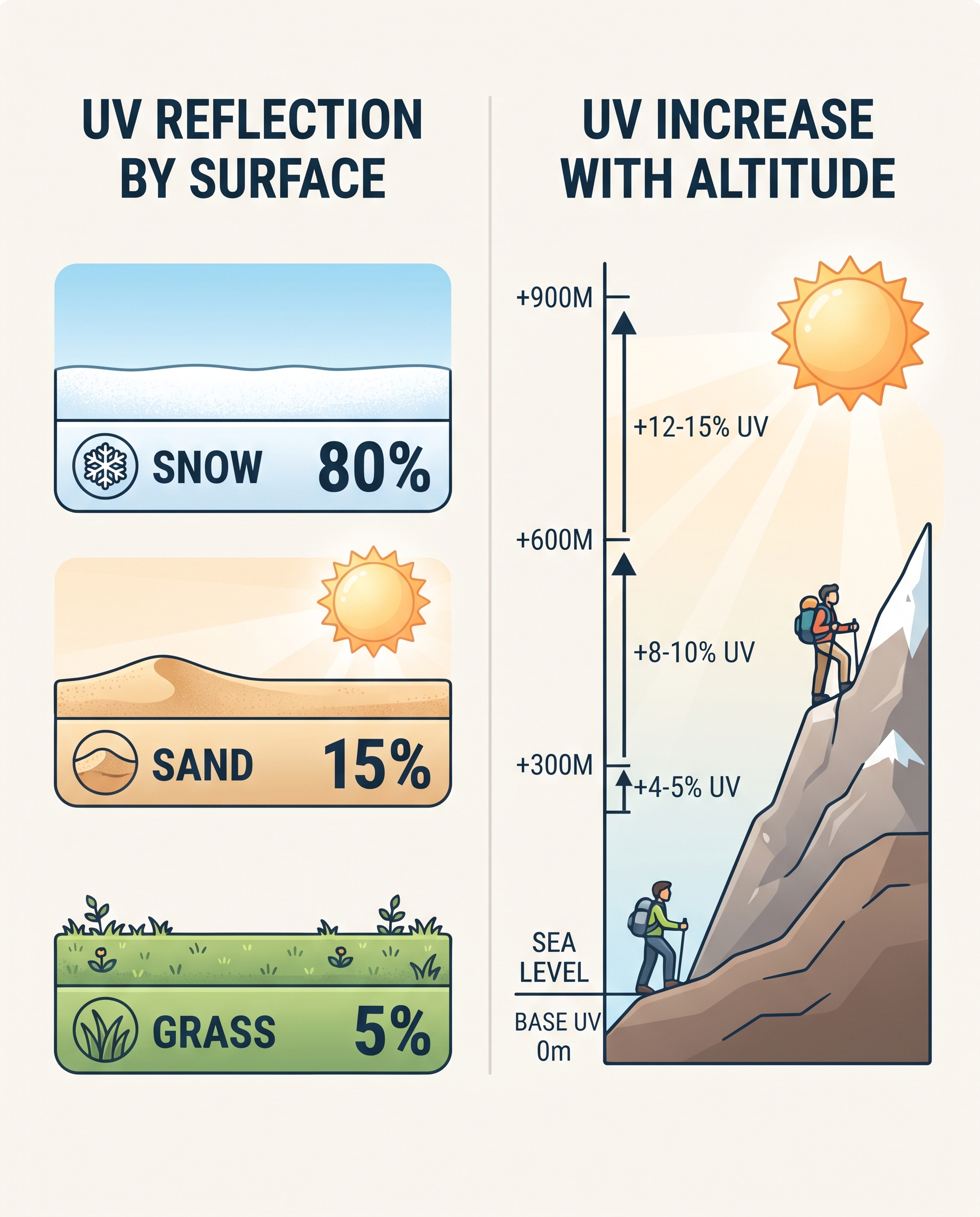
This means your skin gets hit twice: once from UV rays coming straight down from the sun. And again from rays bouncing up off the snow. Your face, neck, and even the underside of your chin can burn, areas that rarely see this much reflected light in everyday life.
This double exposure is why skiers and snowboarders often get sunburn in spots that seem unlikely, like inside the nose or under the eyes. Cold air also masks the warning signs. You don't feel the usual heat of a summer burn, so you keep going without realising the damage building underneath.
How Does Altitude Change Your Skin's Sun Exposure?
The higher you go, the thinner the air becomes. Thinner air filters out less UV radiation before it reaches your skin. Research shows UV exposure increases by roughly 4-5% for every 300 metres you climb.
Australian ski fields sit at elevations between 1,300 and 2,000 metres. That means your skin can face 15-20% more UV radiation on the mountain than it would at sea level, even on an overcast day. Cloud cover doesn't block UV the way many people assume. Up to 80% of UV rays pass straight through clouds.
Kimlin et al. (2007) found that Australian UV exposure patterns make year-round protection necessary, not just protection in summer. This applies just as strongly to a winter trip to the snow as it does to a day at the beach.
Key Takeaways
- Yes, you can get sunburnt in the snow.
- Snow reflects up to 80% of UV rays back onto your skin, doubling your sun exposure.
- Higher altitudes also mean thinner air, which lets more UV radiation through.
- This means a ski trip can expose your skin to more UV than a beach day, even when it feels cold.
- Mature skin is especially at risk, since it has a reduced ability to repair UV damage.
Why Mature Skin Needs Extra Care in the Snow
If you're in your 40s or older, your skin's defences against UV damage aren't what they used to be. Your skin's natural DNA repair process, which fixes damage caused by UV exposure, becomes up to 40% less efficient with age.
Your skin barrier (the outer layer that protects against water loss and irritation) also thins over time. And its ability to bounce back from stress slows down. What might have been a mild pink flush in your 20s can turn into a more painful, longer-lasting burn now. Sensitivity and redness can also linger well past the trip itself.
This isn't about your skin letting you down. It's simply responding to time and hormonal changes, the same way it does with seasonal shifts you may already notice in winter. Knowing this means you can plan ahead, rather than being caught off guard on the slopes.
What Are the Signs of Snow Sunburn?
Snow sunburn often shows up later than you'd expect, sometimes hours after you've come inside and warmed up. Look out for redness, tightness, or a stinging feeling on your face, especially around the nose, cheeks, and lips.
Peeling skin a few days later is common, along with sensitivity to touch or temperature. Eyes can also suffer. Overexposure to UV on snow can cause a painful condition called photokeratitis, sometimes known as snow blindness. This feels like grit in your eyes with watering and light sensitivity.
If you notice blistering, severe pain, or vision changes, these are signs of a more serious burn. It's worth learning more about why your eyes need extra care, since goggles and sunscreen both play a part in keeping this delicate area protected.
How Can You Protect Your Skin on the Slopes?
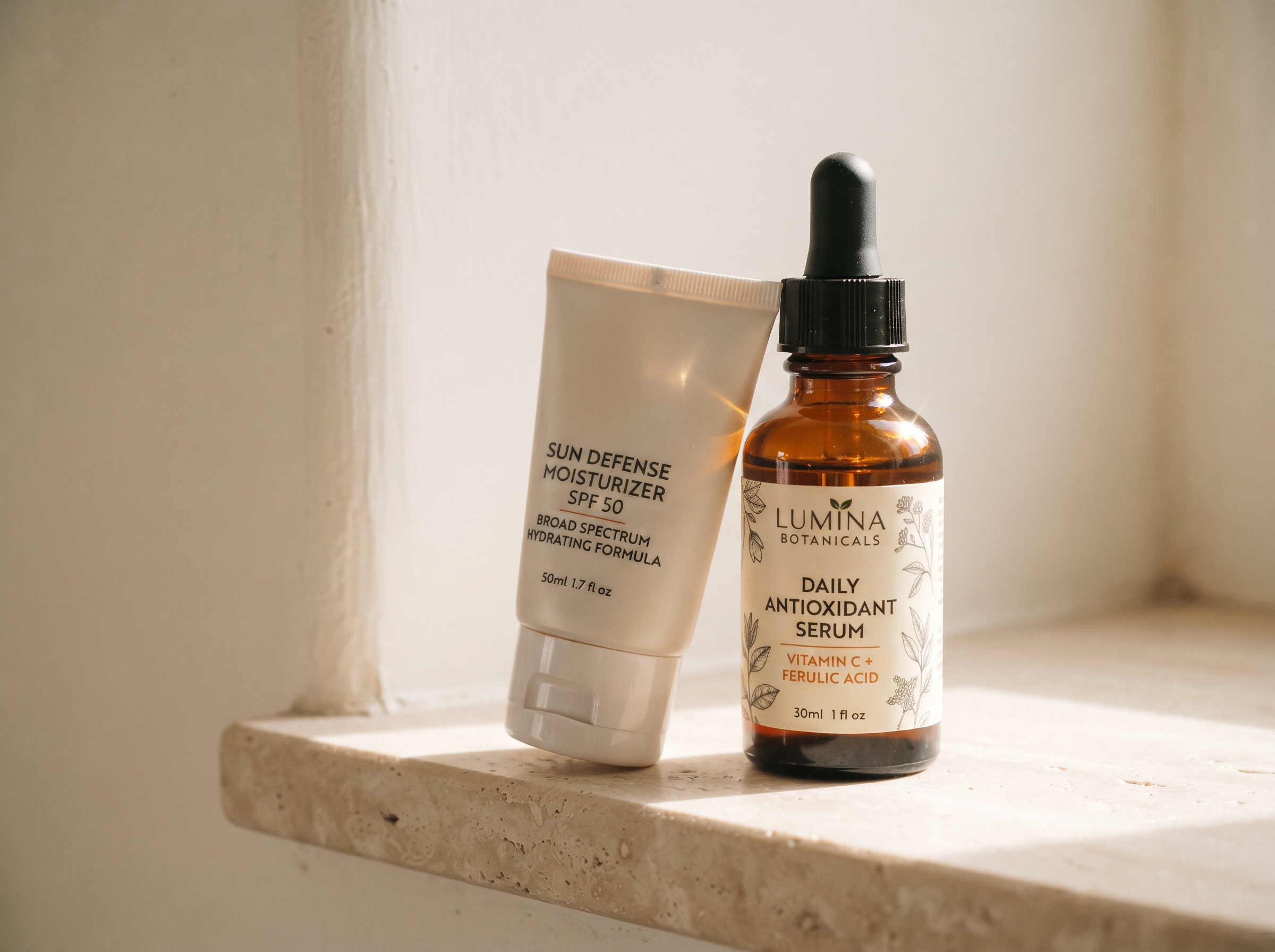
A broad-spectrum SPF 50+ sunscreen is non-negotiable for snow trips, just as it is in summer. Medik8 Physical Sunscreen SPF50 uses mineral filters, which sit on the skin's surface and reflect UV rays away rather than absorbing them. This can feel more comfortable on cold, wind-exposed skin than some chemical formulas.
Apply sunscreen 20 minutes before you head out, and reapply every two hours, more often if you're sweating under layers or wiping your face. Don't forget lips, ears, and the underside of your chin, all common spots people miss.
Layering an antioxidant serum underneath your sunscreen adds another level of defence. PCA Skin C & E Advanced combines vitamin C and E. This help fight the oxidative stress UV exposure creates, and can boost your sunscreen's effectiveness. For more on how UV rays work and why both UVA and UVB protection matter, our guide on UVA and UVB rays breaks it down simply.
Don't forget your eyes. UV-rated ski goggles are just as important as sunscreen when snow glare is this intense. If you're planning a longer trip, our traveller's guide to healthy skin covers packing essentials for any climate.
How Should You Care for Your Skin After a Day in the Snow?
Once you're back inside, your skin needs a chance to recover from cold wind, dry indoor heating. And any UV exposure it picked up during the day. Start with a gentle cleanse to remove sunscreen and grime without stripping your skin further.
Follow with something calming. HydroPeptide Soothing Balm helps ease redness and supports your skin's barrier while it settles down from the day's stress. If your skin feels tight or sensitive overnight, Medik8 Ultimate Recovery provides intensive barrier support while you sleep. This matters even more if your skin's natural repair process has slowed with age.
Avoid hot showers straight after skiing, since heat can worsen already-irritated skin. Stick to lukewarm water and pat your skin dry rather than rubbing.
Snow sunburn is real, and it catches out even careful people because the cold air hides the usual warning signs. Between reflected UV rays and higher altitude, your skin can face more sun exposure on the mountain than it would at the beach.
If your skin has felt different lately, whether that's more sensitivity, slower recovery, or unexpected reactions to weather changes, you're not imagining it. Understanding what's happening beneath the surface is the first step to caring for it properly, wherever your next trip takes you. If you'd like guidance built around your specific skin, not a generic packing list, start your Skin Blueprint and get recommendations based on what your skin actually needs.


