
If you've ever been told your pores are large because of genetics, here's what that advice gets wrong: your pore size at birth isn't the problem. The issue is what's been happening to them every day since.
Pores don't naturally grow larger with age. They stretch. And the primary force doing the stretching is something your skin produces every single day: sebum. When your sebaceous glands consistently overproduce oil, that oil has to go somewhere. It pushes against pore walls like a balloon inflating slowly over years. The constant pressure gradually expands the pore opening to accommodate the volume.
This is mechanical stretching, and it's reversible when you address what's causing it.
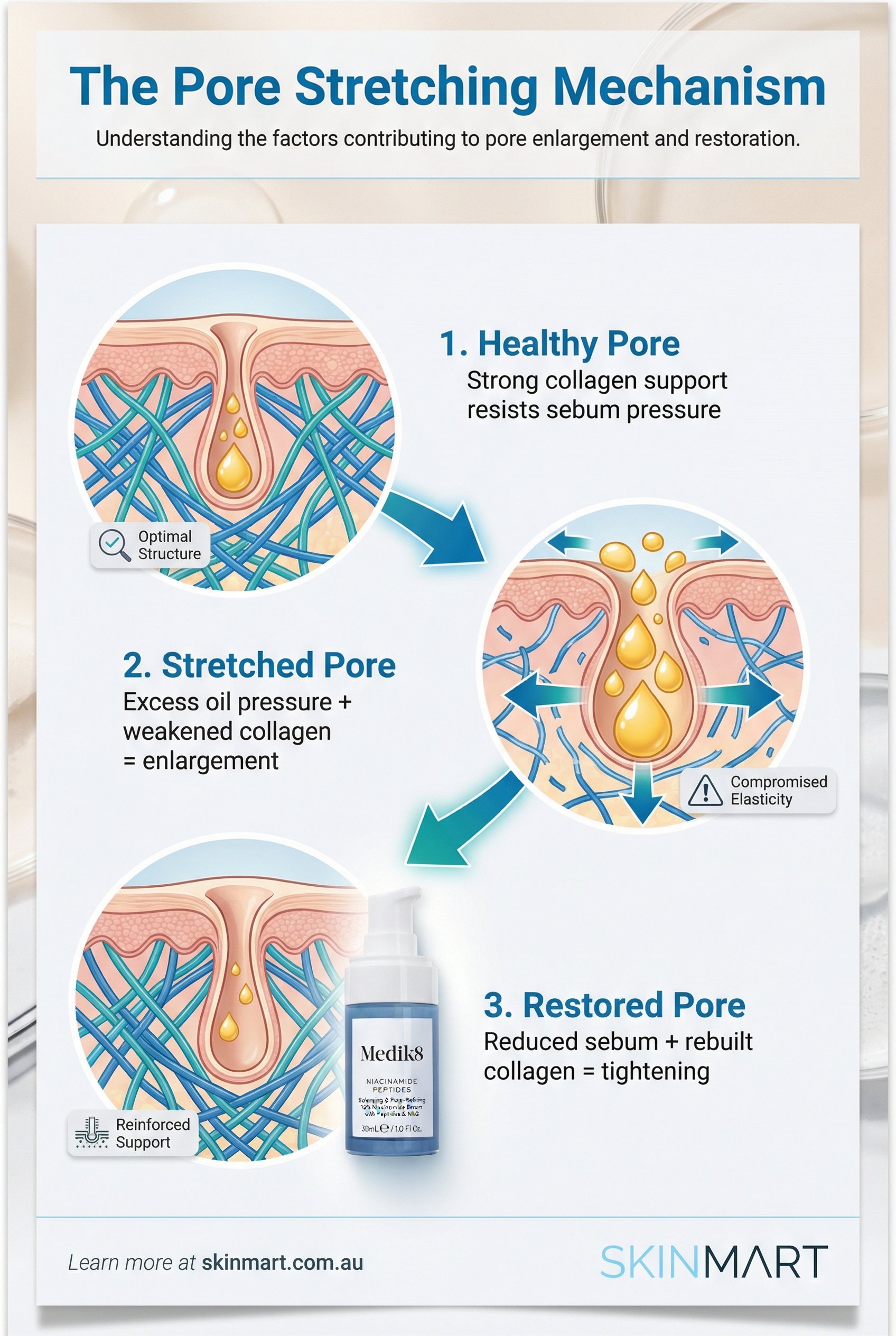
What Actually Makes Pores Look Larger?
The size of your pore opening isn't fixed. It responds to mechanical forces acting on it over time. Think of a pore like a small tunnel through your skin, when something consistently pushes outward from inside that tunnel, the opening widens.
Here's what's creating that outward pressure: sebum production. Your sebaceous glands produce oil always, and when production is high, that oil builds up in the pore canal. As the volume increases, it exerts pressure on the pore walls. Day after day, month after month, this pressure gradually stretches the pore opening.
But sebum alone isn't the complete picture. The second factor is structural support around the pore. Your pores are surrounded by collagen and elastin fibres that act like scaffolding, helping maintain pore wall integrity. When this structural support weakens, through UV damage, natural ageing, or chronic swelling, pores lose their ability to resist the outward pressure from sebum. The combination of high oil production and weakened structural support creates the perfect conditions for visible pore stretching.
This explains why pores often appear larger in the T-zone, where sebaceous glands are most concentrated and oil production is highest. It's not that you were born with bigger pores there, it's that those pores have been under the most consistent mechanical stress.
Key Takeaways
- Pores don't naturally grow larger with age, they stretch.
- Daily sebum production pushes against pore walls like a balloon inflating slowly over years.
- When oil flow is consistently high, the pore opening gradually expands to accommodate the volume.
- This mechanical stretching, combined with collagen loss around pore edges, creates the appearance of larger pores.
- The good news: stretched pores can tighten when you address the root cause, excess oil production and weakened pore wall structure.
Why Oil Control Alone Doesn't Solve the Problem
If excess sebum stretches pores, the logical solution seems simple: reduce oil production. And yes, controlling sebum is part of the solution, but it's not the complete answer.
Here's why: once a pore has been stretched over months or years, simply reducing oil flow doesn't automatically restore the original pore size. The pore wall structure has been compromised. The collagen scaffolding around the pore has been under chronic stress. Even when you reduce the mechanical pressure, the pore doesn't right away snap back to its original diameter.
This is where most oil-control strategies fall short. Blotting papers, mattifying products, and even prescription treatments that reduce sebum production can help prevent further stretching, but they don't address the structural weakness that allows pores to stay enlarged even when oil production decreases.
To actually see pore diameter reduction, you need a two-part approach: reduce the outward pressure (control oil production) and strengthen the structural support around the pore (rebuild collagen and elastin integrity). When both mechanisms are addressed, pores can gradually tighten over time.
The Collagen Connection: Why Pore Walls Need Structural Support
The tissue surrounding your pores isn't just passive skin, it's an active structural framework that determines how well your pores resist mechanical stress. This framework is built primarily from collagen and elastin fibres, which create a support network around each pore opening.
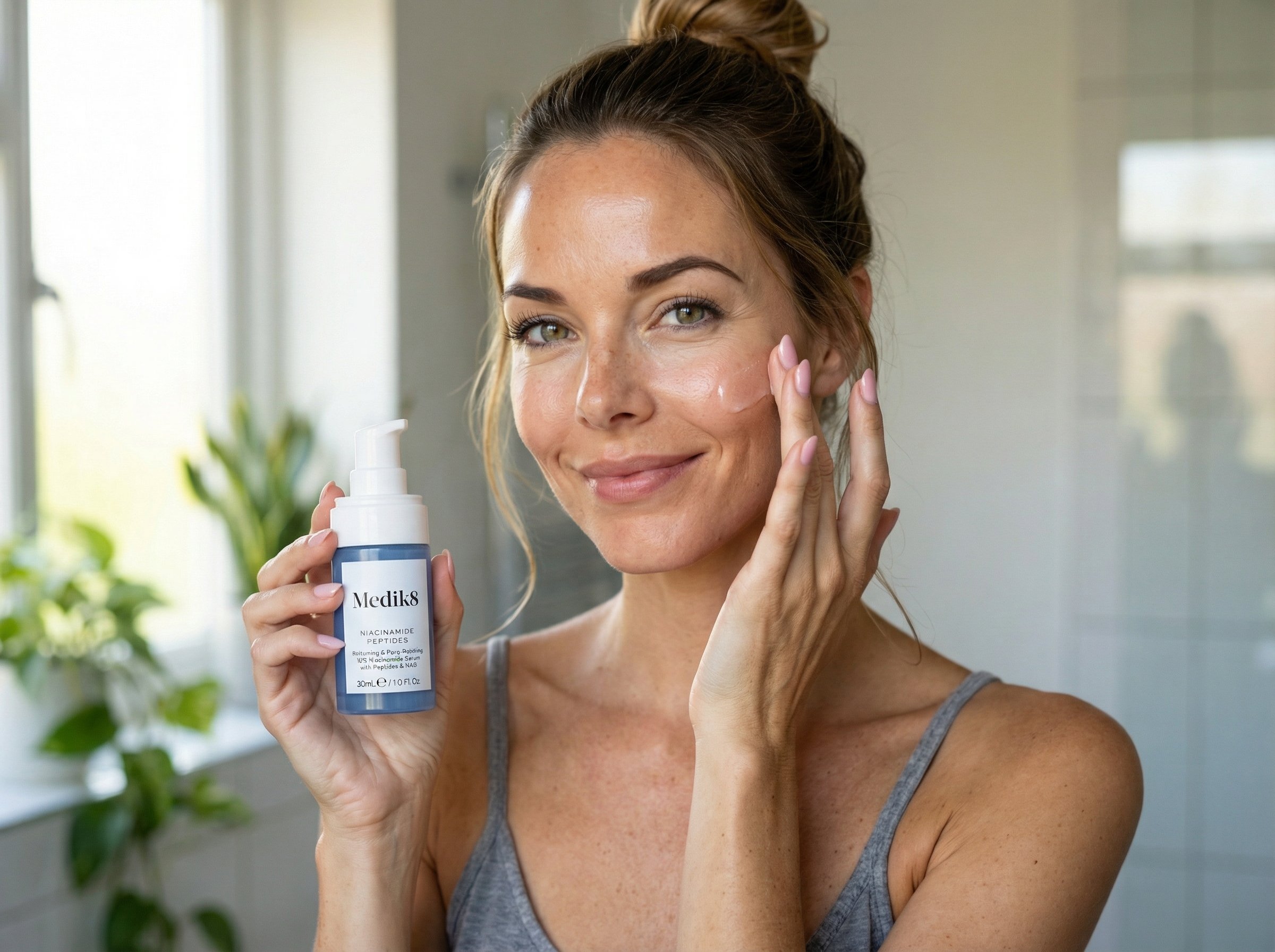
When this collagen network is strong and intact, it acts like reinforcement around the pore, helping the opening maintain its size even under pressure from sebum production. But when collagen degrades, whether from UV exposure, natural ageing, or inflammatory damage, the structural support weakens. Pore walls become less resistant to the outward pressure, and the opening expands more easily.
This is why pore size often becomes more noticeable with age, even if oil production hasn't increased. The cumulative effect of collagen loss means pores have less structural integrity to resist the mechanical forces acting on them. It's not that your pores are producing more oil always, it's that the support structure around them has weakened.
Research shows that when you stimulate collagen synthesis around pore openings, you can actually see measurable reduction in pore diameter over time. The pores don't shrink magically, the reinforced collagen network helps the pore walls contract and resist further stretching. This is why ingredients that support collagen production, like niacinamide and peptides, show genuine efficacy in clinical studies measuring pore size reduction.

Featured: Niacinamide Peptides
Clinically proven 10% niacinamide serum that dramatically improves the look of pores and congestion while soothing the skin barrier.
Shop NowHow Niacinamide Actually Addresses Both Mechanisms
Niacinamide has earned its reputation in pore-focused skincare for a specific reason: it addresses both sides of the pore-stretching equation. It's not just marketing, the mechanism is well-documented in dermatological research.
First, niacinamide reduces sebum production. Studies show that 2-5% niacinamide can decrease sebum excretion rate by up to 30% over 8-12 weeks of consistent use. This reduction in oil volume means less mechanical pressure pushing against pore walls daily. You're removing the primary force that's been stretching your pores over time.
But here's where niacinamide becomes especially valuable: it also stimulates collagen synthesis in the dermal layer surrounding pores. Research shows that niacinamide upregulates collagen production, helping rebuild the structural support network around pore openings. This dual action, reducing the stretching force while at once strengthening the pore wall structure, is why clinical studies consistently show measurable pore size reduction with niacinamide use.
When you combine niacinamide with peptides, you amplify the collagen-building effect. Peptides act as signalling molecules that communicate with fibroblasts (the cells responsible for collagen production), encouraging them to synthesise new collagen and elastin. This combination creates a reinforced support structure around pores while at once reducing the oil production that's been causing the stretch.
The Medik8 Niacinamide Peptides serum delivers both mechanisms in a single formula: 10% niacinamide to control sebum production and a peptide complex to rebuild structural support. This is the two-part approach that addresses pore stretching at its source.
What to Expect: The Timeline for Visible Pore Tightening
Understanding the timeline matters because pore tightening isn't instant, it's a gradual process of reducing mechanical pressure and rebuilding structural support. Here's what the research and clinical studies reveal to help you set realistic expectations.
Weeks 1-4: Oil control becomes noticeable. You'll likely see reduced shine and fewer blotting paper moments before you notice actual pore size changes. This is the niacinamide reducing sebum production. The mechanical pressure on your pores is decreasing, but the structural changes haven't caught up yet.
Weeks 4-8: Early pore refinement begins. This is when many people first notice that pores look slightly less prominent, especially in the T-zone. The combination of reduced oil pressure and early collagen synthesis means pore walls are beginning to contract. The change is subtle but measurable.
Weeks 8-12: Visible pore diameter reduction. Clinical studies measuring pore size show the most major improvements in this timeframe. The collagen network around pores has had time to rebuild, providing stronger structural support. Pores that have been stretched for months or years don't fully reverse, but the visible improvement is meaningful.
Beyond 12 weeks: Continued refinement and maintenance. Pore tightening continues gradually with consistent use. The key is maintaining both the reduced sebum production and the strengthened collagen support. This is why niacinamide works best as a long-term addition to your routine, not a short-term treatment.
One important note: severely stretched pores that have been enlarged for many years may not return to their original size, but they will show improvement. The goal isn't perfection, it's meaningful, visible refinement that comes from addressing the actual mechanism causing the stretch.
Large pores aren't a genetic sentence you're stuck with, they're the result of mechanical stretching from years of sebum pressure combined with weakened structural support. When you understand this mechanism, the solution becomes clear: reduce the outward pressure from oil production while rebuilding the collagen framework that keeps pore walls tight.
Niacinamide and peptides address both mechanisms at once. It's not about controlling surface shine or for now mattifying your skin, it's about changing the actual forces that have been stretching your pores over time. The results are gradual but genuine: measurable pore diameter reduction that comes from addressing the root cause, not masking the symptom.
If you're ready to take control of pore stretching at its source, the Medik8 Niacinamide Peptides serum delivers both mechanisms in a clinically-backed formula. You're not just treating visible pores, you're rebuilding the structural integrity that prevents them from stretching further.


