
You've tried the brightening serums. You've added vitamin C. You're drinking water and getting reasonable sleep. But your skin still looks flat, tired, and dull in a way that no single product seems to fix. Sound familiar?
Here's what most brightening products don't address: dullness often starts inside your cells, not on the surface. just, it starts with a molecule called NAD+ (nicotinamide adenine dinucleotide). NAD+ is the fuel your skin cells run on. When levels drop, your cells slow down, dead skin builds up, and that healthy glow fades. Understanding this connection is the first step to actually doing something about it.

What Is NAD+ and Why Does Your Skin Need It?
NAD+ is a coenzyme found in every living cell. Think of it as a rechargeable battery that powers your skin's most important processes. It helps cells convert nutrients into usable energy. It also activates proteins called sirtuins, which manage cellular repair and stress responses.
For your skin just, NAD+ supports three things that directly affect brightness. First, it fuels cell turnover, the process where your skin sheds old, dull cells and replaces them with fresh ones. Second, it powers DNA repair, helping cells fix damage from UV exposure and pollution before it builds up. Third, it supports your skin's protective defences, which protect against the oxidative stress that makes skin look grey and uneven.
Without enough NAD+, these processes slow down. Your skin can't shed old cells efficiently. Damage builds up. The result is that flat, tired appearance that seems to resist everything you try.
Why Do NAD+ Levels Decline Over Time?
NAD+ levels drop naturally as we age. Research shows they can fall by as much as 50% between your 20s and 50s. This decline happens because your body produces less NAD+ while also using more of it to manage increasing levels of cellular stress and DNA damage.

Several everyday factors speed this up. UV exposure is a major one. When UV rays damage your skin's DNA, your cells use up NAD+ rapidly to run the repair process. In Australia, where UV levels are consistently high, this drain on NAD+ can be major.
Pollution, poor sleep, and chronic stress all add to the load. Your circadian rhythm also plays a role, since your skin does most of its repair work at night. And disrupted sleep limits how well that repair happens.
The result is a compounding deficit. Your skin needs more NAD+ to deal with more damage, but it's producing less of it. Cell turnover slows. Old, damaged cells sit on the surface longer. That's the cellular story behind dull skin.
Key Takeaways
- Dull, tired-looking skin is often a cellular energy problem.
- NAD+ (nicotinamide adenine dinucleotide) is a molecule your skin cells need to produce energy, repair DNA, and shed old cells.
- As NAD+ levels decline with age and environmental stress, cell turnover slows, dead cells build up on the surface, and skin loses its natural glow.
- Restoring NAD+ levels supports faster cell renewal and brighter-looking skin over time.

How Does Low NAD+ Show Up as Dullness?
The link between NAD+ and dullness is mostly about cell turnover. Healthy skin sheds its outermost layer roughly every 28 days. This process, called desquamation (just a term for the natural shedding of skin cells), keeps the surface fresh and light-reflecting. When NAD+ is low, this cycle slows down.
Old cells build up on the surface. They're thicker, drier, and less organised than fresh cells. Instead of reflecting light evenly, they scatter it.
Your skin looks flat rather than luminous. Uneven texture becomes more visible. Fine lines look more prominent because the surface isn't smooth enough to catch light well.
There's also an oxidative stress angle. When your protective defences are under-resourced, free radicals (unstable molecules from UV, pollution, and stress) cause low-level damage that affects skin tone and clarity. Vitamin C is one tool for managing this, but it works best when your cells have the energy to support the repair process underneath.
This is why brightening products that only work on the surface often deliver limited results. They're addressing the symptom, not the cellular slowdown causing it.
What Can You Do to Support NAD+ Levels in Your Skin?
The most direct topical route is through niacinamide, a form of vitamin B3 that your skin converts into NAD+. Niacinamide is well-researched and widely available. It supports the NAD+ pool in skin cells, helps regulate melanin production (which affects uneven tone), and strengthens the skin barrier. It's one of the most evidence-backed brightening ingredients available.
Beyond niacinamide, newer skincare technology is targeting NAD+ more directly. Ingredients like teprenone help protect the cellular machinery that maintains NAD+ activity. Plant-based extracts, including sunflower sprout extract, provide protective support that reduces the drain on NAD+ caused by oxidative stress. The goal is to reduce how fast NAD+ gets used up, while also supporting the pathways that replenish it.
Lifestyle factors matter too. Consistent, quality sleep gives your skin the repair window it needs to use NAD+ well. Broad-spectrum SPF reduces the UV-driven NAD+ drain. And regular, gentle exfoliation helps clear the surface while your cells work on renewal underneath. None of these are quick fixes, but together they support the cellular environment that makes brightening possible.

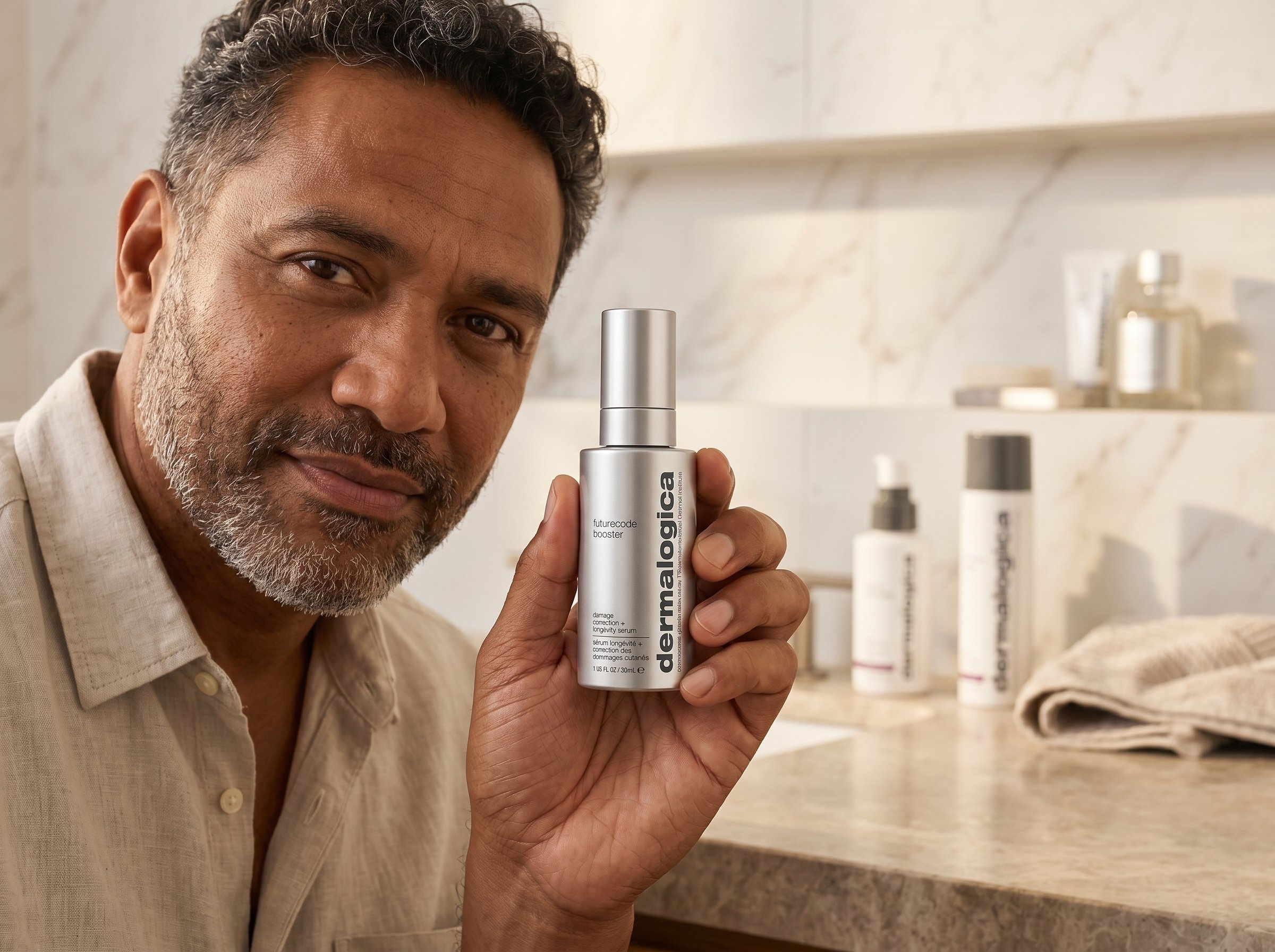
Featured: FutureCode Booster
Advanced booster that helps extend the longevity of healthy-looking skin by supporting natural skin repair and reducing visible signs of DNA-relate...
Shop NowFutureCode Booster: NAD+ Support in Serum Form
Most products that address cellular energy come in heavy creams, which aren't always ideal for all skin types or climates. The Dermalogica FutureCode Booster delivers NAD+ support in a lightweight serum format, making it easier to layer into an existing routine without adding heaviness.
Key ingredients include teprenone, which supports the longevity of healthy skin cells by protecting telomeres (the protective caps on your DNA that shorten with age and stress). Niacinamide provides direct NAD+ precursor support. Sunflower sprout extract and acetyl zingerone work as antioxidants to reduce the oxidative load that depletes NAD+. Rosehip oil adds essential fatty acids that support barrier function.
This is positioned as a foundational booster, not a replacement for your existing treatments. It works underneath your other actives to support the cellular environment that makes everything else more effective. If your skin has stopped responding the way it used to, this is worth considering as part of a broader plan. Shop now.
How Long Does It Take to See Results?
This is worth being honest about. Cellular-level changes take time to show up on the surface. Your skin renews roughly every four weeks, so visible improvements in brightness and texture typically emerge over six to twelve weeks of consistent use. Early changes, like improved skin feel and slightly more even tone, can appear sooner.
The timeline also depends on where your NAD+ levels are starting from, how much UV and environmental stress your skin is managing. And how well your sleep and lifestyle habits support the repair process. Pairing targeted actives with smart routine habits gives your skin the best conditions to respond.
Patience matters here. You're not masking dullness with a temporary brightening effect. You're addressing the cellular slowdown that caused it. That kind of change is more gradual, but it's also more lasting.
Dull skin is rarely just a surface problem. When your cells don't have enough NAD+ to run their repair and renewal processes efficiently, the result shows up as flat, tired-looking skin that resists your usual products. Addressing this at the cellular level, through NAD+ precursors, protective support. And habits that reduce the daily drain, gives your skin what it needs to genuinely renew.
If you're curious whether cellular energy support could be the missing piece in your routine, the FutureCode Booster is worth exploring. And if you'd like guidance tailored to your skin just, speak to our skin experts to understand what your skin is actually doing before recommending anything.


