
If you've invested in collagen creams hoping to plump fine lines and restore firmness, you deserve to know the truth: most of them can't do what they promise. Not because collagen isn't important, it absolutely is, but because of a basic problem that many brands conveniently ignore.
The issue comes down to molecular size. Your skin's barrier is very selective about what it allows through, and collagen molecules are simply too large to make the journey. Understanding this changes everything about how you approach collagen support for your skin. The good news? There's a science-backed solution that actually works, and it's been hiding in plain sight.

Why Can't Collagen Molecules reach Your Skin?
Your skin barrier functions like an very sophisticated security system, allowing certain molecules through while blocking others. The determining factor is molecular weight, measured in daltons. Research shows that molecules larger than 500 daltons struggle to reach the stratum corneum, your skin's outermost protective layer.
Collagen molecules weigh about 300,000 daltons. That's 600 times larger than the absorption threshold. To put this in perspective, trying to absorb topical collagen is like attempting to push a basketball through a keyhole. Your skin's barrier is doing exactly what it should, protecting you from large foreign molecules.
This isn't a flaw in your skin; it's brilliant biological design. If your barrier allowed every large molecule through, you'd be at risk to environmental toxins, bacteria, and allergens. The problem is that this same protective mechanism prevents topically applied collagen from reaching the dermis where it's actually needed.
Some brands claim their collagen is "hydrolysed" or "nano-sized" to improve reach. While breaking collagen into smaller fragments does reduce molecular weight, these pieces still typically measure 3,000-10,000 daltons, far too large to reach well. Even when broken down, collagen fragments remain greatly above the 500-dalton absorption threshold.
What Happens to Collagen When You Apply It Topically?
When you smooth a collagen cream onto your skin, the collagen molecules sit on the surface, unable to reach. They can provide temporary hydration by attracting water molecules, collagen is hygroscopic, meaning it draws moisture from the environment. This creates a short-term plumping effect that disappears once the product is washed off or absorbed into the surface layer.

This surface hydration isn't entirely worthless. It can for now improve skin texture and create a smoother canvas for makeup use. But it's not rebuilding your dermal collagen matrix, reversing structural volume loss, or addressing the underlying causes of collagen degradation. You're really paying premium prices for an expensive moisturiser that delivers temporary cosmetic effects rather than lasting structural improvements.
The distinction matters because real collagen support requires reaching the dermis, the deeper skin layer where fibroblasts live and where collagen synthesis actually occurs. Surface hydration and dermal collagen production are entirely different processes, yet marketing often conflates them to create the impression that topical collagen can rebuild what time and sun damage have depleted.
Key Takeaways
- Most collagen creams fail because collagen molecules are too large to reach skin's barrier, around 300,000 daltons when skin only absorbs molecules under 500 daltons.
- Applying collagen topically is like trying to push a basketball through a keyhole.
- Peptides solve this by being small enough to reach (under 500 daltons) and acting as messengers that signal your skin's fibroblasts to produce collagen naturally.
- This peptide approach works with your skin's biology rather than attempting the impo...

How Do Peptides Actually Signal Collagen Production?
Peptides solve the reach problem by being small enough to pass through your skin barrier, most helpful peptides measure between 500-3,000 daltons, with many therapeutic peptides under 1,000 daltons. But size is only part of the story. What makes peptides genuinely effective is their ability to act as cellular messengers.
When collagen naturally breaks down in your skin through aging or UV damage, it releases specific peptide fragments. Your fibroblasts, the cells responsible for producing collagen, recognise these fragments as signals that collagen has been damaged and needs replacing. This triggers a repair response where fibroblasts increase collagen synthesis to restore what's been lost.
Synthetic signal peptides mimic these natural breakdown fragments. When applied topically and absorbed into the dermis, they really "trick" your fibroblasts into thinking collagen damage has occurred, activating the same repair mechanisms. Instead of trying to deposit collagen from the outside, peptides work with your skin's existing biology to stimulate collagen production from within.
Different peptides signal different processes. Palmitoyl tripeptide-1 and palmitoyl tetrapeptide-7 (often combined as Matrixyl 3000) just target collagen I and III synthesis, the types that provide structural support and firmness. Copper peptides support both collagen production and the enzymatic processes that remove damaged collagen, making room for new synthesis. This targeted signalling approach is basically different from the blunt approach of topical collagen use.
Why the 'Collagen Banking' Approach Changes Everything
Think of your skin's collagen like a bank account. Throughout your twenties, you're making regular deposits, your fibroblasts produce collagen efficiently, maintaining a healthy balance. But around age 25-30, collagen production starts declining by about 1% per year. You're no longer depositing as much, and environmental factors like UV exposure and pollution are making withdrawals.

Most people don't notice this declining balance until their thirties or forties, when the cumulative loss becomes visible as fine lines, reduced firmness, and changes in skin texture. By this point, you're playing catch-up, trying to rebuild a depleted account rather than maintaining a healthy balance.
The collagen banking approach recognises that prevention is more effective than correction. Starting peptide-based collagen support in your late twenties or early thirties, before visible signs appear, maintains your collagen account balance. You're supporting ongoing production while your fibroblasts are still fairly efficient, preventing the dramatic decline that makes later intervention more challenging.
For those already having visible collagen loss, peptides still offer major benefits. While you can't completely restore your collagen to youthful levels, you can slow further decline and support modest improvements in density and organisation. The earlier you start, the more you're working from a position of maintenance rather than aggressive repair. This is why dermatologists increasingly recommend peptide serums and creams as part of preventative skincare strategies, not just corrective treatments.

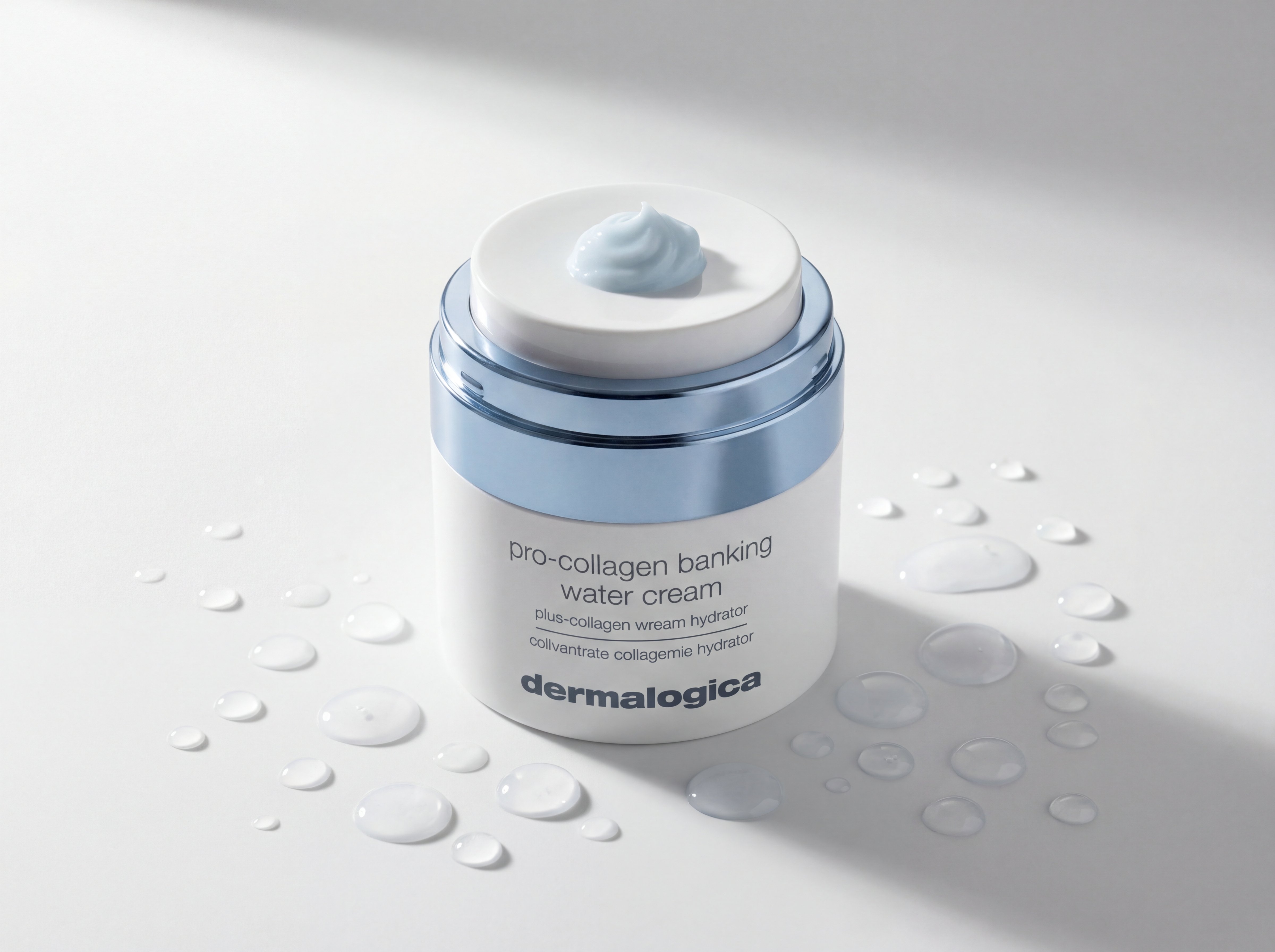
Featured: Pro-Collagen Banking Water Cream
Fights oxidative stress to help preserve collagen and elastin
Shop NowWhat Should You Look for in Peptide-Based Collagen Support?
Not all peptide products deliver equal results. Effective formulas require specific factors beyond simply including peptides on the ingredient list. Peptide amount matters, clinical studies typically use amounts of 3-8% for signal peptides, but many commercial products contain far less without disclosing exact percentages.
formula stability is equally critical. Peptides can degrade when exposed to extreme pH levels, certain preservatives, or incompatible active ingredients. Look for products that use appropriate stabilisation systems and avoid mixing peptides with highly acidic ingredients like L-ascorbic acid or strong exfoliants in the same routine step.
The Dermalogica Pro-Collagen Banking Water Cream addresses these factors with a researched amount of collagen-supporting peptides in a stable, skin-compatible base. The "water cream" texture delivers peptides in a lightweight format that absorbs quickly without heaviness, important because peptides need to reach, not sit on the surface. The formula includes complementary ingredients like hyaluronic acid for hydration and antioxidants to protect newly synthesised collagen from oxidative damage.
What this cream won't do is equally important: it won't fade dark spots, dramatically reduce deep wrinkles overnight, or replace the need for sun protection. Being honest about what peptide technology can and can't achieve builds realistic expectations. Peptides excel at supporting collagen production over time, typically showing initial improvements around 8-12 weeks with continued enhancement over 6 months of consistent use. This is gradual, cumulative support, not instant transformation.
Shop the Pro-Collagen Banking Water Cream as part of a complete approach to collagen support that includes daily SPF, antioxidants, and appropriate exfoliation to maximise peptide effectiveness.
How Should You Layer Peptides Into Your Existing Routine?
Peptides work best when incorporated strategically into your existing routine rather than randomly added. The general principle is applying products from thinnest to thickest consistency, but peptides have specific compatibility factors.
Apply peptide products after cleansing and any water-based serums (like hyaluronic acid) but before heavier moisturisers or oils. If you use active exfoliants like AHAs, BHAs, or retinoids, separate them from peptide use, use exfoliants in the evening and peptides in the morning, or alternate nights. Strong acids and retinoids can possibly degrade certain peptides or alter skin pH in ways that affect peptide reach.
The Pro-Collagen Banking Water Cream works well as a morning moisturiser under SPF or as an evening treatment after lighter serums. Its water-cream texture means it absorbs quickly without interfering with subsequent product layers. For maximum collagen support, pair it with a vitamin C serum in the morning (applied before the cream) to protect newly synthesised collagen from oxidative damage, and a gentle retinoid in the evening on alternate nights to support cellular turnover.
Consistency matters more than perfection. Using peptides five days a week consistently delivers better results than using them daily for two weeks then forgetting for a month. Your fibroblasts respond to sustained signalling, not sporadic intense treatment. Think of peptide use as making regular deposits into your collagen bank account, small, consistent contributions compound over time into major results.
Understanding why most collagen creams don't work isn't about crushing hope, it's about directing your skincare investments toward approaches that actually deliver. Molecular size matters, and no amount of marketing can change the biological reality that collagen molecules are too large to reach your skin barrier.
Peptides offer a scientifically sound alternative by working with your skin's existing biology rather than against it. They're small enough to reach, smart enough to signal specific cellular responses, and proven effective in clinical research. Whether you're banking collagen in your thirties or supporting production in your fifties, peptide-based formulas like the Pro-Collagen Banking Water Cream represent a genuine advancement in how we approach collagen support, not through impossible topical delivery, but through intelligent cellular communication that activates your skin's own production capacity.


