You have tried the serums. You have layered them correctly, applied them to damp skin, and sealed everything with a good moisturiser. Your hyaluronic acid routine looks exactly right on paper. But your skin still feels tight by midday, and that lit-from-within glow you are chasing never quite arrives.
Here is what most skincare content will not tell you: hyaluronic acid (a naturally occurring sugar molecule that holds water in skin) can only do its job when your skin's water-transport system is working. When that system breaks down, no amount of hydrating serum will fully fix it. The problem is not your product. It is your skin's ability to use it.
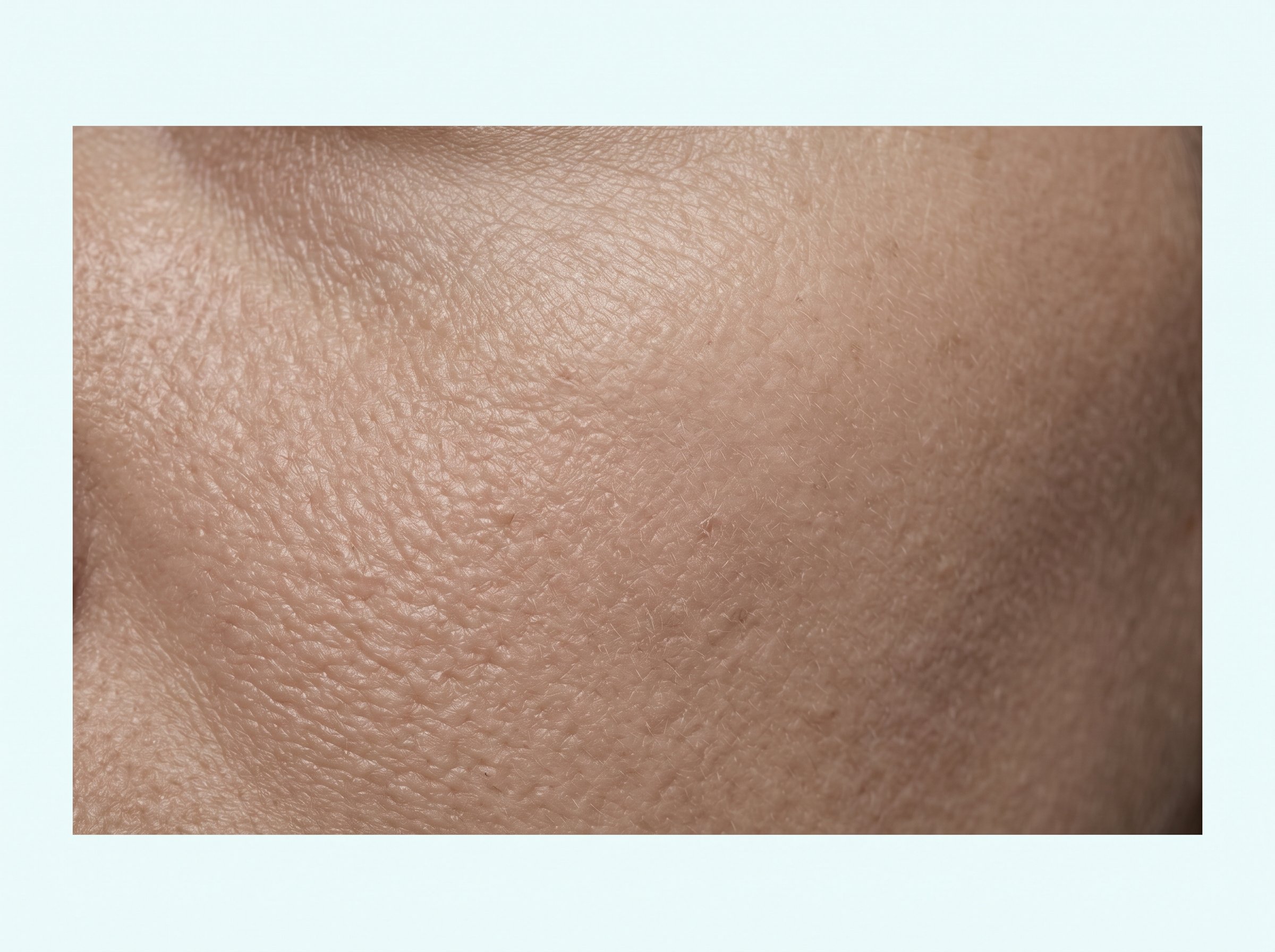
What Is Aquaporin-3 and Why Does It Matter for Hydration?
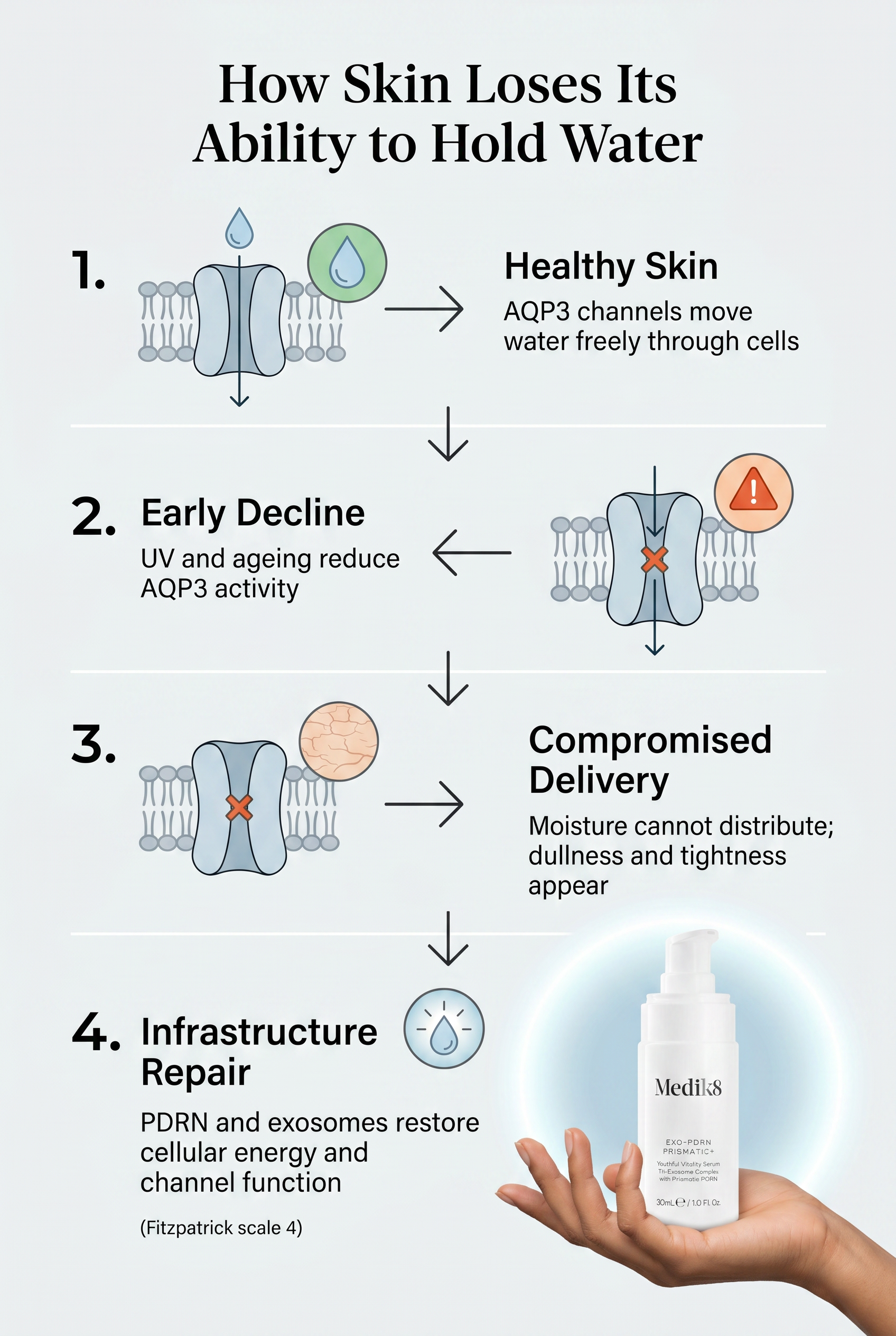
Your skin moves water through channels called aquaporins. Think of them as tiny pipes built into your skin cells. Aquaporin-3 (AQP3) is the most important one for surface hydration. It sits in the membranes of keratinocytes, which are the cells that make up your outer skin layer. And it controls how water flows in and out of those cells.
When AQP3 is working well, your skin distributes moisture evenly. It holds water where it is needed, responds quickly to hydration you apply, and maintains that plump, smooth look we associate with healthy skin. When AQP3 activity drops, water cannot move efficiently through the skin. Moisture pools in some areas and starves others. The result is skin that looks dull, feels tight, and does not respond the way it used to.
Research shows that UV exposure, environmental stress, and natural ageing all reduce AQP3 expression. This is not a slow, gradual change you might notice over years. Studies suggest AQP3 activity can begin to decline in your late twenties and early thirties. This is often exactly when people start noticing that their hydration routine is not delivering the same results it once did.
Why Hyaluronic Acid Alone Cannot Solve a Broken Hydration System
Hyaluronic acid is a humectant. It draws water toward itself and holds it. Applied correctly to damp skin and sealed with an occlusive moisturiser, it is genuinely effective at surface hydration. If you want to understand more about how different molecular weights of HA work, our guide on hyaluronic acid and hydration covers the science clearly.
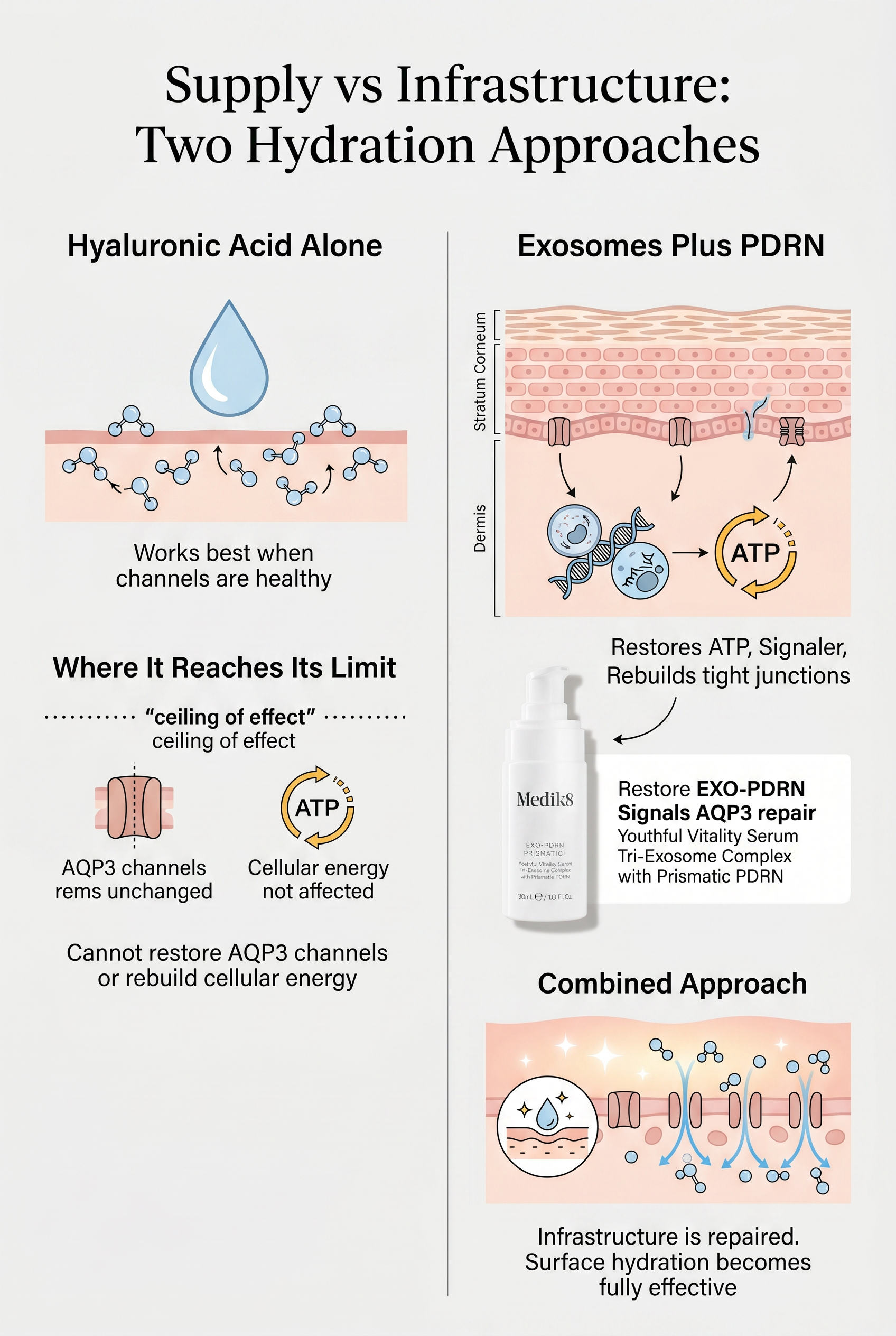
But here is the gap that matters: hyaluronic acid works on the surface and in the upper layers of the skin. It cannot rebuild the channels that move water through your cells. It cannot restore the cellular energy your skin needs to run those channels properly. It is supplying water to a system that may no longer be able to distribute it effectively.
Think of it this way. If your home's plumbing is blocked, pouring more water into the tap does not help. The infrastructure needs to be fixed first. Your skin's hydration infrastructure is aquaporin-3 function, tight junction integrity (the seals between skin cells), and the cellular energy that powers all of it. When those are compromised, even a well-formulated HA serum hits a ceiling.
This is why persistent dehydration often has nothing to do with how much water you drink or how many hydrating products you use. The signals are there. The supply is there. The delivery system is what is failing.
Key Takeaways
- Hyaluronic acid stops working when your skin loses aquaporin-3 channels, the proteins that move water through skin cells.
- Without these channels, even the best serum cannot deliver moisture where it needs to go.
- This is a hydration infrastructure problem, not a product problem.
- Restoring aquaporin-3 function and cellular energy requires more than a topical humectant.
- It requires ingredients that work at the cellular level to rebuild your skin's water-transport system from the inside out.
The Energy Problem Behind Persistent Dehydration
Here is a piece of the puzzle that rarely gets discussed in skincare content. Your skin cells need energy, in the form of ATP (adenosine triphosphate, the molecule your cells use as fuel), to maintain aquaporin channels, rebuild tight junctions. And run the repair processes that keep your barrier working. When cellular energy drops, all of these functions slow down.
Skin cells that are stressed by UV exposure, pollution, or the natural ageing process produce less ATP. Less ATP means less capacity to maintain hydration infrastructure. This creates a cycle where dehydrated, stressed skin becomes less able to fix itself, which leads to more dehydration and more stress.
This is where the angle of energy restoration becomes important. Rather than simply signalling skin cells to do more, the goal is to restore the cellular fuel they need to act on those signals. PDRN, which stands for polydeoxyribonucleotide (a DNA-derived ingredient that activates cell repair pathways), has been studied for its role in stimulating ATP production and activating adenosine receptors that drive tissue regeneration. When cells have the energy they need, aquaporin function, barrier repair, and hydration distribution can all improve.
You can read more about how active ingredients work at the cellular level in our article on active ingredients and skin change.
What Does Rebuilding Hydration Infrastructure Actually Look Like?
Restoring your skin's water-transport system involves two things working together. First, you need ingredients that signal skin cells to upregulate aquaporin-3 expression. Second, you need the cellular energy for those cells to act on those signals. Without both, you get incomplete results.
Exosomes (tiny cell-signalling particles derived from stem cells) have emerged as a key ingredient in this space. They carry growth factors and microRNA that communicate directly with skin cells, prompting them to restore function rather than simply receive hydration passively. When combined with PDRN, which restores the cellular energy needed to run these repair processes, the result is a more complete approach to dehydration.
Clinical data on formulations using this combination show improvements in skin luminosity and barrier function within seven days, with continued gains in skin volume and fine line reduction by day fourteen. A 50-plus percent boost in cell proliferation has been observed in ex vivo studies. This suggests meaningful activity at the cellular level, not just surface-level change.
This is meaningfully different from applying more hydrating serum. It is working on the system that makes hydration possible, not just the supply of water itself.

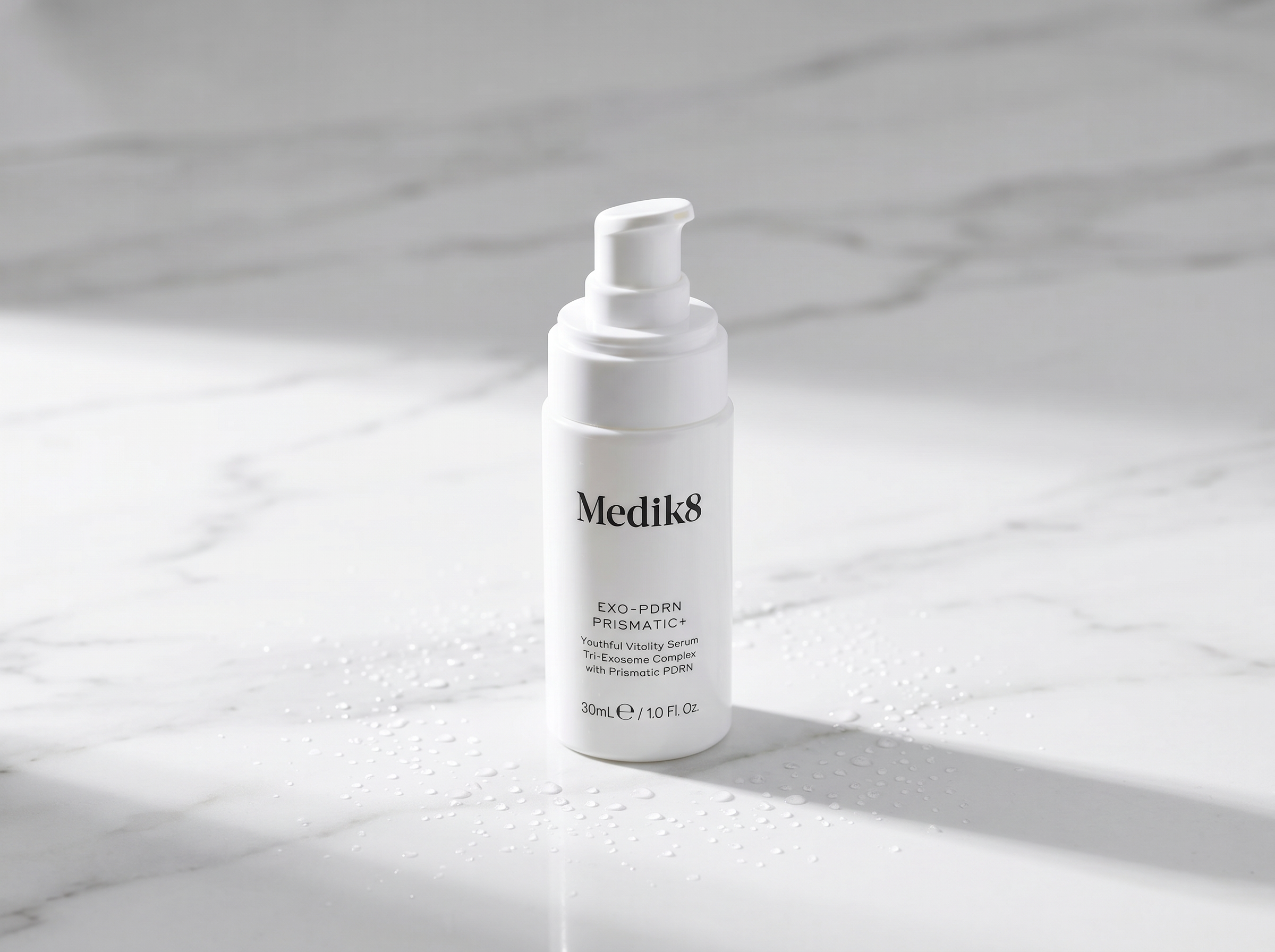
Featured: Exo-PDRN Prismatic+
A full-spectrum face serum that boosts skin's natural rejuvenation by over 50%.
Shop NowHow Do You Know If This Is Your Skin's Problem?
Not every case of dehydration comes down to aquaporin-3 decline. Some dehydration is simply a product or application issue. But there are signs that point toward a deeper infrastructure problem rather than a surface-level fix.
Your hydration routine used to work, and now it does not. You apply serums correctly and still feel tight or dull by afternoon. Your skin looks less luminous than it did a few years ago, even when you are consistent with hydration. Richer products help a little but never quite solve it. These patterns suggest the issue is not what you are applying but your skin's ability to process and distribute moisture.
If you are unsure whether your skin is dry or dehydrated, our article on dry versus dehydrated skin explains the difference clearly. It is worth reading before you change your routine, because the two conditions need different approaches.
Understanding your skin's actual state is the first step. The second is choosing ingredients that work at the right level for what your skin needs. If your infrastructure is the issue, surface hydration alone will always feel like a partial answer.
Where Does Exo-PDRN Prismatic+ Fit Into Your Routine?
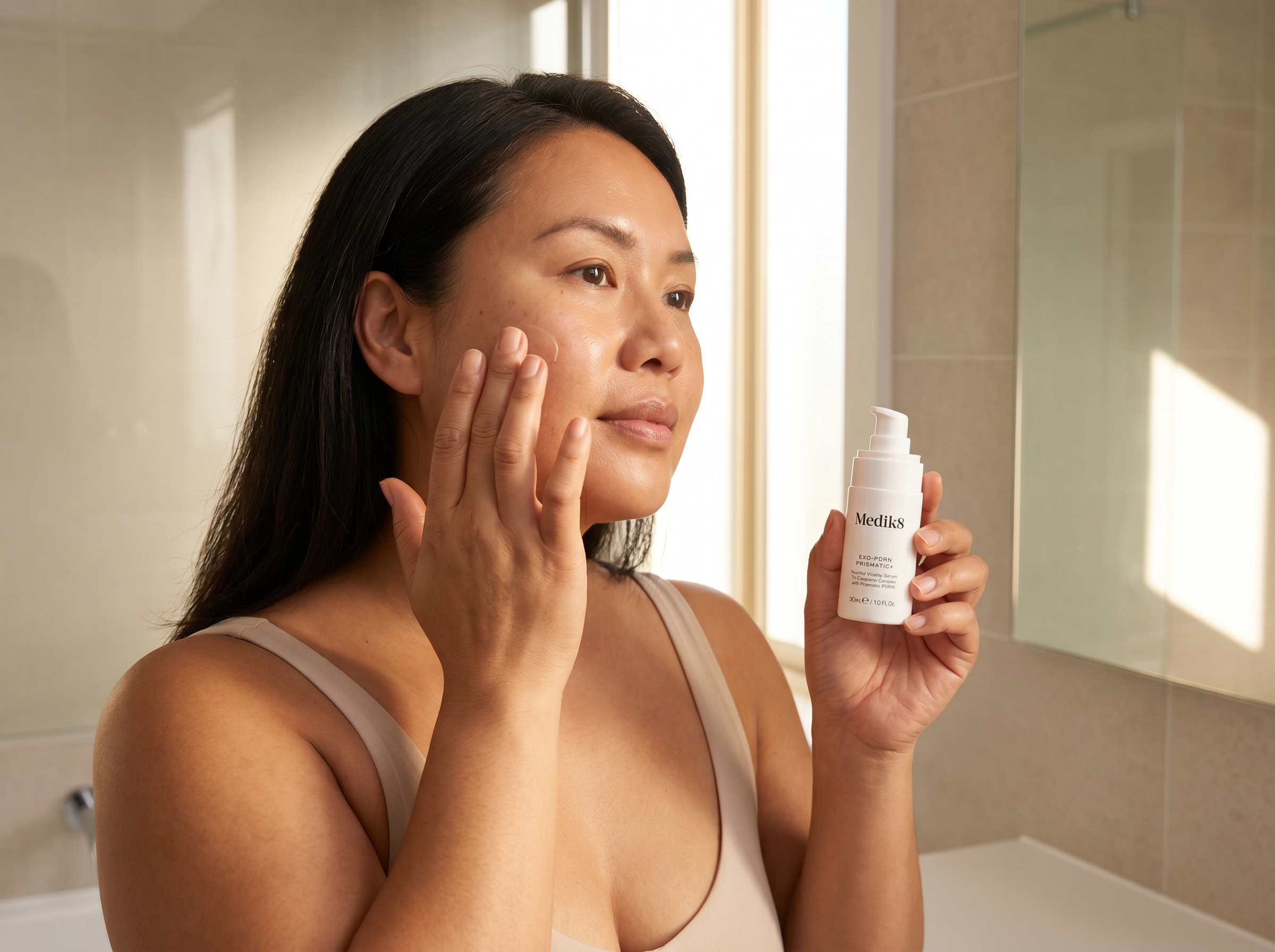
Exo-PDRN Prismatic+ is designed to work as a serum step after cleansing and before moisturiser. It layers well with most existing routines. It is not a replacement for your hydrating serum. It is the step that addresses what your hydrating serum cannot reach.
It is validated for post-procedure use, with 98 percent of participants in clinical assessment agreeing on its suitability after aesthetic treatments. This matters because post-procedure skin has a compromised barrier and heightened hydration needs, exactly the conditions where infrastructure support is most critical.
For skin experiencing persistent dehydration, the most useful shift is moving from a supply mindset to an infrastructure mindset. More water in is not always the answer. Restoring your skin's ability to move, hold, and distribute water is. If you want to understand how serums fit into a broader routine, our article on serums and how to use them is a good starting point.
Hyaluronic acid has not failed you. It is doing exactly what it is designed to do. But if your skin's water-transport system is not working properly, the results will always feel incomplete. Persistent dehydration, lost luminosity, and skin that no longer responds the way it used to are often signs that the issue is deeper than surface hydration can reach.
Rebuilding hydration infrastructure means restoring aquaporin-3 function, supporting tight junction integrity, and giving your skin cells the energy they need to run these systems. That is a different goal from applying more humectant, and it needs different ingredients to achieve it. If you are ready to move from a supply mindset to an infrastructure mindset, explore Exo-PDRN Prismatic+ and see whether it fits what your skin is actually asking for.


