
What is healthy skin? It's a question we get asked often, and the answer might surprise you. Healthy skin isn't flawless skin. It's not the smoothed-out, filtered version you see online. Healthy skin is skin that works well for you, every single day.
Your skin is your body's largest organ. It works around the clock to protect you from bacteria, UV rays, and moisture loss. When your skin feels calm and comfortable, that's not vanity.
That's your body telling you its protective barrier is doing its job. This World Skin Health Day, we want to help you understand what healthy skin actually looks like. And how to start reading the signs your own skin is showing you.
What Does Healthy Skin Actually Mean?
Your skin has one main job: protection. The outer layer, called the stratum corneum (think of it as a brick wall of cells held together by fats), keeps water in and irritants out. When this barrier works well, your skin feels comfortable. When it's disrupted, you might notice dryness, redness, or sensitivity.
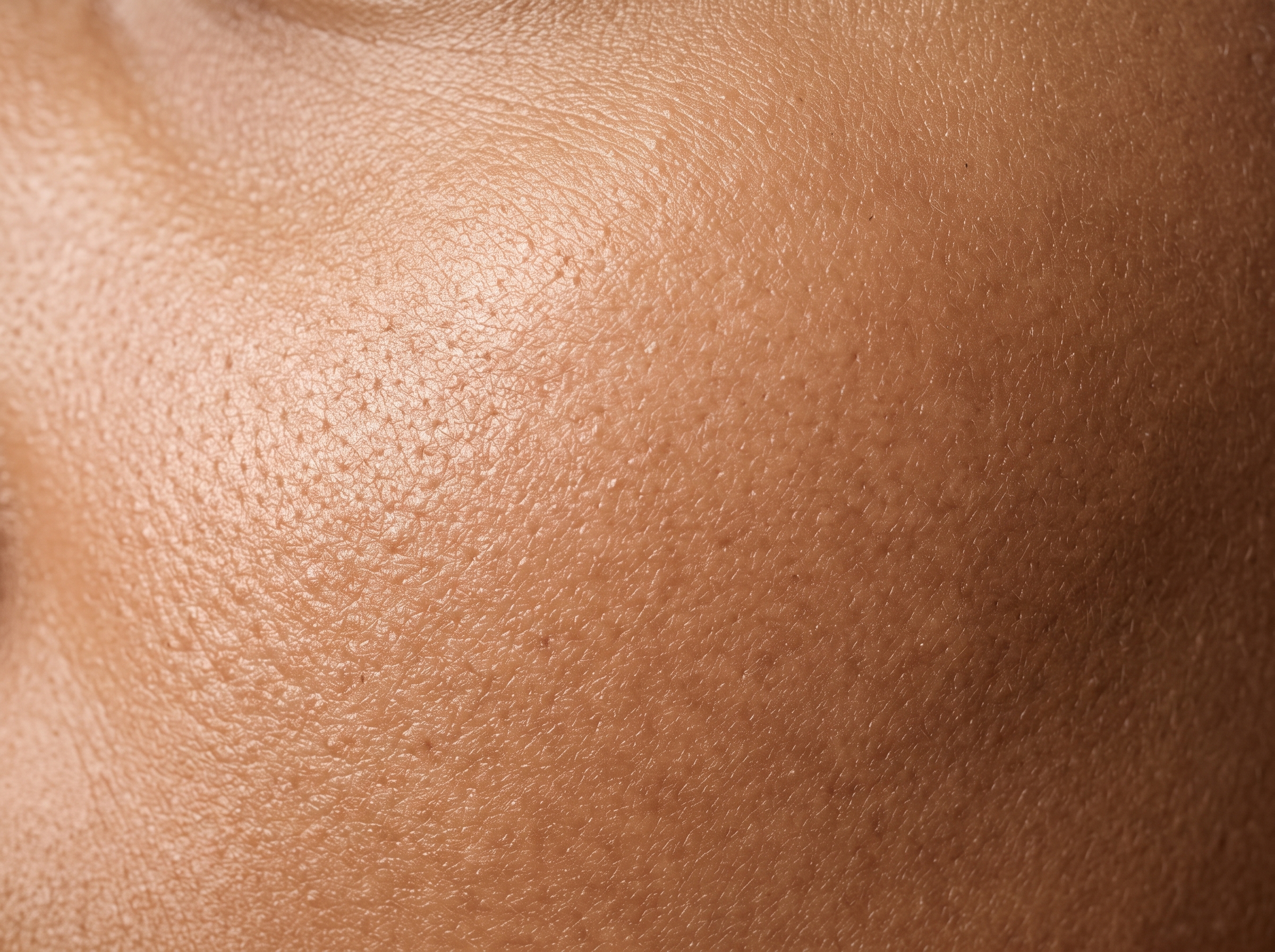
Skin is also your body's largest organ. It covers nearly two square metres and weighs several kilograms on the average adult. It renews itself constantly, shedding old cells and building new ones. This process is called desquamation, which is just a fancy word for skin cell shedding. It's part of why your skin can look different from week to week.
Comfortable, calm skin is part of everyday wellbeing. It's not about chasing a flawless look. When your skin feels good, you feel good. That's the real goal of healthy skin: skin that functions well and feels good to live in.
Key Takeaways
- Healthy skin is skin that works well, not skin that looks perfect.
- Your skin is your body's largest organ, and it protects you from bacteria, UV rays, and moisture loss every single day.
- Healthy skin has a strong barrier (the outer layer that locks in hydration and blocks irritants), feels comfortable rather than tight or itchy, and can adapt to changes in weather, hormones, and stress.
- It doesn't mean zero breakouts or zero fine lines.
- It means your skin can do its job: protect, regulate, an...
Why Does Understanding Your Skin Matter More Than Any Product?
Here's something we believe strongly: knowing your skin is where healthy skin starts. Not the newest serum. Not the most talked-about ingredient. Understanding what your skin needs, and why, is the foundation everything else builds on.
Skin changes constantly. Weather, hormones, stress, and age all affect how your skin behaves. A routine that worked for you last year might not work now. That's not a failure on your part. It's simply how skin works.
This is why understanding always comes before recommending a product. Once you know what your skin is telling you, you can make choices that actually fit your skin, not just what's trending this month.
How Can You Read Your Own Skin?
Think of these signs as your skin communicating, not a diagnosis. Here's what some common signals might mean.
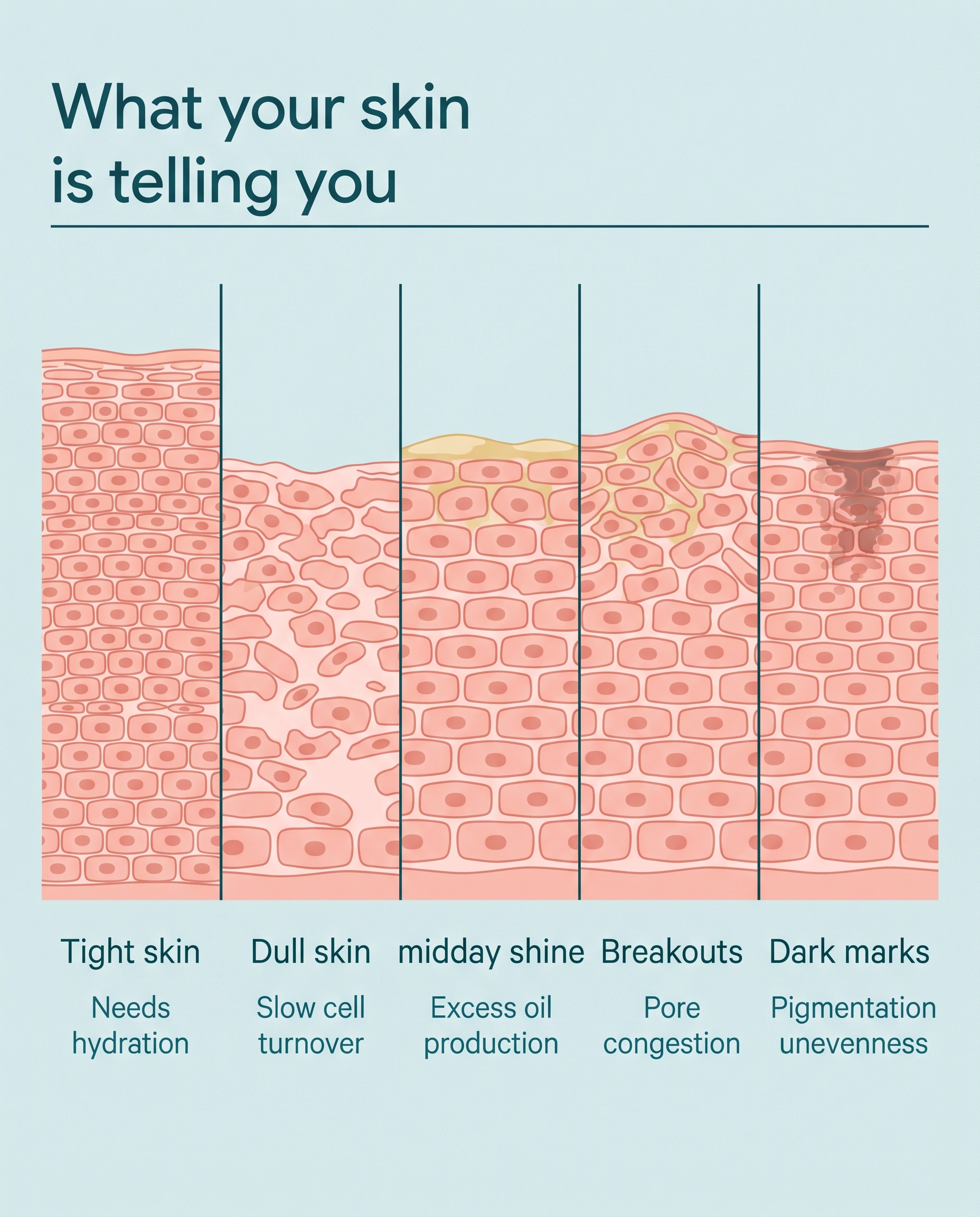
Tight or Thirsty Skin
If your skin feels tight after cleansing, or looks thirsty by afternoon, this often points to dehydration or a weakened barrier. Your skin may be losing water faster than it can hold on to it. This is a sign to focus on barrier support and hydration first.
Dull or Lacklustre Skin
Skin that looks flat or tired, even when you feel rested, often points to slowed cell turnover. Older cells are sitting on the surface longer than they should. Gentle, consistent care can help support your skin's natural renewal.
Breakouts and Congestion
Breakouts don't always mean oily skin. Often, they trace back to a stressed barrier that's letting irritants in while struggling to regulate oil. Congestion can also build when dead skin cells don't shed properly and block pores.
Midday Shine and Visible Pores
If shine returns by lunchtime, or pores look more visible than usual, this usually points to oil balance. Sebum (your skin's natural oil) is essential, but too much sitting on the surface can make pores look larger.
Dark Marks and Uneven Tone
Dark marks or patchy tone point to pigmentation, which is extra melanin sitting in certain areas of skin. Winter is actually a good window to address pigmentation. UV levels are lower, so your skin is less likely to react while you work on evening out tone.
None of these signs are a diagnosis. They're simply information. Understanding them is the first step to responding in a way that actually helps.
When Should You See a Professional About Your Skin?
Reading your own skin is useful, but it has limits. Some signs deserve a closer look from a dermal therapist or GP.
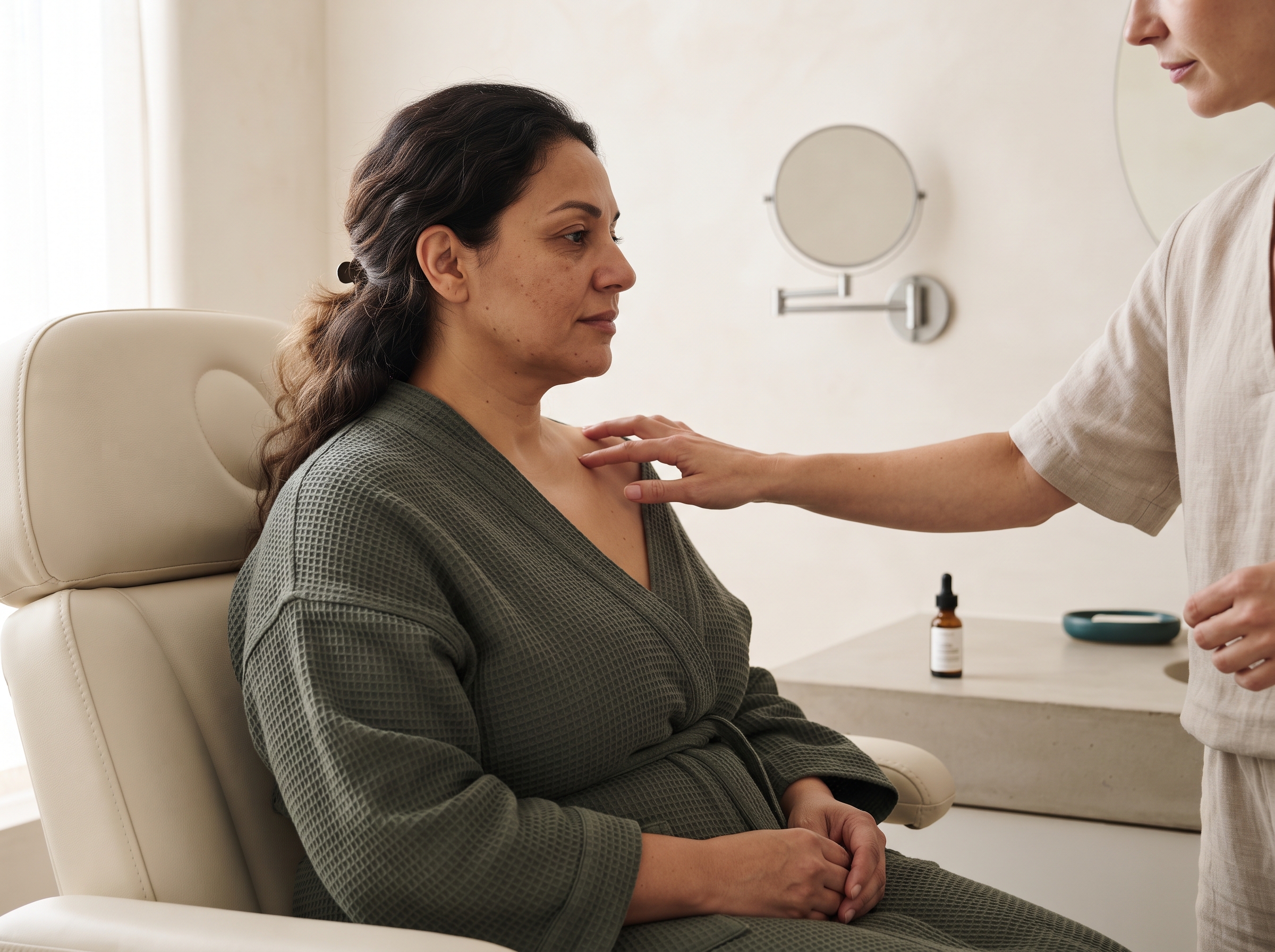
If a concern is persistent, sudden, or changing, such as a mole that shifts shape, a rash that won't settle, or breakouts that don't respond to gentle care, it's worth getting it checked. Skin health includes knowing when self-care isn't enough. That's not a failure. That's good sense.
A professional can also help explain what's happening beneath the surface, especially with hormonal changes, persistent pigmentation, or reactive skin. This kind of guidance can save you time and frustration down the track.
Healthy skin isn't about chasing perfection. It's about understanding the organ that protects you every day, and learning to read what it's telling you. Tightness, dullness, breakouts, shine, and uneven tone are all signals, not failures.
The more you understand your own skin, the more confidently you can care for it. That understanding, not the newest product on the shelf, is where healthy skin really starts.


