
You've been treating your pigmentation for months. The dark spots fade, you feel hopeful, and then, they're back. Sometimes in the exact same places. Sometimes worse than before.
Here's what most pigmentation advice gets wrong: it treats melanin production as the only problem. Stop the melanin, stop the spots. Except your skin doesn't work that way. Pigmentation has two critical checkpoints where it can be interrupted, and if you're only addressing one, you're setting yourself up for an endless cycle of fading and returning spots.
Understanding both checkpoints changes everything. It explains why some treatments work for now but fail long-term. Why your dark spots seem to have a memory. And most importantly, it gives you a complete strategy that addresses the root cause, not just the visible symptom.
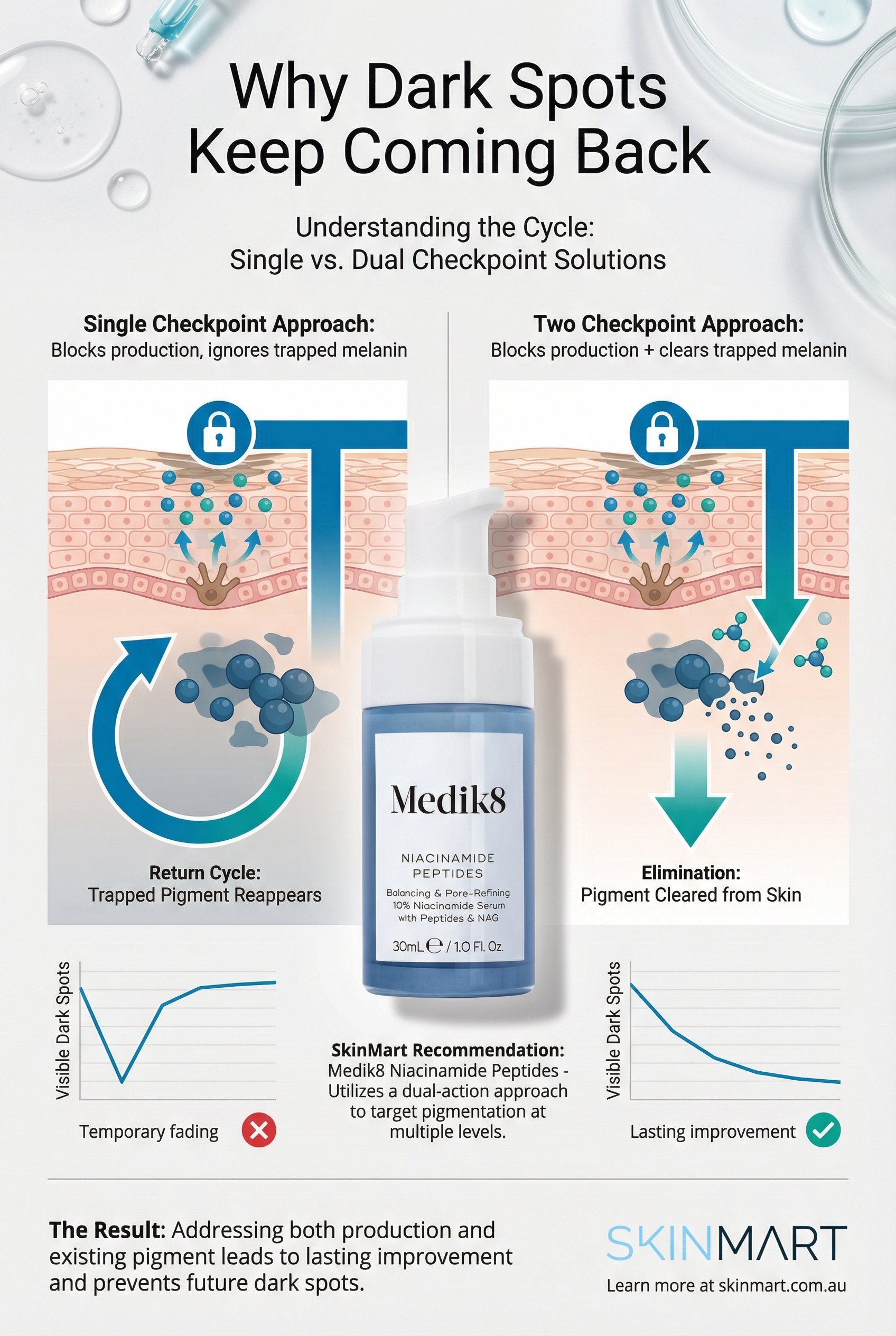
What Are the Two Checkpoints in Pigmentation?
Think of pigmentation as a two-stage process, not a single event. Each stage represents a checkpoint where intervention can stop dark spots from forming or persisting.
Checkpoint One: Melanin Production in Melanocytes. This is where most treatments focus. Your melanocytes (pigment-producing cells) create melanin in response to triggers like UV exposure, swelling, or hormonal changes. Ingredients like vitamin C, kojic acid, and tranexamic acid work here, signalling melanocytes to slow down production. This is important, but it's only half the story.
Checkpoint Two: Melanin Transfer and Distribution in Keratinocytes. This is the checkpoint most people miss entirely. Once melanin is produced, it doesn't just sit in melanocytes. It gets packaged into tiny containers called melanosomes and transferred to your keratinocytes (the cells that make up your skin's surface). How efficiently your keratinocytes process and shed this melanin determines whether pigmentation fades naturally or gets trapped, creating persistent dark spots.
Here's the critical insight: even if you successfully slow melanin production at checkpoint one, existing pigment can remain trapped in your keratinocytes for months. And if your skin barrier is compromised, melanin transfer becomes chaotic and uneven, creating new dark spots even when production is under control.
This is why your pigmentation keeps coming back. You're treating production but ignoring distribution and clearance.
Why Checkpoint Two Gets Ignored (And Why That's a Problem)
Most pigmentation products focus exclusively on checkpoint one because it's easier to market. "Blocks melanin production" sounds powerful and straightforward. But your skin barrier's role in managing pigment distribution is equally important, and far more complex.
When your skin barrier is functioning ideally, keratinocytes process melanin efficiently. They package it, move it up through the skin layers, and shed it naturally through your skin's regular turnover cycle (about 28 days in healthy skin). This is why some people tan evenly and fade predictably, while others develop patchy pigmentation that lingers.
A compromised barrier disrupts this entire process. When your barrier is damaged, from over-exfoliation, harsh treatments, environmental stress, or swelling, keratinocytes become dysfunctional. They can't process melanin efficiently, leading to uneven distribution and prolonged retention. This creates the "sticky" pigmentation that refuses to fade, even when you're no longer producing excess melanin.
Research published in the Journal of Investigative Dermatology shows that barrier dysfunction greatly impairs melanosome transfer and distribution, creating irregular pigmentation patterns that persist despite reduced melanin synthesis. In practical terms: if your barrier is compromised, you can use all the brightening actives in the world, but the melanin that's already there has nowhere to go.
This is the barrier betrayal. Your skin can't clear pigmentation well when the foundation is broken.
Key Takeaways
- Dark spots return because most treatments only address one checkpoint: stopping new melanin production.
- But pigmentation has two critical stages where it can be interrupted.
- The first checkpoint is in your melanocytes, where melanin is created.
- The second is in your keratinocytes, where melanin gets trapped and distributed.
- If you only target melanin production but ignore how your skin barrier manages pigment transfer, you're missing half the equation.
How Niacinamide Works at Both Checkpoints
This is where niacinamide becomes strategically important. Unlike single-mechanism brightening ingredients, niacinamide operates at both checkpoints at once.
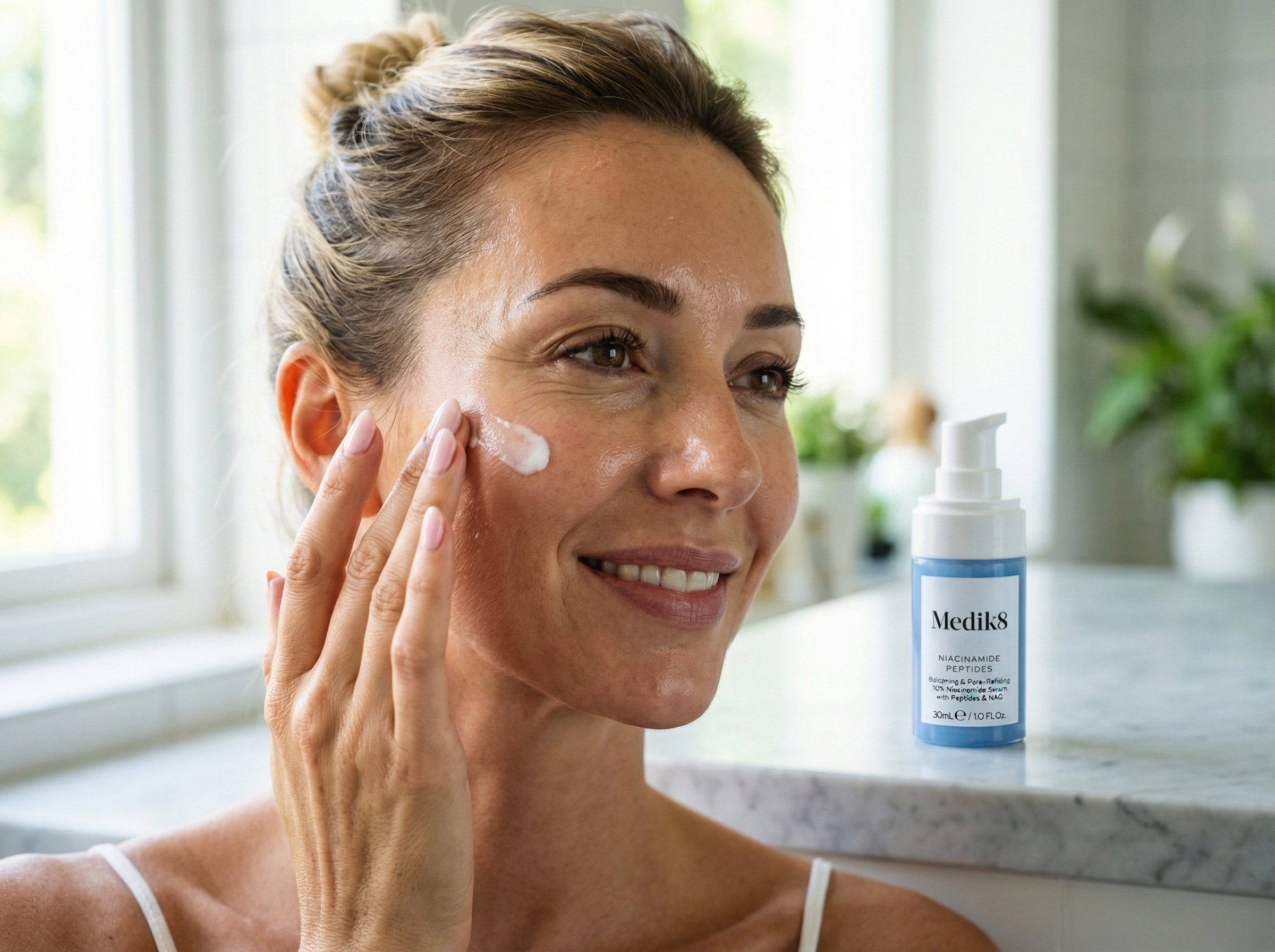
At Checkpoint One: Niacinamide interferes with melanosome transfer from melanocytes to keratinocytes. Studies show it reduces melanin content in keratinocytes by up to 35-68% by blocking the transfer process itself. This means less pigment reaches your skin's surface in the first place.
At Checkpoint Two: Niacinamide strengthens your skin barrier by increasing ceramide synthesis and improving barrier lipid production. A study in the British Journal of Dermatology found that 2% niacinamide greatly improved barrier function within four weeks, reducing transepidermal water loss and increasing stratum corneum hydration. When your barrier is strong, keratinocytes function normally, processing and shedding melanin efficiently rather than trapping it.
This dual action is why niacinamide shows consistent results in clinical trials for melasma, post-inflammatory hyperpigmentation, and general skin tone evenness. A 2011 study comparing 4% niacinamide to 4% hydroquinone (the gold standard) found comparable efficacy with greatly fewer side effects and better barrier tolerance.
But here's what makes this especially relevant: niacinamide isn't just treating your pigmentation, it's creating the conditions for your skin to manage pigment normally. This is the difference between temporary fading and lasting improvement.
Why Peptides Matter for Long-Term Pigmentation Control
If niacinamide addresses both checkpoints, where do peptides fit? Think of peptides as the long-term reinforcement system that prevents pigmentation triggers from activating in the first place.
Chronic swelling is one of the primary triggers for melanocyte activation. When your skin experiences repeated causing swelling events, from UV exposure, barrier damage, or even aggressive treatments, it sends signals that stimulate melanin production as a protective response. This is why post-inflammatory hyperpigmentation is so common and why pigmentation often worsens during times of skin stress.
Peptides work by modulating inflammatory signalling. peptides like Matrixyl 3000 (palmitoyl tripeptide-1 and palmitoyl tetrapeptide-7) have demonstrated anti-inflammatory properties by reducing IL-6 production, a key inflammation marker involved in melanocyte activation. By reducing inflammation, peptides reduce the frequency and intensity of signals that tell melanocytes to produce more pigment.
But peptides do something else that's critical for pigmentation: they support collagen synthesis and dermal integrity. When your dermal structure is strong, your skin is more resilient to the stressors that trigger pigmentation. You're less likely to develop swelling from environmental aggressors, and your skin recovers faster when damage does occur.
This is preventative pigmentation control. You're not just treating existing dark spots, you're reducing the likelihood of new ones forming by addressing the inflammatory environment that triggers melanocyte activation.

Featured: Niacinamide Peptides
Clinically proven 10% niacinamide serum that dramatically improves the look of pores and congestion while soothing the skin barrier.
Shop NowThe Strategic Combination: Why Niacinamide and Peptides Work Together
Combining niacinamide and peptides creates a complete two-checkpoint strategy that most single-ingredient approaches can't match.
Niacinamide handles the immediate pigmentation cycle: blocking melanin transfer at checkpoint one and optimising barrier function at checkpoint two. This addresses both active pigmentation and trapped melanin, creating visible improvement in existing dark spots.
Peptides handle the inflammatory environment: reducing the triggers that activate melanocytes and strengthening dermal integrity to prevent future pigmentation events. This creates long-term stability and reduces the recurrence rate.
What makes this combination especially effective is the synergy between barrier strengthening and inflammation control. A strong barrier (supported by niacinamide) is naturally less prone to inflammation. Reduced swelling (supported by peptides) allows the barrier to function ideally. They reinforce each other, creating a stable skin environment where pigmentation can normalise.
Clinical evidence supports this approach. A 2019 study examining combination treatments for melasma found that multi-mechanism approaches addressing both melanin synthesis and barrier function produced superior results compared to single-active treatments, with greatly lower recurrence rates at 6-month follow-up.
This is what you're missing when you focus solely on brightening actives. You might fade the spots, but you're not creating the foundation that prevents them from returning.
What This Means for Your Pigmentation Strategy
Understanding the two-checkpoint system changes how you approach pigmentation treatment. Instead of chasing the newest brightening ingredient or layering multiple melanin-blocking actives, you need a strategy that addresses both production and distribution.
For active pigmentation: You need intervention at checkpoint one to reduce new melanin formation. Niacinamide does this by blocking melanosome transfer, but you can enhance this with complementary ingredients like vitamin C (which inhibits tyrosinase, the enzyme required for melanin synthesis) or tranexamic acid (which reduces melanocyte activation).
For trapped pigmentation: You need barrier optimisation at checkpoint two to help your skin process and clear existing melanin efficiently. This is where niacinamide's barrier-strengthening properties become critical, supported by adequate hydration and gentle exfoliation that encourages healthy cell turnover without triggering swelling.
For prevention: You need inflammation control to reduce melanocyte triggering. Peptides provide this, along with consistent sun protection (UV is the most potent inflammation trigger for pigmentation) and a gentle routine that doesn't compromise your barrier.
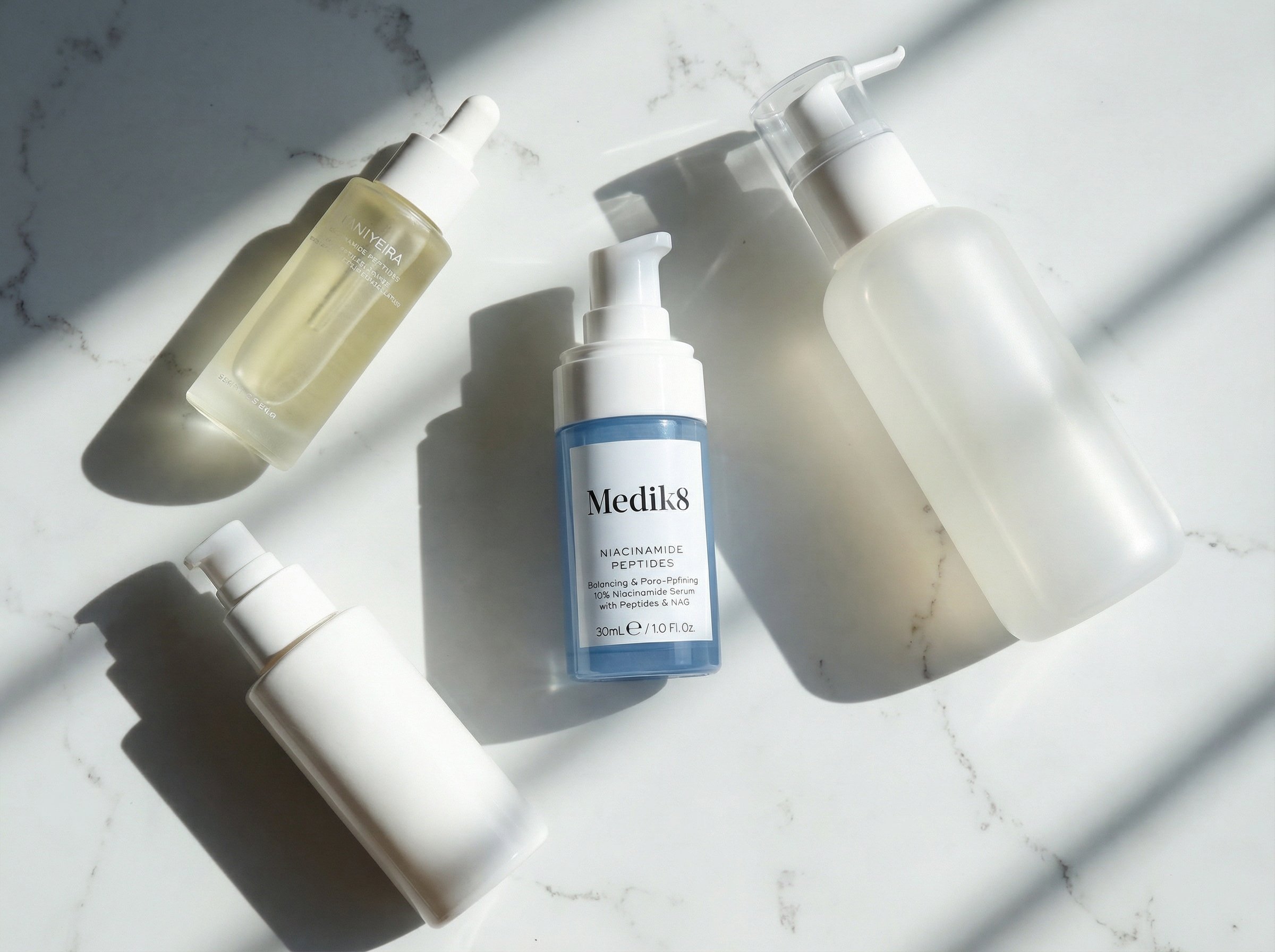
The product that brings this together is Medik8 Niacinamide Peptides, which combines 10% niacinamide with Matrixyl 3000 peptide complex. This formula addresses both checkpoints at once: blocking melanin transfer, strengthening barrier function, and reducing causing swelling triggers.
But here's the honest assessment: this isn't a standalone solution if your pigmentation is severe or hormonally driven (like melasma). In those cases, you'll likely need additional targeted actives like tranexamic acid or azelaic acid. What niacinamide and peptides do is create the foundation that allows those treatments to work more well and prevents the endless cycle of fading and returning.
How to start a Two-Checkpoint Approach
Your pigmentation routine should be structured around both checkpoints, not just layering brightening ingredients randomly.
Morning routine focus: Protection and prevention. Your morning routine should prevent new pigmentation triggers. This means SPF 50+ (non-negotiable), antioxidants to neutralise free radicals from UV and pollution, and barrier support to maintain resilience throughout the day. Apply niacinamide in the morning to provide barrier protection when your skin faces the most environmental stress.
Evening routine focus: Treatment and repair. Your evening routine should address existing pigmentation and support overnight barrier repair. This is when you can layer targeted brightening actives with niacinamide and peptides. The peptides work especially well at night because skin repair processes peak during sleep, and their anti-inflammatory effects can help calm any irritation from stronger actives.
The layering sequence matters: Apply niacinamide after cleansing and any water-based serums but before heavier treatments or oils. Niacinamide has excellent reach and doesn't require a specific pH like some acids do, making it flexible in your routine. If you're using vitamin C (another checkpoint one ingredient), you can layer it with niacinamide, the old incompatibility myth has been thoroughly debunked by research.
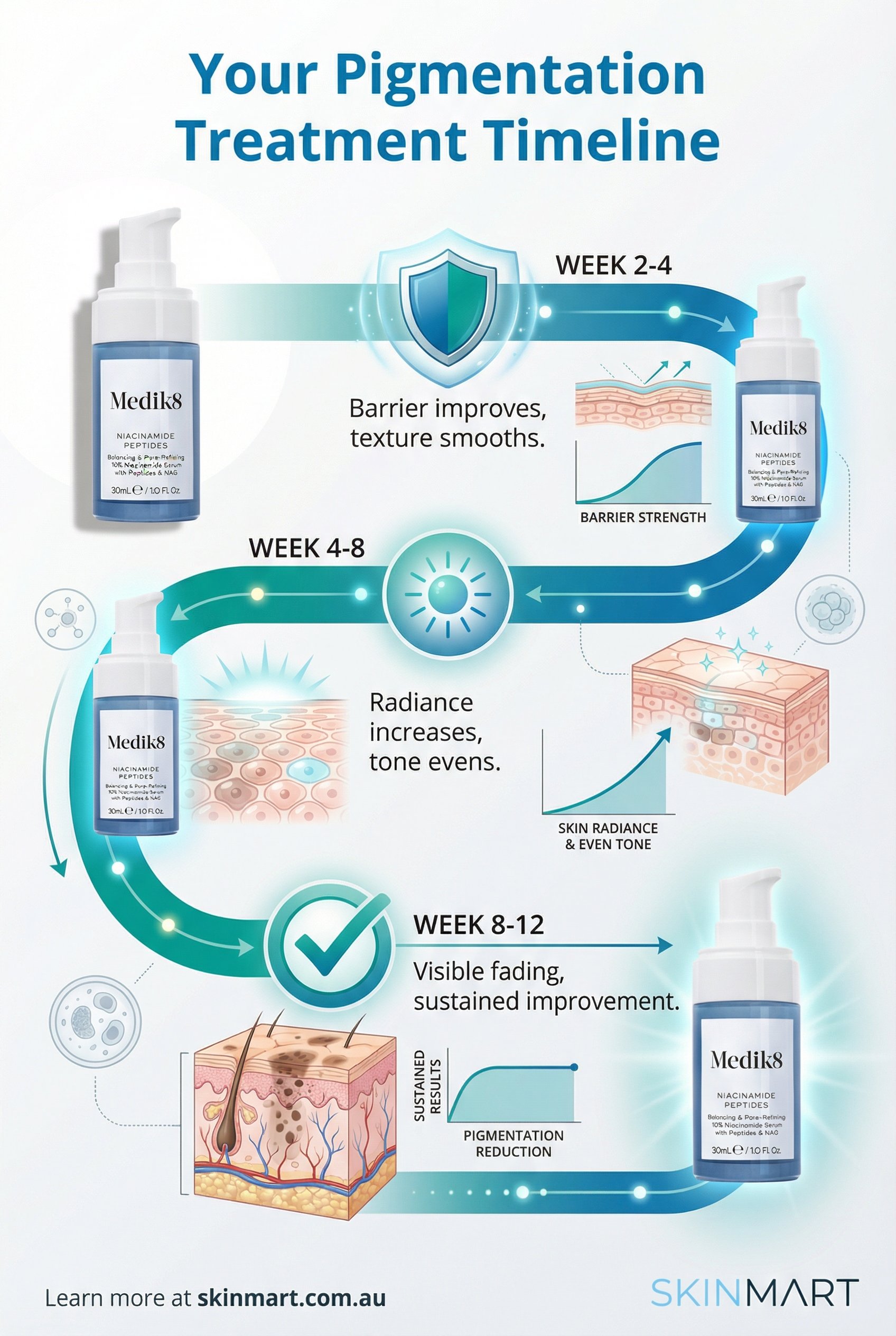
Patience is required: Checkpoint two interventions (barrier repair and melanin clearance) take time. You should see initial improvements in skin texture and radiance within 2-4 weeks as barrier function improves, but visible pigmentation fading typically requires 8-12 weeks as your skin's natural turnover cycle clears trapped melanin. Hormonal pigmentation like melasma may take 4-6 months of consistent treatment.
The goal isn't instant transformation, it's creating a skin environment where pigmentation can normalise and stay normalised.
Your pigmentation keeps returning because you've been treating half the problem. Checkpoint one, melanin production, gets all the attention, while checkpoint two, barrier function and melanin distribution, gets ignored. This incomplete approach creates the frustrating cycle of fading and returning dark spots.
Understanding both checkpoints gives you a complete strategy. Niacinamide works at both stages: blocking melanin transfer and strengthening the barrier that manages pigment clearance. Peptides add long-term stability by reducing the inflammatory triggers that activate melanocytes in the first place. Together, they address not just your current pigmentation, but the underlying dysfunction that allows it to persist and return.
This isn't about finding the perfect brightening ingredient. It's about creating a skin environment where pigmentation can normalise and stay normalised. That requires patience, consistency, and a strategy that respects how your skin actually processes and clears melanin.
If you're ready to stop the cycle and address both checkpoints, explore Medik8 Niacinamide Peptides, a formula designed just for this two-stage approach. Your dark spots have been persistent because your strategy was incomplete. Now you know why, and you know what to do about it.


