
You've tried everything. You drink your two litres daily, you layer hydrating serums, you avoid harsh cleansers. Yet your skin still feels tight by midday, fine lines appear more pronounced, and that plump, dewy look remains frustratingly out of reach. Here's the truth that might surprise you: the problem isn't how much water you're drinking or even what you're applying to your skin's surface.
The real issue is happening at a cellular level, in the microscopic water channels called aquaporins that are supposed to transport moisture into your skin cells. When these channels malfunction, it doesn't matter how much water you consume or how many hydrating products you apply. Your skin simply can't deliver that moisture where it needs to go. Understanding this water delivery problem is the first step to finally achieving the lasting hydration your skin deserves.
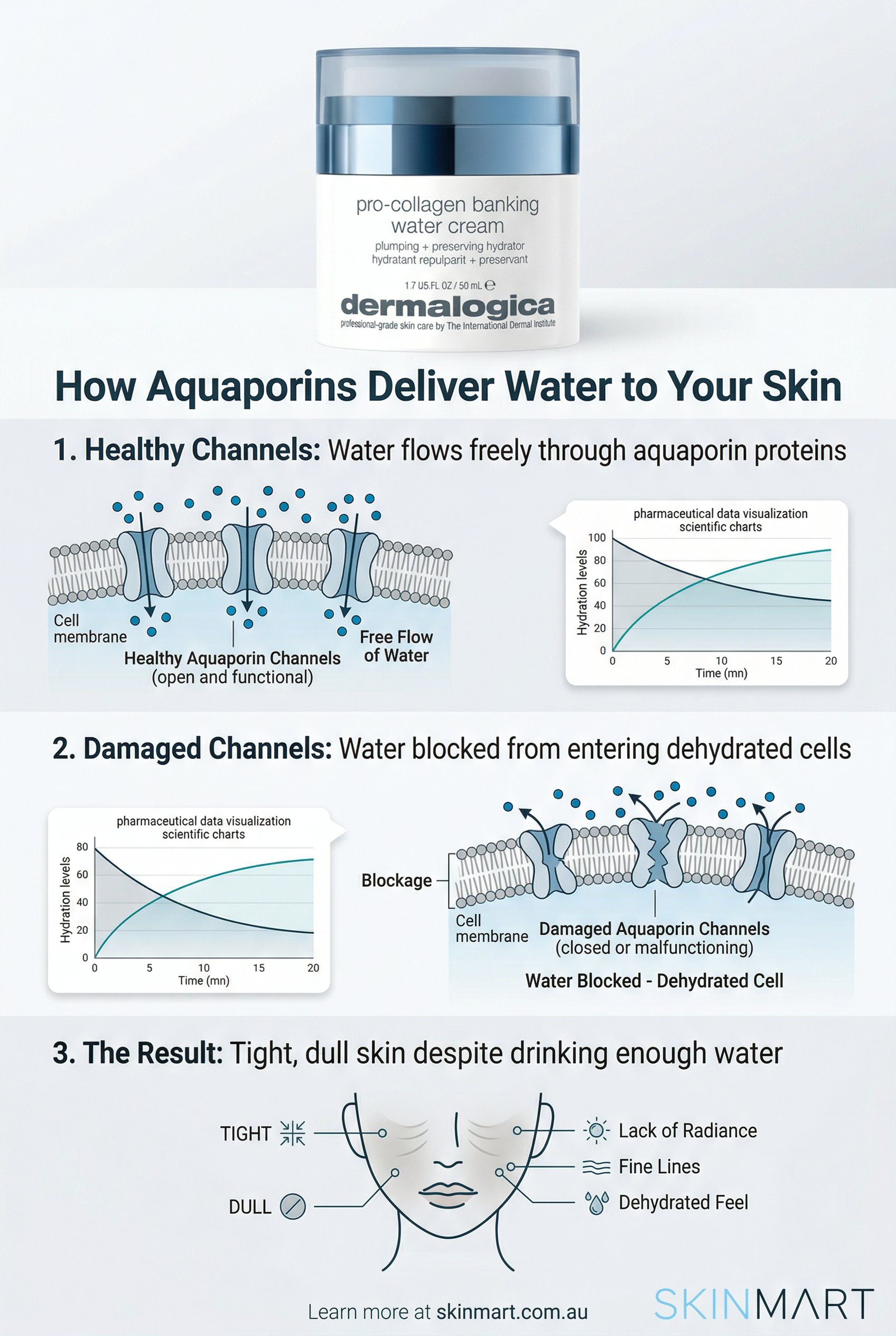
What Are Aquaporins and Why Do They Matter for Skin Hydration?
Think of your skin cells as a house with thousands of tiny doors. Aquaporins are those doors, specialised protein channels embedded in cell membranes that allow water molecules to pass through. Your skin contains several types of aquaporins, with Aquaporin-3 (AQP3) being the most critical for maintaining hydration in the epidermis.
When aquaporins function properly, they create an efficient water highway that delivers moisture from your bloodstream through the deeper skin layers and up to the surface. This isn't just about surface hydration, it's about maintaining the best water gradient that keeps every layer of your skin functioning at its best. Healthy aquaporin function means your skin can actually use the water you're providing it, whether from your water bottle or your skincare products.
Research published in the Journal of Investigative Dermatology shows that aquaporin expression decreases greatly with age and UV exposure. When these channels become damaged or decrease, your skin loses its ability to maintain proper hydration levels, regardless of how much water is available. This is why two people can follow identical hydration routines yet feel completely different results, their aquaporin function differs.
How Does Aquaporin Dysfunction Cause Persistent Dehydration?
Aquaporin dysfunction creates a breakdown in your skin's water delivery system that manifests in ways you've likely felt without understanding the underlying cause. When these channels aren't working efficiently, water molecules struggle to reach cell membranes, leaving them stranded in the spaces between cells where they quickly evaporate.
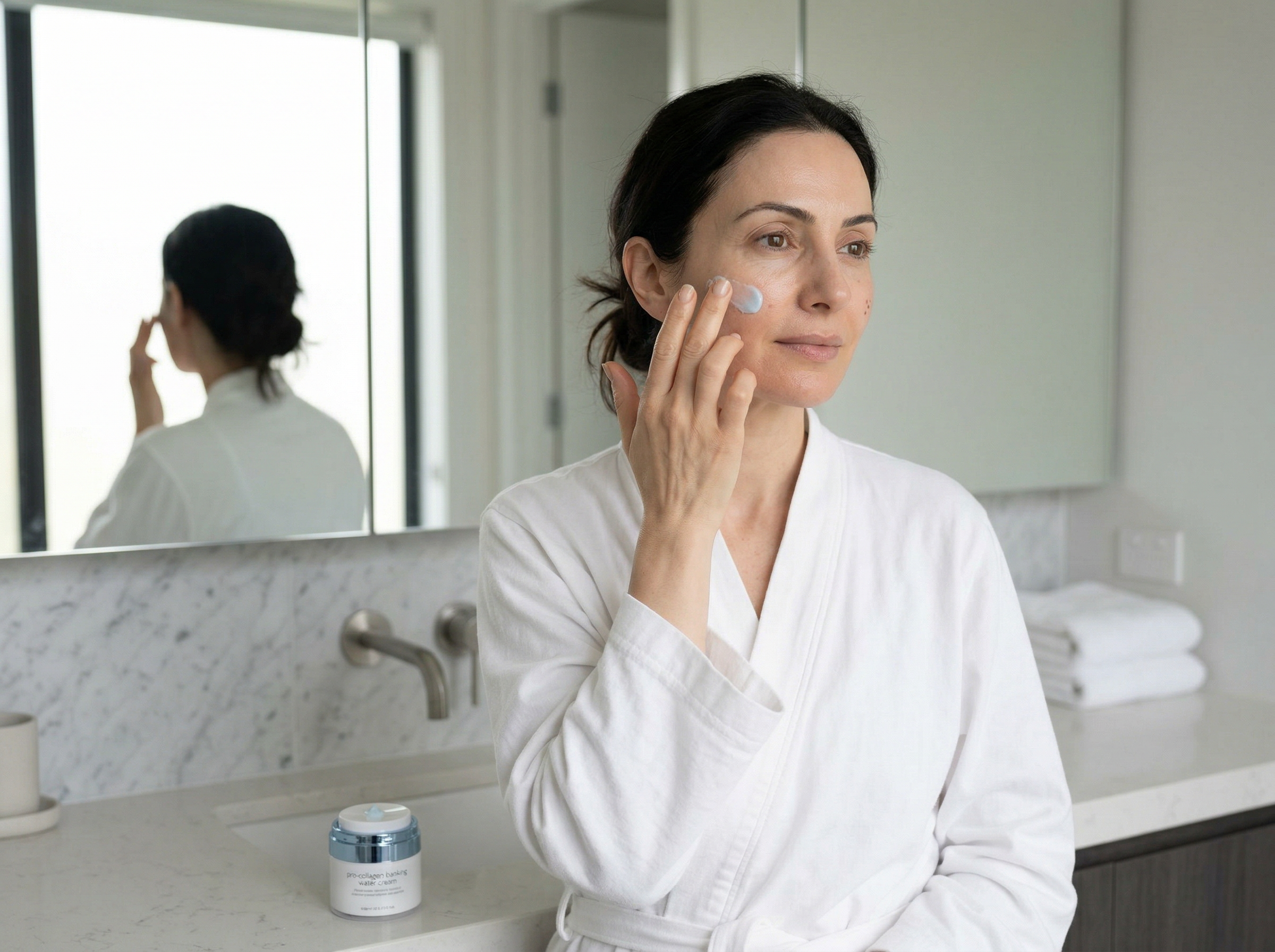
The signs of aquaporin dysfunction are distinct from simple surface dryness. You might notice that your skin feels tight within hours of applying moisturiser, even rich formulas. Fine lines appear more pronounced despite using hydrating serums, and your skin may look dull or lack that healthy plumpness. Some people describe it as their skin feeling "thirsty" no matter what they do, and that's precisely what's happening at a cellular level.
Several factors damage aquaporin function over time. UV radiation is one of the primary culprits, directly damaging the protein structures and reducing aquaporin expression. Chronic swelling from conditions like rosacea or eczema disrupts aquaporin channels. Even the natural ageing process decreases aquaporin production, which explains why mature skin often struggles with dehydration more than younger skin. Hormonal changes, especially during perimenopause and menopause, also affect aquaporin expression, one reason many women in their 40s suddenly find their before normal skin becoming persistently dehydrated.
Understanding this mechanism explains why simply drinking more water or applying more moisturiser doesn't solve the problem. You're not addressing the broken delivery system. It's like having a perfectly functional tap but blocked pipes, no matter how much you turn on the water, it's not reaching its destination.
Key Takeaways
- Your skin can stay dehydrated even when you drink plenty of water because of aquaporin dysfunction, when the microscopic water channels in your skin cells stop working efficiently.
- Aquaporins are protein channels that transport water molecules into skin cells.
- When they're damaged by UV exposure, swelling, or ageing, water can't reach where it's needed most.
- The solution isn't drinking more water; it's repairing these channels with targeted ingredients like niacinamide, peptides, and glycerin...
What Actually Fixes Aquaporin Dysfunction?
Repairing aquaporin function requires a targeted approach that goes beyond conventional hydration strategies. The good news is that research has identified specific ingredients and mechanisms that can restore and enhance aquaporin expression, really rebuilding your skin's water delivery infrastructure.
Niacinamide stands out as one of the most effective aquaporin-supporting ingredients. Studies show that niacinamide increases the expression of AQP3 in skin cells, literally creating more water channels. A 2011 study in the British Journal of Dermatology demonstrated that topical niacinamide use greatly improved stratum corneum hydration by upregulating aquaporin-3 expression. This explains why niacinamide-containing products often deliver hydration results that pure hyaluronic acid serums can't match, they're addressing the delivery system, not just providing moisture.
Peptides, especially certain collagen-stimulating peptides, also support aquaporin function. Palmitoyl tripeptide-5 has been shown to increase aquaporin expression while at once supporting the extracellular matrix that houses these channels. This dual action makes peptides especially valuable for mature skin having both aquaporin dysfunction and structural changes.
Glycerine deserves special mention here. While it's often dismissed as a basic humectant, glycerine actually supports aquaporin function through a fascinating mechanism. It creates an osmotic gradient that encourages water movement through aquaporin channels while also directly supporting the channels' structural integrity. This is why well-formulated glycerine-based products can deliver superior hydration compared to more exotic-sounding ingredients.
The Dermalogica Pro-Collagen Banking Water Cream combines these aquaporin-supporting ingredients in a formula just designed to address water delivery dysfunction. With 5% niacinamide, peptide complexes, and a glycerine-based delivery system, it doesn't just provide surface hydration, it rebuilds your skin's capacity to deliver and retain moisture at a cellular level. Shop now to start repairing your skin's water delivery system.
How Long Does It Take to Restore Aquaporin Function?
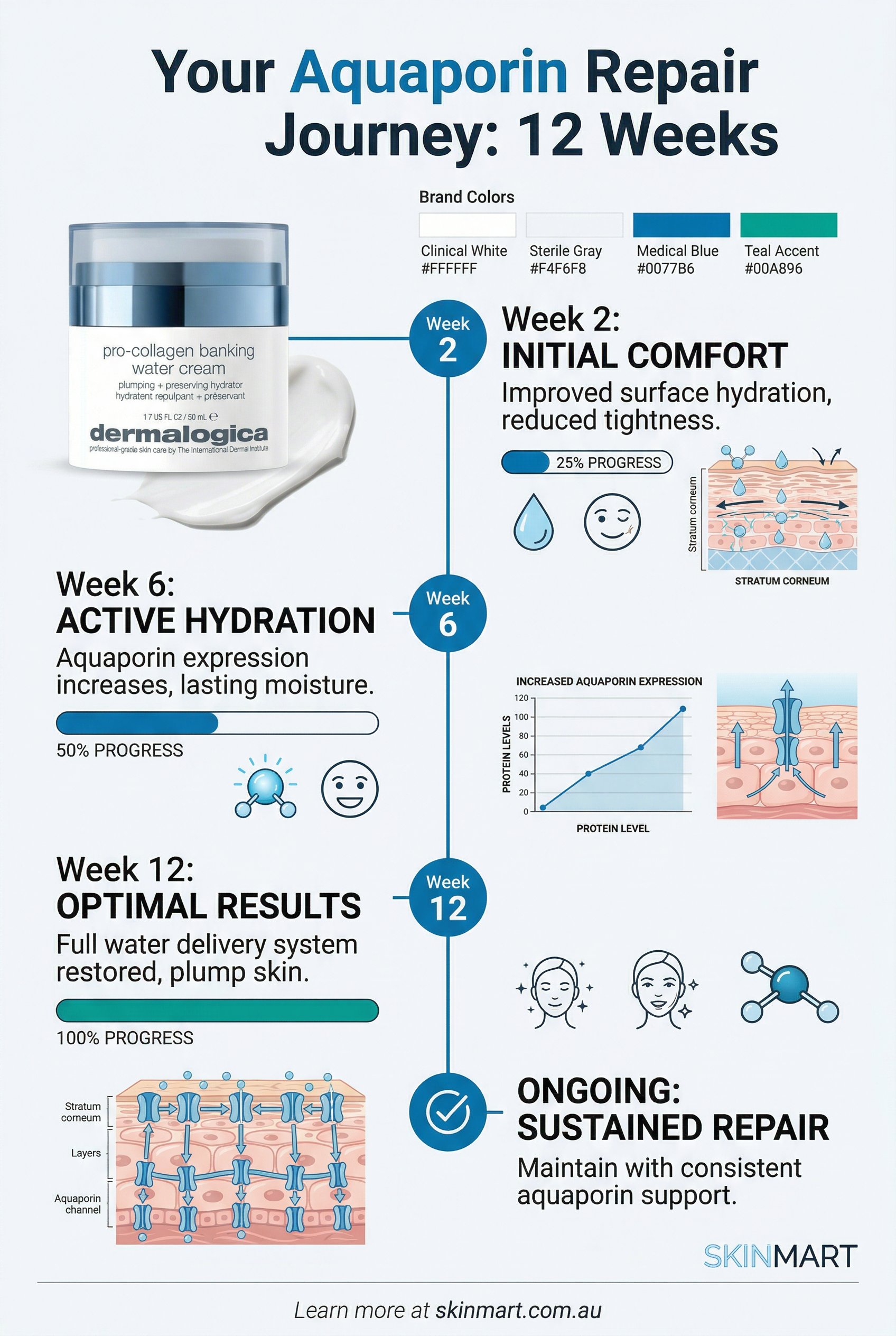
Understanding the timeline for aquaporin repair helps set realistic expectations and maintain the consistency needed for results. Unlike surface hydration that you might feel right away, rebuilding aquaporin function is a gradual process that requires patience and strategic product use.
In the first two weeks, you'll likely notice improved surface hydration and reduced tightness. This initial phase reflects the humectant and occlusive benefits of your products working to support your existing aquaporin function. Your skin is learning to hold onto moisture, even though the deeper repair is just beginning.
Weeks three to six mark the turning point where aquaporin expression begins to increase. Research suggests that consistent use of aquaporin-supporting ingredients like niacinamide shows measurable increases in AQP3 expression within four to six weeks. During this phase, you'll notice that your skin maintains hydration for longer periods. The tight feeling that used to return by midday might not appear until evening, or might disappear entirely. Fine lines caused by dehydration become less pronounced, and your skin develops a subtle plumpness that indicates improved cellular hydration.
By eight to twelve weeks, you're having the full benefits of restored aquaporin function. Your skin's water delivery system is operating more efficiently, creating a foundation of hydration that supports all other aspects of skin health. This is when you might notice secondary benefits, improved product absorption, better makeup use, enhanced barrier function, and more resilient skin overall.
The key to success during this timeline is consistency. Aquaporin expression responds to regular stimulation from supportive ingredients. Sporadic use won't generate the sustained cellular signals needed to increase channel production. This isn't about perfection, missing a day won't derail your progress, but establishing a reliable routine gives your skin the consistent support it needs to rebuild its water delivery infrastructure.

Featured: Pro-Collagen Banking Water Cream
Fights oxidative stress to help preserve collagen and elastin
Shop NowCan You Prevent Aquaporin Damage Before It Happens?
Prevention is always easier than repair, and this principle applies powerfully to aquaporin function. While some decline in aquaporin expression is inevitable with ageing, you can greatly slow this process and maintain efficient water delivery well into your later years.
Sun protection is your primary defence against aquaporin damage. UV radiation directly degrades aquaporin proteins and suppresses their expression. Daily broad-spectrum SPF 50 isn't just preventing pigmentation and collagen damage, it's protecting the microscopic channels that keep your skin hydrated. This makes sun protection especially crucial for anyone in their 20s and 30s who wants to prevent the dehydration issues that commonly emerge in the 40s.
Anti-swelling ingredients play a protective role by preventing the chronic swelling that disrupts aquaporin function. Ingredients like centella asiatica, green tea extract, and niacinamide don't just calm visible redness, they're protecting your skin's water delivery system from causing swelling damage. This is especially important if you have conditions like rosacea or sensitive skin that create ongoing causing swelling stress.
notably, maintaining good aquaporin function creates a positive feedback loop for your overall skin health. Well-hydrated skin has better barrier function, which reduces swelling and environmental damage, which in turn protects aquaporin expression. This is why addressing dehydration early, before it becomes chronic, pays dividends for your skin's long-term resilience.
For those in their 30s and early 40s, including aquaporin-supporting ingredients now, even if you don't currently struggle with dehydration, is a strategic investment in your skin's future. Think of it as collagen banking for your hydration system. You're building and maintaining the infrastructure that will keep your skin functioning ideally as you age.
What Won't Fix Aquaporin Dysfunction (But People Try Anyway)?
Understanding what doesn't work is just as valuable as knowing what does, especially when it saves you time and money on ineffective approaches. Let's address some common strategies that people try when dealing with persistent dehydration, and why they miss the mark when aquaporin dysfunction is the underlying issue.

Drinking excessive amounts of water won't fix aquaporin dysfunction. Yes, adequate hydration supports overall skin health, but once you're meeting your basic hydration needs (which for most people is around two litres daily), drinking more water doesn't improve aquaporin function. The problem isn't water availability, it's your skin's ability to deliver that water into cells. Think of it like having a broken irrigation system; adding more water to the source doesn't help if the pipes can't distribute it.
Layering multiple hyaluronic acid serums is another common approach that addresses the wrong problem. Hyaluronic acid is a humectant that draws water to the skin's surface, which is valuable, but it doesn't repair aquaporin channels. If your water delivery system is broken, piling on humectants just creates surface hydration that evaporates quickly without reaching to deeper layers. This is why some people find that their "hydrating" routine leaves them feeling tight within hours, they're treating the symptom, not the cause.
Facial mists and thermal waters provide temporary relief but no lasting solution. Spritzing your face throughout the day might feel refreshing, but without functioning aquaporins to move that water into cells, you're just wetting the surface. In fact, if you're not following the mist with an occlusive moisturiser, you might actually be making dehydration worse through increased trans-epidermal water loss.
Even rich, occlusive moisturisers have limitations when aquaporin dysfunction is present. They can prevent water loss from the surface, which is helpful, but they can't force water into cells through damaged channels. This is why some people with dehydrated skin find that switching to heavier creams doesn't solve their problem, they're sealing in surface moisture without addressing the cellular hydration deficit.
The effective approach combines aquaporin-supporting actives with appropriate hydration and occlusion. You need ingredients that rebuild the delivery system (niacinamide, peptides), ingredients that provide water (humectants like glycerine and hyaluronic acid), and ingredients that prevent water loss (occlusives like ceramides and plant oils). This complete strategy addresses aquaporin function while supporting the hydration those repaired channels will deliver.
The persistent dehydration you've been battling isn't a failure of your skincare routine or your water intake, it's a water delivery problem happening at a cellular level. When aquaporin channels become damaged or decrease, your skin simply can't transport moisture where it needs to go, regardless of how much hydration you provide. This explains why conventional approaches like drinking more water or layering hydrating serums often fall short.
The solution lies in rebuilding your skin's water delivery infrastructure with ingredients that restore aquaporin function. Niacinamide, peptides, and glycerine don't just provide temporary hydration, they repair the channels that allow your skin to deliver and retain moisture well. With consistent use over eight to twelve weeks, you can restore the efficient water delivery system that creates lasting, cellular-level hydration. Your skin has the capacity to heal and rebuild these essential channels; it just needs the right support to do so.


