
If your skin reacts to almost everything, you already know the frustration. A new product, a change in weather, a stressful week, and suddenly your skin is red, tight, or burning. You strip your routine back.
You try gentler products. Things improve a little, then flare again. The cycle repeats.
What most sensitive skin advice misses is this: the problem often isn't what you're putting on your skin. It's what's happening inside your skin cells. just, it's about a molecule called NAD+ (nicotinamide adenine dinucleotide). And when its levels fall, your skin loses its ability to resolve swelling properly. Understanding this changes how you approach reactive skin entirely.

What Is the Sensitivity Cycle and Why Does It Keep Repeating?
The sensitivity cycle starts with swelling. Your skin encounters a trigger, UV exposure, pollution, a harsh ingredient, or even stress. Your immune cells respond by releasing causing swelling signals called cytokines. These signals are your skin's way of saying: something needs attention here.
In healthy skin, this process has a clear end point. swelling rises, does its job, then resolves. Your barrier repairs itself. Your skin returns to calm.
But in reactive skin, this resolution phase breaks down. swelling lingers. Your barrier stays weakened. And because a weakened barrier lets more triggers through, the whole cycle starts again before your skin has had a chance to recover.
This is why sensitive skin can feel like a moving target. You're not dealing with one flare-up at a time. You're dealing with a system that's stuck in emergency mode, and the reason it stays stuck is often cellular. Stress is one well-known driver of this pattern, but the deeper issue is your cells' ability to manage the process at all.
What Does NAD+ Have to Do With Skin swelling?
NAD+ is a coenzyme found in every living cell. Think of it as the fuel your cells use to do their most important work, repairing DNA damage, producing energy, and managing their stress responses. Without enough NAD+, your cells slow down. They can't repair themselves efficiently. They can't regulate swelling the way they're designed to.

Here's what this means for sensitive skin. One of NAD+'s key roles is activating a family of proteins called sirtuins. Sirtuins help control causing swelling pathways, including NF-kB, the main switch that tells your cells to produce pro-causing swelling signals.
When NAD+ levels are high, sirtuins keep this switch in check. When NAD+ drops, that control weakens. Your skin's causing swelling response becomes harder to dial down.
NAD+ also supports the repair of DNA damage caused by UV exposure and oxidative stress. Unrepaired DNA damage is itself an causing swelling trigger. So when your cells can't repair damage quickly, they keep sending distress signals, adding more fuel to the swelling loop your skin is already caught in. This is the cellular root of why reactive skin often gets worse with age, sun exposure, and ongoing stress.
Key Takeaways
- The sensitivity cycle happens when your skin's cells lack the energy to resolve swelling properly.
- NAD+ (nicotinamide adenine dinucleotide) is a molecule your cells need to manage swelling and repair damage.
- When NAD+ levels drop, your skin gets stuck in a loop of reactivity it cannot break.
- Restoring NAD+ supports your cells' ability to calm swelling, strengthen your barrier, and respond more proportionately to everyday triggers.
- This is the cellular reason sensitive skin can improve with th...
Why Does NAD+ Decline, and Why Does It Matter More for Sensitive Skin?
NAD+ levels fall naturally with age. Research shows levels can drop by as much as 50% between your 20s and 50s. But age isn't the only factor. UV exposure, pollution, poor sleep, and chronic stress all accelerate this decline. Your circadian rhythm also plays a role, disrupted sleep patterns reduce your cells' ability to restore NAD+ overnight, which is when most cellular repair happens.
For skin that's already reactive, this matters a lot. Sensitive skin is often dealing with a compromised barrier and an overactive immune response at the same time. Both of these conditions place a heavy demand on cellular energy. When NAD+ is low, your cells simply don't have enough fuel to meet that demand.
They can't repair the barrier fast enough. They can't resolve swelling efficiently. The sensitivity cycle deepens.
This also explains why reactive skin can become more sensitive over time, even when you're being careful with your routine. It's not that your routine is failing. It's that the cellular foundation your skin needs to respond well is being depleted faster than it's being restored.
How NAD+ Restoration Helps Break the swelling Loop
Restoring NAD+ at a cellular level gives your skin what it needs to exit the sensitivity cycle. When your cells have adequate NAD+, they can activate the sirtuin proteins that regulate causing swelling pathways. This doesn't switch off swelling entirely, your skin still needs its protective responses. What it does is help your cells respond proportionately and resolve swelling more efficiently once the trigger has passed.
NAD+ restoration also supports faster barrier repair. Your skin barrier (the outermost layer that keeps moisture in and irritants out) relies on healthy cell function to rebuild itself. When cells have the energy they need, barrier repair happens faster. A stronger barrier means fewer triggers reach the immune cells beneath it. This means fewer causing swelling signals, less reactivity, and a calmer baseline over time.
There's also the DNA repair connection. When NAD+ supports faster repair of UV and oxidative damage, your cells spend less time in distress mode. Fewer unrepaired DNA breaks means fewer causing swelling signals being sent. The whole system becomes less reactive, not because swelling is suppressed, but because your cells are doing their jobs more well. DNA repair technology in skincare is one of the more exciting areas of skin science for exactly this reason.

Featured: FutureCode Booster
Advanced booster that helps extend the longevity of healthy-looking skin by supporting natural skin repair and reducing visible signs of DNA-relate...
Shop Now
What to Look for in an NAD+ Supporting Product
Not all NAD+ supporting ingredients work the same way. Some ingredients help your cells produce more NAD+ directly. Others protect existing NAD+ from being depleted too quickly. The most effective approach combines both.
Teprenone is one ingredient worth knowing. It supports the activity of telomeres (the protective caps on your DNA) and helps cells maintain their repair capacity under stress. Niacinamide (a form of vitamin B3) is a direct NAD+ precursor, your cells convert it into NAD+. It also regulates causing swelling cytokines and strengthens the skin barrier, making it one of the most well-studied ingredients for reactive skin. Acetyl Zingerone (derived from ginger) acts as a powerful protective, reducing the oxidative stress that depletes NAD+ in the first place.
The challenge with NAD+ restoration in skincare has often been delivery. Many formulas that include these ingredients come in thick creams, which aren't always well-suited for reactive or sensitive skin types. A lightweight serum format allows these actives to absorb more efficiently and layer easily with your existing routine, without adding unnecessary weight or occlusion. Understanding how serums work can help you get the most from any active treatment you add to your routine.
FutureCode Booster: NAD+ Support in a Serum Format
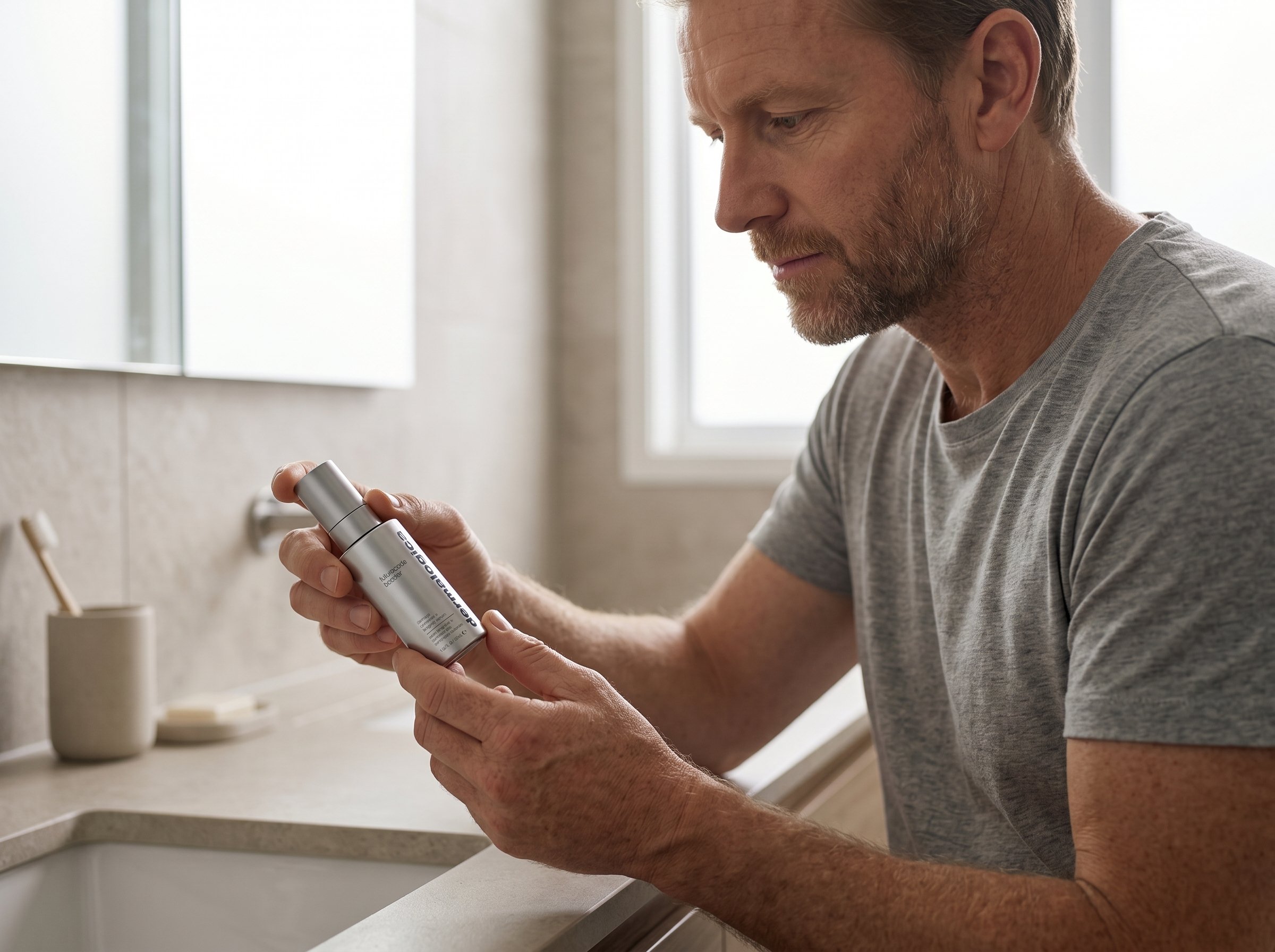
The Dermalogica FutureCode Booster was formulated just to support cellular repair and reduce visible signs of DNA-related damage, the kind that builds up from UV exposure, oxidative stress. And the natural decline of NAD+ over time.

Its key ingredients include Teprenone, Niacinamide, Helianthus Annuus (Sunflower) Sprout Extract, Acetyl Zingerone, and Rosehip Oil. Together, these work to support your cells' repair processes, regulate causing swelling pathways, and strengthen your skin's protective barrier. What makes it especially relevant for sensitive skin is the serum format, lightweight enough to layer with your existing products, without the heavier texture that can feel uncomfortable on reactive skin.
This is not a replacement for your current routine. It's designed to work alongside it, supporting the cellular foundation that helps your other products perform better. If your skin has been stuck in a cycle of reactivity that careful product choices haven't fully resolved, the missing piece may be at the cellular level. Shop the FutureCode Booster here.
The sensitivity cycle is real, and it's exhausting. But it's not random. When your skin keeps reacting despite your best efforts, the answer is often deeper than your product choices. It's in the cellular machinery that controls how your skin manages swelling, repairs damage, and rebuilds its barrier. NAD+ sits at the centre of all of that.
Restoring NAD+ doesn't silence your skin's protective responses. It gives your cells the energy to do their jobs properly, so swelling resolves the way it's meant to, your barrier rebuilds faster. And your skin gradually becomes less reactive to the world around it. If you'd like to understand what your skin just needs, explore the FutureCode Booster or speak to our skin experts to get guidance built around your skin, not around a trend.


