
Your skin is building collagen right now. Every minute, fibroblast cells in your dermis are synthesising new collagen fibres, while enzymes break down old, damaged proteins. This constant turnover maintains your skin's firmness, elasticity, and structural integrity. The question isn't whether this process is happening, it's whether you're giving it the support it needs to work ideally.
Dermalogica's Pro-Collagen Banking Water Cream isn't about adding collagen to your skin from the outside. It's about understanding the biochemical pathways that create quality collagen and strategically supporting them before decline becomes visible. Think of it as the difference between maintaining a building's foundation versus trying to repair it after cracks appear. The science is clear: the earlier you start supporting collagen synthesis, the more structural resilience you maintain over decades.
This approach requires moving beyond marketing claims about 'collagen-boosting miracles' to understand what actually happens at the cellular level when your skin produces collagen, and why certain ingredients genuinely support this process whilst others simply don't.
What Actually Happens During Collagen Synthesis?
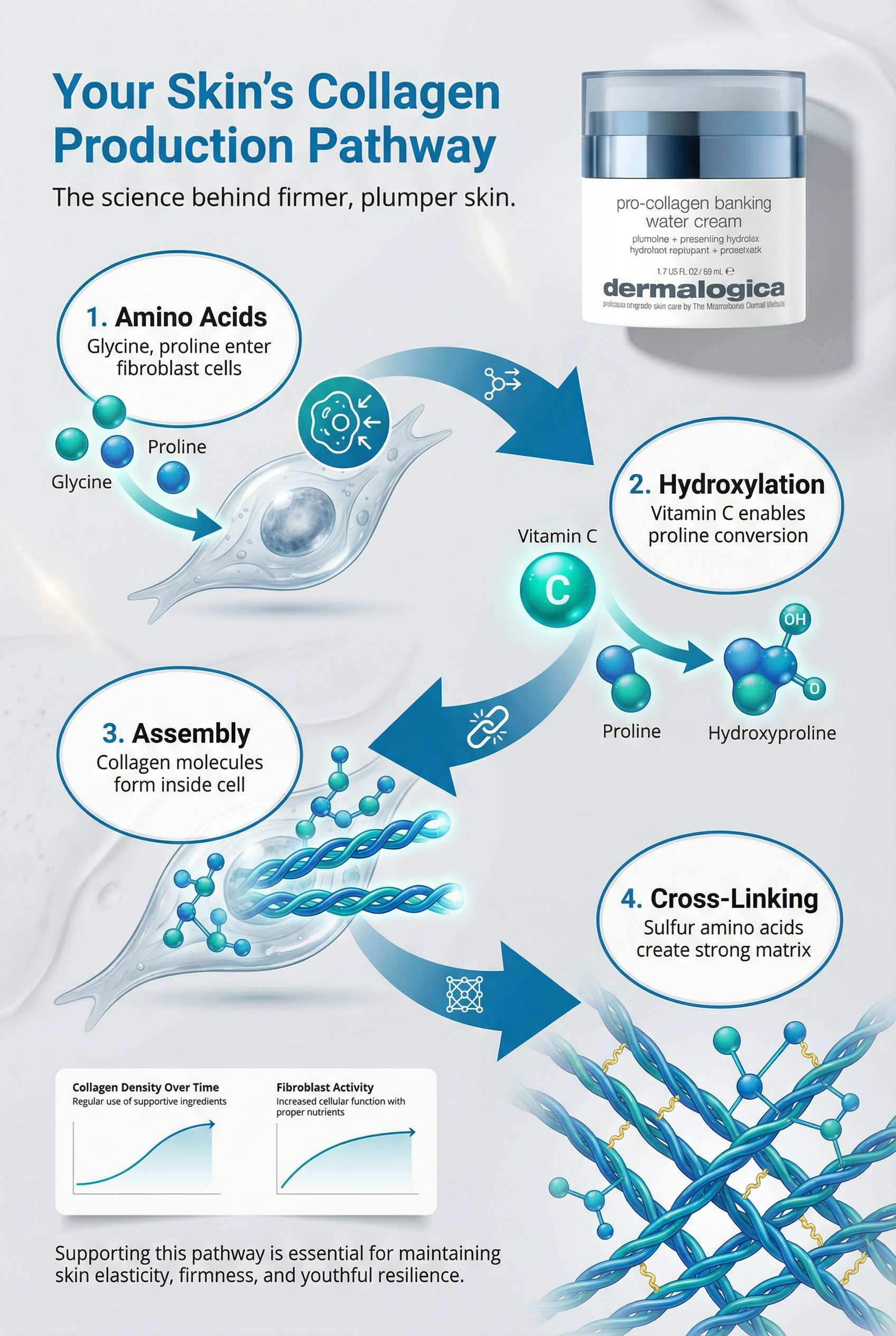
Collagen production is a complex biochemical process that happens inside your fibroblast cells. These specialised cells in your dermis assemble amino acids, primarily glycine, proline, and hydroxyproline, into long chains that form collagen molecules. But here's where the science gets interesting: those proline molecules need to be hydroxylated (modified by adding hydroxyl groups) to create stable collagen, and this hydroxylation process specifically requires vitamin C as a cofactor.
Without adequate vitamin C, your skin produces collagen that's structurally weak and breaks down quickly. This is why scurvy, caused by severe vitamin C deficiency, leads to skin that bruises easily and wounds that won't heal properly. Your body is still making collagen, but it's poor-quality collagen that can't maintain skin structure.
After synthesis, these collagen molecules move outside the cell where they're assembled into fibres and cross-linked to create the strong, flexible matrix that gives your skin its firmness. Sulfur-containing amino acids like cysteine and methionine are crucial for this cross-linking process. The entire cycle from synthesis to mature collagen fibres takes several weeks, which explains why effective collagen support requires consistent, long-term use rather than quick fixes.
Understanding this process reveals why collagen banking focuses on supporting your skin's natural production pathways rather than trying to deliver collagen topically. Collagen molecules are simply too large to reach your skin barrier, but the cofactors and signalling molecules that support synthesis can reach your fibroblast cells and enhance their function.
Why Does Collagen Production Decline With Age?
The often-cited statistic that collagen production decreases by about 1% per year after age 25 tells only part of the story. What's actually happening involves multiple interconnected changes at the cellular level that compound over time.
First, your fibroblast cells become less active. They don't stop producing collagen entirely, but they slow down, synthesising fewer new collagen molecules. At the same time, enzymes called matrix metalloproteinases (MMPs) that break down old collagen become more active, especially when triggered by UV exposure and oxidative stress. This creates an imbalance: less new collagen being made, more existing collagen being degraded.
Second, the quality of collagen your skin produces changes. Younger skin produces predominantly Type I and Type III collagen, the types that provide firmness and elasticity. As you age, the ratio shifts, and the collagen fibres that are produced may not be cross-linked as well, resulting in weaker structural support.
Third, accumulated DNA damage in your skin cells affects the genes that regulate collagen synthesis. Years of UV exposure, pollution, and oxidative stress create mutations and cellular dysfunction that impair your fibroblasts' ability to respond to collagen-stimulating signals. This is why sun protection is basic to any collagen banking strategy, you're not just preventing surface damage, you're protecting the cellular machinery that produces collagen.
Hormonal changes, especially the decline in oestrogen during perimenopause and menopause, further accelerate collagen loss. Oestrogen receptors in skin cells help regulate collagen synthesis, so hormonal shifts directly impact production rates. This explains why many people notice more dramatic skin changes during their forties and fifties.
Which Ingredients Actually Support Collagen Synthesis?
Not all 'collagen-boosting' ingredients work the same way, and understanding the mechanisms helps you build an effective strategy. The most evidence-based approaches target different points in the collagen synthesis and protection pathway.
Vitamin C is non-negotiable for collagen banking because it's required for hydroxylation, the process that stabilises collagen molecules. L-ascorbic acid is the most researched form, but it requires specific pH conditions and stability measures to remain effective. Magnesium ascorbyl phosphate and ascorbyl glucoside are more stable alternatives that convert to active vitamin C in your skin. The key is consistent daily use, as your skin can't store vitamin C long-term.
Retinoids work by increasing cellular turnover and directly stimulating fibroblast activity. They upregulate the genes responsible for collagen production whilst inhibiting the MMPs that break collagen down. This dual action makes retinoids especially effective for collagen banking, but they require gradual introduction and consistent sun protection since they increase photosensitivity.
Peptides are short chains of amino acids that can signal your fibroblasts to increase collagen production. Specific peptides like palmitoyl pentapeptide-4 (Matrixyl) and copper peptides have clinical evidence showing increased collagen synthesis. They work by mimicking the signals your skin naturally uses to trigger repair processes, really telling your fibroblasts there's damage that needs addressing.
Niacinamide supports collagen synthesis indirectly by reducing oxidative stress and swelling that impair fibroblast function. It also supports the production of ceramides and other barrier components that protect existing collagen from environmental damage. Research shows 5% niacinamide can improve skin elasticity over 12 weeks of consistent use.
The Dermalogica Pro-Collagen Banking Water Cream combines these evidence-based approaches in a formula designed just for proactive collagen support. Shop now to start your collagen banking strategy with a complete, research-backed formula.
When Should You Start Collagen Banking?
The honest answer is that your late twenties to early thirties represents the best window to begin strategic collagen support. This timing isn't arbitrary, it's based on when collagen production begins its gradual decline whilst your skin's repair mechanisms are still functioning efficiently.
Starting earlier means you're supporting collagen synthesis before major degradation occurs. Your fibroblasts are still highly active, your cellular DNA hasn't accumulated as much damage, and your skin's natural protective systems are more robust. This creates a foundation of healthy collagen that's easier to maintain than to rebuild later.
However, if you're in your forties, fifties, or beyond, collagen banking still offers major benefits. You're not 'too late', you're simply working with different baseline conditions. Your strategy might need to be more intensive, combining multiple collagen-supporting ingredients with professional treatments like microneedling or laser therapy that create controlled injury to stimulate synthesis.
The key principle remains the same regardless of when you start: consistent, long-term support of your skin's natural collagen production pathways creates better results than sporadic use of even the most advanced products. Collagen synthesis happens on a weeks-to-months timeline, not days, so patience and consistency are essential.
Your current skin condition matters more than your chronological age. Someone in their thirties with major sun damage may need more intensive collagen support than someone in their forties who's consistently protected their skin. This is why personalised assessment of your skin's current collagen status and damage patterns guides the most effective strategy.

Featured: Pro-Collagen Banking Water Cream
Fights oxidative stress to help preserve collagen and elastin
Shop NowKey Takeaways
- Collagen banking is the strategic practice of supporting your skin's natural collagen synthesis before visible decline occurs.
- Starting in your late twenties to early thirties, you can optimise the cellular pathways that produce collagen through targeted ingredients like vitamin C, peptides, and retinoids.
- This proactive approach works because collagen production naturally decreases by about 1% per year after age 25, but consistent support of hydroxylation processes and fibroblast activity ca...
How Do You Build an Effective Collagen Banking Routine?
An effective collagen banking routine addresses multiple points in the synthesis and protection pathway at once. This isn't about using every possible ingredient at once, it's about strategic layering that supports your skin's natural processes without overwhelming its tolerance.
Morning protection focuses on preventing collagen degradation. This means broad-spectrum SPF 30 or higher (non-negotiable), antioxidants like vitamin C to neutralise free radicals before they damage collagen, and barrier-supporting ingredients that protect existing collagen infrastructure. Your morning routine is defensive, you're preventing the damage that triggers MMP activation and collagen breakdown.
Evening repair shifts to active collagen synthesis support. This is when retinoids, peptides, and other collagen-stimulating ingredients work with your skin's natural overnight repair processes. Your fibroblasts are more active during sleep, and your skin isn't facing environmental stressors, making this the best time for active treatment ingredients.
The sequence matters: cleanse thoroughly to remove pollutants and oxidised sebum that create oxidative stress, apply water-based serums with peptides or niacinamide, follow with vitamin C or retinoids (alternating nights if you're building tolerance), then seal everything with a moisturiser that supports barrier function. The Dermalogica Pro-Collagen Banking Water Cream works as this final step, providing hydration whilst delivering additional collagen-supporting peptides.
Consistency trumps perfection. A simple routine you follow daily outperforms an elaborate protocol you only manage twice a week. Your skin's collagen synthesis is an ongoing process that benefits from steady support, not sporadic intensive treatment. Start with core ingredients, vitamin C, a retinoid, and daily SPF, then add targeted treatments based on your specific needs and tolerance.
Consider your complete lifestyle as part of collagen banking: adequate protein intake provides the amino acid building blocks for synthesis, vitamin C-rich foods support internal collagen production, quality sleep enables repair processes, and stress management reduces cortisol levels that impair collagen synthesis. Your topical routine is most effective when it's part of a complete approach to cellular health.
What Results Can You Realistically Expect From Collagen Banking?
Setting realistic expectations is crucial for long-term commitment to collagen banking. This isn't about dramatic before-and-after transformations in weeks, it's about maintaining skin structure and resilience over years and decades.

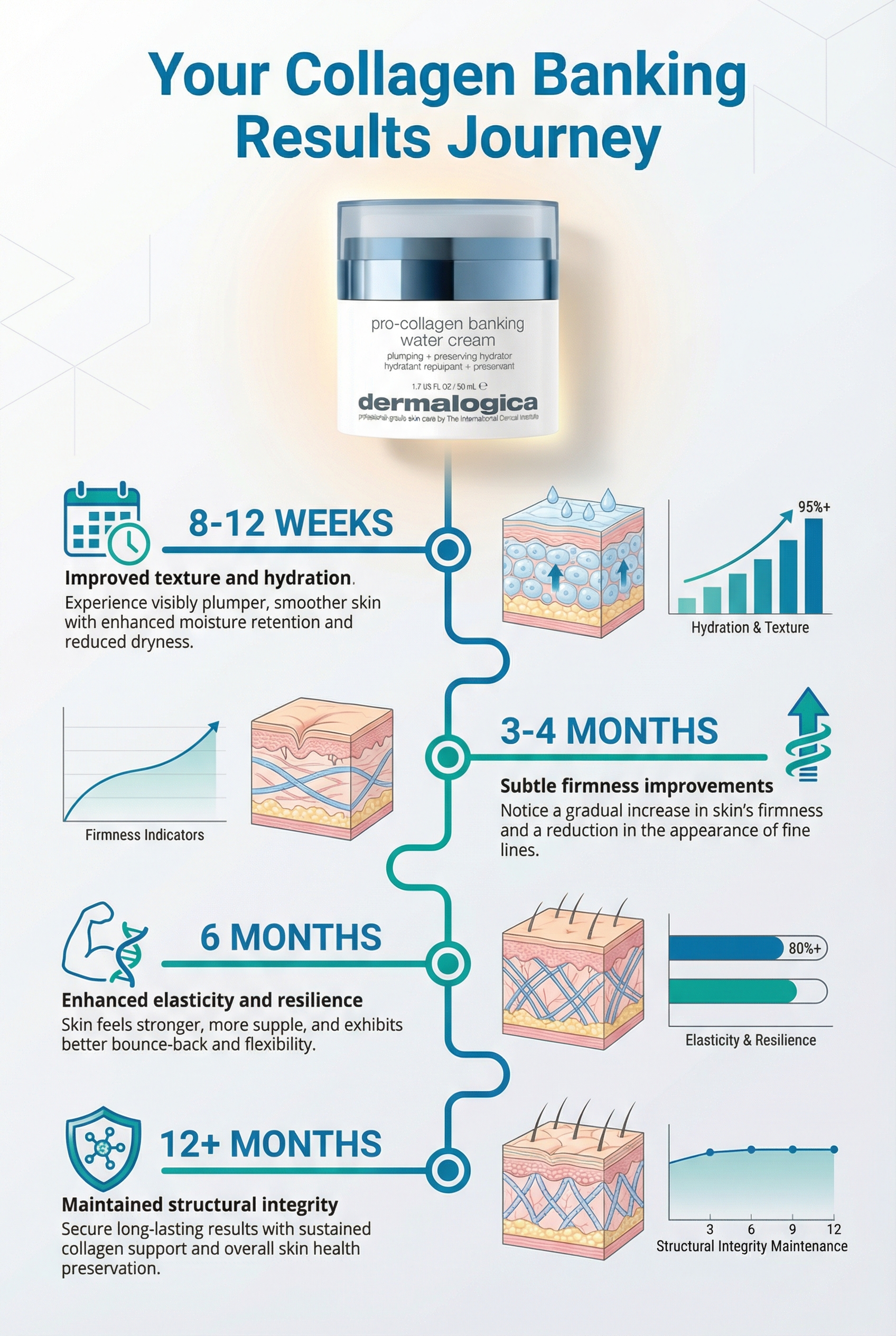
In the first 8-12 weeks of consistent collagen support, you'll likely notice improved skin texture and hydration. These early changes reflect better barrier function and reduced swelling rather than major new collagen formation. Your skin may look more radiant and feel smoother because you're supporting its overall health, not just collagen just.
By 3-4 months, you might observe subtle improvements in skin firmness and elasticity. These changes indicate that your collagen synthesis pathways are responding to consistent support. Fine lines may appear less pronounced, and your skin might show better resilience, bouncing back more quickly when you pinch it, for example. These are signs of improved collagen quality and quantity.
The most major results from collagen banking appear over years, not months. The real measure of success is what doesn't happen, the sagging, loss of firmness, and deep wrinkles that you prevent by maintaining strong collagen infrastructure. Someone who starts collagen banking in their thirties and maintains it consistently will likely have noticeably different skin quality in their fifties compared to someone who didn't take this proactive approach.
Individual results vary based on genetics, lifestyle factors, sun exposure history, and overall health. Someone with minimal sun damage and good nutrition will typically see better results than someone with accumulated UV damage and nutritional deficiencies. This isn't about achieving 'perfect' skin, it's about optimising your individual skin's collagen synthesis capacity and maintaining the best possible version of your own skin over time.
Professional treatments like microneedling, radiofrequency, or laser therapy can accelerate collagen banking results by creating controlled injury that triggers intense synthesis responses. These treatments work synergistically with your daily collagen-supporting routine, but they're enhancements, not replacements for consistent at-home care.
Collagen banking represents a basic shift from reactive skincare to proactive skin health. By understanding the cellular processes that create and maintain collagen, you can make informed choices that support your skin's structural integrity over decades, not just address concerns after they become visible.
The science is clear: your skin's collagen synthesis pathways respond to consistent, targeted support. Vitamin C enables hydroxylation, retinoids stimulate fibroblast activity, peptides signal repair processes, and complete sun protection prevents the damage that triggers collagen breakdown. These aren't marketing claims, they're evidence-based mechanisms that work with your skin's natural biology.
Starting your collagen banking strategy today, whether you're in your late twenties or your fifties, gives your skin the support it needs to maintain best collagen quality. The Dermalogica Pro-Collagen Banking Water Cream provides a research-backed formula designed just for this proactive approach. Your future skin will reflect the choices you make now, not through dramatic transformation, but through sustained resilience, firmness, and health that compounds over time.


