You cleanse every morning. You use oil-control products. You blot through the day.
And by mid-afternoon, your skin is shiny again. If this sounds familiar, here is something worth knowing: your oil production may not be the problem. It may be your skin's answer to one.
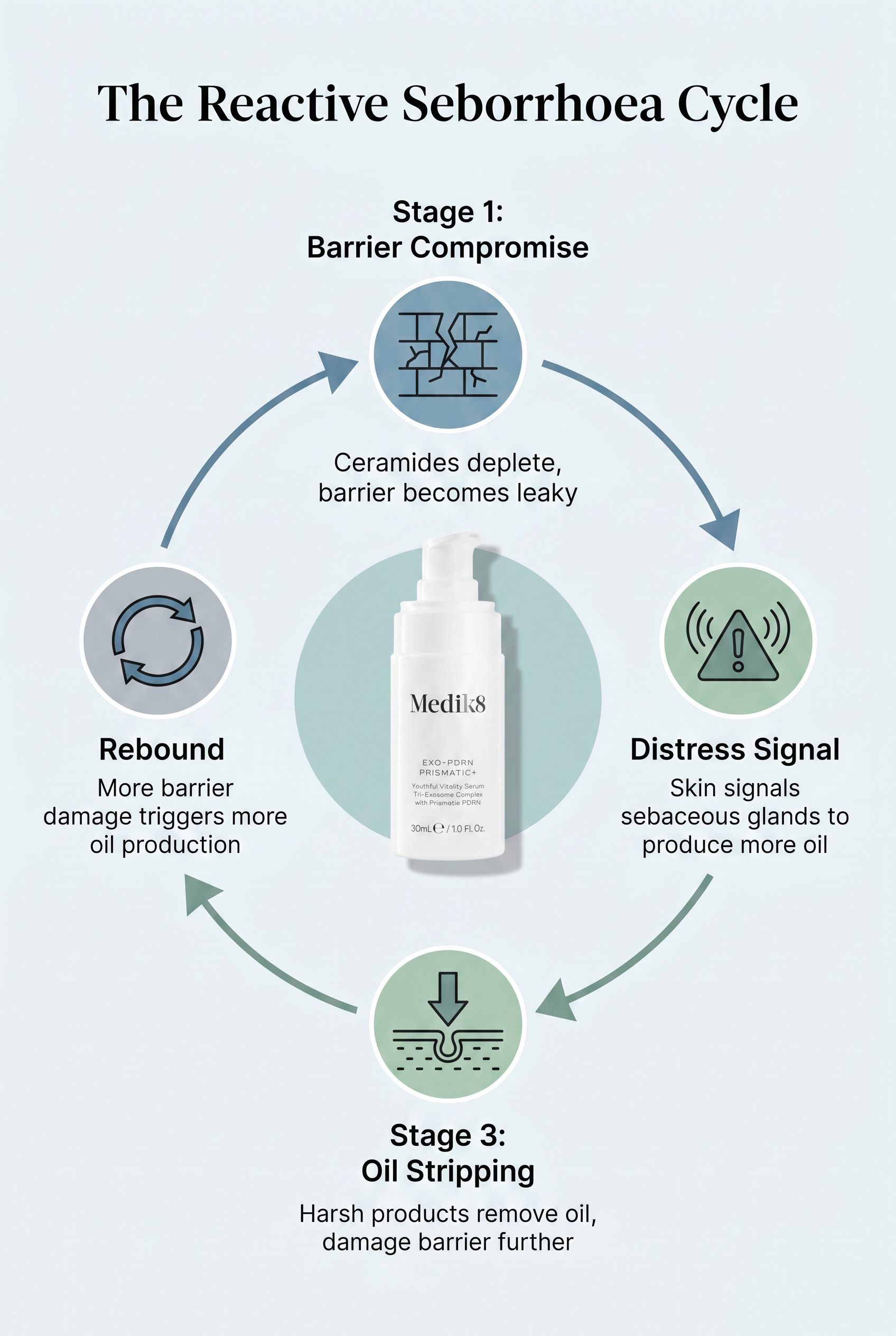
The oily skin paradox is this, the more aggressively you fight oil, the more oil your skin makes. That cycle has a name: reactive seborrhoea. It is driven by barrier dysfunction, and it is far more common than most people realise. Understanding it changes everything about how you approach your skin.
What Is Reactive Seborrhoea, and Why Does It Happen?
Your skin has a barrier, a thin but powerful layer that holds moisture in and keeps irritants out. Think of it like a brick wall. The bricks are your skin cells. The mortar between them is made up of ceramides (natural fats your skin produces to seal gaps and hold the structure together). When that mortar breaks down, your barrier becomes leaky and vulnerable.
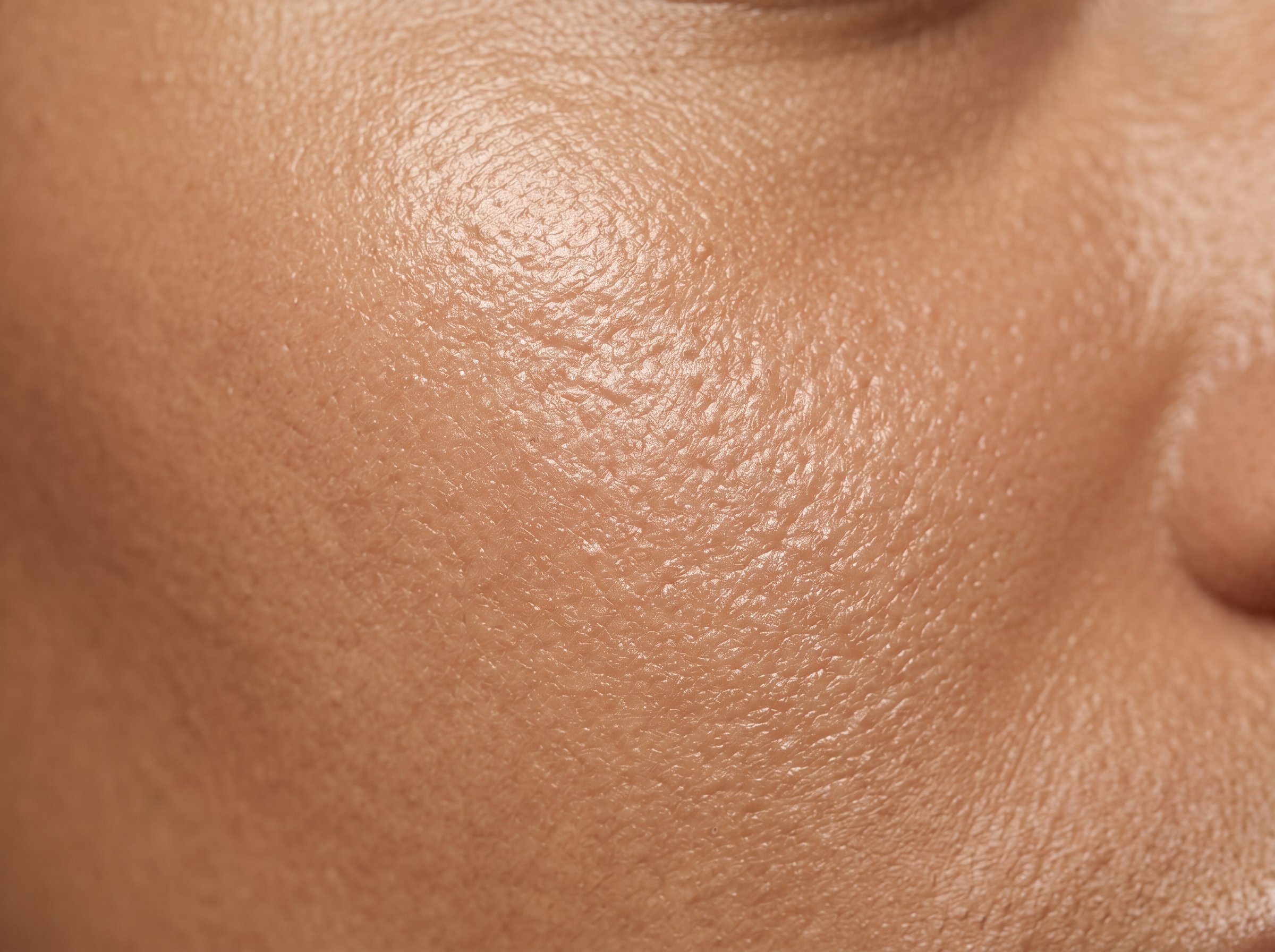
When your barrier is compromised, your skin does not just sit there and suffer. It sends distress signals. One of those signals tells your sebaceous glands, the tiny oil-producing organs in your skin, to ramp up production. Your skin is trying to protect itself.
Sebum is antimicrobial and helps form a physical shield on the surface. More barrier damage means more sebum. This is reactive seborrhoea: excess oil as a defence response, not a skin type.
Research shows that sebum production increases measurably when skin barrier function drops. A study published in the Journal of Investigative Dermatology found that transepidermal water loss (TEWL), a key marker of barrier damage, correlates with increased sebaceous gland activity. Your skin is not broken. It is reacting. And that distinction matters a great deal for how you treat it.
Key Takeaways
- Excess oil production is often a symptom of barrier dysfunction, not an inherent skin type.
- When your skin's protective barrier is compromised, sebaceous glands overproduce sebum as a defensive response, a pattern called reactive seborrhoea.
- Stripping oil makes this worse.
- The real solution is rebuilding the barrier so your skin stops sending distress signals.
- Ingredients like niacinamide, ceramides, and PDRN-based regenerative actives address the root cause, not just the surface shine.
Why Oil-Stripping Products Make Oily Skin Worse
Most products marketed for oily skin focus on removing oil from the surface. Harsh cleansers, alcohol-based toners, and aggressive clay masks can strip sebum quickly. In the short term, your skin feels cleaner. But within hours, shine returns, often worse than before.
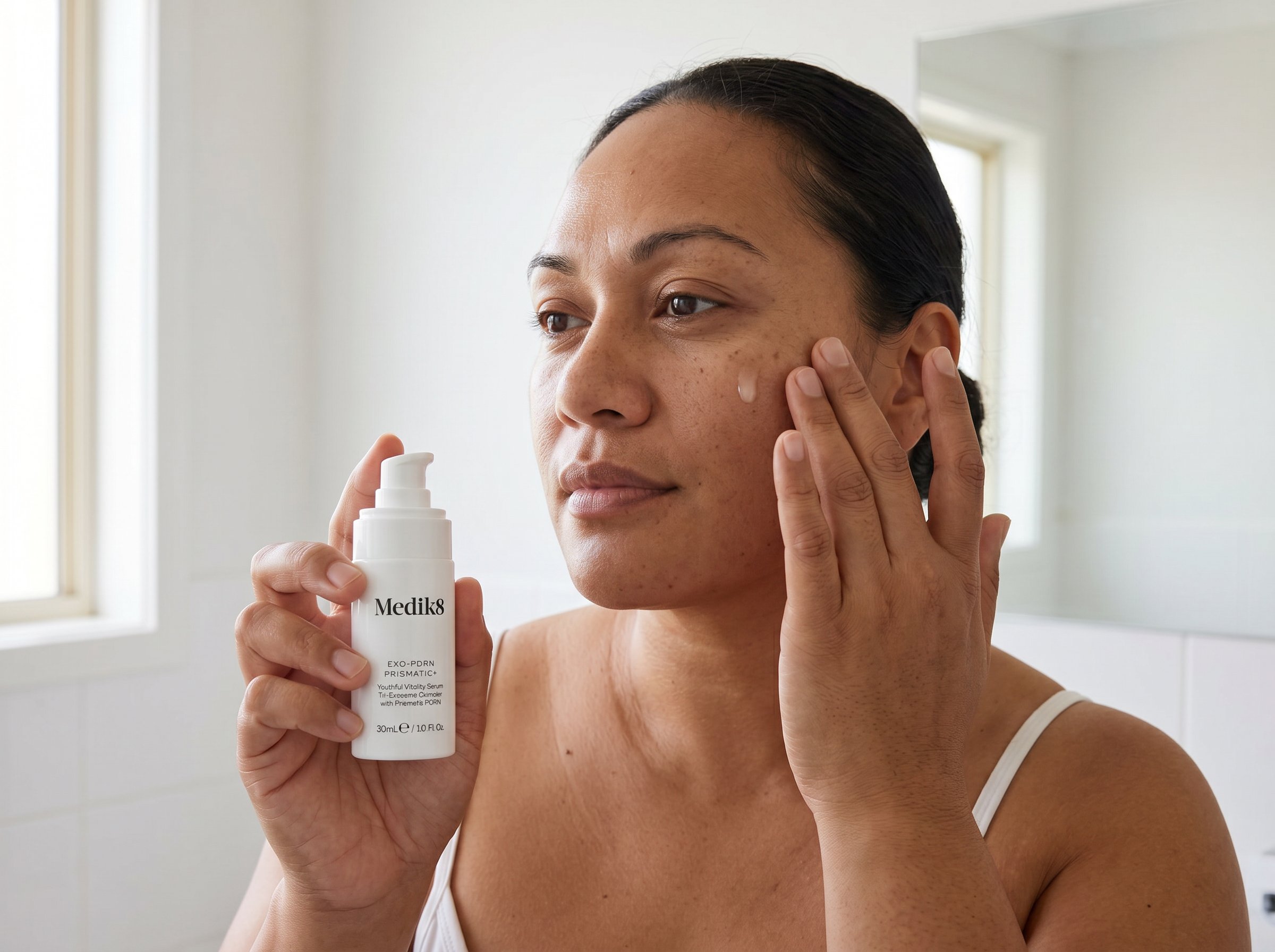
Here is why. When you strip oil from the surface, you also damage the barrier further. Your skin reads this as more barrier disruption.
So it produces more sebum to compensate. This is called rebound hypersecretion, and it is the reason so many people feel trapped in a cycle of oily skin that never truly improves. Over-exfoliating can trigger the same rebound response, worth reading if you use actives regularly.
The approach that actually works is different. Instead of fighting oil at the surface, you address the barrier dysfunction driving the overproduction. When your barrier is healthy, your skin no longer needs to produce excess sebum as a defence. Oil production naturally settles. This is not a quick fix, it is a genuine resolution of the underlying cause.
If you have ever wondered whether oily skin needs moisturiser, the answer is yes. Skipping hydration signals more barrier stress, which can worsen oil production. The key is choosing the right formulation, lightweight, non-comedogenic (meaning it will not block pores), and barrier-supportive.
The Role of Ceramides and Tight Junction Proteins in Oil Control
Ceramides are the structural fats that make up roughly 50% of your skin's barrier matrix. When ceramide levels drop, from harsh products, environmental stress, or natural ageing, the barrier becomes porous. Water escapes. Irritants enter. And sebaceous glands respond to the disruption by producing more oil.
Tight junction proteins are another key part of barrier integrity. These proteins, including claudin-1 and occludin, act like the seals between your skin cells. They control what passes through the barrier at a cellular level.
When these proteins are underexpressed, the barrier leaks. Inflammation rises. Sebum production follows.
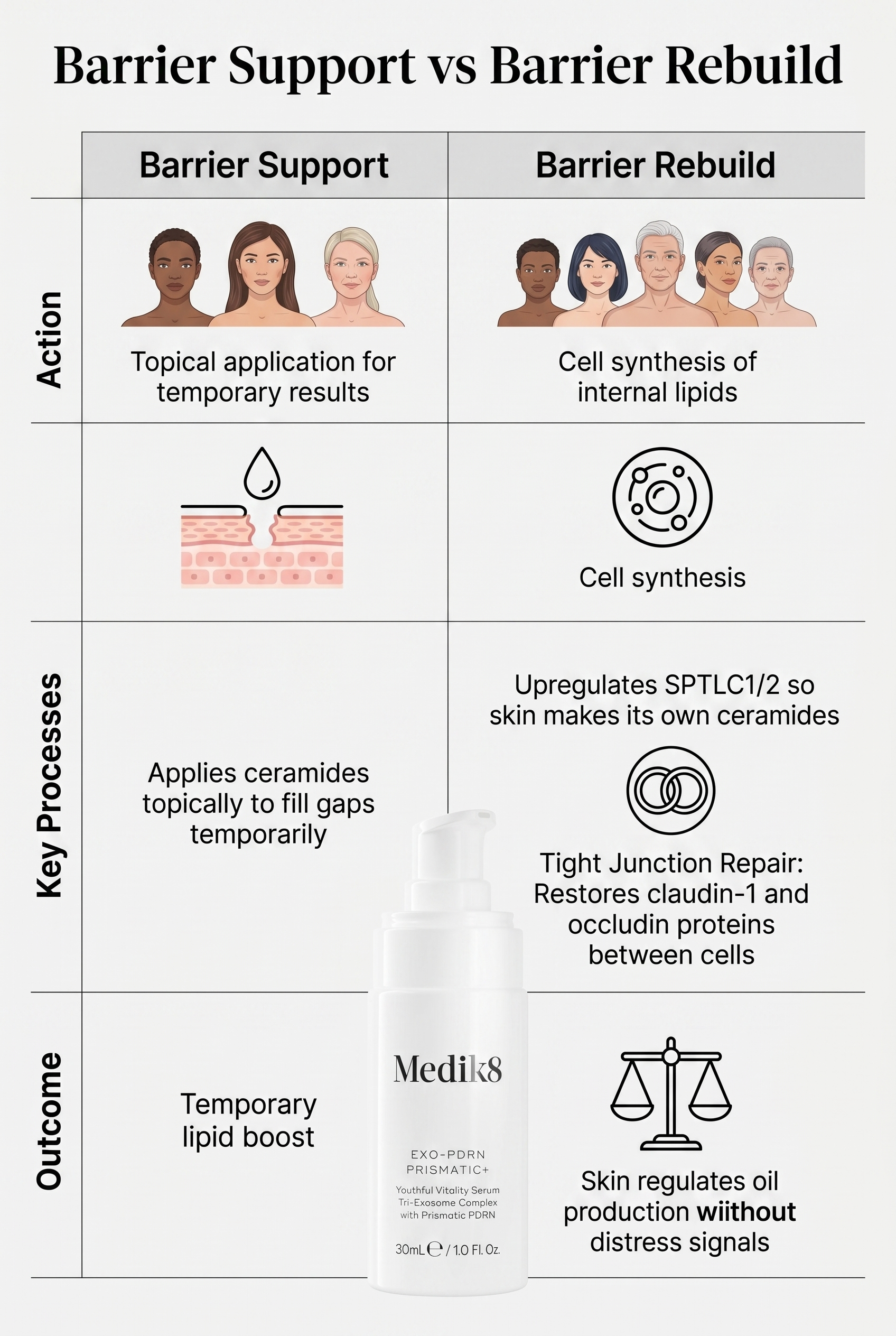
The traditional approach to barrier support involves applying ceramides topically. This helps, but it is a supply-side solution. A more advanced approach teaches your skin to synthesise its own ceramides again, by upregulating the enzymes (SPTLC1 and SPTLC2) that produce them. Similarly, encouraging claudin-1 and occludin expression restores tight junction integrity from within.
This is the difference between barrier support and barrier rebuild. One replenishes. The other regenerates.

Featured: Exo-PDRN Prismatic+
A full-spectrum face serum that boosts skin's natural rejuvenation by over 50%.
Shop NowHow Exo-PDRN Prismatic+ Addresses the Root Cause
This is where regenerative skincare enters the picture. Exo-PDRN Prismatic+ by Medik8 combines two advanced actives, a Triple Exosome Complex and Prismatic PDRN (Polydeoxyribonucleotide, a DNA-derived compound that supports cellular repair and renewal), to address barrier dysfunction at a cellular level.
PDRN works by providing nucleotide building blocks that cells use to repair DNA and restore normal function. In the context of barrier health, this means supporting the keratinocytes (skin cells) responsible for ceramide synthesis. Clinical data shows that Exo-PDRN Prismatic+ delivers measurable improvements in barrier function within seven days. Cell proliferation, the process of generating new, healthy skin cells, increased by more than 50% in ex vivo (lab-based) testing.
Exosomes are tiny messenger vesicles that carry signalling molecules between cells. The Triple Exosome Complex in this formulation delivers targeted signals that help regulate sebaceous gland activity and reduce the inflammatory mediators (chemical signals that drive inflammation) that trigger excess oil production. Together, these two actives work on the barrier rebuild angle: not just calming the surface, but restoring the skin's ability to regulate itself.
For skin caught in the reactive seborrhoea cycle, this approach is meaningful. Rather than managing oil after it appears, you are addressing the barrier dysfunction that made excess oil necessary in the first place. Learn more about DNA technology in skincare if you want to understand how PDRN works at a deeper level.
Exo-PDRN Prismatic+ by Medik8
A full-spectrum face serum combining Prismatic PDRN and a Triple Exosome Complex. Clinically shown to improve barrier function, skin health, and luminosity within seven days. Validated for use on sensitised and post-procedure skin (98% agreement in clinical assessment).
What a Barrier-First Approach to Oily Skin Actually Looks Like
Shifting from oil control to barrier rebuild means changing the logic of your routine. The goal is no longer to remove oil as fast as possible. The goal is to restore barrier integrity so your skin stops overproducing oil in the first place.
Start with a gentle, pH-balanced cleanser, one that removes surface sebum without stripping the barrier. Avoid cleansers with high concentrations of sodium lauryl sulphate (SLS), a surfactant that can damage the barrier with repeated use. Cleanse twice daily. More than that often triggers rebound oil production.
Add niacinamide (a form of vitamin B3) at two to five percent. It reduces sebum production by about 14% at four weeks by acting on fatty acid synthesis within sebaceous glands. It also supports barrier proteins, making it a useful dual-action ingredient for this concern. Pair it with a lightweight, non-comedogenic moisturiser, yes, even for oily skin. Hydration signals to your barrier that it does not need to compensate with more oil.
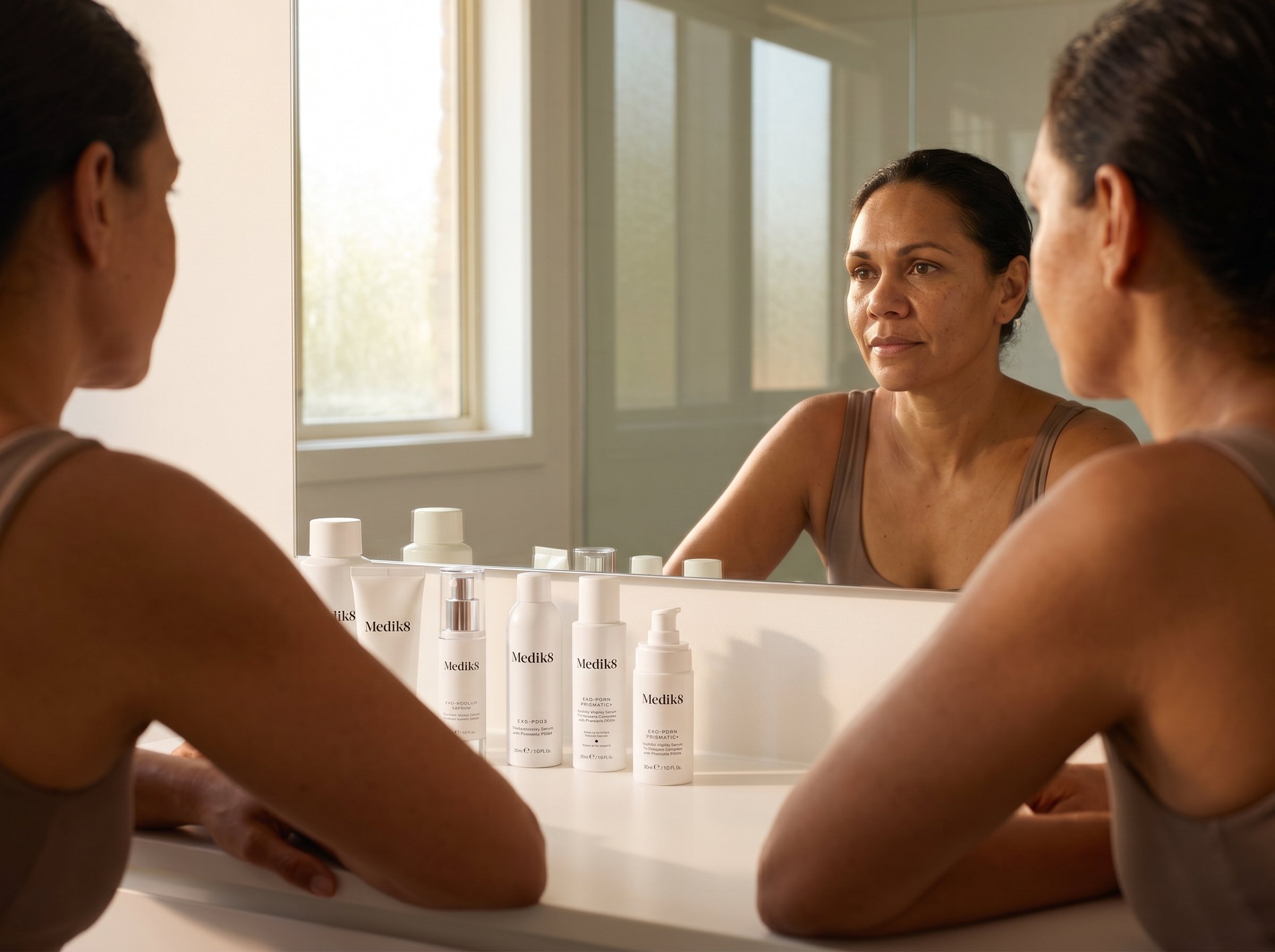
For those ready to address the root cause more directly, a regenerative serum like Exo-PDRN Prismatic+ fits into the routine after cleansing and before moisturiser. It works best as part of a consistent protocol, not as a spot treatment. Expect initial improvements in texture and barrier feel within the first one to two weeks. Meaningful shifts in oil regulation typically take eight to twelve weeks as barrier function rebuilds and sebaceous gland activity normalises.
Diet plays a supporting role too. High-glycaemic foods and dairy can stimulate sebum production through hormonal pathways. Managing these factors alongside your topical routine gives your skin the best conditions to regulate itself.
Oily skin is not a character flaw or a hygiene issue. In many cases, it is your skin doing exactly what it is designed to do, protecting a barrier that has been compromised. The paradox is that the products most commonly recommended for oily skin can make the underlying problem worse. Stripping oil without addressing barrier dysfunction keeps you in the cycle.
The shift to a barrier-first approach is not complicated, but it does require a different starting point. Instead of asking how to remove oil faster, ask why your skin is producing it. When the answer is barrier dysfunction, the solution is barrier rebuild. If you want to understand your skin's specific pattern before choosing products, book your skin consultation, for personalised guidance built around your skin, not around a sales page.


