
You've been using the same vitamin C serum for three years. The one that used to make your skin glow. The one you recommended to everyone. Now? Nothing. You've blamed the formula, wondered if they changed suppliers, even questioned whether you're applying it wrong.
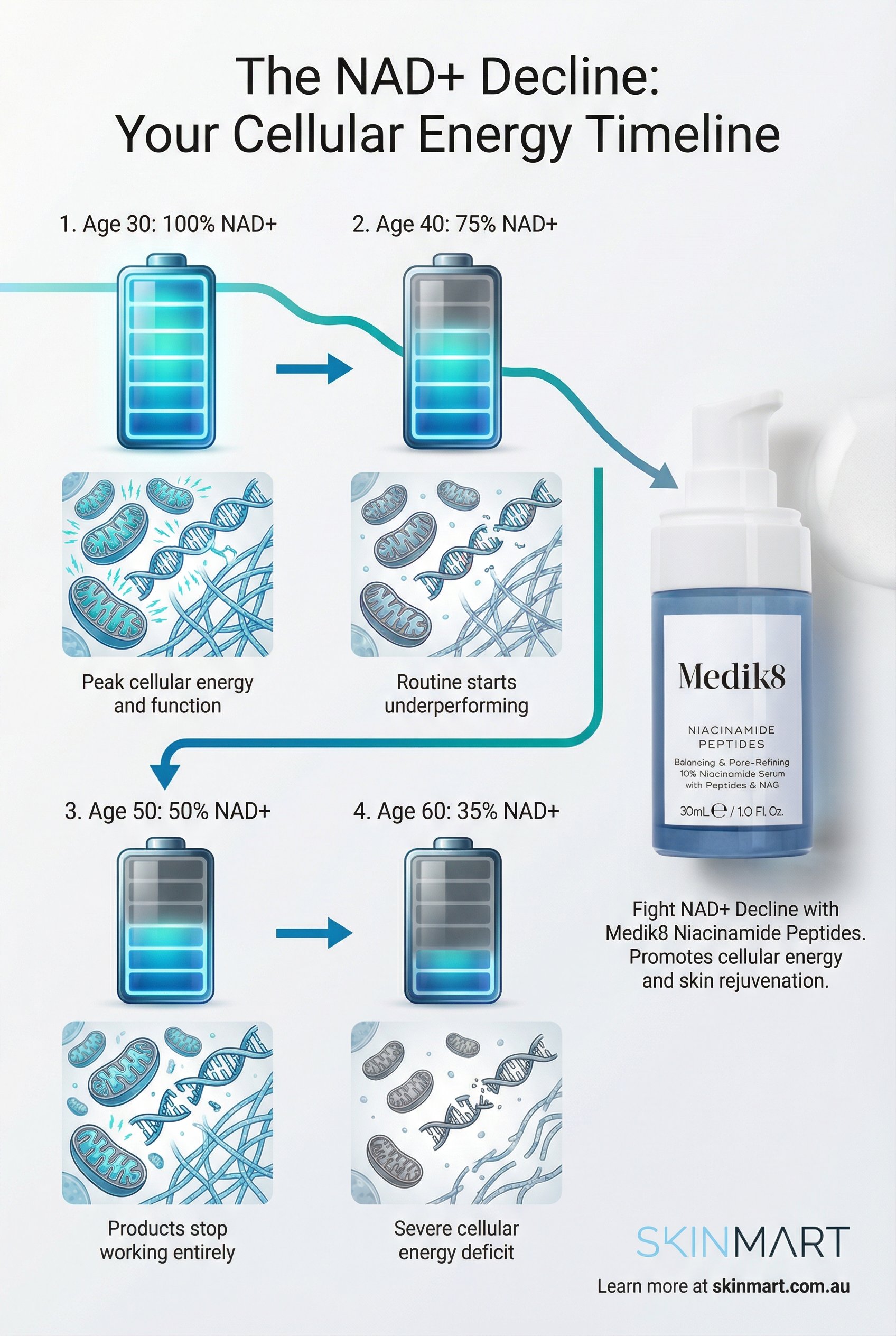
But here's what's actually happening: your skin's cellular batteries are dying. Not metaphorically, literally. Every cell in your skin runs on a molecule called NAD+ (nicotinamide adenine dinucleotide), and after age 30, your levels plummet. By 50, you're operating at roughly half capacity. This isn't about ageing gracefully or accepting change, this is a measurable energy crisis happening at the cellular level, and it's why your entire routine has stopped working.
What Is NAD+ and Why Should You Care?
NAD+ is the cellular currency your skin uses to do everything, process vitamin C, synthesise collagen, repair UV damage, turn over cells, maintain your barrier. Think of it as the electricity powering your home. You can have the best appliances in the world, but without power, nothing functions.
Here's the problem: NAD+ levels decline by about 50% between ages 30 and 50. This isn't a gradual fade, it's a steep drop that accelerates in your 40s. Research published in Cell Metabolism shows this decline directly correlates with decreased cellular function, impaired DNA repair, and reduced mitochondrial efficiency, the very processes your skincare relies on.
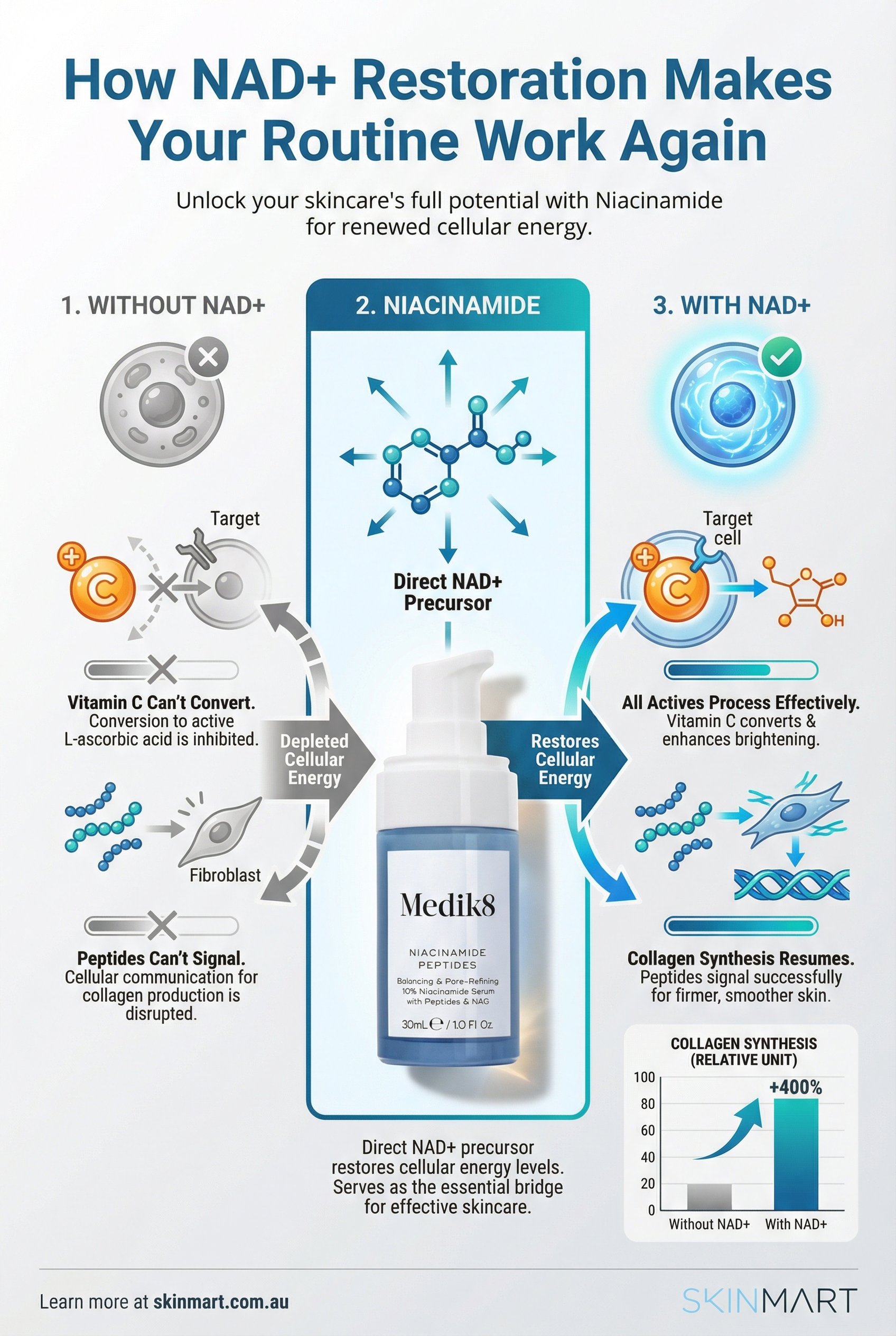
When your NAD+ levels tank, your skin cells can't metabolise the expensive actives you're applying. That retinol? Your cells lack the energy to convert it into retinoic acid. That peptide serum? Without adequate NAD+, your fibroblasts can't synthesise the collagen those peptides are signalling for. You're not having product failure, you're having cellular energy bankruptcy.
The Three Ways NAD+ Depletion Sabotages Your Routine
1. Your skin can't process active ingredients
Every skincare active requires enzymatic conversion or cellular uptake to work. Vitamin C needs to be metabolised into its active form. Retinol requires conversion through multiple steps. Peptides need cellular machinery to read and respond to their signals. All of these processes are NAD+-dependent. When levels drop, your skin simply can't complete these conversions efficiently. You're applying ingredients your cells can't use.
2. Collagen synthesis stalls
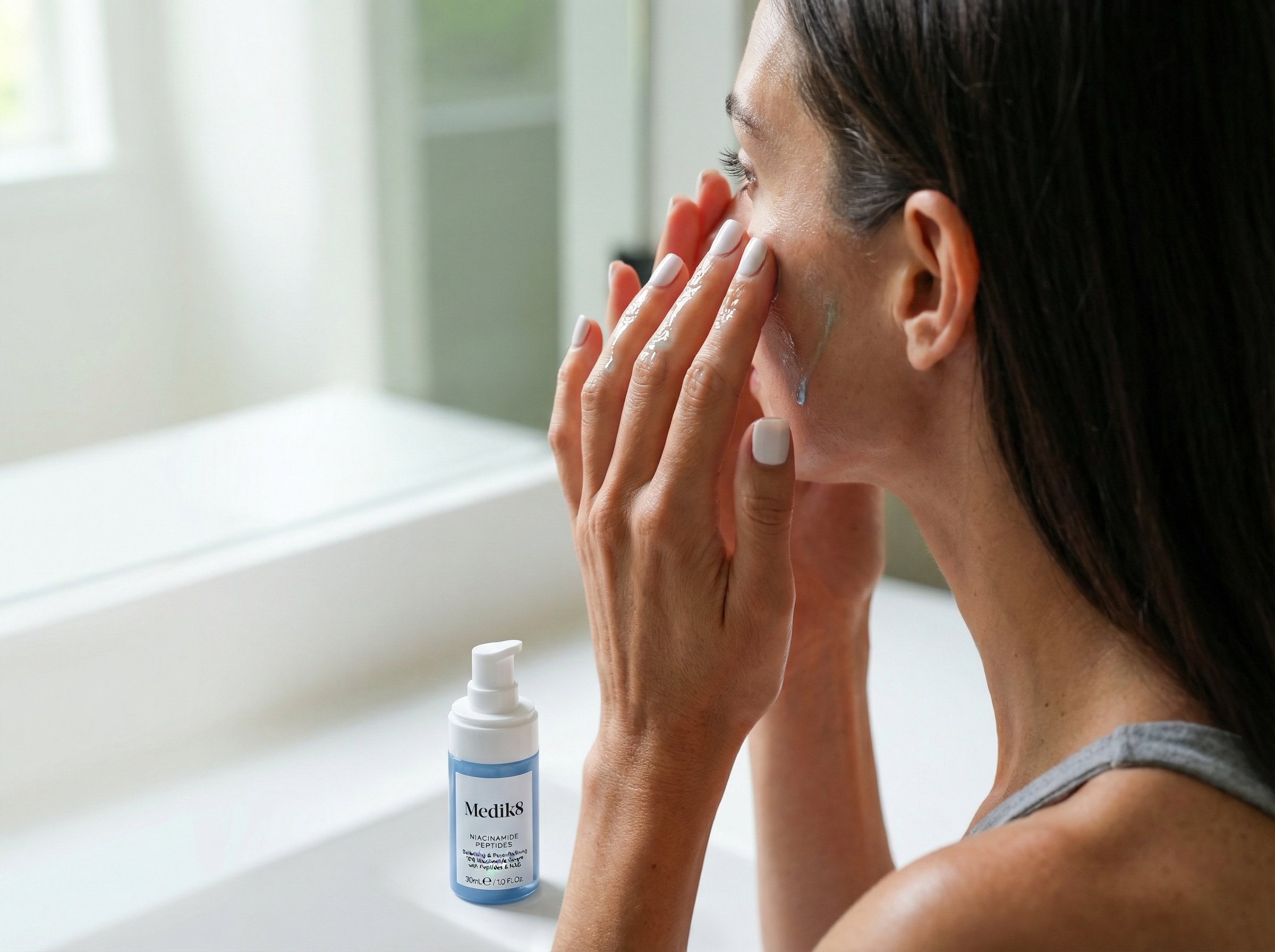
Producing collagen is one of the most energy-intensive processes your skin performs. Your fibroblasts need abundant NAD+ to fuel the complex biochemical pathways that assemble collagen molecules. As NAD+ declines, collagen production slows dramatically, not because your cells have forgotten how, but because they literally lack the energy. This is why that peptide serum that used to plump your skin now seems to do nothing.
3. Cellular repair shuts down
Your skin faces constant assault, UV radiation, pollution, oxidative stress. Repairing this damage requires NAD+-dependent enzymes called sirtuins and PARPs. When NAD+ levels are low, these repair systems go offline. Damage builds up faster than your skin can fix it, accelerating visible ageing regardless of how many antioxidants you're applying topically.
Why Adding More Products Makes It Worse
The instinct when your routine stops working is to add more. A stronger retinol. An extra serum. A new treatment. But here's the counterintuitive truth: piling on more actives when your NAD+ is depleted is like revving a car engine with no fuel. You're demanding more from cells that are already energy-starved.
This is why so many people feel increased sensitivity in their 40s and 50s. It's not that your skin has suddenly become reactive, it's that your cells lack the energy to process multiple demanding actives at once. Each additional product requires cellular resources your skin no longer has in abundance. The result? swelling, irritation, and a compromised barrier, not because the products are wrong, but because your cellular infrastructure can't support them.
The solution isn't more products. It's restoring your skin's basic capacity to use what you're already applying.
How Niacinamide Restores Cellular Power
Niacinamide (vitamin B3) is a direct NAD+ precursor, meaning your cells use it as raw material to manufacture NAD+. This isn't a metaphor or marketing claim. It's biochemistry. When you apply niacinamide topically, you're literally supplying the building blocks your cells need to restore their energy reserves.
Multiple studies show this mechanism. Research in the Journal of Investigative Dermatology shows topical niacinamide increases cellular NAD+ levels, which in turn enhances DNA repair, improves barrier function, and boosts collagen synthesis. A 2020 study in International Journal of Molecular Sciences found that niacinamide supplementation restored age-related NAD+ decline and improved cellular metabolism in skin cells.
But here's what makes this especially powerful for your routine: niacinamide doesn't just work on its own, it makes everything else in your routine work better. By restoring NAD+ levels, you're really recharging your skin's ability to process and respond to other actives. That vitamin C serum that stopped working? With adequate NAD+, your cells can metabolise it again. That retinol? Your cells now have the energy to convert it efficiently.

Featured: Niacinamide Peptides
Clinically proven 10% niacinamide serum that dramatically improves the look of pores and congestion while soothing the skin barrier.
Shop NowKey Takeaways
- After 30, your skin's NAD+ levels decline by up to 50%, starving cells of the energy needed to use skincare ingredients well.
- This cellular energy crisis explains why your trusted routine suddenly stops delivering results, not because the products changed, but because your skin's ability to metabolise them has diminished.
- Niacinamide (vitamin B3) directly replenishes NAD+, restoring the cellular power needed to process actives, synthesise collagen, and repair damage.
- It's not about adding mor...
What This Means for Your Actual Routine
Understanding the NAD+ crisis changes how you should think about skincare after 40. Instead of constantly searching for the next miracle ingredient, focus on restoring your skin's basic capacity to respond. Here's what that looks like practically:
Start with NAD+ restoration
Before layering on multiple actives, ensure your cells have the energy to use them. A quality niacinamide serum becomes your foundation, not just another step, but the step that makes all others possible. Look for formulas with 5-10% niacinamide, ideally combined with peptides that support the collagen synthesis your restored NAD+ levels can now fuel.
Simplify your active roster
With restored cellular energy, you need fewer products, not more. A streamlined routine of well-chosen actives will outperform a 10-step routine applied to energy-depleted cells. Focus on synergistic combinations: niacinamide to restore NAD+, a retinoid your cells can now process well, and targeted treatments for specific concerns.
Give it time to rebuild
Restoring NAD+ levels and cellular function takes 8-12 weeks of consistent use. This isn't instant gratification, it's cellular renovation. You're not just seeing surface improvements; you're rebuilding your skin's metabolic capacity. The payoff? Your entire routine starts working again, and the results compound over time rather than plateauing.
The Product That Addresses Both Problems
Understanding the NAD+ crisis is one thing. Finding a product that actually addresses it is another. Most niacinamide serums stop at ingredient inclusion, they contain niacinamide but don't consider what happens after NAD+ is restored. Your cells have energy again, but what are they supposed to do with it?
This is where Medik8 Niacinamide Peptides takes a different approach. It combines 10% niacinamide to restore NAD+ levels with a sophisticated peptide complex just designed to direct that restored energy toward collagen synthesis. You're not just recharging the battery, you're ensuring that energy gets channelled into the processes that actually reverse visible ageing.
The formula includes Matrixyl 3000 Plus, a peptide blend that signals fibroblasts to increase collagen and elastin production, and Argireline, which reduces expression lines by gently relaxing facial muscles. But here's why the combination matters: peptides only work if your cells have the energy to respond to their signals. Without adequate NAD+, even the most advanced peptides are shouting instructions at cells that can't hear them. By restoring NAD+ first, this formula ensures your cells can actually execute the collagen-building commands those peptides deliver.
The result isn't just improved skin, it's a restored capacity to improve. Your other products start working again because your cells can finally process them. Shop Medik8 Niacinamide Peptides to restore your skin's cellular power and make your entire routine effective again.
Your routine didn't fail you. Your cellular energy did. This distinction matters because it changes everything about how you approach skincare after 40. You don't need to keep searching for the next miracle ingredient or resign yourself to diminishing results. You need to restore your skin's basic capacity to respond, and that starts with NAD+.
The science is clear: declining NAD+ levels sabotage even the most sophisticated skincare routines by starving cells of the energy they need to function. But this isn't a one-way street. By replenishing NAD+ with niacinamide and supporting the processes that restored energy enables, you can make your entire routine effective again. Not through more products, but through smarter cellular support that addresses the root cause rather than chasing symptoms.
You're not asking too much of your skin. You're finally giving it what it needs to deliver.


