You have probably tried a retinol. Maybe a vitamin C serum, a peptide complex, or a brightening treatment. Good choices, all of them. These ingredients send real signals to your skin, signals that trigger collagen production, speed up cell renewal, and fight oxidative stress. The science behind them is solid.
But here is a question worth sitting with: what happens when your skin receives the signal and simply cannot act on it? Not because the product failed. Not because your routine is wrong. But because the cells doing the work are running low on energy. This is the energy problem in anti-ageing, and it is one of the least-discussed reasons why even well-built routines hit a wall.
Key Takeaways
- Most age-positive skincare works by sending signals to your skin cells, telling them to make more collagen, shed old cells faster, or hold more moisture.
- But signals only work when your cells have enough energy to respond.
- As we age, cellular energy (ATP) drops significantly.
- This is the energy problem in anti-ageing.
- PDRN (polydeoxyribonucleotide) addresses this by restoring the raw materials cells need to function and repair.
What Do We Mean by 'Signals' in Skincare?
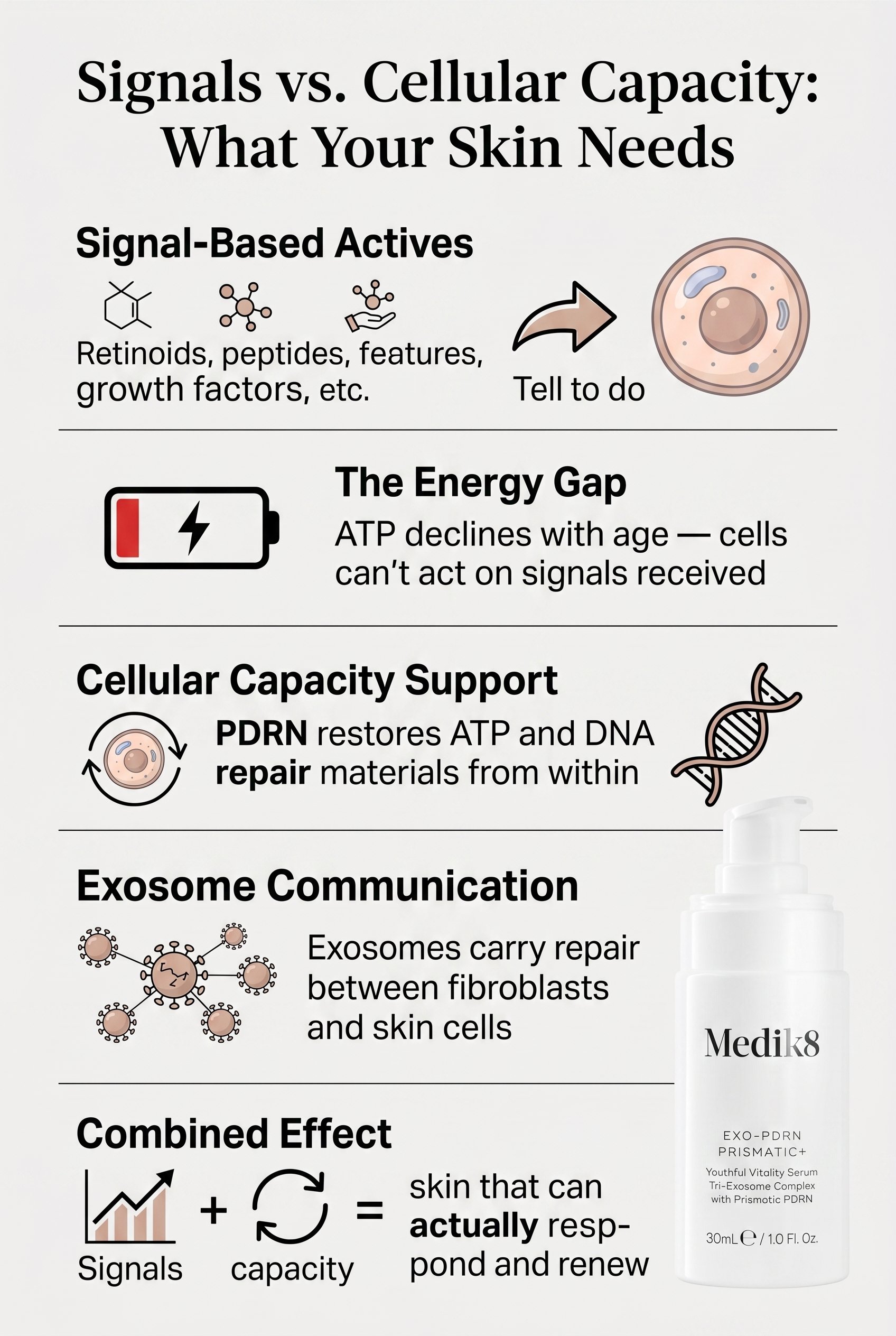
Most active skincare ingredients work by sending instructions to your skin cells. Retinoids (vitamin A derivatives) tell skin cells to turn over faster and produce more collagen. Peptides (short chains of amino acids) mimic the signals your skin uses to trigger repair. Growth factors tell fibroblasts, the cells that make collagen and elastin, to get to work. These are all signal-based approaches, and they are genuinely effective.
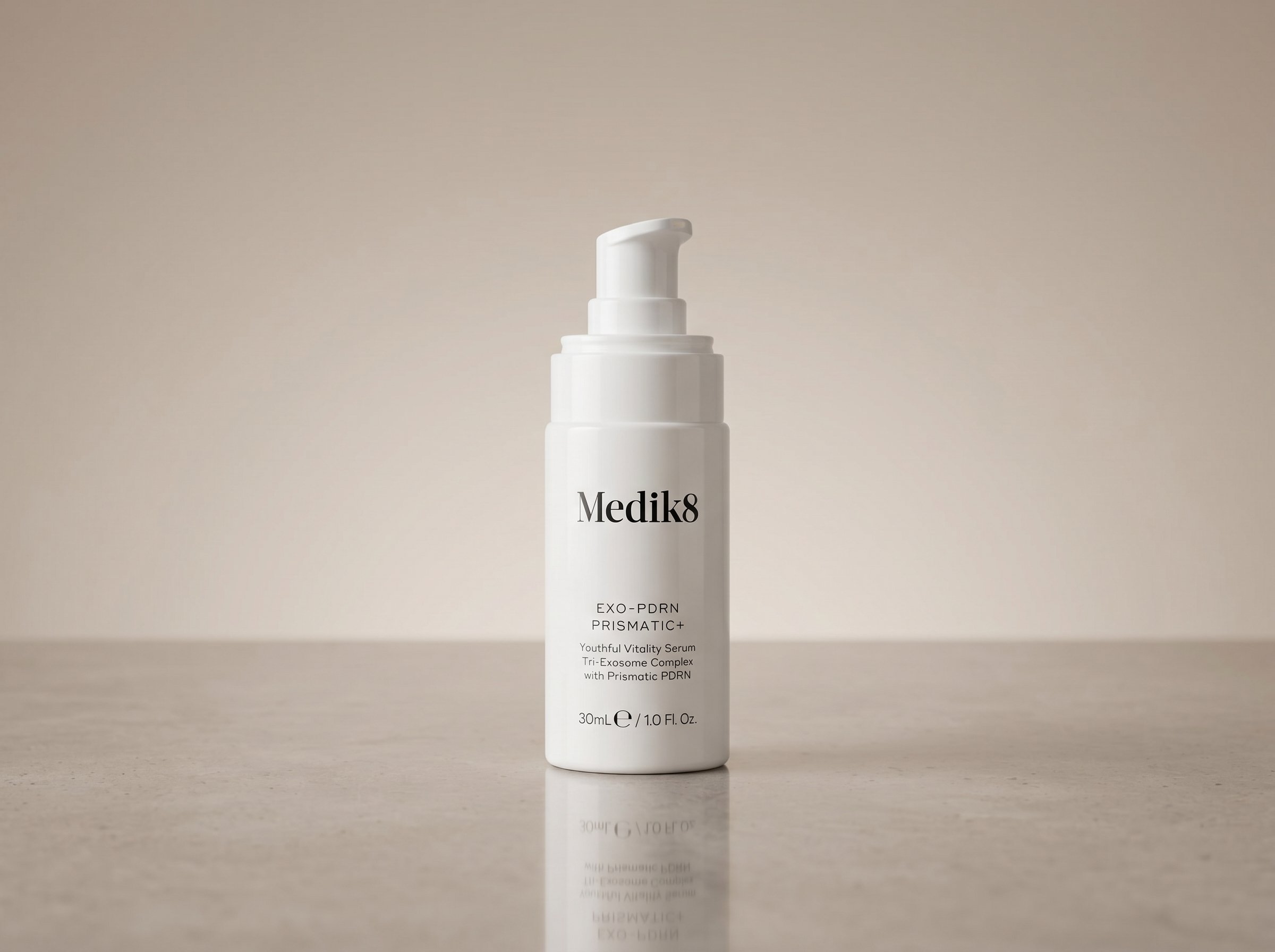
The logic makes sense. If your skin has slowed down, give it a nudge. Send a message.
Wake it up. And for many people, especially in their 30s and early 40s, this works well. Starting a retinol routine at the right time can produce real, visible results, and the evidence supports that.
But signals are only half the story. A signal tells a cell what to do. It does not give the cell the capacity to do it.
Why Cellular Capacity Declines With Age
Your skin cells run on ATP (adenosine triphosphate). Think of ATP as the fuel your cells burn to do almost anything, divide, repair DNA, build proteins, maintain their structure. Without enough ATP, a cell can receive a perfectly clear signal and still fail to act on it. The message arrives. The energy to respond does not.
From around your mid-30s, cellular energy production starts to slow. Mitochondria (the structures inside cells that generate ATP) become less efficient. DNA damage accumulates.
Cells that were once quick to repair and renew become sluggish. This is not a flaw in your skincare routine. It is a change happening at a biological level, one that most skincare products are not designed to address.
This is why some people notice their routine stops delivering the same results over time. The products have not changed. The signals are still being sent. But the cells receiving those signals have less capacity to act. Ageing is partly genetic, but this energy decline is a consistent pattern across skin types and backgrounds.
Understanding this gap changes how you think about what your skin actually needs.
What Is PDRN and How Does It Address This Gap?
PDRN stands for polydeoxyribonucleotide. It is a bioactive compound made from purified DNA fragments. Your cells can use these fragments as raw building blocks to repair their own DNA and restore energy production. Rather than sending a signal from the outside, PDRN gives cells the materials they need to rebuild from within.
This is a meaningful difference. Signal-based ingredients say: 'do this.' PDRN says: 'here are the tools to actually do it.' Clinical studies show PDRN can boost cell growth (proliferation) by over 50% in ex vivo testing, that is, in real human skin tissue outside the body. It supports ATP restoration, which means cells can respond to the signals they are already receiving more effectively.
PDRN has a long history in clinical and post-procedure settings, where rapid tissue repair is the priority. Its move into daily skincare reflects a growing understanding that regeneration does not have to wait for a procedure. It can be part of how you care for your skin every day. If you are curious about how DNA-level technology fits into skincare more broadly, this overview of DNA technology in skincare is a useful starting point.
Where Exosomes Fit Into This Picture
Exosomes are tiny messenger particles released by cells. They carry proteins, lipids (fats), and genetic material between cells, acting as a communication network for repair and renewal. When your skin is young and healthy, this network is active and efficient. As skin ages, exosome activity declines alongside cellular energy.
Pairing exosomes with PDRN creates a layered approach. PDRN restores the cellular energy and raw materials needed for repair. Exosomes carry the signals that coordinate that repair across multiple cell types. Together, they address both sides of the equation: capacity and communication.
This is the logic behind Exo-PDRN Prismatic+, a full-spectrum serum that combines a Triple Exosome Complex with Prismatic PDRN. It is designed for skin that has the right routine in place but needs support at a deeper level. Not to replace your actives, but to give your cells what they need to actually respond to them.

Featured: Exo-PDRN Prismatic+
A full-spectrum face serum that boosts skin's natural rejuvenation by over 50%.
Shop Now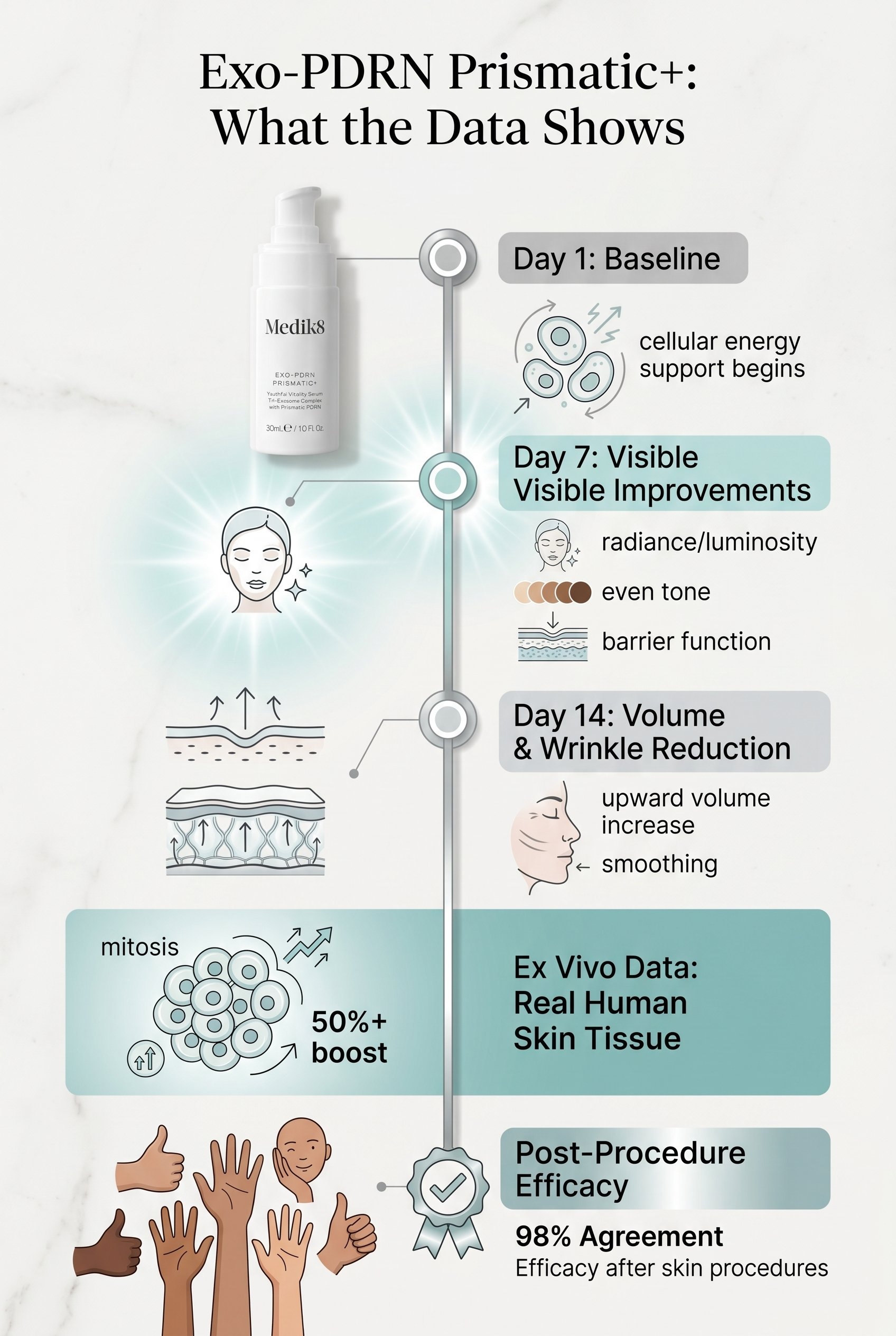
Signals and Capacity: Why You Need Both
This is not an argument against retinol, peptides, or vitamin C. Those ingredients earn their place in a well-built routine. The point is that signal-based actives and cellular energy support work at different levels. And addressing both gives your skin a better chance of real, lasting change.
Think of it this way. A retinol tells your fibroblasts to make more collagen. PDRN gives those fibroblasts the energy to follow through. A peptide signals your skin to repair.
Exosomes help coordinate that repair across the skin's layers. These approaches are not competing. They are complementary.
For skin in its 40s and 50s, skin that has been doing the right things but is not seeing the same return, adding cellular energy support may be the missing layer. Not a replacement for what is working, but the piece that helps everything else work better. If you are thinking about how active ingredients layer together, this guide to active ingredients covers the fundamentals clearly.
A Closer Look at Exo-PDRN Prismatic+
Exo-PDRN Prismatic+ is built around two core technologies: Prismatic PDRN and a Triple Exosome Complex. The PDRN component works to restore cellular energy and support DNA repair. The exosome complex carries targeted signals to fibroblasts, keratinocytes (the cells that form your outer skin layers), and melanocytes (the cells that produce pigment).
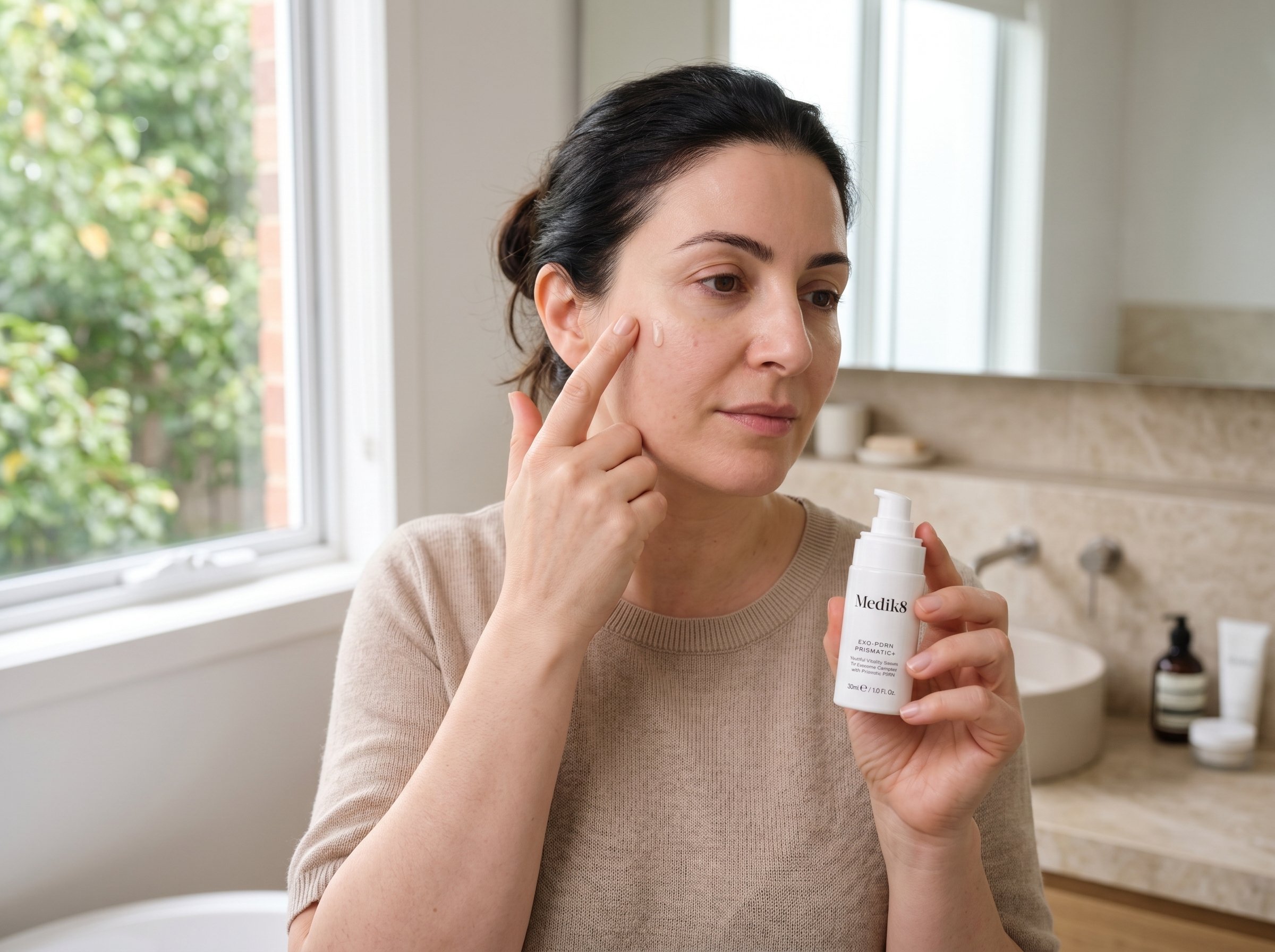
Clinical data shows visible improvements in skin health, luminosity, tone, and barrier function within 7 days. Volume and wrinkle improvements appear by day 14. The formula has also shown 98% agreement for post-procedure efficacy, meaning it supports recovery after treatments like laser or microneedling, when the skin's repair capacity is under pressure.
This is not a product for everyone. It is best suited to skin that is already working with a solid routine and needs support at a cellular level. If you are still building your foundation, start there first. But if your routine is in place and your results have plateaued, this is worth understanding.
Most age-positive skincare is built around signals. That is not wrong, signals matter. But if your cells do not have the energy to act on those signals, the best routine in the world will only take you so far. The energy problem in anti-ageing is real, and it is one of the clearest reasons why results plateau even when the approach is sound.
PDRN and exosomes work at a different level. They do not replace the actives you are already using. They give your skin the capacity to respond to them more fully. If your routine is in place and you are ready to look at what might be missing, shop Exo-PDRN Prismatic+ and see whether this is the layer your skin has been waiting for.


