You apply moisturiser every morning. You layer it on at night. But by mid-afternoon, your skin feels tight again. The flaking returns.
The dullness stays. If this sounds familiar, the problem probably is not the product you are using. The problem may be that your skin has partly forgotten how to hydrate itself.
The ceramide synthesis problem is real, and it is more common than most people realise. Your skin is designed to produce its own ceramides (natural fats that hold moisture in and keep irritants out). But several things can slow that production down.
When ceramide levels drop, your barrier weakens. Water escapes faster than any cream can replace it. Understanding why this happens is the first step toward actually fixing it, not just masking it.
What Are Ceramides and Why Does Your Skin Need Them?
Ceramides are lipids, which are natural fats found in your skin. They make up about 40 to 50 percent of the outer skin layer, called the stratum corneum. Think of your skin like a brick wall. The skin cells are the bricks.
Ceramides are the mortar that holds everything together. Without enough mortar, the wall develops gaps. Water leaks out. Irritants get in.
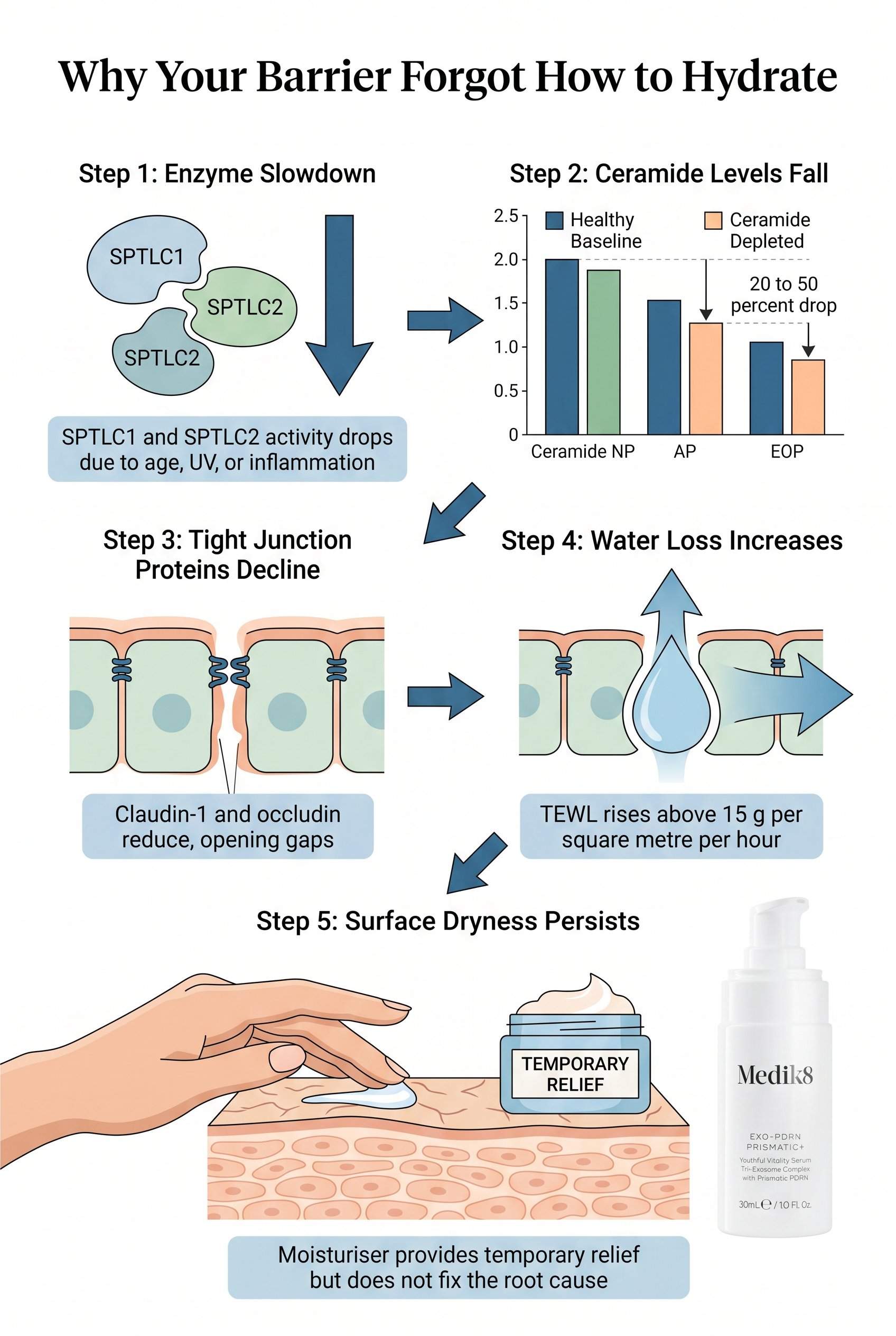
Your body makes ceramides through a process that starts with two key enzymes: SPTLC1 and SPTLC2 (serine palmitoyltransferase subunits 1 and 2). These enzymes kick off the ceramide production chain. When they work well, your skin maintains healthy levels of ceramides. When they slow down, production falls. Research shows that dry skin can have ceramide levels 20 to 50 percent below those found in healthy skin.
The ratio of lipids in your barrier also matters. Your skin needs ceramides, cholesterol, and free fatty acids in roughly equal amounts. When that balance shifts, the barrier cannot do its job properly. This is why simply applying a cream with one ingredient rarely solves chronic dryness on its own.
What Causes the Ceramide Synthesis Problem?
Several things can reduce your skin's ability to make ceramides. Age is one of the biggest factors. As we get older, SPTLC1 and SPTLC2 activity slows down.
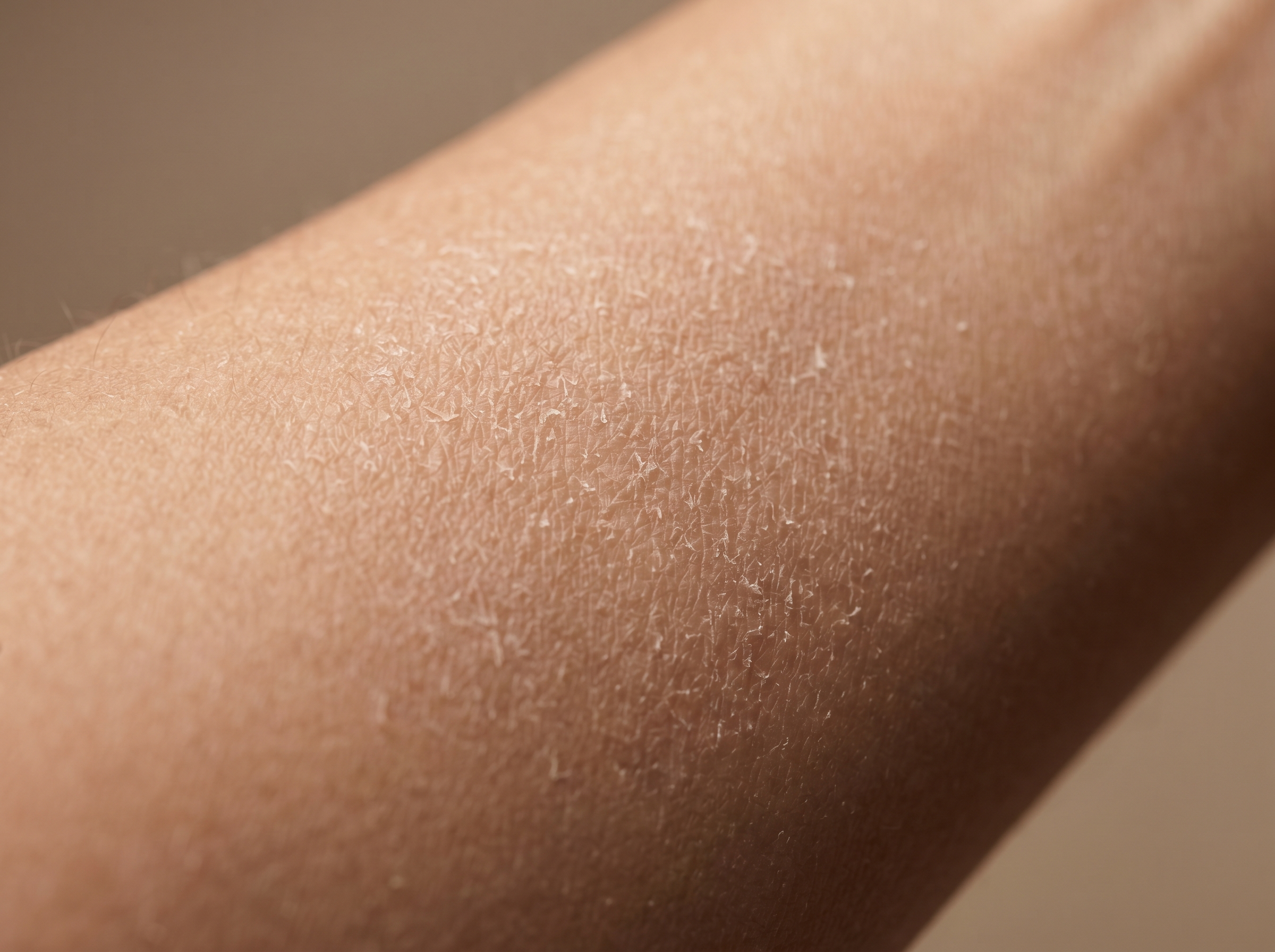
Ceramide levels fall. The barrier becomes less efficient at holding moisture. This is why skin that was manageable in your thirties can feel persistently dry in your forties and beyond.
UV exposure is another major driver. Australian sun is intense year-round. UVB radiation damages the enzymes involved in ceramide production and also reduces aquaporin-3, a protein that acts as a water channel in your skin. Less aquaporin-3 means less water moving through the skin layers. Winter conditions compound this further, as cold air and indoor heating lower humidity and increase water loss through the skin.
Inflammation plays a role too. Cytokines (small proteins released during inflammation) like IL-4 and IL-13 directly suppress ceramide production. They also reduce levels of claudin-1 and occludin, which are tight junction proteins. Tight junction proteins form microscopic seals between skin cells in the deeper living layers.
When these proteins decline, water escapes through gaps between cells before it even reaches the surface. Research by De Benedetto et al. (2011) showed that tight junction disruption can occur before visible lipid barrier damage appears. This explains why dry skin and inflammation often feed each other in a cycle.
Harsh cleansers, particularly those with sodium lauryl sulphate (SLS), strip existing ceramides and disrupt the skin's pH. The ideal skin pH sits between 4.5 and 5.5. When pH rises above 6.0, the enzymes that process lipids slow down significantly. Barrier recovery can take three times longer at elevated pH levels.
Why Moisturiser Alone Cannot Solve This
Most moisturisers work in one of two ways. Humectants like glycerin and hyaluronic acid draw water into the skin. Occlusives like petrolatum and dimethicone form a film on the surface to slow water loss.
Both are useful. But neither one restores your skin's ability to produce ceramides. They address the symptoms, not the cause.
If your SPTLC1 and SPTLC2 enzymes are underperforming, your barrier will keep losing ceramides faster than you can replace them with topical products alone. The moisture you apply escapes through the same gaps that were there before. You feel relief for a few hours, then tightness returns. This is the cycle that so many people with chronic dry skin know well. Understanding the difference between dry and dehydrated skin can also help clarify why the same products do not always work for both conditions.
True barrier rebuilding requires a different approach. It means supporting your skin's own production systems, not just topping up what is missing. Ingredients that upregulate ceramide synthesis, restore tight junction proteins, and repair the lipid ratio are what actually shift the pattern over time.
What Does Barrier Rebuild Actually Mean?
Barrier rebuild goes deeper than barrier support. Barrier support adds ceramides and locks in moisture temporarily. Barrier rebuild targets the production systems that have slowed down. The goal is to restore your skin's ability to generate its own ceramides and maintain its own tight junction proteins.
Niacinamide (vitamin B3) is one of the best-studied ingredients for this. At concentrations of 2 to 5 percent, it has been shown to increase ceramide production by up to 34 percent and free fatty acid synthesis by up to 67 percent. It also reduces inflammatory cytokines that suppress claudin-1 expression. This means it works on both the lipid barrier and the tight junction layer at the same time.
Ceramide-dominant formulations that include the specific subtypes depleted in dry skin (ceramide NP, AP, and EOP) also support the rebuilding process. Research by Chamlin et al. (2002) showed that formulations using physiological lipid ratios improved barrier function significantly better than petrolatum alone. The key is the ratio. Ceramides need cholesterol and free fatty acids alongside them to integrate properly into the skin's lamellar structure. Learning which active ingredients suit your skin can help you make more confident choices here.
Applying humectants to damp skin first, then layering ceramide-rich products, then sealing with an occlusive is the protocol that clinical evidence supports. Each step serves a different function. The sequence matters as much as the ingredients.

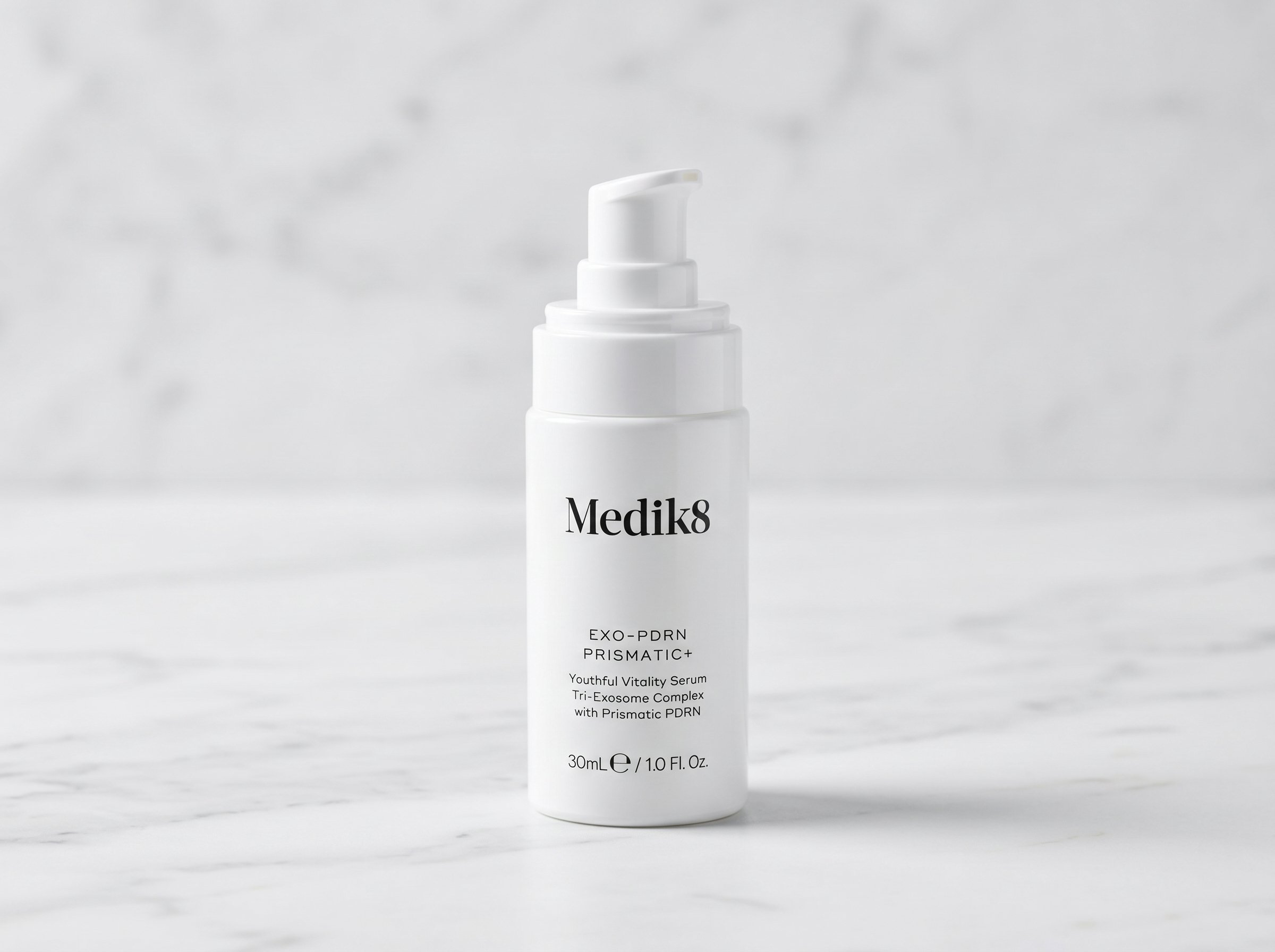
Featured: Exo-PDRN Prismatic+
A full-spectrum face serum that boosts skin's natural rejuvenation by over 50%.
Shop NowKey Takeaways
- Chronic dry skin is often a ceramide synthesis problem, not just a moisture shortage.
- Enzymes called SPTLC1 and SPTLC2 drive ceramide production in your skin.
- When these slow down due to age, UV exposure, or inflammation, your barrier loses its ability to hold water.
- Tight junction proteins like claudin-1 and occludin also decline, opening gaps that let hydration escape.
- The result is skin that feels tight and dry even when you apply moisturiser regularly.
How Exo-PDRN Prismatic+ Supports Ceramide Synthesis
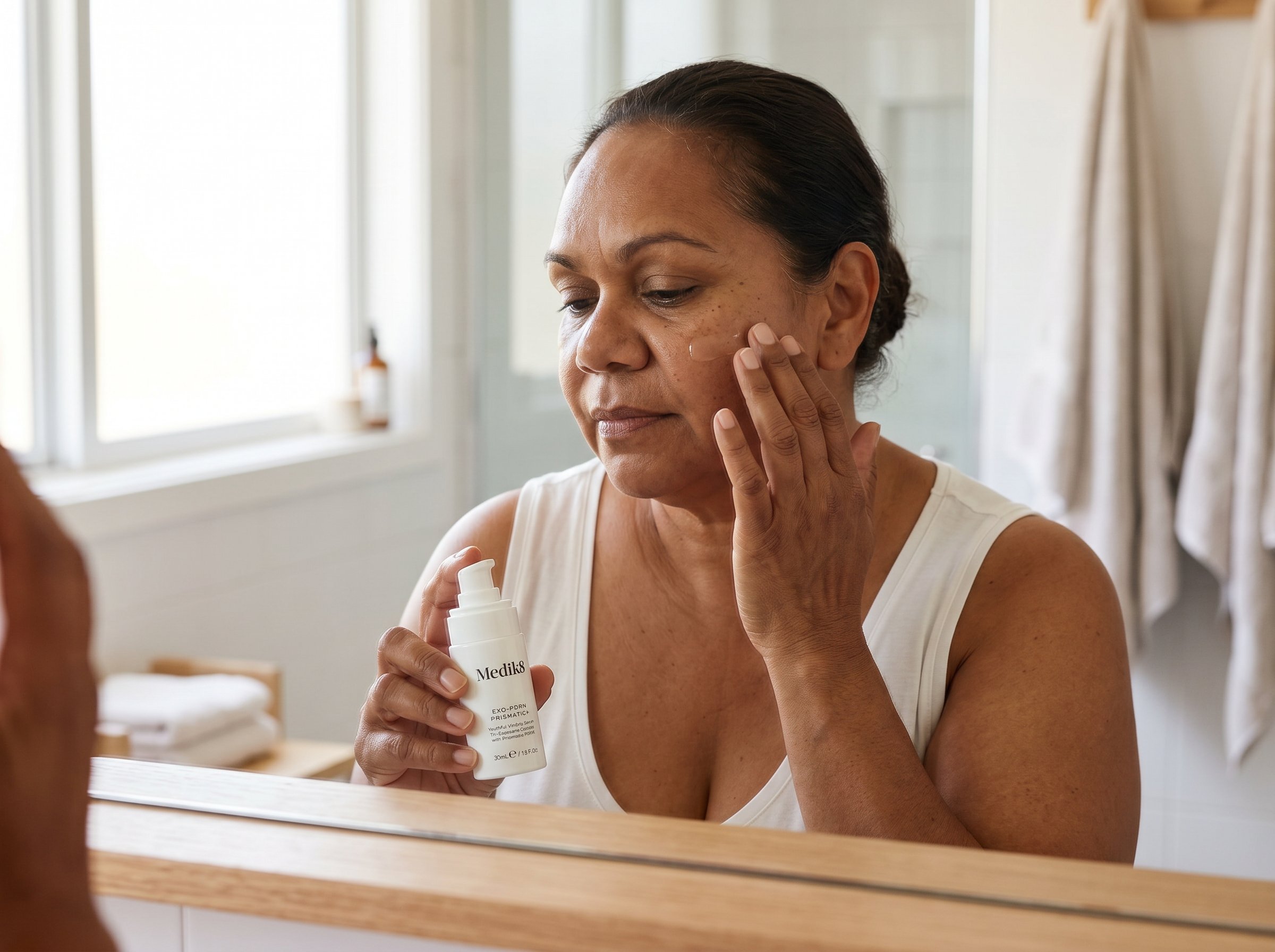
This is where a newer class of ingredient enters the picture. Exo-PDRN Prismatic+ by Medik8 combines a Triple Exosome Complex with Prismatic PDRN (polydeoxyribonucleotide) to support skin regeneration at a cellular level. PDRN is a DNA-derived ingredient that has been shown to support cell proliferation by over 50 percent in ex vivo studies. Exosomes are tiny cell-signalling particles that carry instructions between cells and support repair processes.
What makes this relevant to the ceramide synthesis problem is the mechanism. Rather than simply adding ceramides to the surface, this formulation works by supporting the cellular environment in which ceramide production occurs. Our analysis suggests that PDRN-driven approaches may help restore the conditions needed for SPTLC1 and SPTLC2 to function more effectively. Clinical data shows improvements in skin health, luminosity, and barrier function within seven days, with continued improvements in volume and skin texture at fourteen days.
It has also been validated for post-procedure use, with 98 percent agreement on efficacy in compromised skin. This matters for dry skin sufferers who have used active treatments that may have further disrupted their barrier. The formulation supports active regeneration without causing the barrier disruption that some other actives can trigger. For those whose skin is stuck in a cycle of dryness and sensitivity, this distinction is worth understanding. Read more about DNA technology in skincare to understand the broader context of this ingredient class.
What a Barrier Rebuild Protocol Looks Like in Practice
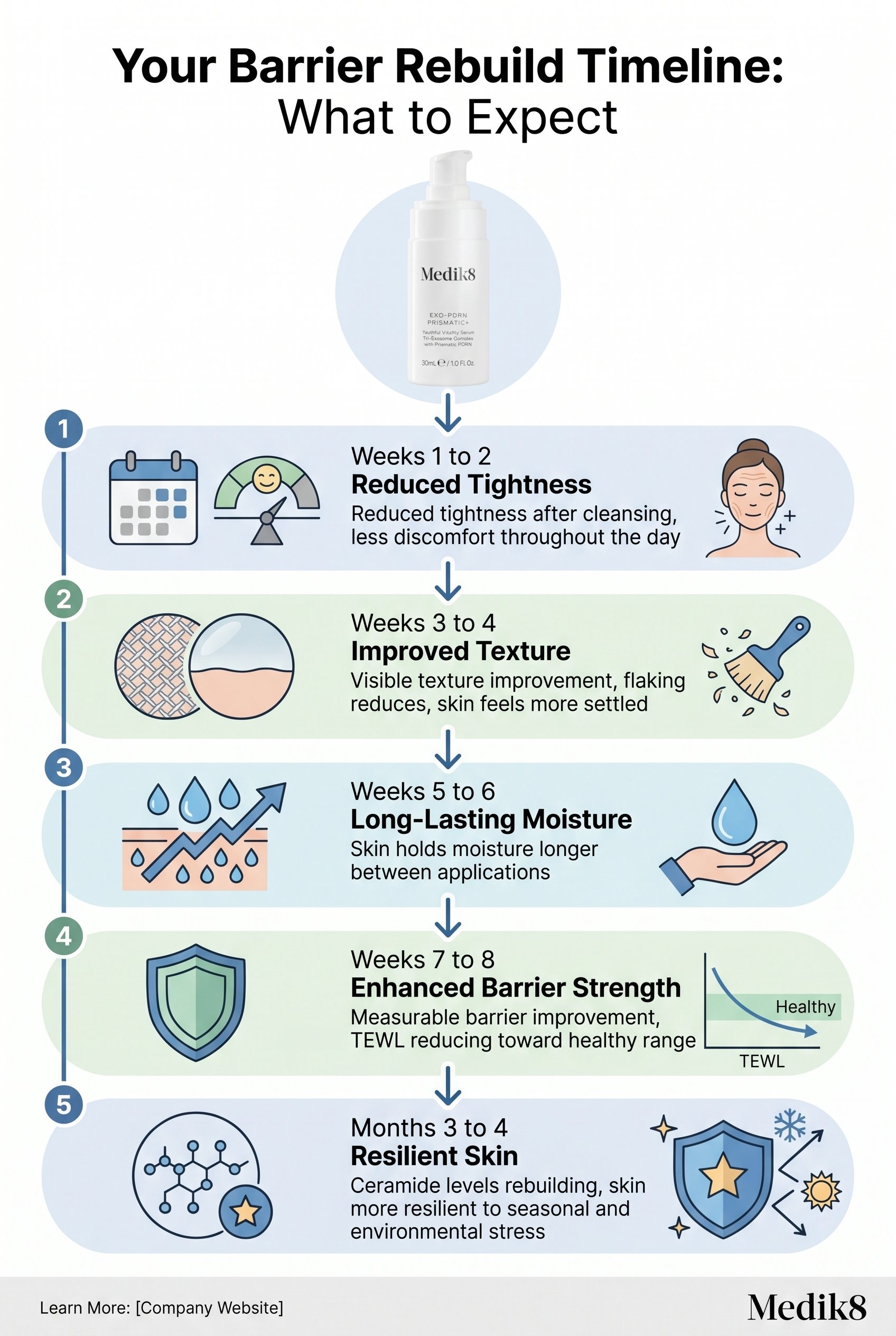
Rebuilding your barrier takes time. Clinical research consistently shows that meaningful improvement in ceramide levels and tight junction proteins requires four to eight weeks of consistent twice-daily use. This is not a failure of the approach. It reflects the reality of cellular repair. You are rebuilding structure, not just adding moisture.
A practical protocol for dry skin looks like this. Use a gentle, pH-balanced cleanser (around pH 5.5) morning and night. Apply a humectant serum to damp skin within three minutes of cleansing.
Follow with a ceramide-dominant moisturiser that includes cholesterol and free fatty acids. Seal with an occlusive layer in the evening, especially during winter months or in air-conditioned environments. Add niacinamide at 2 to 5 percent to support ceramide production from within.
In Australian conditions, seasonal adjustment matters. Winter months in southern states bring lower humidity and indoor heating that can increase water loss through the skin by 40 to 60 percent. During these months, heavier occlusives and more frequent application are often needed. Coastal areas with higher humidity may allow lighter formulations. Year-round SPF 50+ protection is non-negotiable, as UV exposure directly reduces the enzymes your skin needs to produce ceramides.
Weeks one and two typically bring reduced tightness and less discomfort after cleansing. By weeks three and four, texture often improves and flaking reduces. By weeks six to eight, most people notice that their skin holds moisture for longer and feels more resilient. The goal is not perfection. It is a barrier that functions well enough to maintain its own hydration most of the time.
Chronic dry skin is rarely just about needing more moisture. It is often about a barrier that has lost its ability to produce and maintain the ceramides and tight junction proteins it needs to hold water in. SPTLC1 and SPTLC2 enzyme activity, claudin-1 levels, and lipid ratios all play a role. When these systems slow down, no amount of regular moisturising fully solves the problem. Understanding this shifts the approach from symptom management to actual barrier rebuilding.
The right strategy combines ceramide-dominant formulations, niacinamide to support endogenous production, and ingredients that work at the cellular level to restore what has been lost. If you are ready to move beyond temporary relief, explore Exo-PDRN Prismatic+ and consider booking you skin consultation to get a plan built around your skin specifically, not just the most marketed solution.


