
Here's the frustrating paradox: you treat your acne aggressively, your skin gets worse. You add more treatments to combat the worsening breakouts, and the cycle spirals. What if the very products promising to clear your skin are actually perpetuating the problem?
The truth is, most acne treatments operate on a scorched-earth philosophy, strip away oil, dry out blemishes, kill bacteria at any cost. But your skin isn't the enemy. When you attack it with harsh treatments, you're not just fighting acne, you're destroying the very defence system that could help you win the battle. Understanding this barrier betrayal changes everything about how you approach clear skin.
What Is Your Skin Barrier and Why Does It Matter for Acne?
Your skin barrier is the outermost layer of your skin, a sophisticated defence system made of skin cells held together by lipids (fats) like ceramides, cholesterol, and fatty acids. Think of it as a brick wall: the cells are the bricks, and the lipids are the mortar holding everything together.
When this barrier is intact, it performs two critical functions: it keeps moisture locked inside your skin, and it keeps irritants, bacteria, and environmental aggressors out. For acne-prone skin, this barrier function is everything. A healthy barrier regulates oil production, manages swelling, and prevents acne-causing bacteria from reaching deeper into your skin.
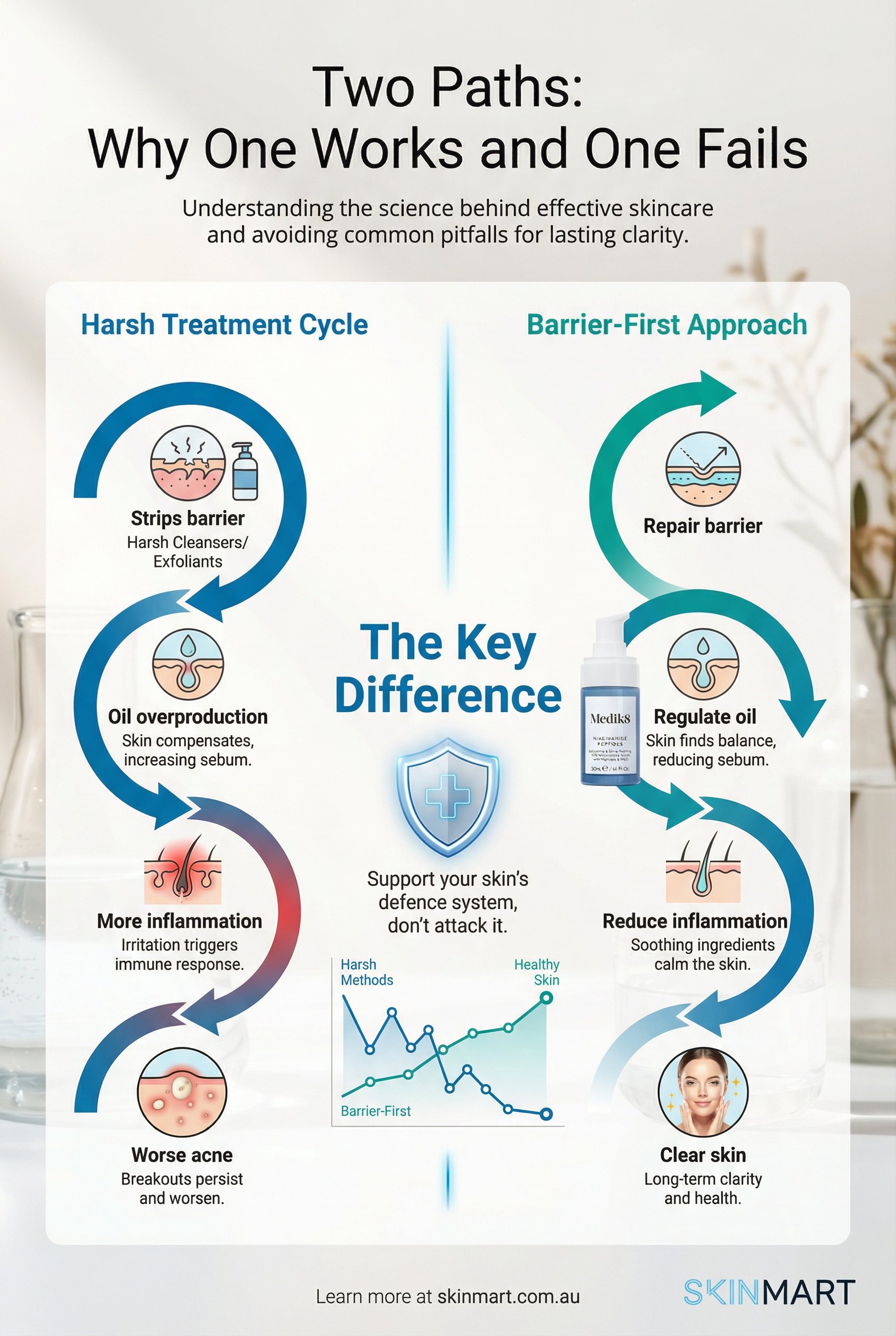
But here's what happens when harsh acne treatments compromise this barrier: your skin loses moisture rapidly, triggering your sebaceous glands to overproduce oil in compensation. The damaged barrier can no longer well keep out Cutibacterium acnes (the bacteria associated with acne), and swelling increases as your skin struggles to repair itself. You end up with more oil, more bacteria reach, and more swelling, the exact conditions that cause acne.
Research published in the Journal of Clinical and Aesthetic Dermatology shows that people with acne often have compromised barrier function even before treatment begins. When you add aggressive treatments that further damage this barrier, you're not solving the problem, you're making your skin more at risk to the very condition you're trying to treat.
How Do Harsh Treatments Damage Your Barrier?
Common acne ingredients like benzoyl peroxide, salicylic acid, and retinoids work by increasing cell turnover, reducing oil, and killing bacteria. These mechanisms can be effective, but they come with a cost when used too aggressively or without barrier support.
Benzoyl peroxide oxidises and kills acne bacteria, but it's also highly drying. It strips away the lipids in your barrier, leaving your skin at risk and dehydrated. Many people feel the classic signs: tight, flaky skin that at once breaks out.
Salicylic acid exfoliates inside your pores, which helps prevent congestion, but overuse disrupts the careful balance of cell turnover. Your skin starts shedding cells faster than it can produce the lipids needed to hold new cells together, weakening your barrier structure.
Retinoids accelerate cell turnover and prevent pores from clogging, making them highly effective for acne. However, they also for now compromise barrier function during the adjustment period. Without proper barrier support, this leads to the irritation, redness, and increased sensitivity that makes many people abandon treatment just as it's starting to work.
The problem isn't these ingredients themselves, it's the all-or-nothing approach. When you use multiple harsh treatments at once, or use them at high amounts without barrier repair, you're creating a damaged skin environment where acne actually thrives.
Key Takeaways
- Harsh acne treatments backfire because they strip away your skin's protective barrier, the layer that keeps moisture in and bacteria out.
- When you damage this barrier with aggressive ingredients, your skin responds by producing more oil, increasing swelling, and becoming more at risk to the acne-causing bacteria you're trying to eliminate.
- The solution isn't stronger treatments, it's repairing your barrier while treating acne at once.
- Niacinamide works by strengthening barrier function, reduc...
The Oil Production Paradox: Why Stripping Makes Skin Oilier
This is the barrier betrayal at its most frustrating: you strip away oil to combat acne, and your skin responds by producing even more oil. It seems counterintuitive, but it's a predictable biological response.
Your sebaceous glands produce sebum (oil) to protect and moisturise your skin. When your barrier is damaged and moisture escapes rapidly, your skin detects this dehydration and signals your sebaceous glands to increase oil production. This is your skin's attempt to compensate for barrier dysfunction, but it backfires spectacularly for acne-prone skin.
You end up in a cycle: harsh treatment strips oil and damages barrier → skin becomes dehydrated → sebaceous glands overproduce oil → excess oil helps to clogged pores and breakouts → you use more harsh treatments to combat the oil. Each cycle further compromises your barrier and worsens the oil production response.
Breaking this cycle requires a different approach: repair the barrier while managing oil production through regulation rather than stripping. This is where ingredients like niacinamide become game-changing. Research shows niacinamide reduces sebum production by regulating sebaceous gland activity, not by stripping oil away, but by normalising the signals that tell glands how much oil to produce.
A study in the Journal of Cosmetic and Laser Therapy found that 2% niacinamide greatly reduced sebum excretion after four weeks of use. Participants felt less oily skin without the compensatory overproduction that occurs with harsh, stripping treatments. You get oil control without barrier damage, the sustainable approach to managing acne-prone skin.
Why swelling Gets Worse When Your Barrier Is Compromised
Acne is basically an inflammation condition. While bacteria and oil play roles, inflammation drives the redness and tissue damage that characterise acne lesions. When you damage your skin barrier, you're adding fuel to this fire.
A compromised barrier allows irritants and allergens to reach more easily into your skin, triggering immune responses and inflammation cascades. Your skin is constantly reacting to environmental aggressors it should be able to keep out. This chronic low-level swelling makes existing acne worse and creates an environment where new breakouts form more easily.
Also, many harsh acne treatments are themselves irritating, they trigger swelling as a side effect of their mechanism. When your barrier is intact, your skin can better tolerate this irritation. But when your barrier is already compromised, these treatments become inflammation aggressors themselves, creating a situation where your acne treatment is actively inflaming your skin.
Niacinamide addresses this through multiple anti-causing swelling pathways. It inhibits the transfer of melanosomes (which reduces post-causing swelling hyperpigmentation, those dark marks acne leaves behind), reduces the production of inflammatory mediators, and strengthens barrier function to prevent external irritants from triggering swelling in the first place.
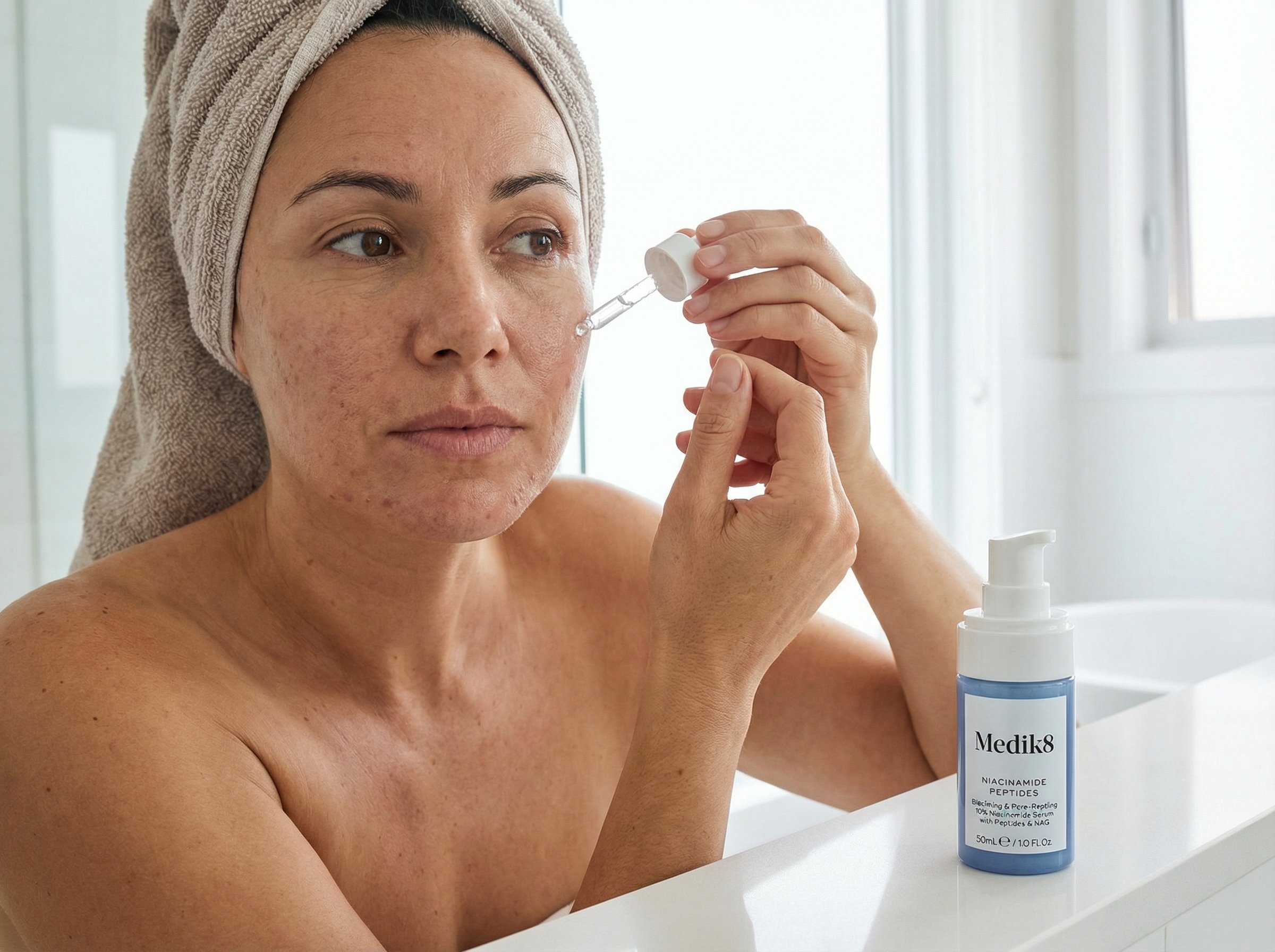
The Medik8 Niacinamide Peptides delivers 10% niacinamide alongside barrier-supporting peptides, giving you both inflammation control and barrier repair in one formula. This dual action breaks the inflammation cycle rather than perpetuating it.

Featured: Niacinamide Peptides
Clinically proven 10% niacinamide serum that dramatically improves the look of pores and congestion while soothing the skin barrier.
Shop Now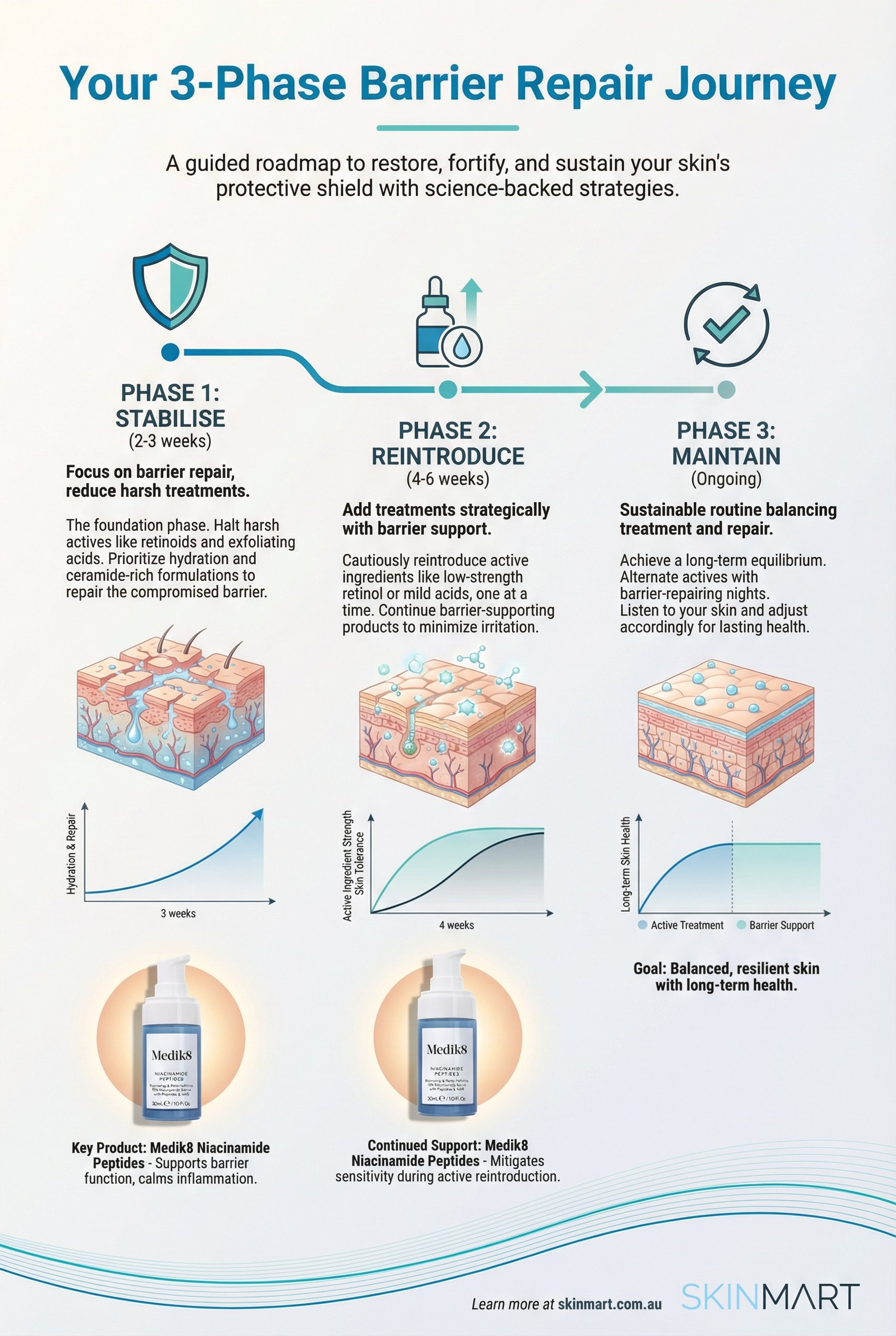
What Your Skin Actually Needs: The Barrier-First Approach
Effective acne treatment isn't about choosing between clearing breakouts and maintaining barrier health, it's about recognising that you can't achieve lasting clear skin without a healthy barrier. The barrier-first approach prioritises repair and protection while treating acne, creating the foundation for sustainable results.
This means including barrier-repairing ingredients alongside acne treatments rather than as an afterthought. Niacinamide is especially valuable here because it serves multiple functions: it strengthens your barrier by increasing ceramide production, regulates oil without stripping, reduces swelling, and even has direct antibacterial effects against acne-causing bacteria.
Research in the International Journal of Cosmetic Science shows that niacinamide increases the production of ceramides, fatty acids, and cholesterol, the essential lipids that form your barrier's protective structure. When you strengthen this structure, your skin becomes more resilient to acne treatments, allowing you to use effective ingredients without the damaging side effects.
The barrier-first approach also means adjusting your treatment intensity to match your barrier's capacity. Instead of using multiple harsh treatments at once, you build your routine strategically: establish barrier support first, then introduce active treatments gradually, always maintaining that barrier foundation.
For many people, this approach actually delivers faster results than the aggressive method. When your barrier is supported, your skin can tolerate consistent treatment without the irritation breaks that interrupt progress. You're playing the long game, building a healthy skin environment where acne struggles to form rather than constantly battling breakouts on damaged, at risk skin.
How to Repair Your Barrier While Treating Acne
Repairing a compromised barrier while managing acne requires a strategic, phased approach. You're not abandoning acne treatment, you're creating the conditions where treatment can actually work sustainably.
Phase 1: Immediate barrier support. If your skin is currently irritated, red, flaky, or sensitised from harsh treatments, your first priority is stabilising your barrier. This means for now reducing or eliminating the most aggressive treatments and focusing on barrier repair for 2-3 weeks. Use gentle cleansers that don't strip, include barrier-repairing ingredients like niacinamide and ceramides, and protect your skin from further damage.
Phase 2: Strategic treatment reintroduction. Once your barrier shows signs of recovery (reduced redness, less sensitivity, improved texture), you can reintroduce acne treatments, but strategically. Start with one treatment at a lower amount or reduced frequency. Maintain your barrier support products as the foundation of your routine. The Medik8 Niacinamide Peptides works especially well here because it provides both barrier repair and acne management, allowing you to address both priorities at once.
Phase 3: Sustainable maintenance. As your skin adjusts and your barrier strengthens, you can gradually increase treatment intensity if needed, but always with barrier support as your foundation. This might mean using retinoids three nights per week with niacinamide on the other nights, or applying barrier repair serums before more aggressive treatments to buffer their impact.
The key is consistency with barrier support rather than intensity with acne treatments. A moderate treatment you can use consistently delivers better results than an aggressive treatment you can only tolerate intermittently before your skin rebels.
The Long-Term Benefits: Why Barrier Health Prevents Future Breakouts
Here's the insight that changes your entire approach to acne: a healthy barrier doesn't just help you tolerate treatments better, it actively prevents acne formation. When you invest in barrier health, you're not just managing current breakouts; you're creating skin that's basically more resistant to acne.
A strong barrier regulates oil production naturally, maintaining the balanced sebum levels that keep pores clear without the excess that helps to congestion. It prevents bacteria from reaching into deeper skin layers where they trigger causing swelling acne lesions. It manages inflammation better, reducing the severity of breakouts when they do occur.
Research shows that people who maintain barrier health alongside acne treatment experience fewer breakouts over time, less severe swelling when breakouts occur, and greatly reduced post-inflammatory hyperpigmentation. Their skin becomes more resilient, better able to handle hormonal fluctuations, stress, and environmental factors that typically trigger breakouts.
This is the sustainable path to clear skin: not constantly battling breakouts on damaged, at risk skin, but building a healthy skin environment where acne struggles to take hold. It requires patience, barrier repair takes weeks, not days, but the results are transformative. You move from managing crisis after crisis to maintaining genuinely healthy, clear skin.
The barrier-first approach isn't slower than harsh treatments, it's actually faster when you account for all the setbacks, irritation breaks, and worsening cycles that harsh treatments create. You're building a foundation for lasting results rather than temporary improvements that collapse as soon as you ease up on aggressive treatment.
The barrier betrayal isn't just about harsh treatments causing side effects, it's about a basic misunderstanding of what your skin needs to heal. When you approach acne as an enemy to attack rather than a symptom of underlying imbalance, you create the very conditions that perpetuate breakouts: damaged barriers, dysregulated oil production, chronic swelling, and at risk skin.
Breaking free from this cycle means shifting your perspective. Your skin isn't the problem, it's trying to protect itself with the only mechanisms it has. When those mechanisms are compromised by aggressive treatment, it responds the only way it can: more oil, more swelling, more breakouts. Repairing your barrier gives your skin what it actually needs to regulate itself, creating the foundation where clear skin becomes sustainable rather than constantly embattled.
You're not choosing between clear skin and barrier health, you're recognising that lasting clear skin requires barrier health. The barrier-first approach with Medik8 Niacinamide Peptides gives you both: the acne-fighting benefits of niacinamide alongside the barrier-strengthening support your skin needs to heal and stay clear. This is how you move from managing crisis to maintaining genuinely healthy skin, by working with your barrier, not against it.


