
April is Rosacea Awareness Month. If your skin flushes easily, stings after cleansing, or stays red for no clear reason, you have likely asked yourself: is this just sensitivity, or is something else going on? It is a fair question, and an important one. The answer shapes everything about how you care for your skin.
Rosacea and sensitive skin can look similar on the surface. Both cause redness. Both react to products. But they work differently beneath the skin, and they respond to different care.
This article will help you understand what might be happening with your skin, not to diagnose it. But to help you ask better questions and make smarter choices. If you suspect rosacea-like signs, always speak with your GP or dermatologist for a proper assessment.
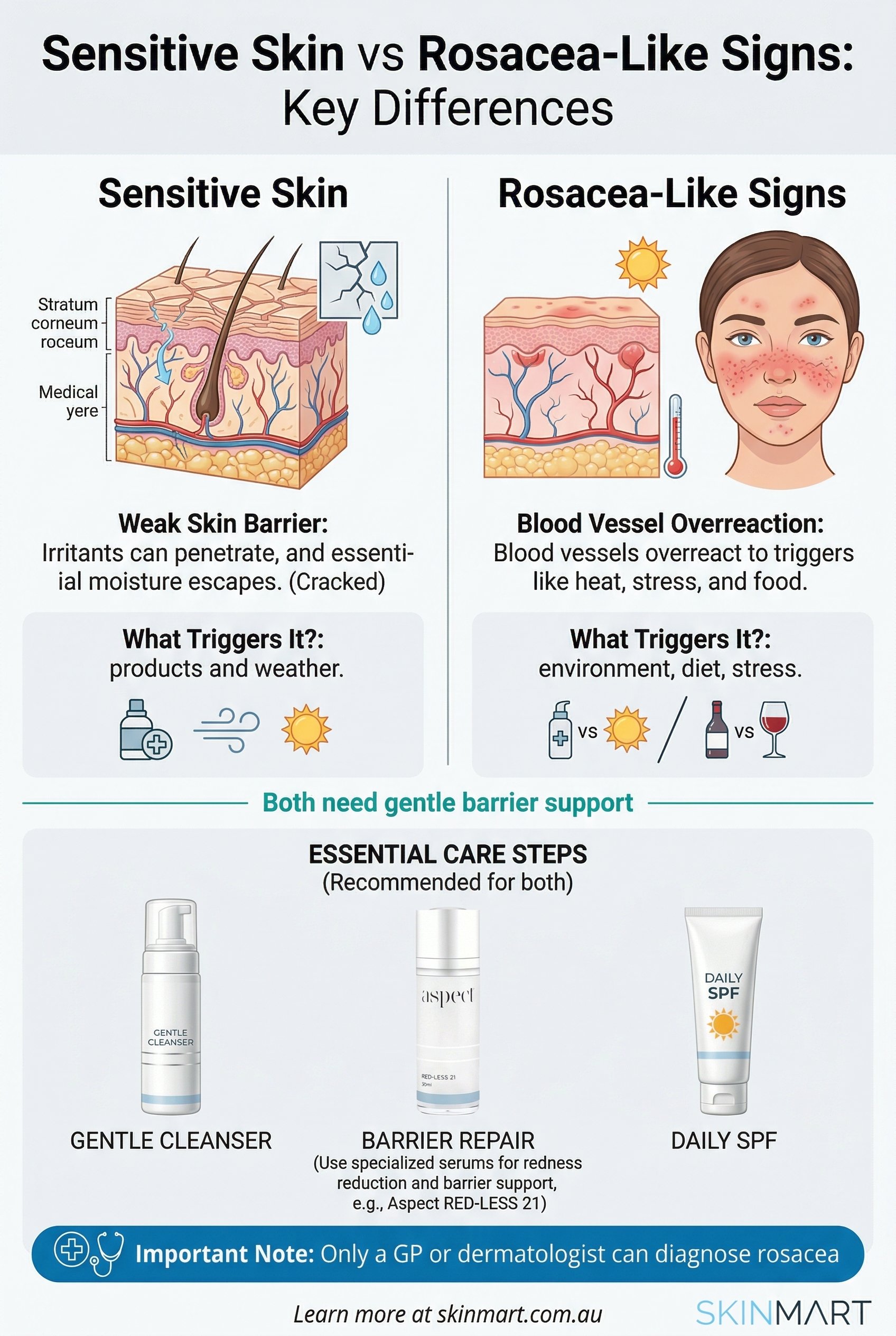
What Is the Difference Between Rosacea-Like Signs and Sensitive Skin?
Sensitive skin is a barrier issue. Your outer skin layer, the stratum corneum, think of it as a protective wall, has gaps. Moisture escapes, and irritants get in.
The result is stinging, redness, and reactivity when products or weather hit those weak spots. It is uncomfortable, but the cause is structural. Strengthen the barrier, and the sensitivity usually improves.
Rosacea-like signs go deeper. The redness is not just about a weakened barrier. It involves your skin's blood vessels and nerve pathways becoming overreactive. Your skin really treats normal triggers, heat, wind, spicy food, a glass of wine, as threats.
The blood vessels dilate, flush, and sometimes stay that way. Over time, some people notice small visible vessels across the nose and cheeks, or small red bumps that look like acne but behave differently. These are signs worth discussing with a medical professional.
The key difference? Sensitive skin tends to react to what you put on it. Rosacea-like signs often react to what is happening around you, your environment, your diet, your stress levels. Stress and the skin are more connected than most people realise, and for skin showing rosacea-like patterns, that connection is especially strong.
What Does Rosacea-Like Redness Actually Feel Like?
Rosacea-like redness tends to follow patterns. You might notice flushing that comes on fast, after a hot drink, a workout, or a stressful meeting, and takes a long time to settle. The redness often sits in the centre of your face: across your cheeks, nose, and sometimes your chin or forehead. It can feel warm, tight, or like a mild burning sensation.
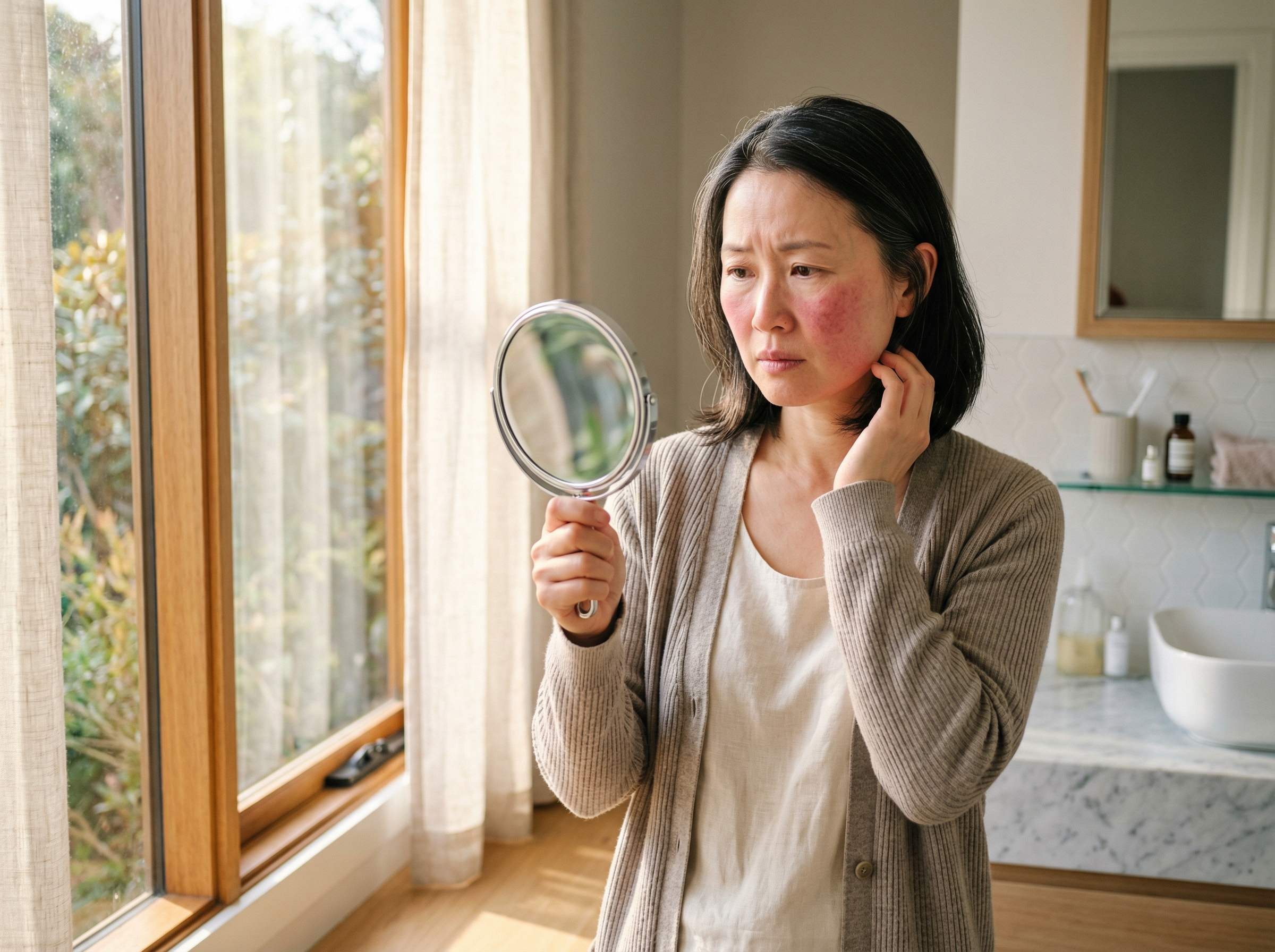
Some people also notice that their skin stings when they apply products that work fine for everyone else. This is a signal that the skin barrier is also compromised, which is common when rosacea-like signs are present. The two issues often exist together. A weakened barrier lets in more irritants, which triggers more swelling, which weakens the barrier further. It becomes a cycle.
Sensitive skin, by contrast, tends to react more broadly. It might sting after almost any product, feel tight in dry weather, or flush briefly and then settle. It does not usually follow the same trigger patterns as rosacea-like signs. If your redness has a clear pattern, certain foods, temperatures, or situations, that is worth noting and discussing with your doctor.
It is also worth knowing that rosacea-like signs can change over time. What starts as occasional flushing may become more persistent. Early awareness and the right skin care can help slow that progression. Only a GP or dermatologist can confirm a rosacea diagnosis, so if these signs feel familiar, book that appointment.
Key Takeaways
- Rosacea and sensitive skin both cause redness and reactivity, but they have different causes and need different care.
- Sensitive skin reacts to irritants because its barrier is weak.
- Rosacea-like signs involve a deeper neurovascular response, flushing, visible vessels, and burning that come and go with specific triggers.
- Only a GP or dermatologist can diagnose rosacea.
- But understanding the difference helps you choose the right approach for your skin and avoid products that make things worse.
How Does Your Environment Affect Redness and Reactive Skin?
Your environment is one of the biggest drivers of both sensitivity and rosacea-like flares. In Australia, UV exposure is intense year-round. Sun is one of the most common triggers for rosacea-like flushing. It also breaks down the skin barrier over time, making sensitivity worse. UVA and UVB rays both play a role, and daily SPF is non-negotiable for reactive skin types.
Wind, cold air, and sudden temperature changes also stress reactive skin. Your blood vessels respond to temperature shifts by dilating or constricting. In rosacea-prone skin, this response is amplified. Moving from an air-conditioned room into summer heat can be enough to trigger a flush. Knowing your personal environmental triggers is one of the most useful things you can do for your skin.
Stress is another major environmental factor, and one that often gets overlooked. When you are under pressure, your body releases cortisol and other stress hormones. These trigger swelling throughout your body, including in your skin.
For skin already prone to redness or rosacea-like signs, stress can turn a manageable day into a visible flare. Managing stress is not just good for your wellbeing. It is genuinely good for your skin.
What Skin Care Approach Does Reactive and Rosacea-Like Skin Actually Need?
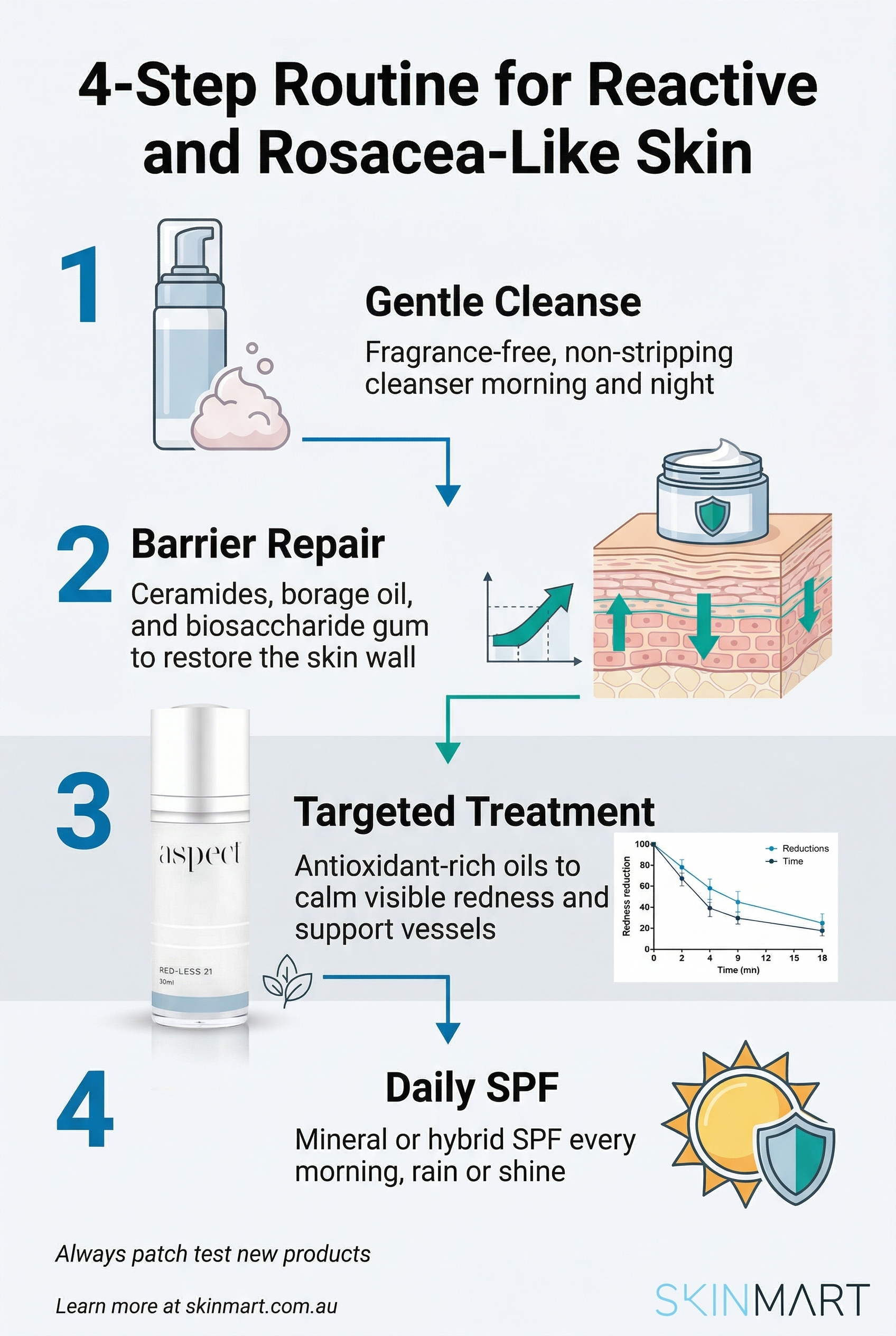
The foundation for both sensitive skin and rosacea-like skin is the same: a calm, intact barrier. When your barrier is strong, less gets in. Less swelling means less redness. But the way you build that foundation matters, especially for skin showing rosacea-like signs, which can react badly to harsh or active-heavy routines.
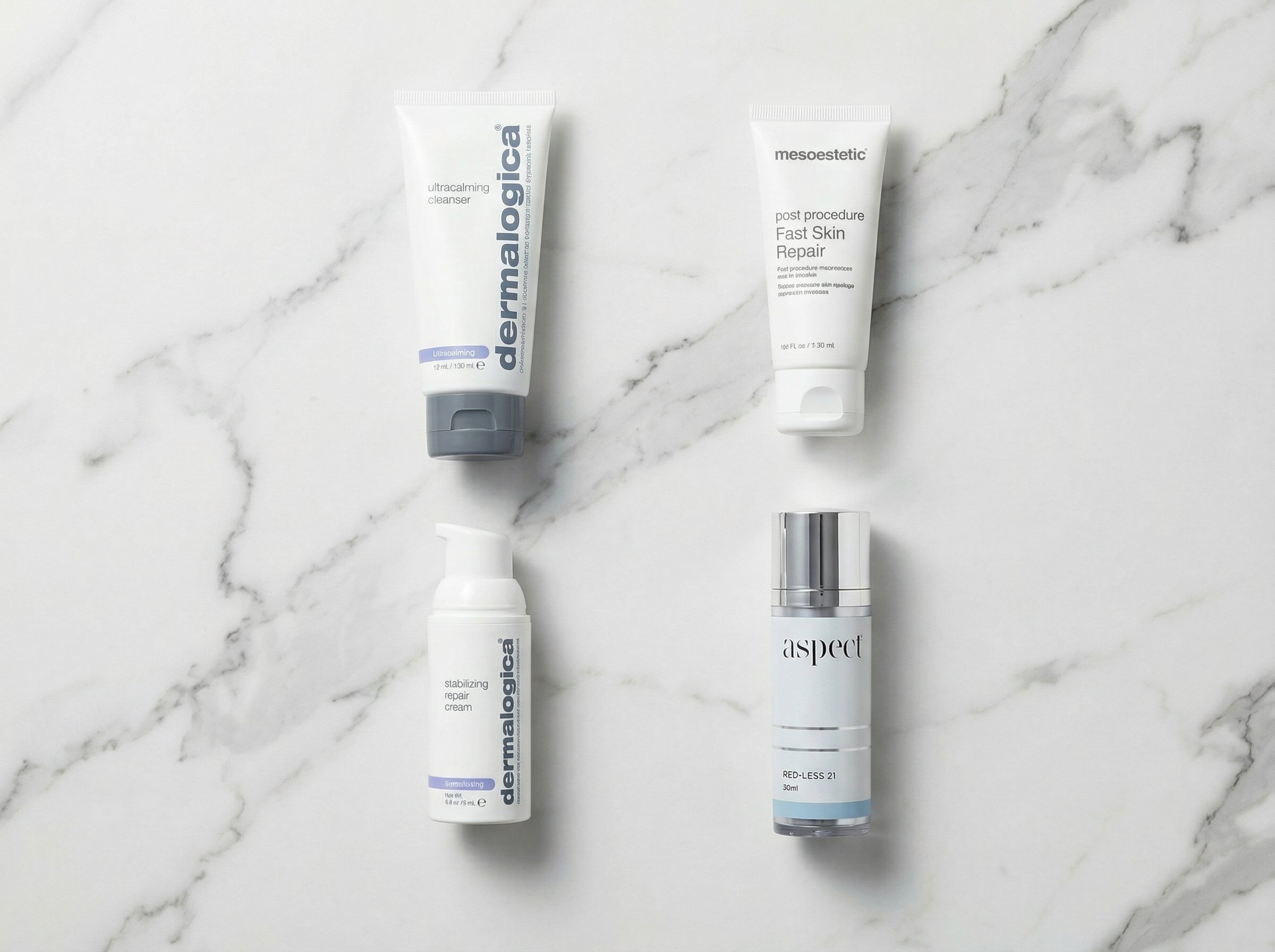
Start with your cleanser. Harsh foaming cleansers strip the barrier and spike swelling. Dermalogica Ultracalming Cleanser is formulated for exactly this kind of skin. It contains bisabolol, a calming ingredient derived from chamomile that helps reduce redness and irritation. It cleanses without disrupting the skin's natural protective layer, which is the starting point for any reactive skin routine.
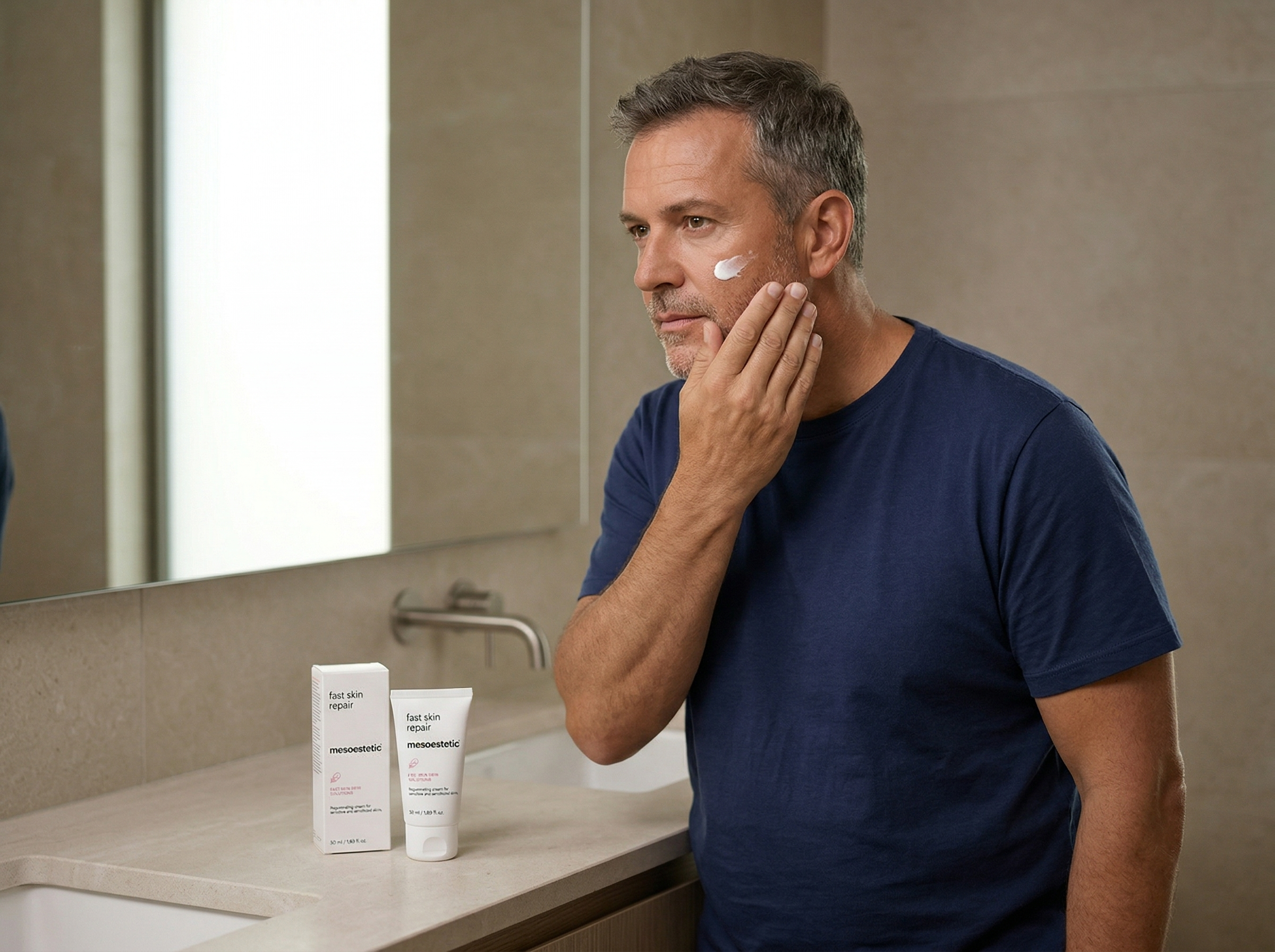
Barrier repair is the next priority. Mesoestetic Post Procedure Fast Skin Repair is a standout here. It was originally designed to support skin after clinical treatments, which means it is built to repair and protect even the most compromised barriers. It contains borage oil, which is rich in gamma-linolenic acid (GLA), a fatty acid that helps reduce swelling and restore lipid levels in the barrier.
It also includes biosaccharide gum, which forms a soothing film over the skin and helps lock in moisture. For skin having rosacea-like signs or chronic sensitivity, this kind of targeted barrier support can make a real difference. Learn more about Mesoestetic Post Procedure Fast Skin Repair.
For ongoing daily support, Dermalogica Stabilizing Repair Cream offers a gentle, barrier-focused moisturiser with glycerin and butylene glycol to draw moisture into the skin and hold it there. It is fragrance-free and designed for reactive skin, the kind of product you can use consistently without worrying about triggering a flare. And if redness is a specific concern, Aspect Red-Less 21 brings a targeted approach. It uses sea buckthorn oil (Hippophae Rhamnoides), which is rich in antioxidants and omega fatty acids shown to calm redness and support vascular health in reactive skin. It is a strong option for skin where visible redness is the primary concern.

Featured: Aspect Red-Less 21
Discover how Aspect Red-Less 21 can help with your skincare routine.
Shop NowDoes Diet and Stress Play a Role in Skin Redness?
Yes, and the evidence is solid. For skin showing rosacea-like signs, certain foods are well-documented triggers. Alcohol (especially red wine), spicy foods, hot drinks, and foods high in histamine can all cause flushing. This happens because these substances activate causing swelling pathways and dilate blood vessels in the face. The reaction can appear within minutes and last for hours.
That does not mean you need to eliminate everything. The goal is to understand your personal pattern. Not everyone reacts to the same triggers. Keeping a simple diary, noting what you ate, your stress level, and how your skin looked, can reveal patterns that are hard to spot otherwise. Diet affects skin in more ways than most people expect, and redness is one of the clearest examples.
On the stress side, the gut-skin connection is real. Chronic stress disrupts the gut microbiome, increases systemic swelling, and raises cortisol, all of which show up on your skin. For skin already prone to redness, stress is not just a background factor. It is an active trigger. Building stress management into your routine, sleep, movement, even breathing practices, is a genuine part of caring for reactive skin.
When Should You See a GP or Dermatologist About Skin Redness?
This is important. Nothing in this article is a diagnosis. Only a GP or dermatologist can assess whether you have rosacea. If your redness is persistent, getting worse over time, or affecting your confidence and daily life, please book an appointment with a medical professional. Early diagnosis means earlier access to prescription treatments that can make a major difference.
Some signs worth flagging to your doctor include: redness that stays for hours or days without a clear cause, small visible blood vessels across your nose and cheeks, red bumps that look like acne but do not respond to acne treatments, eye irritation or sensitivity alongside facial redness. And a burning or stinging sensation that is present most days. These are not reasons to panic, but they are reasons to get a professional opinion.
Skincare can do a lot to support reactive skin. But it works best alongside proper medical care, not instead of it. If rosacea is confirmed, your doctor may recommend prescription options that work alongside the right skincare routine. The two approaches complement each other well.

Featured: Dermalogica Stabilizing Repair Cream
Discover how Dermalogica Stabilizing Repair Cream can help with your skincare routine.
Shop NowRedness, flushing, and reactive skin are not things you just have to put up with. Understanding what is actually driving your skin's behaviour, whether that is a weakened barrier, rosacea-like neurovascular patterns, environmental triggers, or stress, is the first step to caring for it well. The right approach is not about using more products. It is about using the right ones, in the right order, for what your skin actually needs.
If the signs described in this article feel familiar, start by simplifying your routine, supporting your barrier. And speaking with your GP or dermatologist about what you are having. You deserve to understand your skin, not just manage it. If you would like guidance on building a routine suited to reactive or redness-prone skin, start your Skin Blueprint and get tips built around you, not around what is trending.


