You had a procedure. Maybe it was a peel, a laser treatment, or microneedling. Your skin looked great for a while. Then something shifted.
Products that felt fine before now sting. Your skin flushes easily. It feels tight, reactive, and unpredictable. You're using gentler and gentler products, but nothing seems to help.
This is post-procedure barrier compromise, and it traps more people than most clinics talk about. The procedure itself is not the problem. The problem is what happens when your skin's protective layer gets disrupted and never fully recovers. Understanding this cycle is the first step to breaking it.
What Does a Skin Procedure Actually Do to Your Barrier?
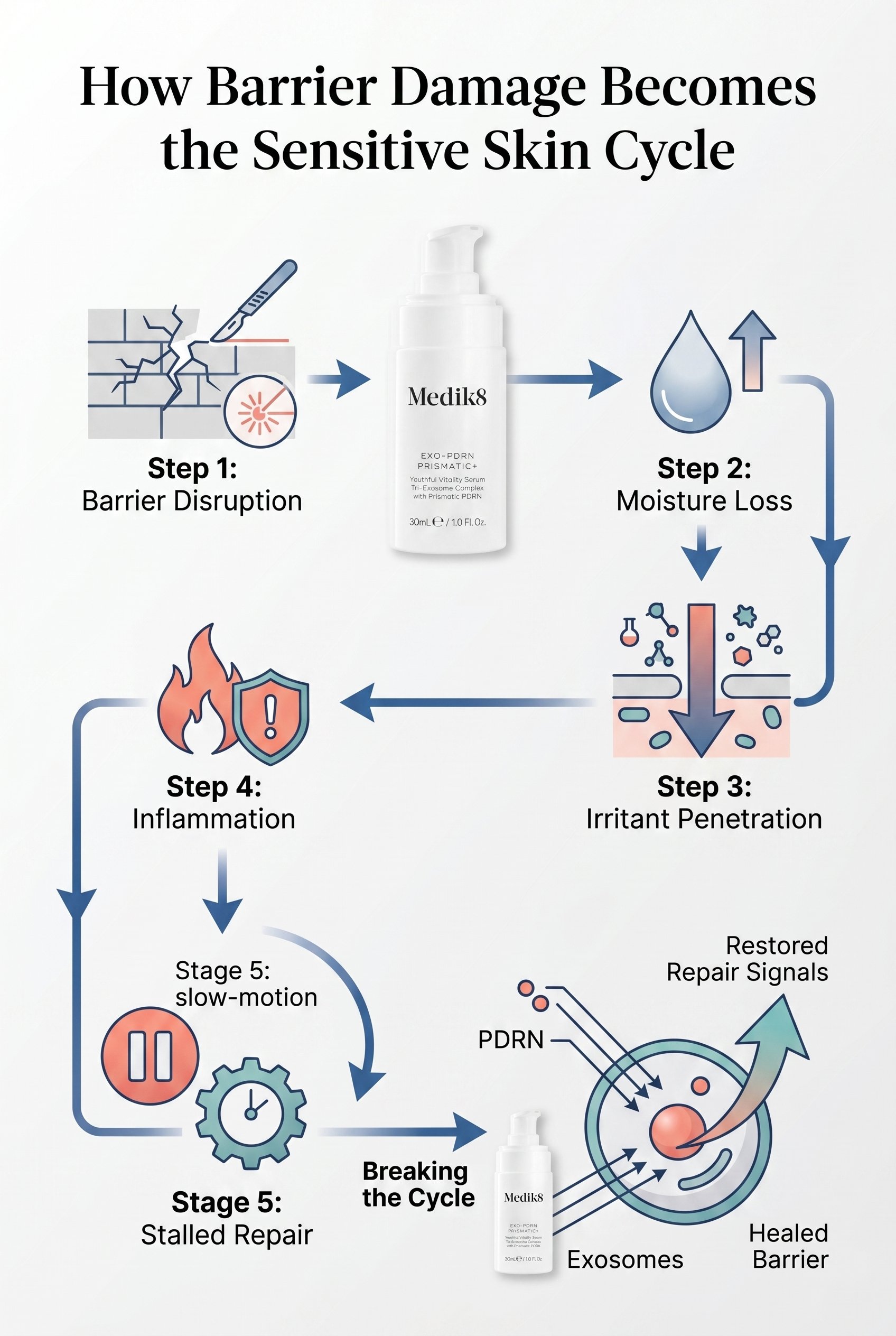
Your skin has an outer layer called the stratum corneum. Think of it as a brick wall. The bricks are dead skin cells, and the mortar holding them together is made of lipids, mainly ceramides (natural fats your skin makes), cholesterol, and fatty acids. This structure keeps moisture in and irritants out.
Procedures like chemical peels, laser resurfacing, and microneedling work by creating controlled damage to this layer. That is the whole point. The disruption signals your skin to repair and renew.
When recovery goes well, you get fresher, clearer skin. But that disruption also temporarily removes the mortar between the bricks. Your barrier becomes porous.
In the short term, this is expected. Your skin is designed to heal. The issue arises when the healing process stalls or stays incomplete. Moisture keeps escaping through those gaps.
Irritants, including ingredients in your skincare, penetrate deeper than they should. Your immune cells detect the intrusion and fire up an inflammatory response. That inflammation then slows the very repair process your skin needs to recover.
Why Does Reactive Skin Keep Getting Worse After Procedures?
Here is the part that catches most people off guard. After a procedure, the skin does not always return to its pre-treatment baseline. Sometimes it settles at a lower level of barrier function than before. This happens for a few reasons, and they feed into each other.
First, the procedure depletes lipids from the stratum corneum. Your skin needs to synthesise (produce) new ceramides and other lipids to rebuild. This process depends on specific enzymes, including those coded by genes called SPTLC1 and SPTLC2. If those pathways are not well supported, ceramide production stays low. The mortar never fully sets.
Second, tight junction proteins, which are the structural proteins that seal the spaces between skin cells deeper in the epidermis (your outer skin layer), can be disrupted. Proteins like claudin-1 and occludin act as a second line of defence behind the lipid layer. When these are damaged and not rebuilt, the barrier stays leaky even if the surface looks healed. Over-exfoliation after procedures can make this worse by repeatedly stripping the surface before these proteins have time to reform.
Third, chronic low-grade inflammation keeps the skin in a state of high alert. Nerve fibres become sensitised. The skin starts reacting to things that would not normally trigger a response, like water temperature, fragrance, or even niacinamide. This is not sensitivity in the way most people think of it. It is a structural and biological problem, not a personality trait of your skin.
Key Takeaways
- Post-procedure skin damage disrupts the skin's outer protective layer, called the stratum corneum.
- This creates a cycle where moisture escapes, irritants get in, and inflammation keeps building.
- The skin becomes reactive to products it once tolerated.
- Most approaches focus on soothing symptoms rather than fixing the underlying barrier.
- Active regeneration, using ingredients like PDRN and exosomes, works differently.
The Avoidance Trap: Why Playing It Safe Keeps You Stuck
The instinct when skin becomes reactive is to strip back everything. Use only water. Find the most gentle, fragrance-free, minimal product possible. Avoid all actives.
This feels logical. But for many people, it does not resolve the problem. It just manages it.
Avoidance reduces the irritant load on your skin. That is genuinely helpful in the short term. But it does not give your skin what it needs to actually rebuild.
Ceramide synthesis requires specific building blocks. Tight junction proteins need cellular signals to be produced. Your skin's repair machinery needs to be activated, not just left alone.
Think of it this way. If you broke your leg, rest would be part of recovery. But rest alone would not rebuild bone density. You would need the right nutrients and eventually the right movement to restore full function.
Skin barrier repair works on a similar principle. Avoidance is one part of the answer. Active support is the other part, and it is the part most routines leave out. Understanding which active ingredients are safe during recovery makes a real difference to how quickly your barrier rebuilds.
What Is Active Regeneration and Why Does It Matter Here?
Active regeneration means giving your skin the biological signals it needs to repair itself, rather than just coating the surface or avoiding triggers. Two ingredient categories are particularly relevant for post-procedure barrier recovery: PDRN and exosomes.
PDRN stands for Polydeoxyribonucleotide. It is a purified fragment of DNA that acts as a raw material for cell repair. When skin cells are stressed or damaged, they need nucleotides (the building blocks of DNA) to replicate and restore function.
PDRN provides those building blocks directly. Research shows it supports cell proliferation (new cell growth) and has anti-inflammatory effects. This matters a great deal when your skin is stuck in a reactive loop.
Exosomes are tiny messenger particles released by cells. They carry instructions from one cell to another. In the context of skin repair, exosomes can deliver signals that tell skin cells to produce more ceramides, rebuild tight junction proteins, and reduce inflammatory activity. They do not replace cells. They communicate with the cells already there and help them do their jobs better.
The combination of PDRN and exosomes addresses the two core problems in post-procedure barrier compromise: depleted cellular energy and disrupted repair signalling. This is a different approach from applying a ceramide cream, which delivers lipids from the outside. Active regeneration helps your skin make its own lipids again, which is a more lasting solution. DNA technology in skincare is a growing area of evidence, and PDRN sits at the centre of it.

Featured: Exo-PDRN Prismatic+
A full-spectrum face serum that boosts skin's natural rejuvenation by over 50%.
Shop NowIntroducing Exo-PDRN Prismatic+: Active Regeneration for Post-Procedure Skin
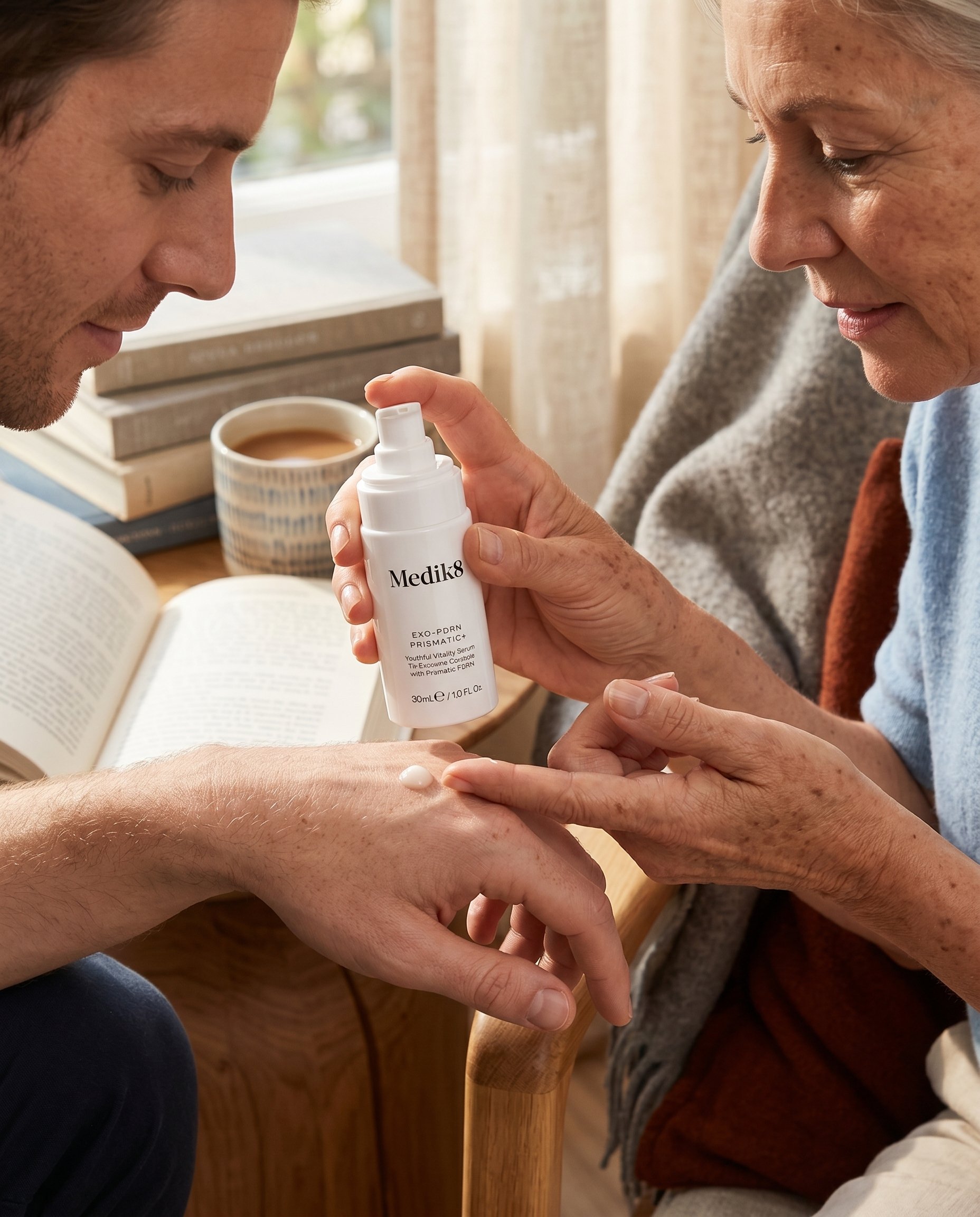
Exo-PDRN Prismatic+ from Medik8 was developed with post-procedure use specifically in mind. It combines a Triple Exosome Complex with Prismatic PDRN to support active regeneration without adding stress to a compromised barrier. In clinical assessment, 98% of users agreed it was suitable for use after procedures.
The mechanism is worth understanding. The PDRN in this formula provides nucleotide building blocks that support cell repair and proliferation. Ex vivo testing (lab testing on human skin tissue) showed a 50% or greater boost in cell proliferation with consistent use. The exosome complex delivers targeted signals to support ceramide synthesis pathways and tight junction protein production, addressing both layers of barrier function.
Results from clinical data show improvements in skin health, luminosity, tone, and barrier function within seven days. Volume and wrinkle depth improvements were observed at fourteen days. For skin stuck in a reactive cycle after procedures, the key outcome is not just appearance. It is the gradual return of skin that can tolerate products, handle environmental changes, and feel comfortable again.
This is not a product for everyone. It is best suited to skin that has moved past the acute healing phase after a procedure but has not returned to its pre-treatment baseline. If your skin is severely compromised or actively broken down, a more foundational repair protocol should come first. A skin consultation can help identify where you are in that process. Shop Exo-PDRN Prismatic+ here.
How to Use Active Regeneration in a Post-Procedure Routine
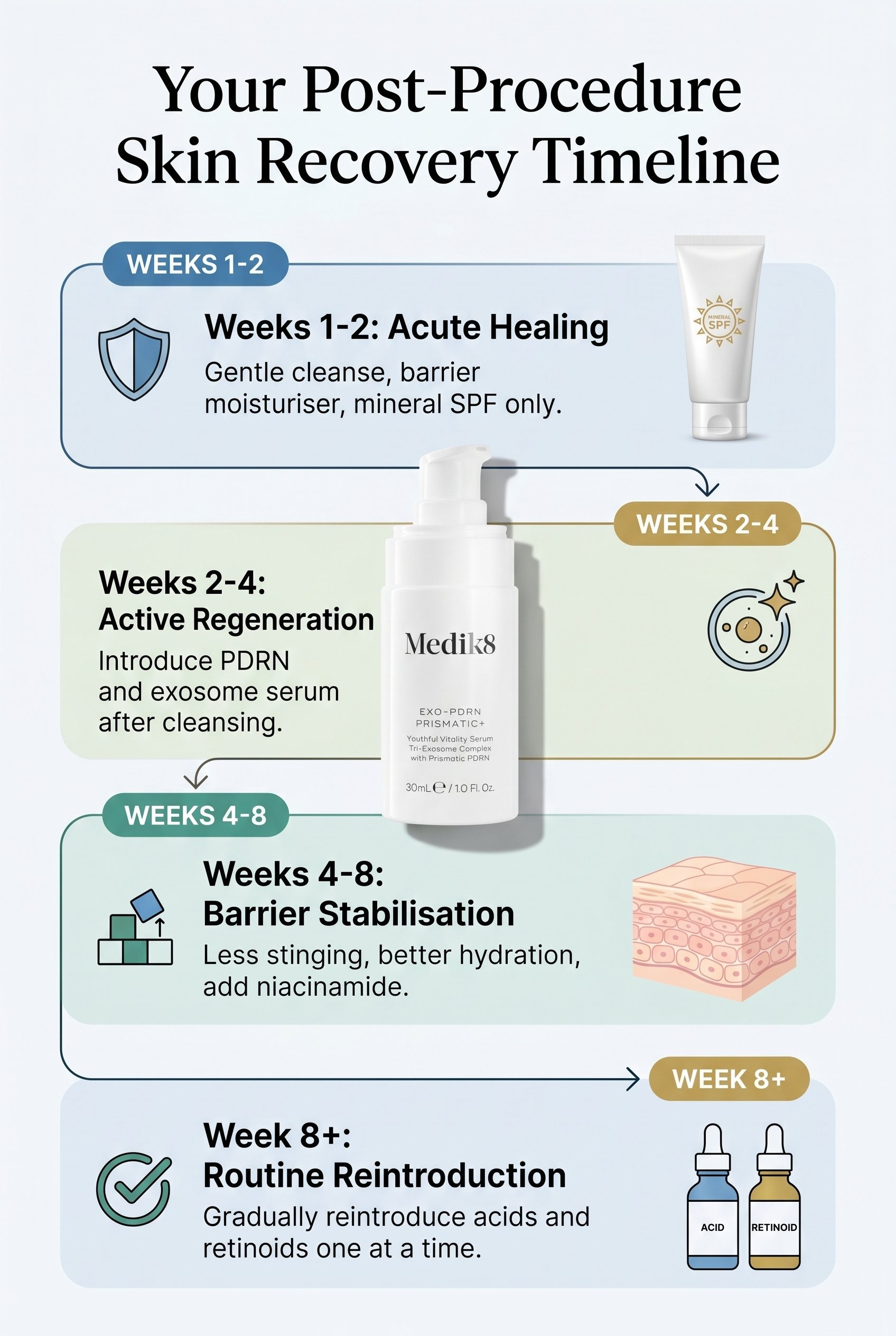
Timing matters when your barrier is compromised. In the first few days after a procedure, the priority is protection and basic hydration. Gentle cleansing, barrier-safe moisturiser, and mineral SPF. No actives, no exfoliants, no fragrance. This phase is about keeping the wound environment clean and calm.
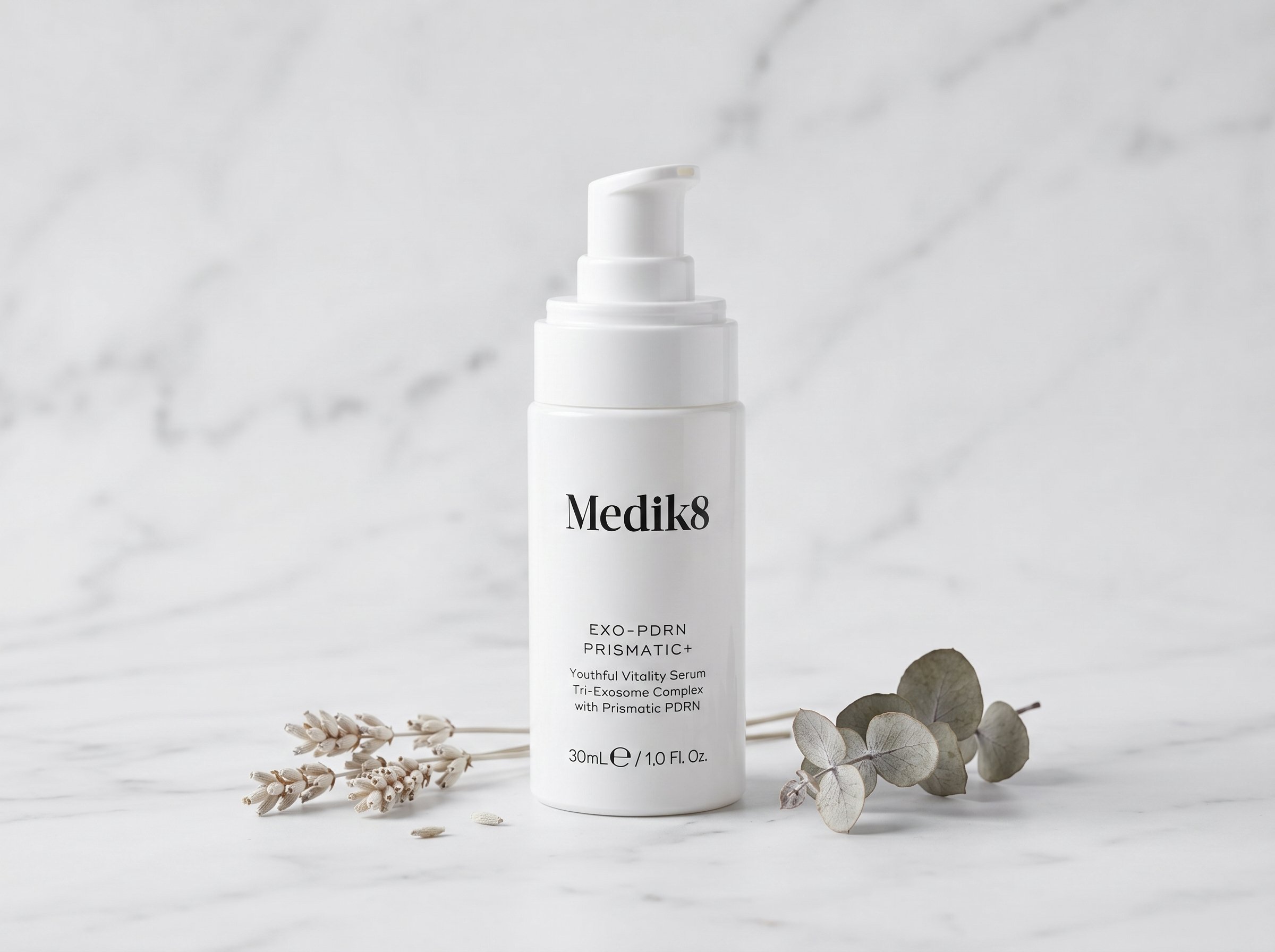
Once the acute phase has passed, usually after one to two weeks depending on the procedure, active regeneration can begin. This is where Exo-PDRN Prismatic+ fits. Apply it after cleansing and before your moisturiser. The lightweight texture is designed to absorb without overwhelming skin that is still in recovery mode.
Keep the rest of your routine minimal during this phase. Resist the urge to layer multiple actives. Your skin's job right now is to rebuild, and that takes energy.
Giving it too many competing signals slows the process. One well-chosen regenerative serum, a supportive moisturiser, and SPF in the morning is enough. Product layering order matters, especially when your barrier is still recovering.
As your skin stabilises, you can gradually reintroduce other actives. Niacinamide is usually well tolerated early, as it supports ceramide production. Retinoids and acids should wait until your barrier shows clear signs of recovery: less stinging, better hydration retention, and reduced reactivity to everyday triggers.
Post-procedure barrier compromise is not a sign that something went wrong. It is a known consequence of how procedures work. The problem is not the disruption itself. It is when the disruption does not fully resolve, leaving skin stuck in a reactive cycle that avoidance alone cannot fix.
Active regeneration offers a different path. By giving your skin the biological signals it needs to rebuild ceramides, repair tight junction proteins. And calm chronic inflammation, you support recovery at the level where it actually happens. If your skin has been reactive since a procedure and you have been waiting for it to settle on its own, it may be time to give it more targeted support. Book your skin consultation to understand where your barrier is right now and what it needs next.


