
You've been consistent. You use your retinol. You layer your vitamin C. You never skip SPF.
But somewhere along the way, your skin stopped responding the way it used to. Results that came easily in your early 30s now feel harder to reach. If that sounds familiar, the answer likely isn't your products. It's something happening deeper, at the cellular level.
NAD+ decline is one of the least talked-about reasons your skin's performance changes with age. It's not a trend or a marketing angle. It's a well-documented shift in how your skin cells produce energy, and it has a direct effect on everything from collagen synthesis to barrier repair. Understanding it changes how you think about your entire routine.

What Is NAD+ and Why Does Your Skin Need It?
NAD+ stands for Nicotinamide Adenine Dinucleotide. It's a coenzyme, a helper molecule, found in every living cell in your body. Think of it as your cell's power supply. Without it, almost nothing works properly.
Your skin cells use NAD+ to fuel more than 500 different processes. These include producing collagen and elastin, repairing UV damage, building the lipids that hold your barrier together, and regulating swelling. When NAD+ is plentiful, your cells can do all of this efficiently. When it drops, they have to make choices, and repair and renewal are often the first things to slow down.
This is why NAD+ matters so much for visible skin health. It's not just background chemistry. It's the energy system that powers every outcome you're trying to achieve with your routine.
What Happens to NAD+ Levels as You Age?
NAD+ levels begin declining in your late 20s and early 30s. By the time you're between 40 and 60, levels can fall by around 50% (Verdin, 2015). That's a major drop, and it happens gradually, which is part of why it's easy to miss.

Several things drive this decline. UV exposure is a major one. When UV rays damage your DNA, your body uses NAD+ to power the repair process (through enzymes called PARPs).
The more UV damage, the more NAD+ gets used up. In Australia's high UV environment, this depletion happens faster than in lower UV climates. This is one reason rigorous daily SPF 50+ broad-spectrum protection isn't optional, it's directly protecting your cellular energy reserves.
Chronic swelling also depletes NAD+. So does the natural slowdown of the salvage pathway, the main route your body uses to recycle and renew NAD+. As this pathway becomes less efficient with age, your cells struggle to keep up with demand. The result is a gradual energy deficit that shows up on your skin as slower recovery, reduced firmness, and treatments that seem to plateau.
If you've ever wondered how much of ageing is genetic versus environmental, NAD+ decline is a good example of both factors at work, your genes influence how quickly it drops. But lifestyle and UV exposure shape the pace.
Key Takeaways
- NAD+ is a molecule your skin cells use for energy, repair, and collagen production.
- After age 30, NAD+ levels begin to fall.
- By your 40s and 50s, levels can drop by around 50%.
- When this happens, your skin cells have less energy to repair damage, build collagen, and maintain your barrier.
- This is why treatments that once worked well may seem less effective over time.
How Does NAD+ Decline Show Up on Your Skin?
The signs of NAD+ decline don't look like a single dramatic change. They look like a collection of subtle shifts that build over time. Your skin takes longer to bounce back after stress.
Fine lines seem to deepen despite consistent retinol use. Your barrier feels less resilient. Brightness fades even when your routine is solid.
Here's what's happening beneath the surface. Your fibroblasts, the cells responsible for producing collagen and elastin, need ATP (cellular energy) to do their job. ATP is produced using NAD+.
When NAD+ drops, fibroblast output slows. It's not that your skin has forgotten how to make collagen. It's that the cells don't have enough energy to do it efficiently.
At the same time, your skin's ability to repair UV damage weakens. PARP enzymes, which fix broken DNA strands, are heavily dependent on NAD+. Less NAD+ means slower DNA repair, which allows damage to build up. Over time, this helps to uneven tone, loss of resilience, and the kind of dullness that doesn't respond well to surface-level brightening. Your skin's overnight repair cycle is also affected, cellular energy powers the renewal that happens while you sleep.
Barrier function suffers too. Ceramide synthesis, the process that produces the fats holding your skin barrier together, requires cellular energy. When NAD+ is low, ceramide production can slow, leaving your barrier more at risk to moisture loss and environmental stress.
Why Your Treatments May Be Hitting a Ceiling
This is the part that reframes everything. Retinoids, peptides, and vitamin C are all excellent ingredients with strong clinical evidence. But they work by signalling your skin cells to do something, produce more collagen, increase cell turnover, repair oxidative damage. What they can't do is give your cells the energy needed to act on those signals.
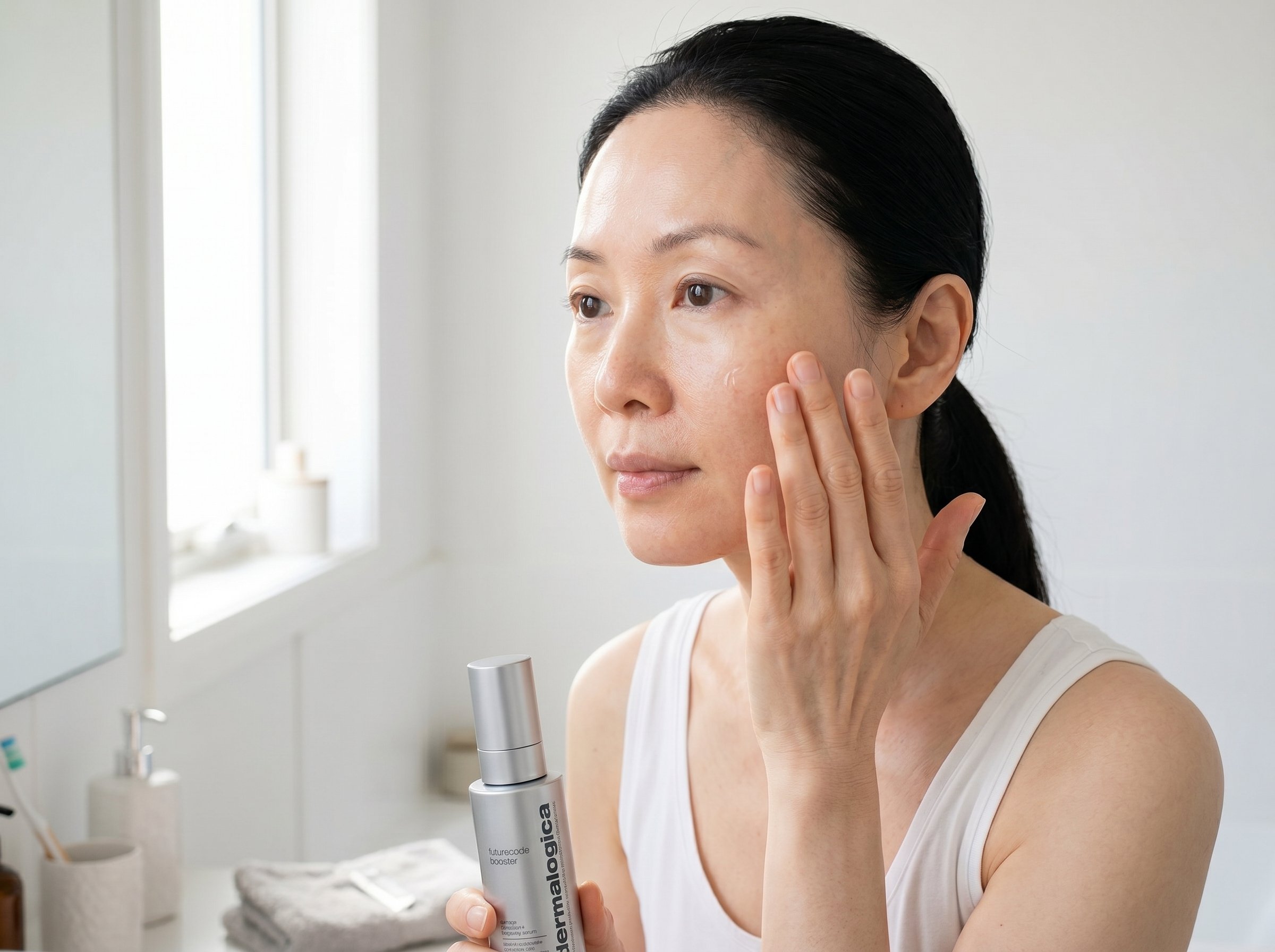
Think of it this way. A retinoid sends the message: produce collagen. But if your fibroblasts are running low on cellular energy, they can't fully respond to that message.
The signal arrives. The capacity to act on it is limited. This is what a treatment plateau often looks like from the inside.
Supporting NAD+ doesn't replace your existing treatments. It restores the cellular conditions that allow those treatments to work properly. It's a foundational layer, not a swap. If you've been building a retinol routine or exploring active ingredients, adding NAD+ support could be the piece that helps your routine perform closer to its potential.

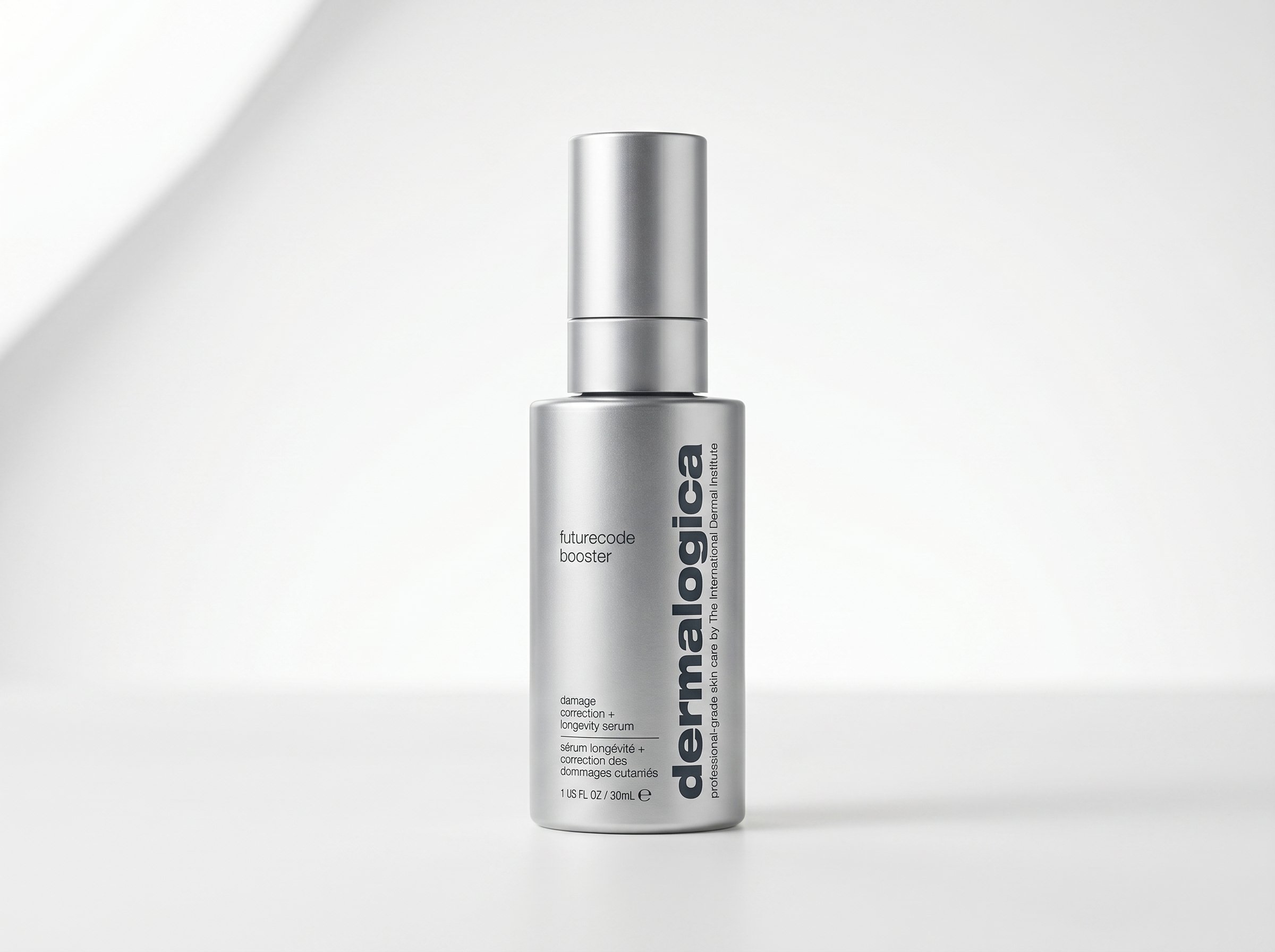
Featured: FutureCode Booster
Advanced booster that helps extend the longevity of healthy-looking skin by supporting natural skin repair and reducing visible signs of DNA-relate...
Shop Now
Which Ingredients Support NAD+ in Your Skin?
Niacinamide (vitamin B3) is the most evidence-backed topical NAD+ precursor available. It enters the salvage pathway, the primary route your body uses to renew NAD+, and supports cellular energy from there. At 5% amount, niacinamide has Grade A clinical evidence for improving fine lines, barrier function, hyperpigmentation, and elasticity (Gehring, 2004; Bissett et al., 2005). It's stable, well-tolerated, and works across all skin types including sensitive skin.
CoQ10 (ubiquinone or ubiquinol) supports mitochondrial function from a different angle. Your mitochondria, the energy-producing structures inside each cell, need CoQ10 to run their electron transport chain efficiently. Topical CoQ10 at 0.5% has been shown to reduce oxidative stress and improve wrinkle depth (Knott et al., 2015). It's a complementary ingredient, not a duplicate of niacinamide's function.
Alpha-lipoic acid is both water and fat soluble (Biewenga et al., 1997), meaning it can reach multiple compartments within the cell. It also helps renew vitamins C and E, extending your protective network. Used 2 to 3 times per week at 3 to 5%, it adds another layer of cellular protection.
Emerging precursors like nicotinamide riboside (NR) and nicotinamide mononucleotide (NMN) are showing strong results in oral supplementation research. Dellinger et al. (2017) found that NR supplementation raised NAD+ levels by 60% after six weeks. Topical formulas are still developing, but advanced versions with liposomal delivery show real promise for skin reach.
How to Add NAD+ Support to Your Routine
Start with niacinamide 5% as your foundation. Apply it twice daily after cleansing, before heavier treatments. It's compatible with most actives and rarely causes irritation. Within three to four weeks, you'll likely notice improved texture and hydration. Over eight to twelve weeks, expect progressive improvements in tone, fine lines, and barrier resilience.
In the morning, layer CoQ10 after your niacinamide and before SPF. This supports mitochondrial function and adds protective protection, especially relevant given Australia's UV index. In the evening, introduce alpha-lipoic acid two to three times per week. Start there and build frequency as your skin adjusts.
Your existing treatments stay in place. Retinoids go on after your NAD+ support layer in the evening. Peptides, acids, and vitamin C all continue as before. You're adding a cellular energy layer underneath your routine, not replacing what's already working.
The timeline for structural changes, firmness, fine lines, dermal density, is three to six months. That's not a slow result. That's what real cellular change looks like.
NAD+ decline isn't a flaw in your routine. It's a biological shift that changes what your skin cells can do. And understanding it puts you in a much better position to support your skin properly. When your cells have the energy they need, your treatments can do more.
Your barrier holds better. Your skin repairs itself more efficiently. That's not a promise of perfect results. It's the difference between working with your skin's biology and working around it.
If your routine has felt like it's hit a ceiling, this could be the layer that changes that. Shop FutureCode Booster to explore NAD+ support in a format that fits your existing routine, or speak to our skin experts to understand exactly where this fits in your routine to get a personalised plan built around what your skin actually needs right now.


