
If you've started paying closer attention to your morning routine, collagen is probably on your mind. You may have noticed your skin feels less firm than it did a few years ago. Fine lines are settling in around the eyes and mouth.
The bounce-back after a big week just isn't what it used to be. That's not your imagination. It's biology, and it starts earlier than most people expect.
The good news is that your skin isn't passive in this process. It responds to the right signals. A well-chosen morning collagen cream, used consistently as part of a smart routine, can give your skin exactly those signals.
This guide explains what's happening to your collagen as you age, what a daytime collagen cream actually does, how it fits into your morning routine. And what realistic results look like over time. We'll also walk through the HydroPeptide Nimni Day Cream as a worked example of how good collagen science translates into a real product.
Why Does Collagen Decline With Age?
Collagen is the main structural protein in your skin. Think of it as the scaffolding that keeps skin firm, plump, and resilient. Your skin is made up of roughly 75 to 80 percent collagen by dry weight. The cells that produce it are called fibroblasts, and they sit in the dermis (the deeper, living layer of skin beneath the surface).
From your mid-twenties onward, collagen production slows by about one percent each year. That figure sounds small, but it compounds. By your forties, the gap between breakdown and production has widened noticeably. Several things drive this.
First, the fibroblasts themselves become less active over time. Second, enzymes called matrix metalloproteinases (MMPs) break down existing collagen fibres. UV exposure, chronic inflammation, and oxidative stress all push MMP activity higher. Third, hormonal shifts, particularly the drop in oestrogen around perimenopause, reduce the signals that tell fibroblasts to keep producing collagen.
In Australia, UV exposure adds another layer of pressure. Our UV index regularly exceeds 10 during summer months. Cumulative sun damage is one of the fastest ways to accelerate collagen breakdown, which is why photoprotection is not optional in any collagen-support strategy. If you want to understand more about how environmental and internal factors interact with skin ageing, our article on whether ageing is all in the genes is worth a read.
Key Takeaways
- A morning collagen cream supports your skin's own collagen production rather than replacing it.
- As we age, collagen breaks down faster than skin can rebuild it.
- A well-formulated daytime cream uses peptides, antioxidants, and collagen-signalling ingredients to slow that breakdown and encourage new collagen synthesis.
- Applied after serums and before SPF, it forms a protective and active layer that works with your skin all day.
- Results build gradually over eight to twelve weeks of consistent use.
Collagen From Within vs. Collagen Support From Outside: What's the Difference?
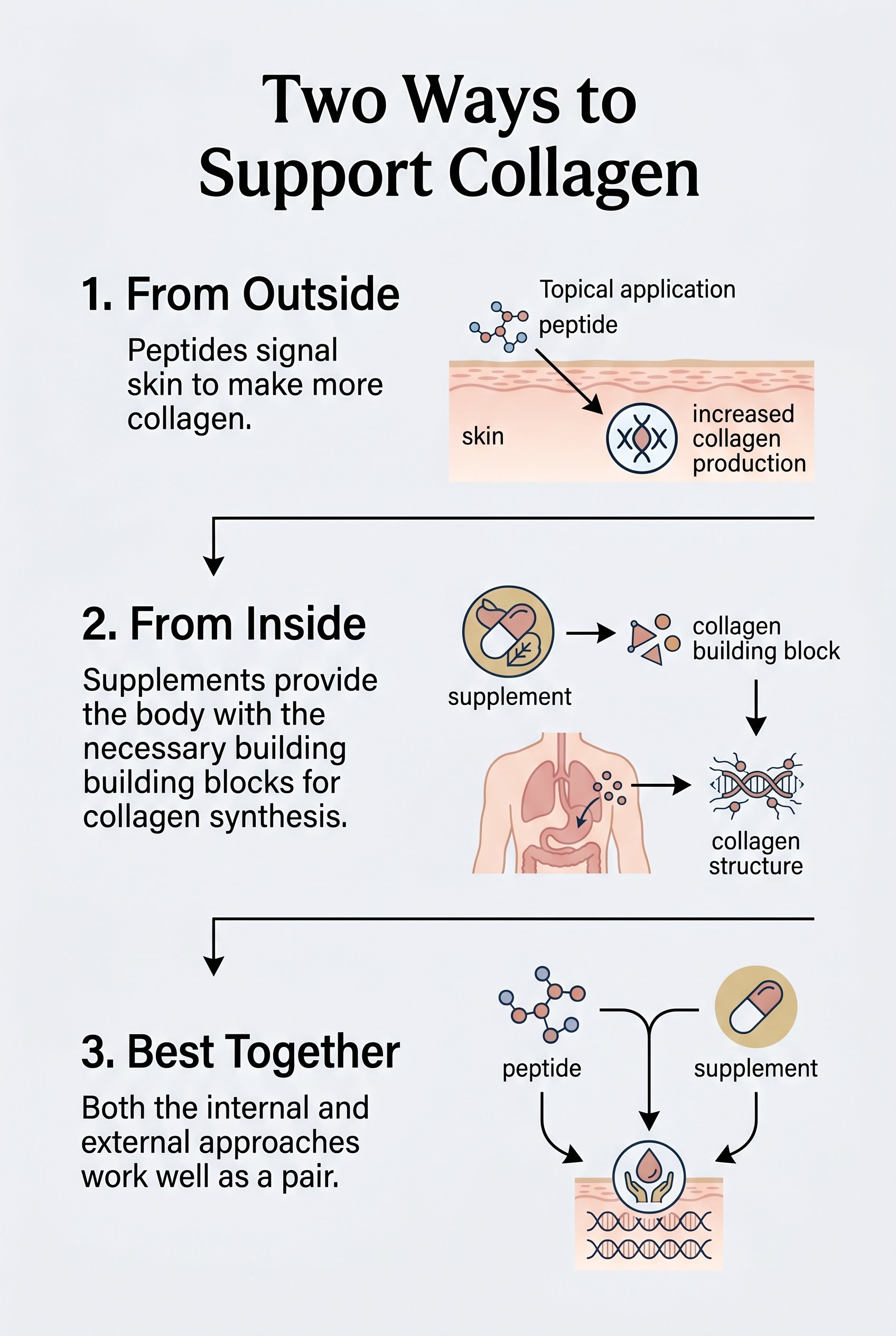
There's a lot of noise in the collagen space right now. Collagen supplements, collagen powders, collagen drinks. These products work from the inside, providing amino acids that your body can use to build new collagen. The research on oral collagen peptides is growing. And some studies show modest improvements in skin hydration and elasticity with consistent use over eight to twelve weeks.

Topical collagen support works differently. Collagen molecules themselves are too large to penetrate the skin's outer layer (the stratum corneum, which acts as a protective barrier). So a cream that simply contains collagen is not delivering that collagen into your dermis. What it can do is sit on the surface and temporarily improve hydration and texture. That's not nothing, but it's not the same as stimulating your skin's own production.
The more meaningful approach is to use ingredients that signal your fibroblasts to produce more collagen, protect existing collagen from breakdown. And support the skin environment where collagen is made. Peptides (short chains of amino acids that act as messengers to skin cells), antioxidants, and growth-factor-inspired ingredients all work this way. This is the science behind a genuine morning collagen cream, and it's where the difference between a well-formulated product and a marketing claim becomes clear. For more on how active ingredients work in your routine, see our guide on whether active ingredients are right for you.
What Does a Morning Collagen Cream Actually Do?
A well-designed morning collagen cream does three things at once. It delivers collagen-stimulating signals to your fibroblasts. It protects the collagen you already have from breakdown. And it prepares your skin for the day ahead, including creating a smooth base for SPF and makeup.
The key ingredients to look for are peptides that mimic the signals your skin uses to trigger collagen synthesis, antioxidants that neutralise the free radicals (unstable molecules caused by UV and pollution) that activate MMP enzymes. And hydrating agents that support the skin environment where collagen production happens. Some advanced formulations also include growth factors or bioactive proteins that communicate directly with skin cells.
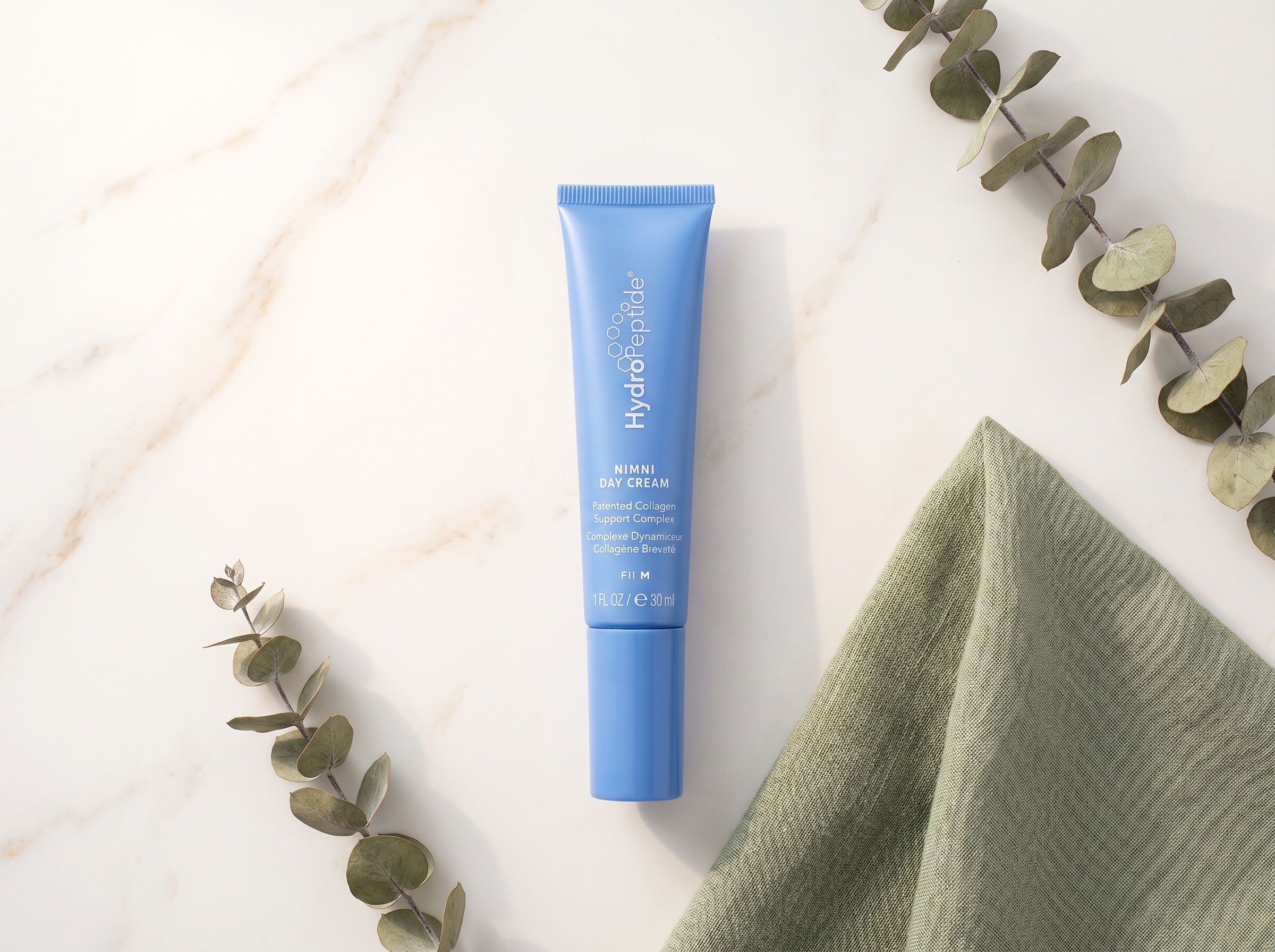
The HydroPeptide Nimni Day Cream is built on research by Dr Marcel Nimni, a biochemist who spent decades studying collagen biology. The Nimni collagen science at the heart of this cream focuses on supporting the body's own collagen-building pathways rather than simply adding collagen to a formula. It combines peptides, antioxidants, and hydrating ingredients in a texture that works well under SPF and makeup. This is a morning-specific formulation, designed for daytime use when your skin is facing UV, pollution, and environmental stress. It's a strong example of how collagen science moves from research into a product you can actually use.

Featured: HydroPeptide Nimni Day Cream
Discover how HydroPeptide Nimni Day Cream can help with your skincare routine.
Shop NowWhere Does a Morning Collagen Cream Fit in Your AM Routine?
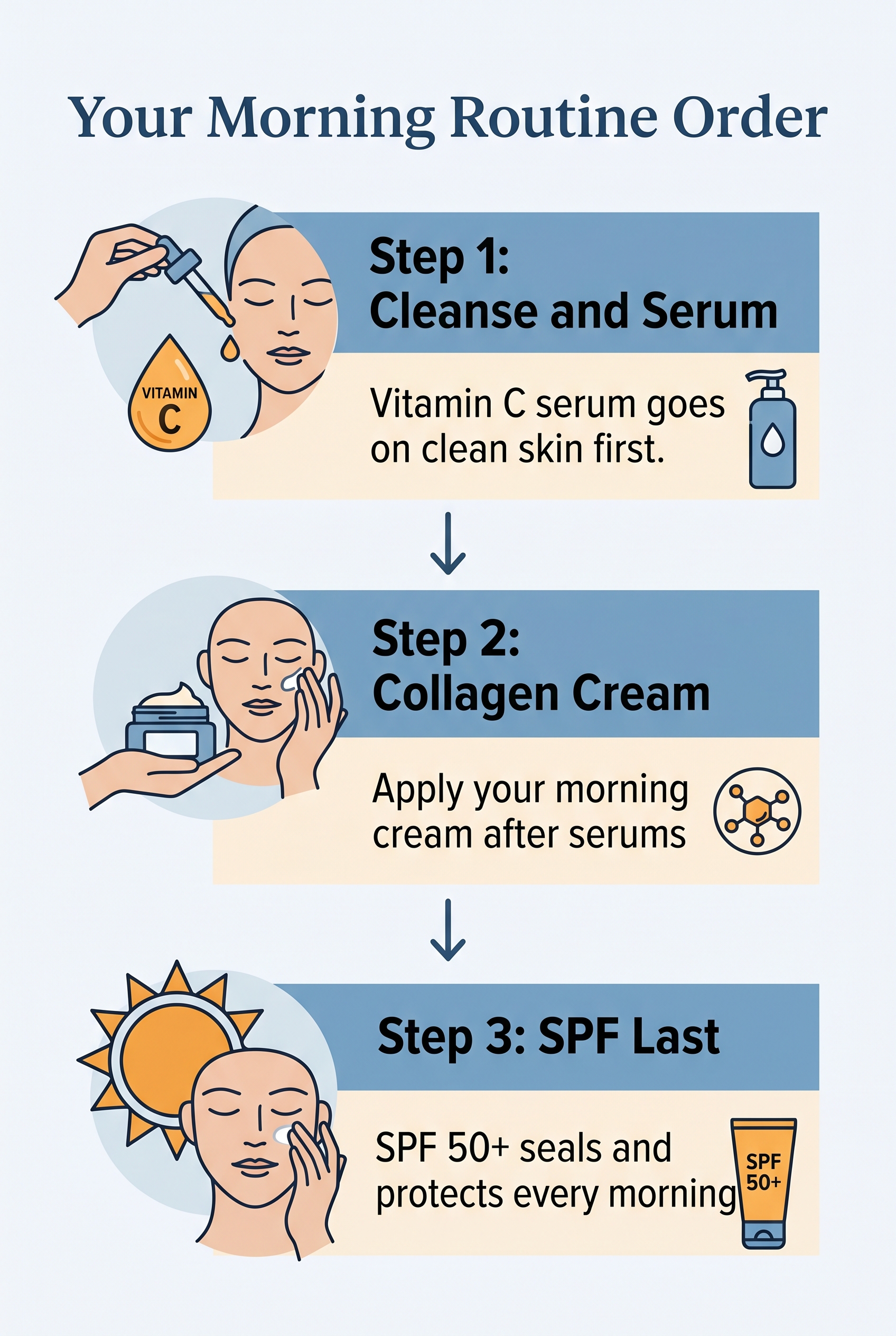
Layering order matters in skincare. Products applied in the wrong sequence can reduce how well they work or, in some cases, interfere with each other. A morning collagen cream sits in the moisturiser step. This means it goes on after your cleanser, toner (if you use one), and any serums, and before your SPF.
Here's a simple sequence for a collagen-focused morning routine. Cleanse to remove overnight buildup. Apply any treatment serums, such as a vitamin C serum (vitamin C is a cofactor in collagen synthesis and a strong antioxidant). Then apply your morning collagen cream.
Finish with a broad-spectrum SPF 50 or higher. If you wear makeup, that goes on last. This order means your active ingredients reach the skin directly, your collagen cream seals in hydration and delivers its signals. And your SPF sits on top as a protective layer.
One thing worth noting: SPF is not optional in this routine. Every unprotected UV exposure drives MMP activity and breaks down the collagen your cream is working to support. In Australia, that means SPF every single morning, not just on beach days. If you're unsure about the difference between UVA and UVB and why both matter for ageing, our article on UVA and UVB rays covers it clearly. And if you'd like a broader look at how to order your products, our guide on whether you're using products in the wrong order is a useful reference.
What Can You Realistically Expect, and When?
This is the question that matters most, and we'd rather give you an honest answer than a hopeful one. Collagen remodelling is a slow biological process. You won't see a dramatic change in the first week. What you will notice early on is improved hydration and a smoother skin texture, usually within two to four weeks of consistent use. These are real improvements, but they reflect surface-level changes in the skin environment rather than structural collagen rebuilding.
Visible changes in firmness and fine lines typically begin to show between eight and twelve weeks. Deeper structural improvements, the kind that reflect genuine collagen remodelling in the dermis, take longer. Studies on collagen-stimulating ingredients like peptides and retinoids generally measure outcomes at three to six months.
This is not a flaw in the products. It's how skin biology works. Collagen fibres take time to form, organise, and integrate into your skin's structure.
The practical implication is this: consistency matters more than intensity. Using a good morning collagen cream every day for three months will deliver more change than using it sporadically for six. Pair it with daily SPF, adequate sleep, and a diet that supports collagen synthesis (protein, vitamin C, zinc), and you're giving your skin the full picture it needs. Your routine is a long-term investment, and the returns are real when you stay with it.
Collagen decline is one of the most consistent changes your skin goes through as you age, but it's not something you're powerless against. Understanding what drives that decline, and what your skin actually needs to rebuild, puts you in a much stronger position than following whatever is trending. A well-formulated morning collagen cream, applied consistently as part of a smart routine, gives your fibroblasts the signals they need to keep working. Pair it with SPF every single day, and you're protecting the collagen you have while building more.
The HydroPeptide Nimni Day Cream is a product we recommend with confidence because the science behind it is genuine. It's built on real collagen biology, not marketing language. If you're ready to build a morning routine that's actually working for your skin, talk to one of our skin therapists who can help you put the right pieces together. Learn more about the full HydroPeptide range and what makes it worth your attention.


