
You've heard niacinamide is the ingredient that plays well with everything. You've read that peptides need careful layering to work properly. Now you're holding a bottle that combines both, and you're wondering: where does this actually go in my routine?
Here's what matters: Medik8 Niacinamide Peptides isn't just another serum to slot into an arbitrary order. It's a barrier-strengthening, collagen-supporting formula that changes how your other products perform. Layer it wrong, and you're diluting its effectiveness. Layer it right, and you're building a routine where each product amplifies the next. This is about understanding the science of absorption and compatibility, not following rules that were never based on evidence in the first place.
Where Does Niacinamide Peptides Fit in the Layering Order?
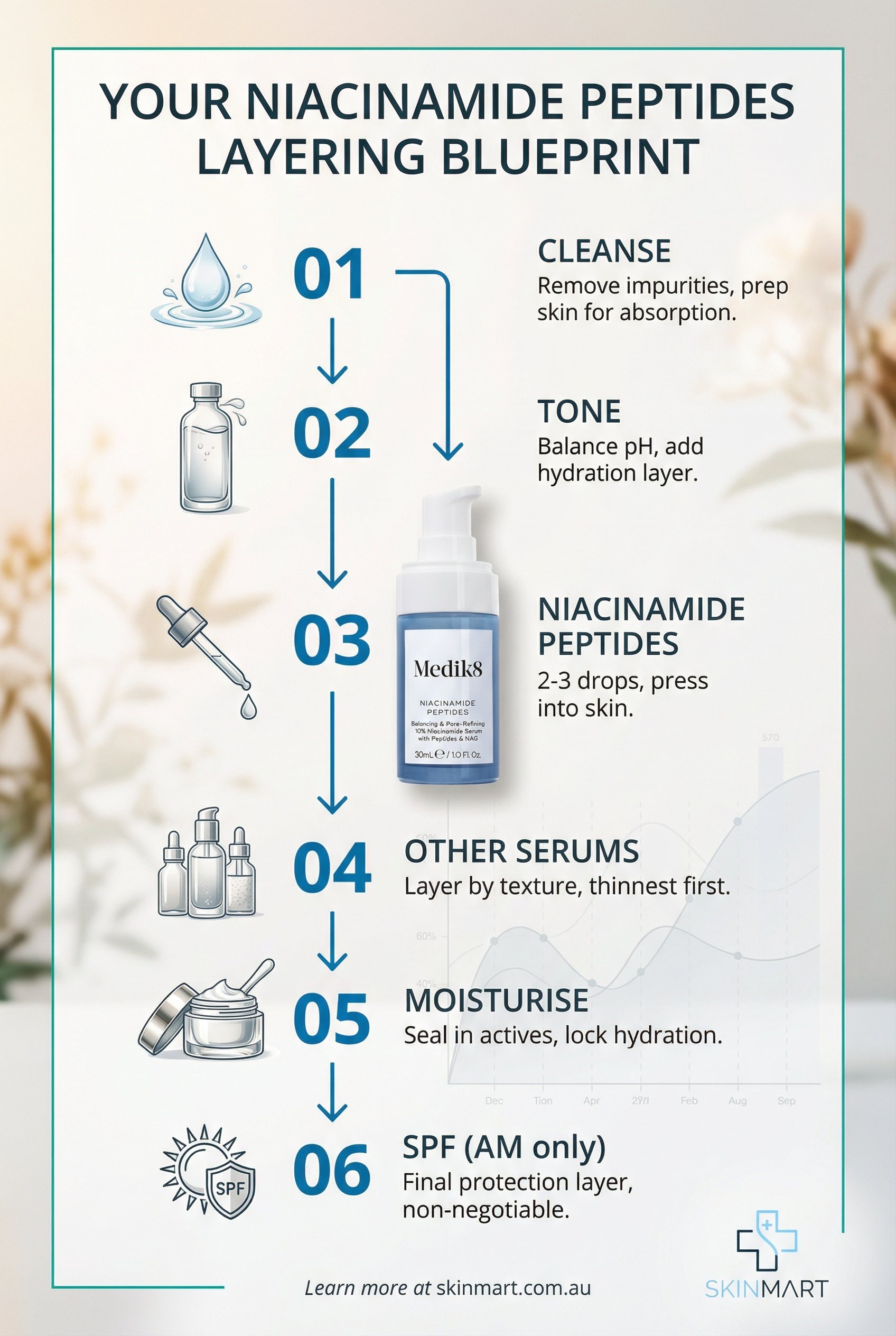
The standard advice is to layer from thinnest to thickest texture. That's not wrong, but it's incomplete. What actually matters is molecular size and skin reach depth. Medik8 Niacinamide Peptides has a lightweight, water-based serum texture that absorbs quickly, which means it goes on early, after cleansing and any treatment toners, but before oils, heavier serums, or moisturiser.
Here's the practical order: Cleanser → Toner/Essence → Niacinamide Peptides → Other Serums (if using) → Moisturiser → SPF (morning only). If you're using multiple serums, apply the most fluid one first. Niacinamide Peptides typically goes before vitamin C serums (which are often silicone-based) and before retinoids or facial oils.
Why this order works: Niacinamide strengthens your skin barrier, which actually helps your skin tolerate stronger actives that come after it. The peptides need direct contact with skin to signal collagen production well. Layering it early gives both ingredients the best chance to do their job before you seal everything in with richer formulas.
Can You Use Niacinamide Peptides with Vitamin C?
The old myth that niacinamide and vitamin C can't be used together has been thoroughly debunked. Modern formulas are pH-balanced to prevent any conversion of niacinamide to niacin (which was the theoretical concern). Medik8 Niacinamide Peptides works beautifully alongside vitamin C, they address different aspects of skin health and actually complement each other.
If you're using both in the same routine, layer Niacinamide Peptides first if it has a thinner texture, or layer your vitamin C first if it's a lightweight serum. Most Medik8 vitamin C formulas (like C-Tetra or Super C30) have a slightly richer, silicone-based texture, so Niacinamide Peptides would go on first. Give each serum 30-60 seconds to absorb before applying the next.
The benefit of this combination: Vitamin C works as an protective and brightening agent, while niacinamide regulates oil production and strengthens the barrier. Peptides support collagen synthesis. You're addressing protection, regulation, and repair in one routine, that's not redundancy, that's strategic layering.
How to Layer Niacinamide Peptides with Retinoids
Retinoids are powerful, and they're also possibly irritating, especially when you're building tolerance. This is where niacinamide becomes your strategic advantage. Studies show that niacinamide can reduce retinoid-induced irritation without compromising effectiveness. It does this by strengthening the skin barrier and reducing transepidermal water loss (TEWL), which means your skin is more resilient to the exfoliating effects of retinoids.
The layering approach depends on your skin's tolerance. If you're new to retinoids or have sensitive skin, apply Niacinamide Peptides first on clean skin, wait a few minutes for it to absorb, then apply your retinoid. This creates a buffer that reduces irritation while still allowing the retinoid to reach. If your skin tolerates retinoids well, you can apply the retinoid first (some dermatologists prefer actives on bare skin for maximum reach), then layer Niacinamide Peptides after.
Here's the practical reality: Most people find better tolerance and less dryness when they use niacinamide before retinoids. The peptides in this formula also support the collagen-building effects you're using retinoids for in the first place. You're not diluting the retinoid's effectiveness, you're creating an environment where your skin can handle it better and stay consistent, which is what actually drives results.
Layering with AHAs, BHAs, and Exfoliating Acids
Chemical exfoliants work at a specific pH range to dissolve the bonds between dead skin cells. The question isn't whether you can use Niacinamide Peptides with acids, you absolutely can, but when in your routine they should go to maintain efficacy for both.
If you're using a pH-dependent acid treatment (like glycolic acid, lactic acid, or salicylic acid), apply it right away after cleansing on dry skin. Wait 5-10 minutes to let it work at the correct pH, then apply Niacinamide Peptides. This sequencing ensures the acid can exfoliate well before you layer other products that might buffer its pH.
The alternative approach: Use your acids and niacinamide at different times of day. Many people prefer acids in the evening (when there's no sun exposure concern) and niacinamide in the morning (where its barrier-strengthening and sebum-regulating effects prepare skin for the day). This eliminates any timing concerns and spreads your active ingredients across both routines.
What makes this combination valuable: Acids accelerate cell turnover, which can for now compromise your barrier. Niacinamide rebuilds that barrier and reduces swelling. The peptides support the collagen you're trying to reveal with exfoliation. You're not just removing dead skin, you're supporting the healthy skin underneath.

Featured: Niacinamide Peptides
Clinically proven 10% niacinamide serum that dramatically improves the look of pores and congestion while soothing the skin barrier.
Shop NowMorning Routine vs Evening Routine: When to Apply
Niacinamide Peptides is stable and effective in both morning and evening routines, so the decision comes down to what else you're using and what your skin needs at different times of day. There's no single right answer, there's the right answer for your routine.
Morning use makes sense if: You want oil control and barrier support throughout the day. Niacinamide regulates sebum production, which means less shine and better makeup wear. The barrier-strengthening effects also help protect against environmental stressors like pollution and UV exposure (though this doesn't replace SPF). If you're using vitamin C in the morning, Niacinamide Peptides layers well before or after it.
Evening use makes sense if: You're using stronger actives like retinoids or acids at night and want the barrier support and peptide benefits during your skin's repair phase. Your skin does most of its renewal while you sleep, so delivering collagen-supporting peptides at night aligns with your skin's natural rhythm. If your morning routine is already crowded with multiple steps, moving Niacinamide Peptides to evening simplifies your AM routine without sacrificing results.
The option many people overlook: Use it twice daily. Niacinamide is well-tolerated at the 10% amount in this formula, and peptides benefit from consistent delivery. If your skin responds well and you're not having any sensitivity, morning and evening use can accelerate results, especially for barrier repair and collagen support.
Key Takeaways
- Medik8 Niacinamide Peptides layers after cleansing and toning, before heavier serums and moisturiser.
- Its lightweight texture and multi-functional formula make it compatible with most actives, including vitamin C, retinoids, and AHAs.
- Apply 2-3 drops to clean skin, morning or evening.
- Because niacinamide strengthens your barrier while peptides support collagen, this serum actually helps your other actives work more well rather than competing with them.
- The key is understanding texture order a...
How Much Product to Use and use Technique
More isn't better with serums, it's about adequate coverage and proper absorption. For Niacinamide Peptides, 2-3 drops is sufficient for your entire face and neck. The formula is concentrated, and your skin can only absorb so much at once. Using more just means product sitting on the surface, possibly pilling under other layers, and wasting product.

Application techniques matters more than most people realise. Dispense the serum into your palm or onto your fingertips, then press it into your skin rather than rubbing. Pressing encourages absorption and minimises disruption to your skin barrier. Start with your cheeks (the driest area for most people), then forehead, then chin and nose. Extend down to your neck and décolletage if you have enough product, these areas show ageing and benefit from the same ingredients as your face.
Wait 30-60 seconds before layering the next product. This isn't about the serum 'drying down', it's about giving the active ingredients time to reach before you add another layer that might interfere with absorption. If you're applying makeup or SPF afterward, this brief wait prevents pilling and ensures smooth use.
What Not to Layer with Niacinamide Peptides
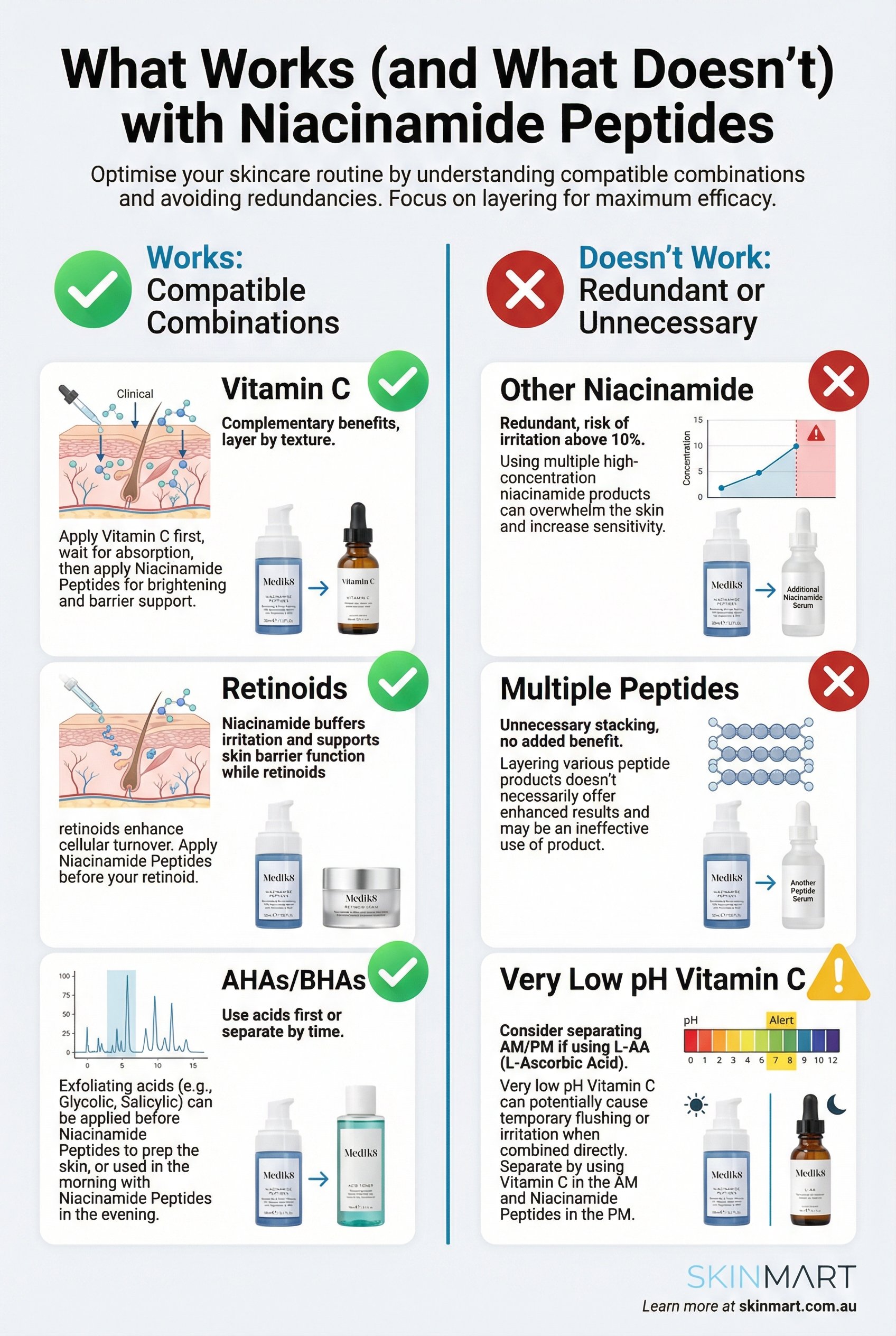
Niacinamide is famously compatible with most ingredients, but there are a few combinations that don't make sense, not because they're dangerous, but because they're redundant or counterproductive.
Avoid layering with other high-dose niacinamide products. If you're already using a 10% niacinamide serum, adding another niacinamide-heavy product in the same routine doesn't increase benefits, it just increases the risk of irritation. More than 10% niacinamide hasn't been shown to provide additional benefits, and some people feel flushing or sensitivity at higher amounts.
Be cautious with vitamin C at very low pH. While modern formulas work well together, if you're using a pure L-ascorbic acid serum at pH 2.5-3, some dermatologists recommend separating it from niacinamide by a few hours (morning vs evening) just to eliminate any potential for reduced efficacy. This is more theoretical than proven, but if you're investing in both ingredients, you want maximum effectiveness from each.
Don't layer with other peptide serums in the same routine unless you have a specific reason. Medik8 Niacinamide Peptides already contains a peptide complex. Adding another peptide serum isn't harmful, but it's likely unnecessary, you're better off using complementary ingredients that address different aspects of skin health rather than stacking similar actives.
Layering Medik8 Niacinamide Peptides isn't about following rigid rules, it's about understanding what your skin needs and how ingredients work together. This serum strengthens your barrier, regulates oil, and supports collagen production, which means it doesn't just sit in your routine as another step. It actively makes your other products work more well by creating resilient, healthy skin that can tolerate and respond to actives.
The right layering order for you depends on your other products, your skin's tolerance, and your specific concerns. Start with the basics: cleanse, apply Niacinamide Peptides to damp or dry skin, layer other serums by texture, then seal with moisturiser and SPF. Adjust based on how your skin responds. If you're seeing results and your skin feels comfortable, you've found your order. If you're having sensitivity or not seeing the improvements you expected, revisit your layering sequence and consider whether you're using too many actives at once.
Ready to add Medik8 Niacinamide Peptides to your routine with confidence? Shop now and start building a routine where every product works harder because your barrier is stronger.


