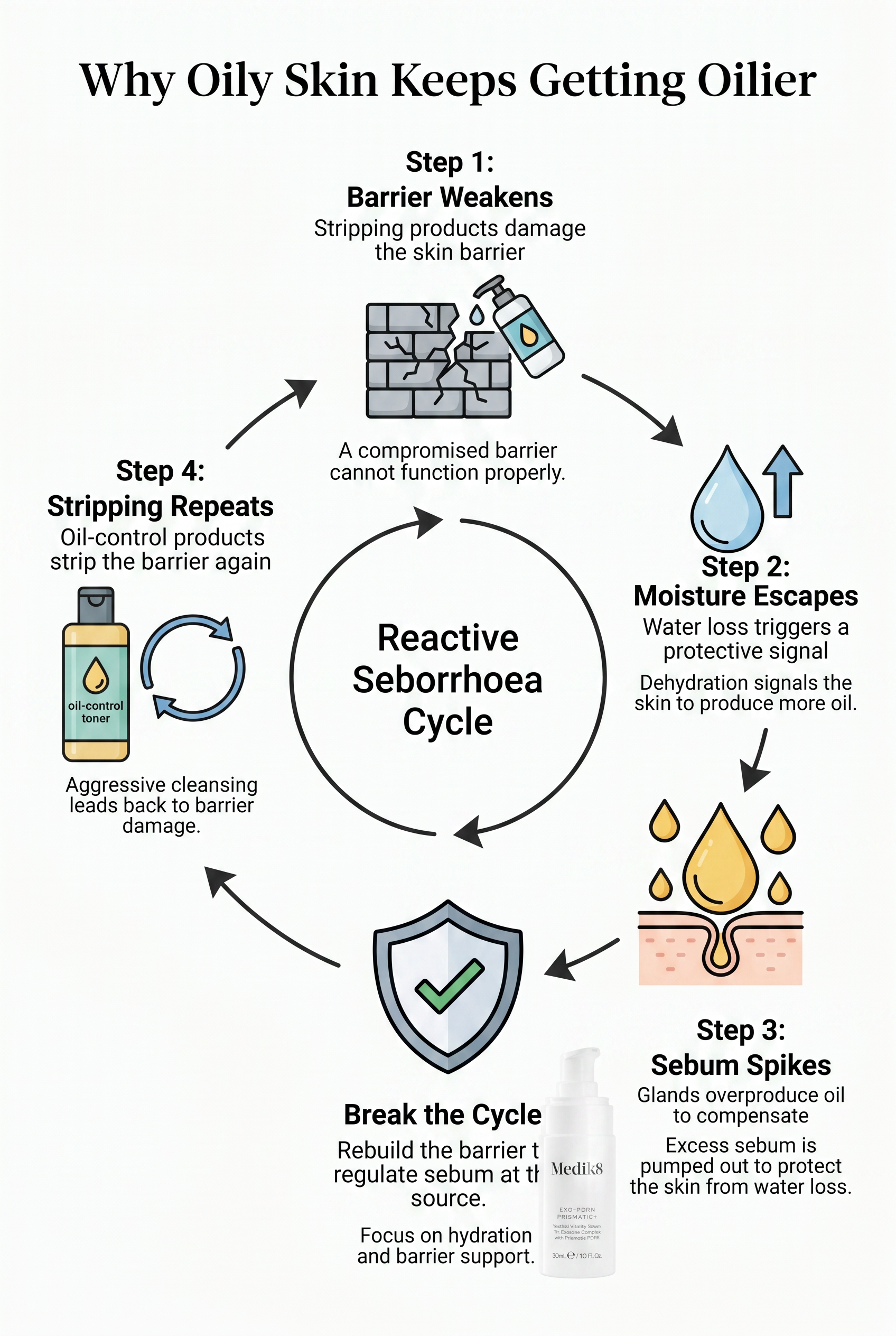
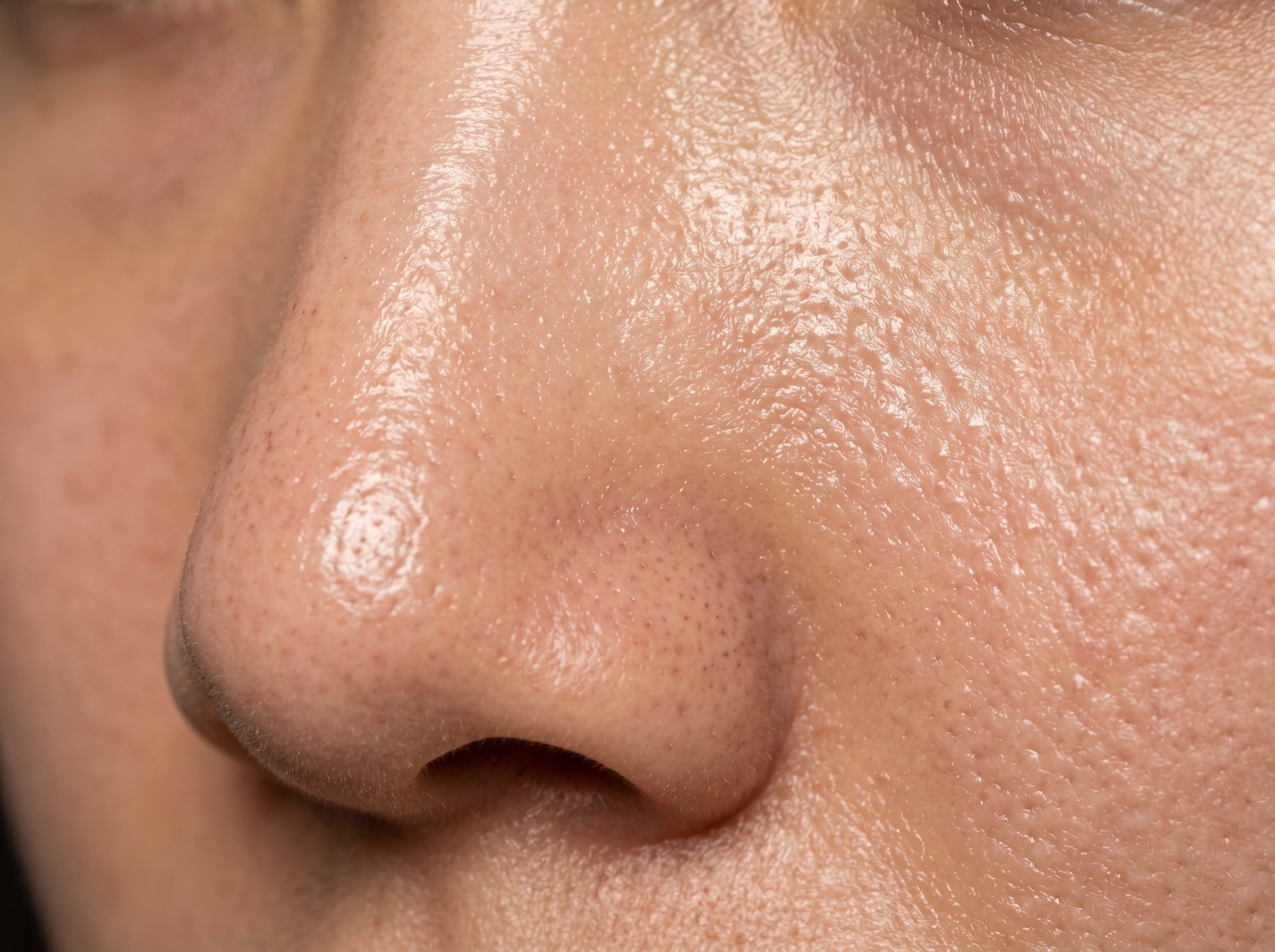
If your skin is oily, you've probably tried products that strip, mattify, or absorb excess oil. They might work for a few hours. Then the shine comes back, sometimes worse than before. That cycle isn't a coincidence, and it isn't a failure of willpower or routine. It's your skin responding to a barrier problem.
This is the angle that makes Exo-PDRN Prismatic+ worth understanding if you have oily skin. It doesn't target sebum directly. Instead, it targets the barrier dysfunction that drives excess sebum in the first place. The result is oil rebalancing that comes from genuine skin repair, not surface suppression. Here's how that works.
Why Does Oily Skin Keep Producing More Oil?
Your sebaceous glands (the small glands in your skin that produce sebum, your skin's natural oil) don't operate in isolation. They respond to signals. One of the most powerful signals is barrier compromise.
When your skin barrier is weakened, your skin detects moisture loss and ramps up sebum production to compensate. It's a protective reflex. But it creates a frustrating loop.
Harsh cleansers, over-exfoliation, and stripping oil-control products all damage the barrier. The barrier weakens, moisture escapes, and your skin responds by producing more sebum. You blot, you cleanse, you strip again. The cycle continues. Choosing the right moisturiser for oily skin is one piece of breaking this cycle, but it doesn't address the root cause.
The root cause is a barrier that has lost its ability to hold moisture and regulate itself. Until that's addressed, sebum production stays elevated. This is what researchers call reactive seborrhoea, where oil overproduction is a symptom of barrier dysfunction, not just overactive glands.
Key Takeaways
- Exo-PDRN Prismatic+ rebalances oil production by rebuilding the skin barrier rather than just controlling surface shine.
- When your barrier is compromised, your skin overproduces sebum as a protective response.
- Exo-PDRN Prismatic+ uses a Triple Exosome Complex and Prismatic PDRN to trigger ceramide synthesis and strengthen tight junction proteins.
- This teaches your skin to regulate itself again.
- Clinical data shows improvements in barrier function within seven days, with sebum regulation follo...
What Does 'Barrier Rebuild' Actually Mean?
There's an important difference between supporting your barrier and rebuilding it. Most oily skin products do neither. Barrier-support products add ingredients like ceramides (natural fats that help hold skin cells together) from the outside. That helps. But it doesn't teach your skin to make its own ceramides again.
Barrier rebuild goes deeper. It means activating the genes and proteins your skin uses to synthesise its own structural components. Two key enzymes here are SPTLC1 and SPTLC2. These are part of the pathway your skin uses to produce ceramides from scratch. When these are upregulated (switched on at a higher level), your skin starts making more of its own ceramides rather than relying on topical ones.
At the same time, tight junction proteins called claudin-1 and occludin form the seal between skin cells. Think of them as the mortar between bricks. When these proteins are strengthened, moisture stays in and irritants stay out. Your skin no longer needs to compensate with excess sebum. This is the mechanism that makes barrier rebuild different from barrier support, and it's the mechanism that Exo-PDRN Prismatic+ targets directly.
How Does Exo-PDRN Prismatic+ Work for Oily Skin?
Exo-PDRN Prismatic+ combines two key technologies: a Triple Exosome Complex and Prismatic PDRN. Exosomes are tiny messenger particles that carry instructions between cells. The Triple Exosome Complex in this formula delivers signals that activate skin repair pathways, including the ceramide synthesis pathway described above. PDRN (Polydeoxyribonucleotide) is a DNA fragment that drives cellular energy and regeneration. It supports ATP production, which is the fuel cells need to carry out repair work.

For oily skin, this combination works by restoring the barrier from the cellular level up. As ceramide synthesis increases and tight junction proteins strengthen, the barrier becomes more effective at retaining moisture. Moisture retention reduces the signal that triggers compensatory sebum production.
Over time, oil levels rebalance. This isn't a temporary mattifying effect. It's a structural shift in how your skin functions.
Clinical data supports early results. Improvements in barrier function and skin health are measurable within seven days. Sebum rebalancing follows as the barrier stabilises over the following weeks. If you're also using active ingredients like niacinamide or salicylic acid, the order you apply your products matters for getting the most from each one.

Featured: Exo-PDRN Prismatic+
A full-spectrum face serum that boosts skin's natural rejuvenation by over 50%.
Shop NowIs Exo-PDRN Prismatic+ Right for Oily Skin?
This product suits oily skin that is caught in the stripping cycle. If your skin produces excess oil, you've tried oil-control products. And you still feel like your skin is never quite balanced, barrier dysfunction is likely a factor. Exo-PDRN Prismatic+ addresses that directly.
It also suits oily skin that has been through active treatments. Retinoids, chemical exfoliants, and professional peels all create some level of barrier disruption as part of how they work. Exo-PDRN Prismatic+ is validated for post-procedure use, with 98% of participants agreeing it supported skin recovery without causing additional disruption. If you're starting a retinol routine or already using active ingredients, pairing it with a barrier-rebuilding serum makes sense.
It is not suited to skin experiencing active acne breakouts, severely compromised barriers, or those with known sensitivities to nucleotides. If you're unsure whether your barrier is compromised or just naturally oily, starting your Skin Blueprint assessment gives you a clearer picture before you invest in any new product.
How Does It Fit Into an Oily Skin Routine?
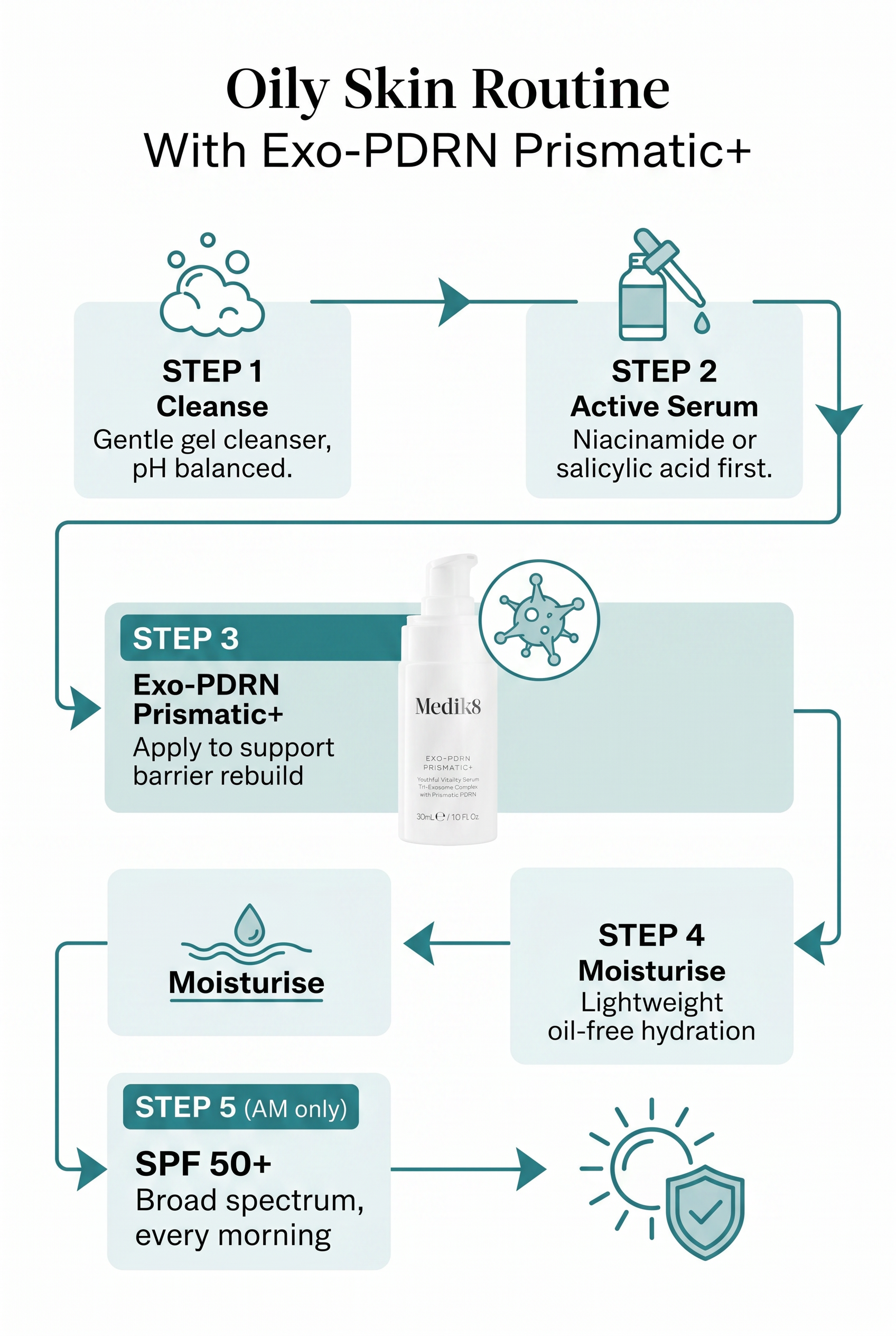
Exo-PDRN Prismatic+ works as a serum step, applied after cleansing and before moisturiser. For oily skin, this means applying it to clean, dry skin in the morning or evening (or both, depending on your routine). It layers well under lightweight, oil-free hydration and SPF 50+ in the morning.
If you're using salicylic acid or niacinamide, apply those first as they work at the surface level. Then apply Exo-PDRN Prismatic+ to support the deeper repair work. This layering approach means your actives do their job without competing with the regeneration signals the serum delivers. Understanding what salicylic acid does helps you see why this order makes sense: it clears the path, and the serum rebuilds the structure underneath.
Consistency matters here. Barrier rebuild happens over weeks, not days. The seven-day clinical improvements are encouraging, but the full benefit for sebum rebalancing develops as your barrier strengthens over four to six weeks of regular use. Think of it as changing the conditions that create excess oil, rather than treating the oil itself.
Oily skin is not just about too much sebum. In many cases, it's about a barrier that has lost its ability to regulate moisture and signal production correctly. When the barrier is compromised, excess oil is the result, not the cause. Targeting the cause means rebuilding the barrier at the cellular level, not just managing the shine at the surface.
Exo-PDRN Prismatic+ takes that approach. By activating ceramide synthesis and strengthening tight junction proteins, it addresses the structural reason your skin overproduces oil. If you're ready to move beyond products that treat the symptom, this is where to start. Shop now or book your skin consultation to see how it fits your specific skin picture.


