
You've likely heard that exercise gives you a healthy glow. But the relationship between movement and your skin goes far deeper than that temporary post-workout flush. While you're strengthening your cardiovascular system and building endurance, your skin is undergoing its own transformation, one that might surprise you.
The connection between exercise and skin health isn't just about sweating out toxins (spoiler: that's largely a myth). It's about how increased blood flow basically changes the way your skin functions, repairs itself, and ages. Understanding this relationship puts you in control of another powerful tool for skin health, one that works from the inside out.
What Actually Happens to Your Skin When You Exercise?
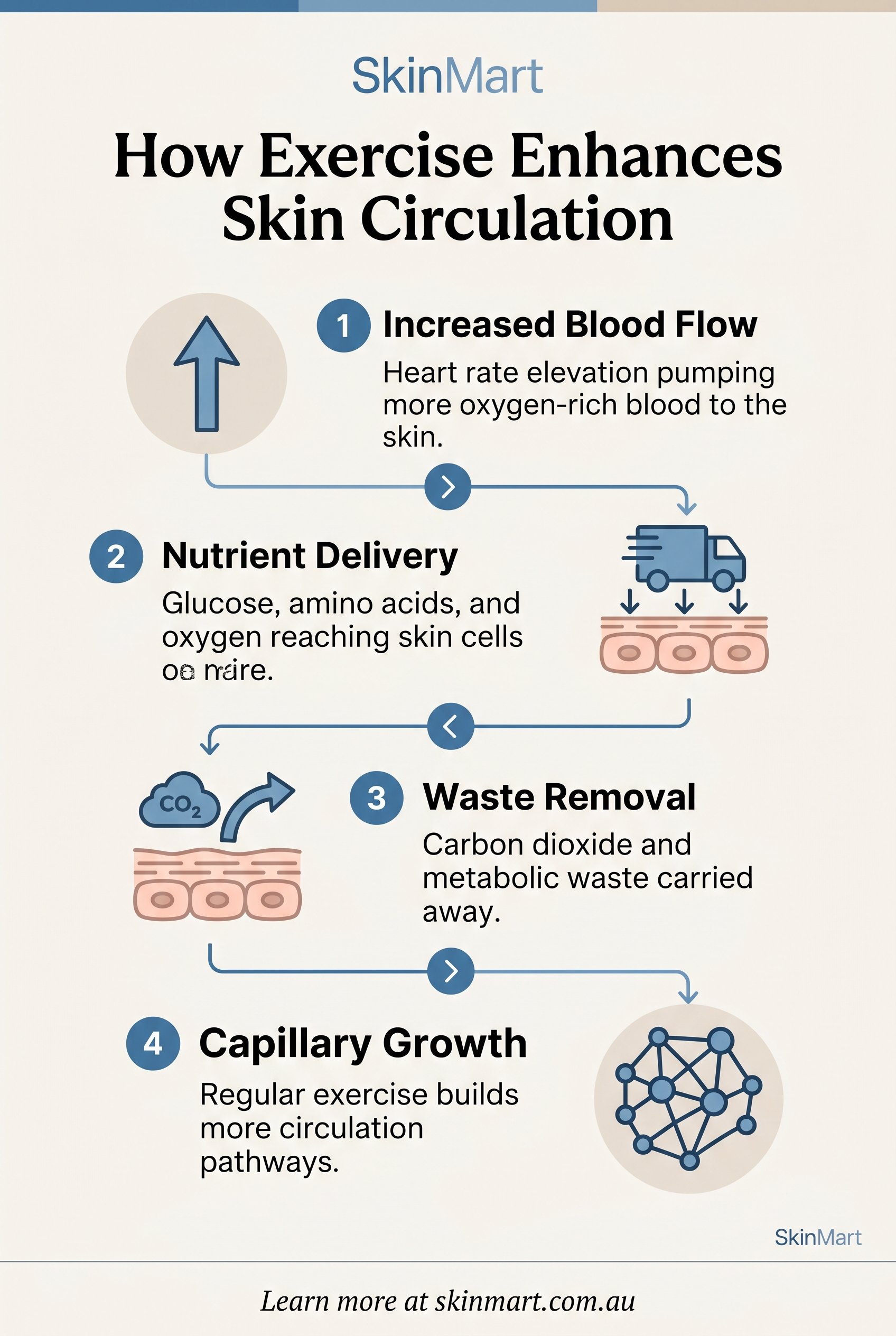
When you start moving, your heart rate increases to pump more blood throughout your body. This enhanced circulation doesn't just serve your muscles, it's a delivery system for your skin. Each capillary network in your dermis receives a surge of oxygen-rich blood, along with the nutrients your skin cells need to function ideally.
This increased blood flow serves two critical purposes. First, it brings glucose, amino acids, and oxygen to skin cells, supporting their energy production and repair processes. Second, it carries away metabolic waste products and carbon dioxide that can interfere with cellular function. Think of it as your skin's internal cleaning and feeding system working at peak efficiency.
Research published in the Journal of Applied Physiology found that regular exercise increases the density of capillary networks in the skin, meaning you're not just for now boosting circulation, you're actually building more pathways for nutrient delivery over time. This structural change is one reason why people who exercise consistently often maintain healthier-looking skin as they age.
The immediate effect you notice, that rosy glow, is real, but it's just the visible sign of these deeper processes at work. Your skin cells are receiving the resources they need to produce collagen, repair DNA damage, and maintain the barrier function that keeps irritants out and moisture in.
How Does Exercise Influence Collagen and Skin Structure?
Here's where exercise reveals one of its most surprising skin benefits: it appears to support collagen production and maintenance. A study from McMaster University examined skin samples from regular exercisers versus sedentary individuals and found notable differences in the composition of both the epidermis and dermis.

The exercisers showed skin traits more typical of younger individuals, including higher collagen density and better-organized collagen fibres. The researchers suggested that exercise-induced increases in certain cytokines, especially IL-15, may stimulate the cellular processes that maintain skin structure.
This doesn't mean exercise reverses all signs of ageing or replaces your retinol serum. Rather, it works through a different pathway. While topical treatments like retinoids stimulate collagen production by directly affecting skin cells, exercise creates systemic conditions that support collagen synthesis and protect existing collagen from degradation.
The mechanical stress of movement also matters. Weight-bearing exercise, in particular, creates mild stress signals throughout your body, including your skin. Your cells respond to these signals by strengthening their structural components, a process called mechanotransduction. It's similar to how muscles grow stronger when challenged, except your skin is building resilience at the cellular level.
Key Takeaways
- Exercise enhances skin health primarily through improved circulation, which delivers oxygen and nutrients to skin cells while removing waste products.
- Beyond the temporary post-workout flush, regular physical activity stimulates collagen production, reduces swelling through stress hormone regulation, and supports the skin's natural repair processes.
- Studies show that consistent exercise can improve skin thickness, elasticity, and barrier function, benefits that complement your topical skincar...
Does Exercise Really Reduce Skin swelling?
Chronic swelling is increasingly recognised as a driver of various skin concerns, from acne to premature ageing. Exercise influences swelling through multiple pathways, and the effects are more nuanced than simply 'reducing swelling.'
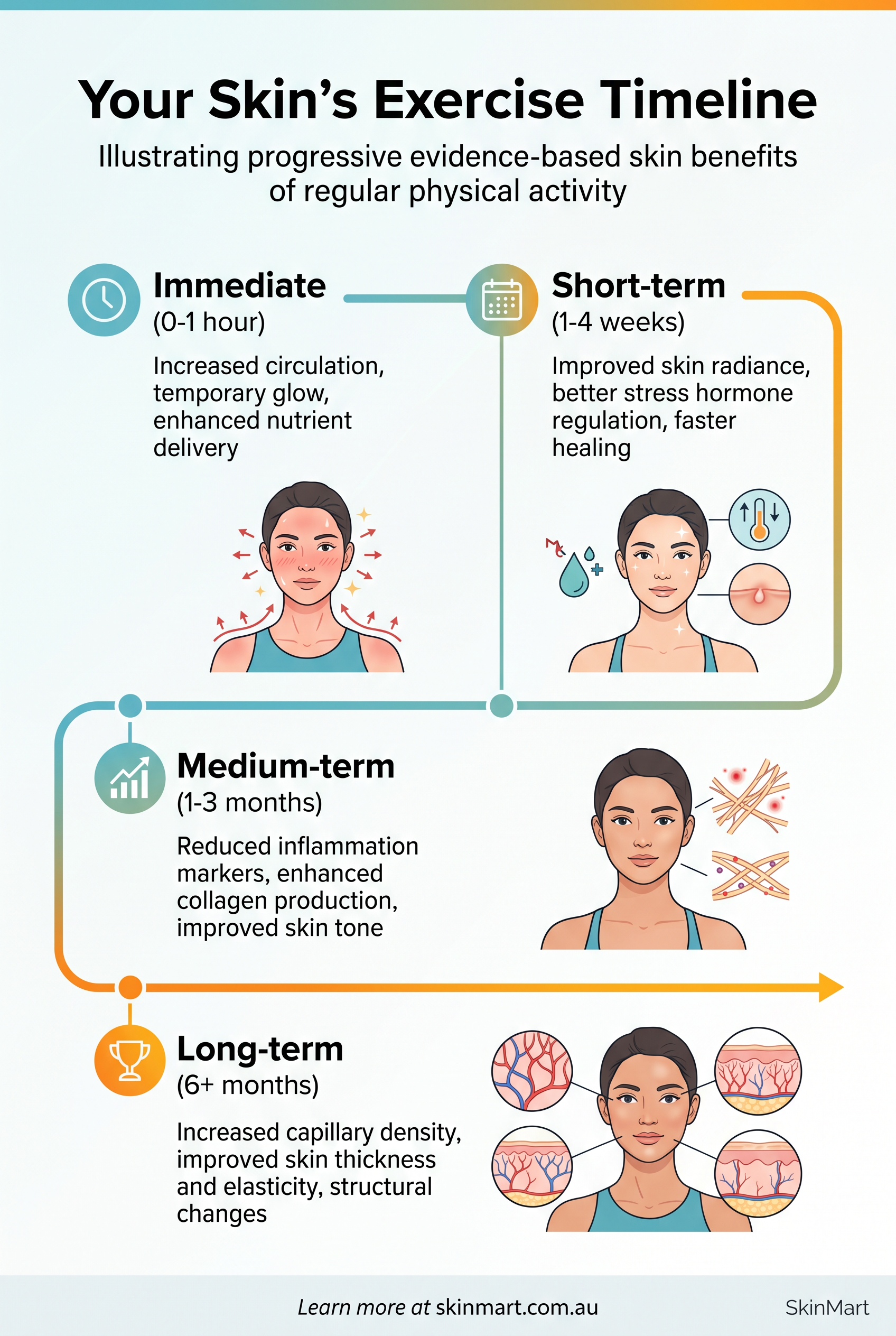
During exercise, your body at first experiences a pro-causing swelling response, this is normal and necessary for adaptation. However, regular physical activity shifts your baseline causing swelling state downward. Studies show that people who exercise consistently have lower levels of causing swelling markers like C-reactive protein and IL-6 when measured at rest.
This matters for your skin because chronic low-grade swelling accelerates the breakdown of collagen and elastin, impairs barrier function, and can worsen conditions like rosacea, eczema, and acne. By lowering systemic swelling, exercise creates an internal environment where your skin can function more efficiently.
Exercise also regulates cortisol, your primary stress hormone. While short bursts of cortisol during exercise are helpful, chronically elevated cortisol (from ongoing stress) degrades collagen, impairs wound healing, and can trigger causing swelling skin conditions. Regular moderate exercise helps normalise cortisol patterns, breaking the stress-swelling-skin damage cycle.
There's an important caveat here: excessive exercise without adequate recovery can have the opposite effect, elevating cortisol and oxidative stress. The sweet spot appears to be moderate, consistent activity, think 30-45 minutes most days rather than extreme training sessions.
Can Exercise Help With Specific Skin Concerns?
The circulation and anti-causing swelling benefits of exercise translate differently depending on your specific skin concerns. For acne-prone skin, the relationship is complex. Increased blood flow supports the skin's natural healing processes and may help clear breakouts faster. The stress-reduction benefits can also help, since stress is a known acne trigger.

However, sweat itself isn't inherently helpful for acne. If sweat sits on your skin, it can mix with bacteria and oils, possibly clogging pores. The solution isn't to avoid exercise, it's to cleanse promptly afterward. Keep a gentle cleanser in your gym bag and wash your face as soon as possible post-workout.
For those dealing with dullness or uneven skin tone, exercise's circulation boost offers genuine benefits. Enhanced blood flow brings a fresh supply of oxygen and nutrients to the skin's surface, supporting cell turnover and revealing brighter, more even-toned skin. This effect is cumulative, the more consistently you exercise, the more noticeable the improvement in skin radiance.
If you're managing rosacea or sensitive skin, approach exercise thoughtfully. While the long-term anti-causing swelling benefits are valuable, the immediate flushing and heat can trigger flare-ups. Choose cooler environments, stay well-hydrated, and consider lower-intensity activities that still boost circulation without excessive facial flushing. Swimming is often especially well-tolerated.
For mature skin concerned with firmness and elasticity, the collagen-supporting effects of regular exercise are especially relevant. Combined with strength training's ability to maintain facial muscle tone, you're supporting your skin's structural foundation from within, something no topical product can fully replicate.
What Type of Exercise Benefits Your Skin Most?
The ideal exercise routine for skin health combines cardiovascular activity with strength training, though any movement is better than none. Cardiovascular exercise, whether running, cycling, swimming, or brisk walking, provides the circulation boost that delivers immediate and long-term benefits to your skin.
Aim for at least 150 minutes of moderate-intensity cardio weekly. This doesn't need to be complicated: a 30-minute walk five times per week meets this threshold. The key is elevating your heart rate enough to increase blood flow without pushing into excessive stress territory.
Strength training helps differently but key point:. Resistance exercise stimulates the production of growth factors and hormones that support tissue repair and collagen synthesis throughout your body, including your skin. Two to three strength sessions weekly complement your cardio routine well.
Yoga and similar practices offer unique benefits through their stress-reduction effects. While they may not provide the same cardiovascular intensity, the cortisol-regulating benefits of regular yoga practice can greatly impact stress-related skin concerns.
The timing of your skincare routine around exercise matters too. Exercise with a bare face when possible to avoid clogged pores from makeup mixing with sweat. Cleanse gently afterward, then apply your regular products. Your skin's enhanced circulation post-workout may actually improve absorption of certain ingredients, though there's limited research on this effect.
How Do You Protect Your Skin While Exercising?
Understanding exercise's benefits doesn't mean ignoring potential challenges. Outdoor exercise requires sun protection, UV exposure during your run or cycling session can quickly undermine the skin benefits you're working toward. Apply a broad-spectrum SPF 30 or higher before outdoor activity, and reapply if you're out for extended periods.
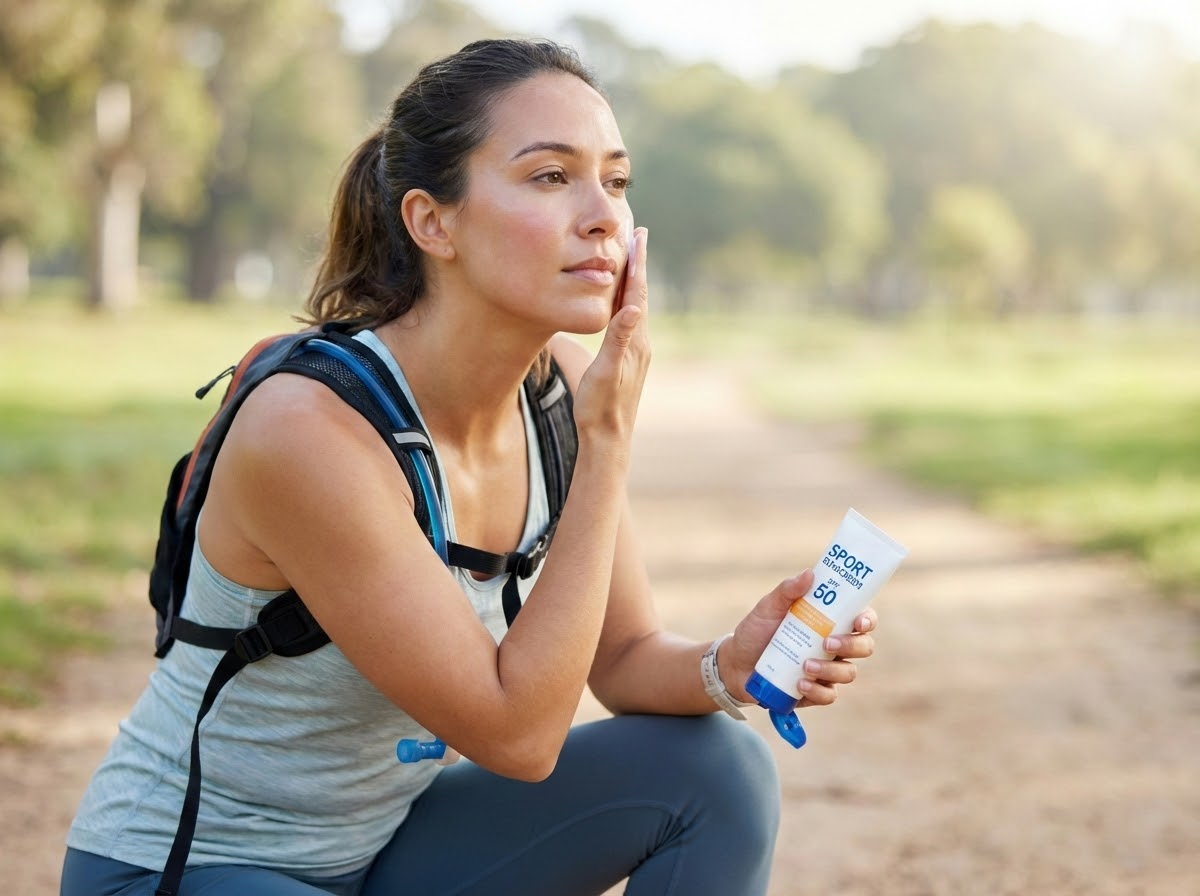
Choose a sunscreen formulated to resist water and sweat. Look for labels that say 'sport' or 'active', these formulas are designed to stay put during physical activity. Mineral sunscreens with zinc oxide often work well for exercise since they're less likely to sting if they run into your eyes with sweat.
Hydration impacts your skin both during and after exercise. When you're dehydrated, your skin loses plumpness and your circulation becomes less efficient. Drink water before, during, and after exercise to maintain best blood flow and support your skin's moisture levels from within.
Indoor exercise presents different factors. Gyms can harbour bacteria on equipment and in humid environments like change rooms. Bring your own towel, avoid touching your face during workouts, and cleanse promptly afterward. If you're prone to body breakouts, shower as soon as possible and change out of sweaty clothes quickly.
For those with conditions like eczema or very dry skin, exercise-induced sweating can be irritating. Wear breathable, moisture-wicking fabrics, and consider applying a thin layer of a barrier cream to areas prone to irritation before working out. This creates a protective layer between your skin and salty sweat.
Exercise transforms your skin through mechanisms that work alongside your topical skincare routine, not instead of it. The enhanced circulation, collagen support, and swelling reduction you gain from regular movement create internal conditions where your skin can function at its best. This is empowerment through understanding, you're not just treating your skin from the outside, you're supporting it from within.
The most effective approach combines consistent physical activity with evidence-based skincare. Your retinol serum stimulates collagen production through one pathway; your regular exercise supports it through another. Your vitamin C brightens through protective action; your improved circulation delivers the nutrients your skin needs to maintain that brightness naturally. You're building a complete strategy that addresses skin health from multiple angles, and that's exactly how lasting results happen.


