
You've tried the brightening serums. You've layered on the vitamin C. But the skin around your eyes still looks flat, tired, and dim. Not because you chose the wrong products. Because you may have been solving the wrong problem.
Dullness around the eyes isn't always about pigment or surface tone. Sometimes it's about density. When the skin in that area loses its structure, light stops reflecting cleanly.
The glow disappears. And no amount of brightening actives will bring it back if the underlying density isn't there. This is the story of glow as a consequence of density, and why the Dermalogica Smart Eye Density Booster takes a different approach.
What Does 'Density' Actually Mean for Your Skin?
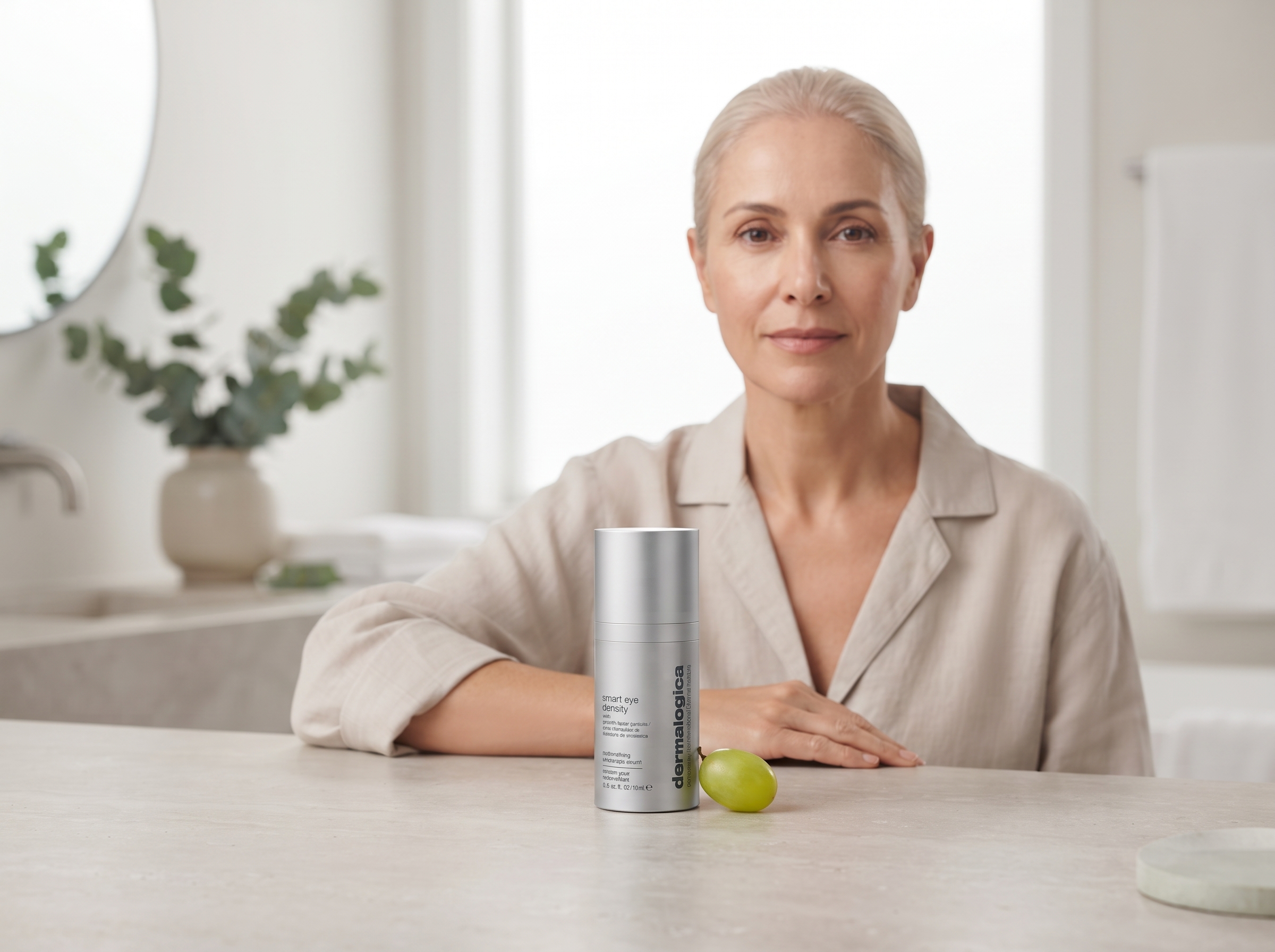
Skin density refers to how full and firm the skin feels and looks at a structural level. Think of it like the difference between a fresh grape and a raisin. The grape reflects light evenly.
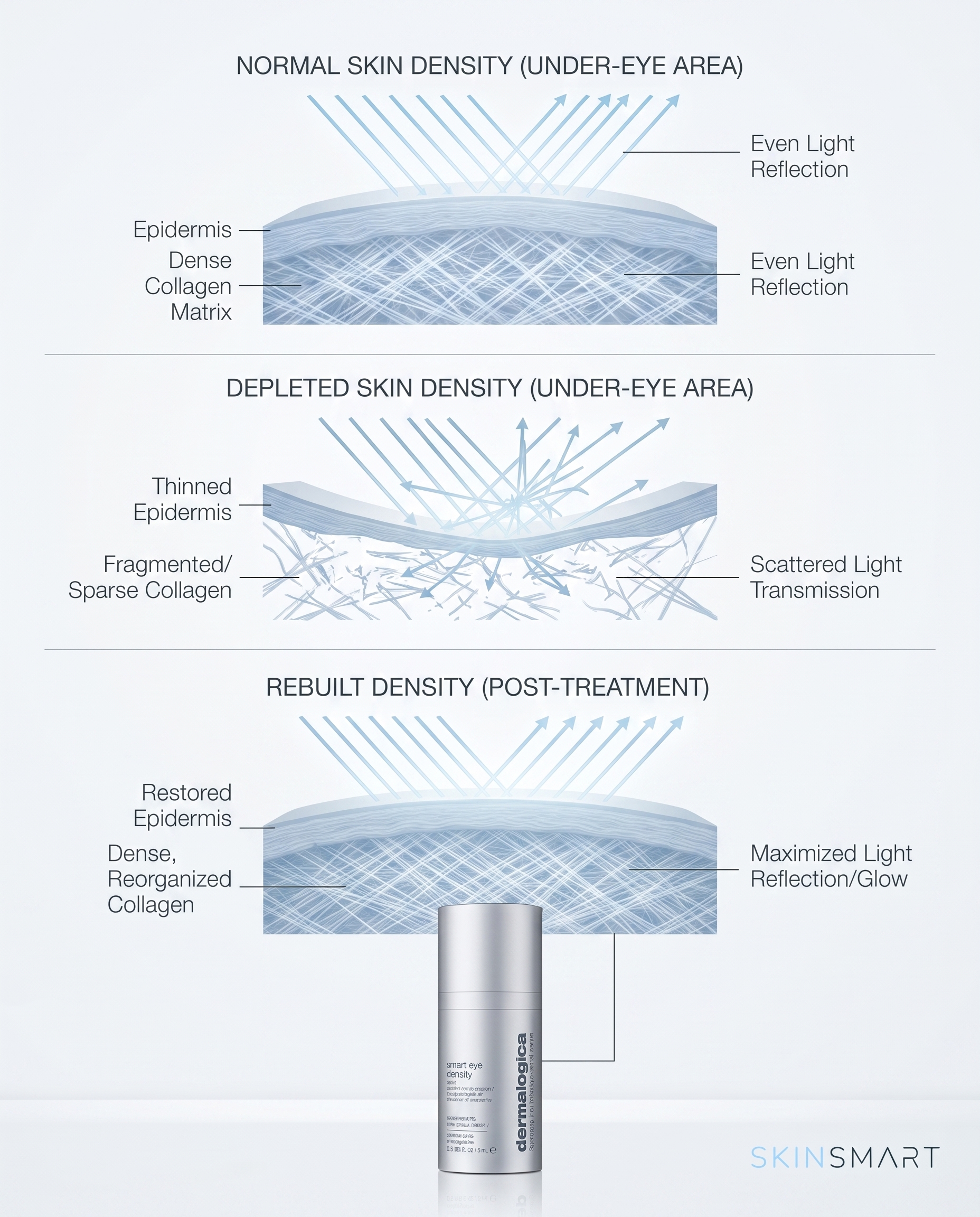
The raisin scatters it. The surface hasn't changed in colour. The structure has.
Around the eyes, skin is thinner than anywhere else on your face. It has fewer oil glands and less collagen (the protein that gives skin its firmness and bounce). That makes it the first area to show depletion.
When density drops, the skin becomes slightly hollow. Light hits the uneven surface and scatters in all directions instead of reflecting back cleanly. That scatter is what we read as dullness.
This is a structural problem. A brightening serum addresses pigment. A density-focused product addresses structure. They are not the same thing, and they don't solve the same problem.
Why the Eye Area Loses Density Over Time
Two things drive density loss around the eyes. The first is cellular energy depletion. Skin cells need energy to do their jobs, including producing collagen and hyaluronic acid (the moisture-binding molecule that keeps skin plump).
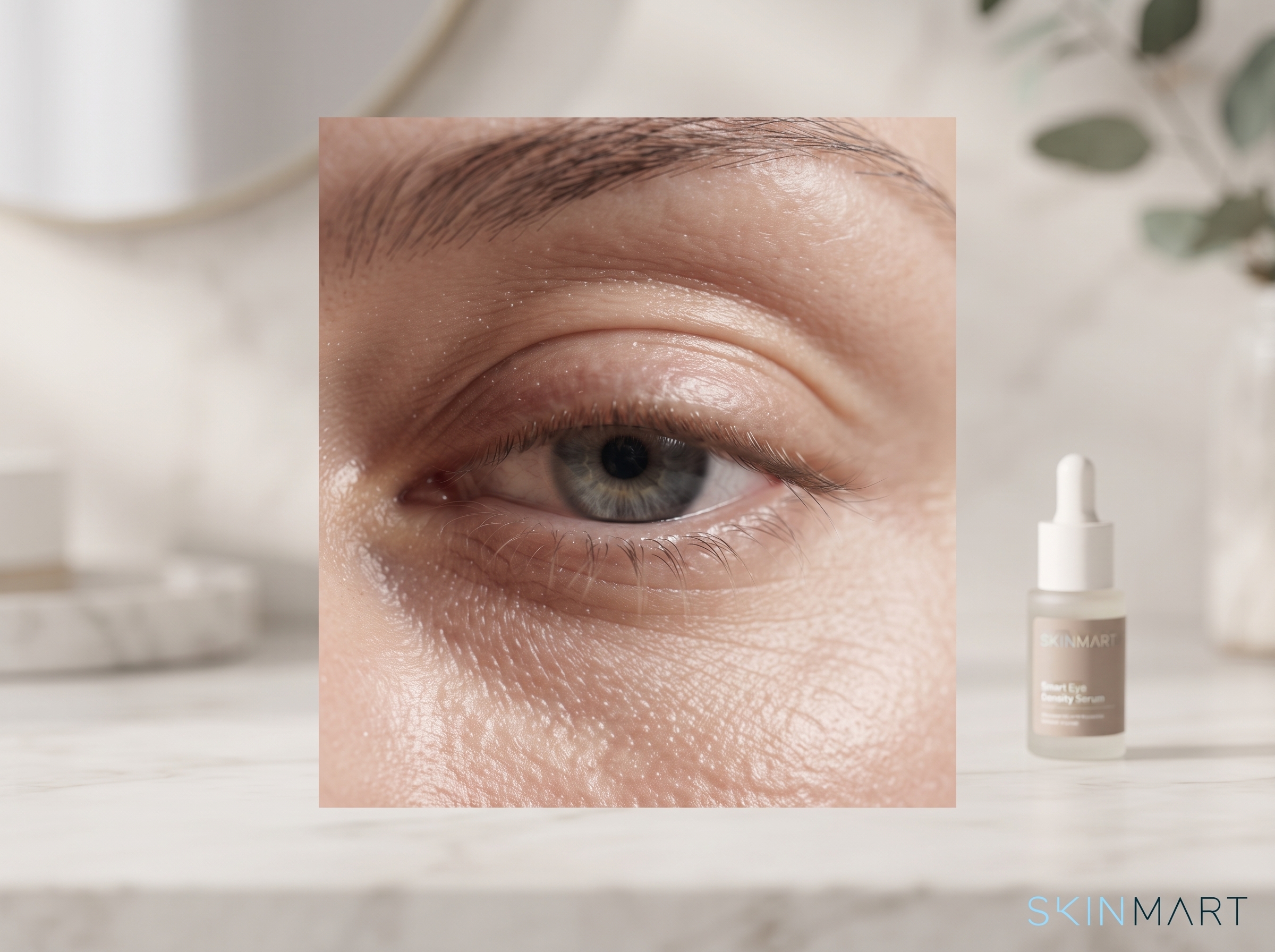
As we age, that cellular energy production slows. Cells become, in a sense, half-charged. They're still working, but not at full capacity.
The second driver is structural depletion. Collagen breaks down faster than it's replaced. Hyaluronic acid levels drop. The scaffolding that holds the skin in shape starts to thin.
The result isn't necessarily a deep wrinkle. It's a subtle hollowing. A flatness. A loss of that lit-from-within quality that dense, hydrated skin naturally has.
Sedentary patterns can make this worse. When circulation is sluggish from long periods of sitting, less oxygen and fewer nutrients reach skin cells. The lymphatic system (your body's waste-clearing network) slows down too. Puffiness builds in the morning, and the skin looks even more fatigued by afternoon. Movement, even in small doses, supports circulation and helps the eye area look more alive throughout the day.
Key Takeaways
- Dullness around the eyes is often a depletion problem, not a brightening problem.
- As skin loses density, the surface becomes uneven and thin.
- Light scatters instead of reflecting cleanly.
- The result looks dull, tired, and flat.
- Rebuilding density with ingredients like peptides and hyaluronic acid (a moisture-binding molecule) restores the structure that light needs to bounce off.
Glow Is What Happens When Light Has Structure to Work With
Here's the reframe worth sitting with. Glow is not something you add to skin. It's what happens when skin has enough density for light to reflect cleanly off its surface.
Dense, hydrated skin is slightly convex (curved outward). Light hits it and bounces back evenly. That's the glow you're looking for.
Depleted skin is slightly concave (curved inward). Light hits it and scatters. No amount of highlighter or brightening serum changes that underlying geometry. You can brighten the surface, but the structure underneath still scatters the light. The result is skin that looks a little better but still not quite right.
Rebuilding density changes the geometry. When the skin around your eyes regains structure, it catches light the way it's supposed to. The glow isn't added. It's restored. That's the honest promise of a density-focused approach, and it's a meaningfully different outcome than what a vitamin C product delivers.
How the Smart Eye Density Booster Addresses This
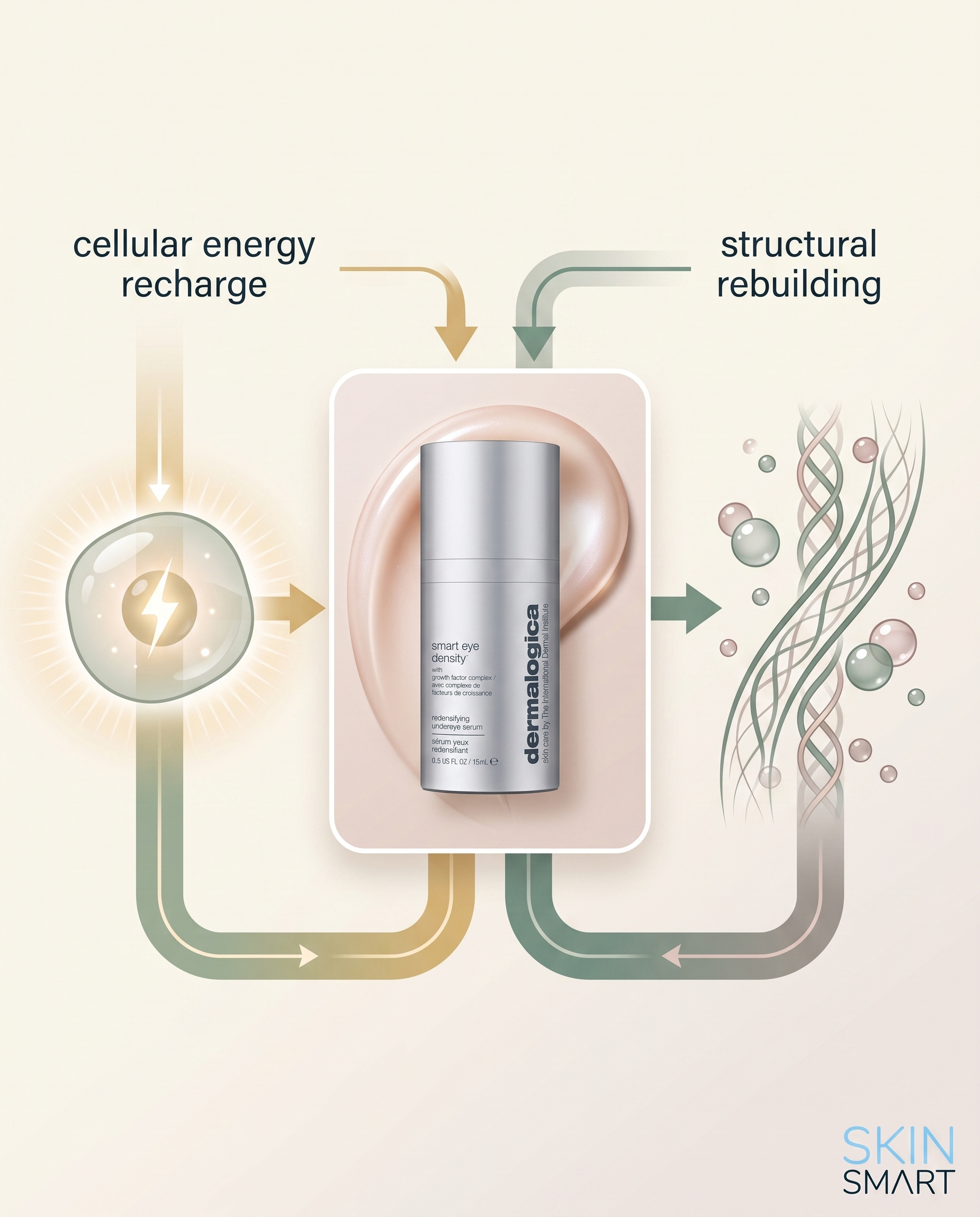
The Dermalogica Smart Eye Density Booster is built around two angles: cellular energy support and structural density rebuilding. It's not a brightening serum. It doesn't work by targeting pigment or adding luminosity to the surface. It works by supporting the conditions your skin needs to rebuild density from within.
The formula targets cellular energy pathways to help skin cells function more effectively. Think of it as recharging cells that have been running on low. When cells have more energy, they're better at producing the structural proteins and hydration molecules that create density. Peptides (short chains of amino acids that signal skin to produce more collagen) and hyaluronic acid work together to support that rebuilding process.
The result, with consistent use, is skin that looks fuller and more even. Light reflects more cleanly. The area looks less hollow.
The glow that returns isn't a trick of the light. It's the light doing what it naturally does when the structure underneath is there to support it. Independent testing showed a 129% increase in skin density with regular use, which is a meaningful structural change, not a surface-level one.
One honest note: this is not a retinol replacement. It won't erase deep wrinkles or restore volume lost from fat pad changes deeper in the face. What it does, it does well. And for the specific problem of density-driven dullness around the eyes, it's a more targeted answer than most products in this space.
How to Use It for Best Results
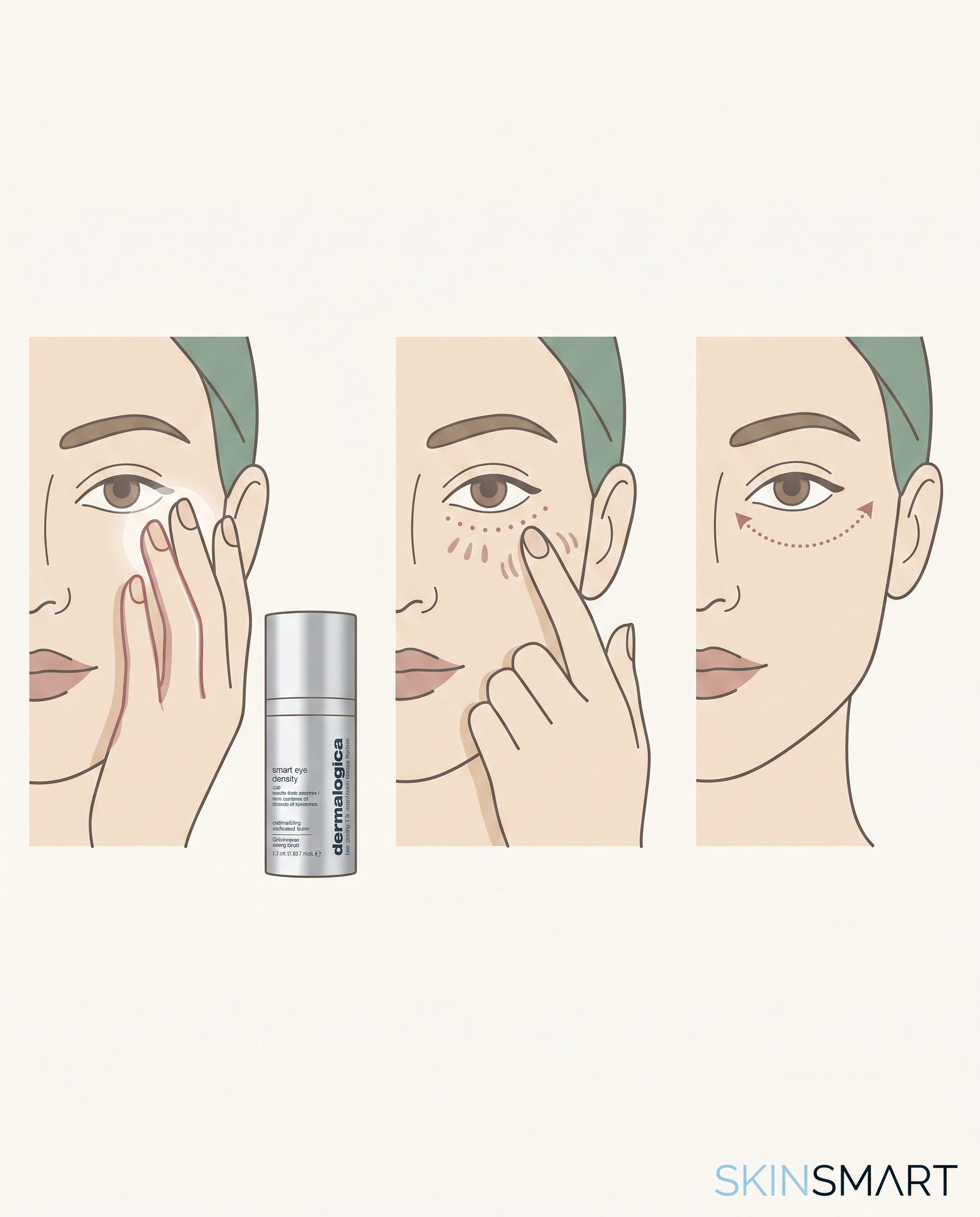
Application technique matters more around the eyes than almost anywhere else. Use your ring finger (it applies the least pressure naturally) and tap the product in gently. Don't drag or rub. The skin here is thin and benefits from light, rhythmic application.
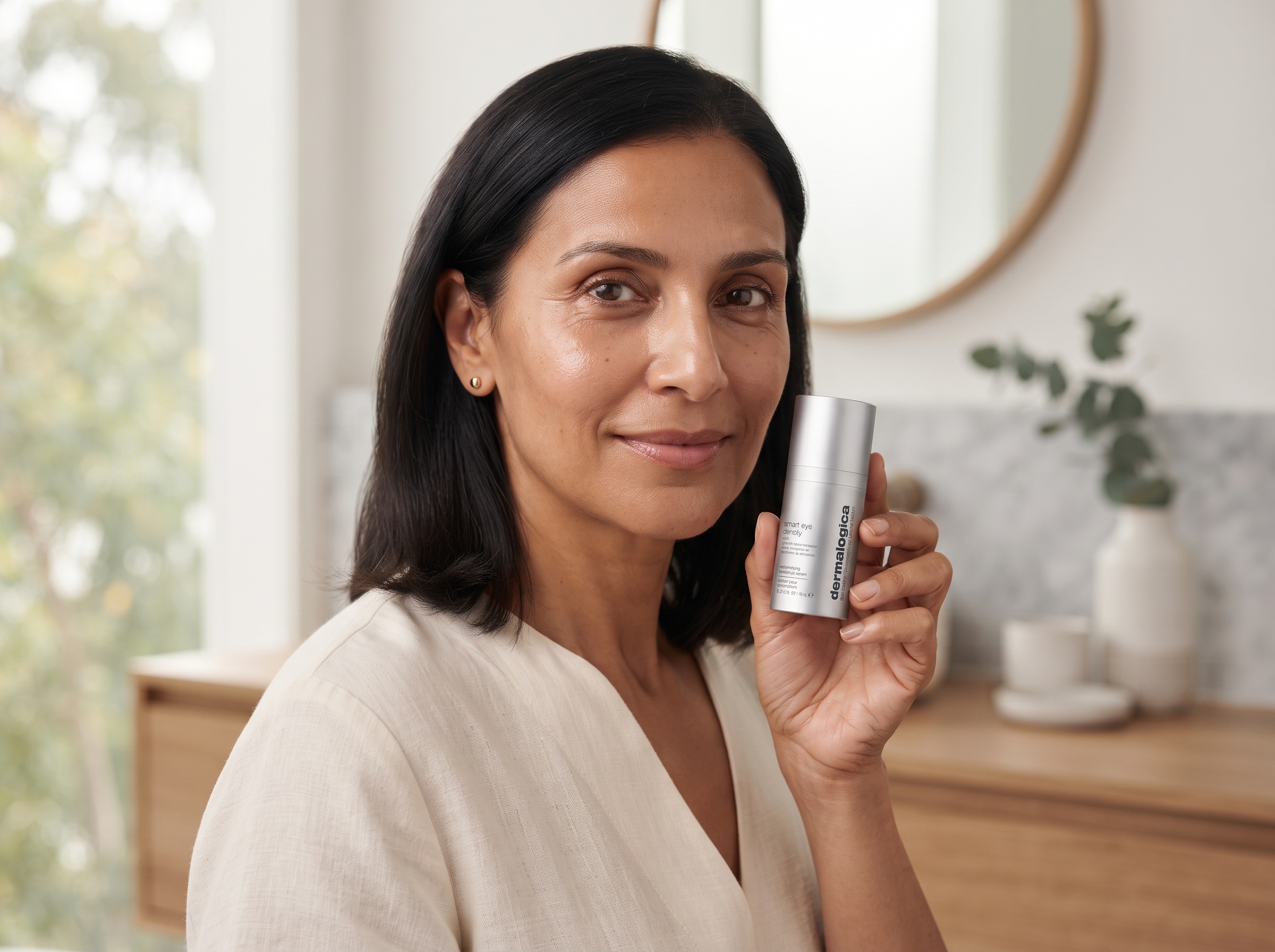
Apply in the direction of lymphatic flow: from the inner corner of the eye outward toward the temple. This supports the natural drainage pathway and reduces morning puffiness over time. A small amount goes a long way. You don't need to layer heavily.
Use morning and night for best results. In the morning, it prepares the eye area before SPF and makeup. At night, it supports the skin's natural repair cycle while you sleep.
Consistency over weeks is what drives structural change. You'll likely notice a difference in how the area feels within the first week. And a visible difference in density and glow within four to six weeks.
Is This the Right Product for You?
The Smart Eye Density Booster suits skin experiencing dullness and flatness around the eyes that hasn't responded to standard brightening products. It's especially relevant if you've noticed the eye area looks tired even when you're well-rested, or if brightening serums have improved tone slightly but the skin still looks dim and flat.
It works well alongside your existing routine. It doesn't replace a broad-spectrum SPF, a good cleanser, or a hydrating moisturiser. It fills a specific gap: structural density support for the eye area.
If you're pregnant or breastfeeding, check with your GP before adding any new active product.
Dullness around the eyes is a solvable problem when you understand what's actually causing it. If the issue is density, the answer is density. Not more vitamin C. Not another brightening layer. A product that supports your skin's ability to rebuild the structure that glow depends on.
The Dermalogica Smart Eye Density Booster is built for this specific problem. It's honest about what it does and what it doesn't.


