
You've tried the ceramide creams. You've added hyaluronic acid. You apply moisturiser morning and night, and your skin still feels tight by mid-afternoon. If this sounds familiar, the problem may not be what you're putting on your skin. It may be what's happening inside your skin cells.
Persistent dry skin, especially the kind that doesn't fully respond to even well-formulated products, is often a sign of impaired cellular repair. Your barrier can't rebuild itself properly if the cells doing the rebuilding have run out of energy. And that's exactly what happens when NAD+ (a molecule your cells rely on to function) declines. Understanding this connection changes how you approach dry, compromised skin. Not by replacing what you're already doing, but by addressing what's been missing underneath.
What Does Dry Skin Actually Mean at a Cellular Level?
Dry skin isn't simply skin that needs more water. It's skin with a damaged barrier. Your outer skin layer, called the stratum corneum, is made up of skin cells held together by a mix of lipids (fats).
Think of it as a brick wall. The cells are the bricks, and the lipids are the mortar filling the gaps. When that mortar breaks down, moisture escapes and irritants get in.
The key lipids in this structure are ceramides (natural fats that seal your skin barrier), cholesterol, and free fatty acids. In dry skin, these are depleted. Your skin can't hold water, and it can't protect itself properly. You feel the tightness, roughness, and discomfort that comes with a compromised barrier.
But here's the part that's easy to miss: your skin is constantly trying to repair this. Every day, your barrier cells work to produce new ceramides, shed old cells, and rebuild the lipid structure. That process requires energy. And the cellular source of that energy is NAD+.
What Is NAD+ and Why Does It Matter for Barrier Repair?
NAD+ stands for nicotinamide adenine dinucleotide. It's a molecule found in every cell of your body. It plays a central role in how your cells convert nutrients into usable energy. It also activates a group of proteins called sirtuins, which regulate cell repair, reduce swelling, and support DNA maintenance.

In your skin, NAD+ is essential for the cells responsible for building your barrier. Without enough of it, those cells can't produce ceramides efficiently. They can't repair UV-related DNA damage. They can't complete the normal shedding process that keeps your skin surface smooth. The repair cycle slows down, and your barrier stays compromised no matter how much moisturiser you apply.
Research shows that NAD+ levels decline steadily with age, dropping by roughly 50% between your 20s and 50s (Verdin, 2015). This decline is one reason dry skin becomes harder to manage as you get older. Your skin isn't less responsive because you've chosen the wrong products.
It's less responsive because the cellular machinery behind repair is running low on fuel. Understanding this is explored further in our article on DNA technology in skincare. This looks at how cellular-level science is changing what's possible in topical treatments.
Key Takeaways
- Persistent dry skin often comes down to cellular repair failure, not just a lack of moisture.
- As NAD+ (a molecule your skin cells need to produce energy) declines with age, your barrier cells lose the ability to rebuild ceramides, repair DNA damage, and restore the lipid structure that holds moisture in.
- Moisturisers address the surface.
- NAD+ restoration addresses the cellular engine behind repair.
- Supporting NAD+ levels alongside barrier-focused skincare gives your skin the energy it needs t...
Why Moisturiser Alone Has Limits
This isn't a criticism of moisturisers. Ceramide-rich creams, humectants like glycerin and hyaluronic acid, and occlusive ingredients like petrolatum all do real, measurable work. They reduce water loss, attract moisture into the skin, and help rebuild the lipid layer. For many people, the right moisturiser makes a major difference.
But moisturisers work from the outside in. They supply ingredients your barrier needs. They don't restore the cellular energy required to use those ingredients well. If your skin cells are energy-depleted, they can't fully process and integrate the ceramides and lipids you're delivering topically. The surface feels better for now, but the underlying repair stays incomplete.
Think of it this way. You can deliver building materials to a construction site all day. But if the workers don't have enough energy to build, the materials sit unused.
NAD+ is what powers the workers. This is also why product layering and routine order matter so much. Even the best ingredients need a functioning cellular environment to deliver their full benefit.
How NAD+ Decline Shows Up in Dry, Compromised Skin
When NAD+ levels drop, several things happen in dry skin that make the condition harder to manage. Ceramide production slows, because the enzymes involved in lipid synthesis need cellular energy to function. Skin cell turnover becomes irregular, leading to the rough, flaky texture that won't smooth out with exfoliation alone. DNA repair slows down, which means UV damage builds up and further disrupts barrier function over time.
There's also an causing swelling effect. NAD+ supports sirtuin proteins that help regulate swelling. When NAD+ declines, low-grade swelling increases.
For skin having dryness, this creates a cycle. A compromised barrier triggers swelling. swelling further disrupts barrier repair. And without enough cellular energy to break the cycle, the skin stays stuck.
You may also notice that your skin recovers more slowly after stress, weather changes, or product reactions. That delayed recovery is a cellular repair problem. Your skin knows what it needs to do. It just doesn't have the energy to do it quickly enough. This is closely connected to how your circadian rhythm affects skin repair, since overnight cellular renewal depends heavily on available NAD+ during peak lipid synthesis hours.

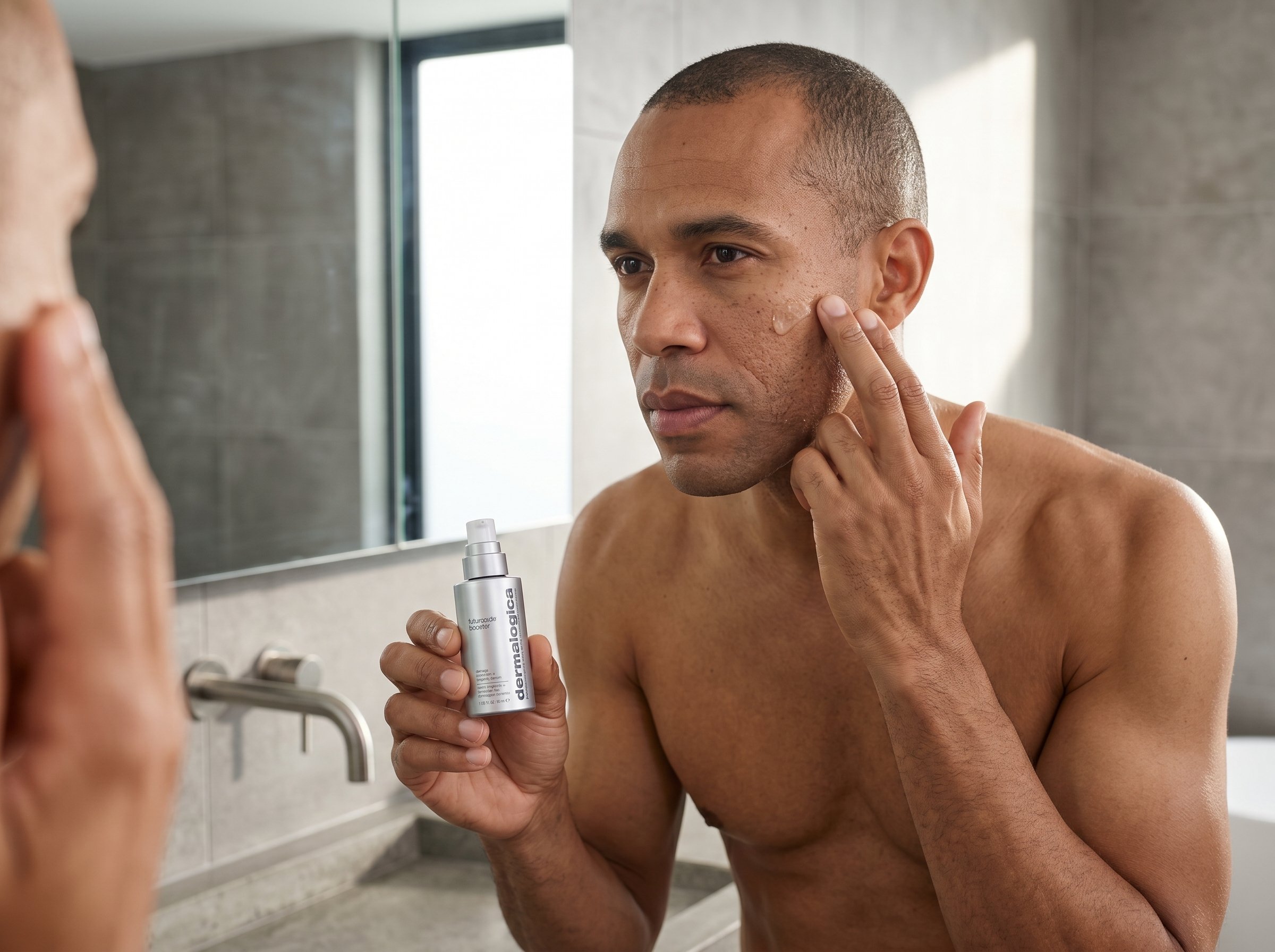
Featured: FutureCode Booster
Advanced booster that helps extend the longevity of healthy-looking skin by supporting natural skin repair and reducing visible signs of DNA-relate...
Shop NowWhat Does Cellular Restoration Actually Look Like?
Supporting NAD+ in the skin is a fairly new area of topical skincare science. Ingredients like teprenone (a compound that supports cellular longevity and NAD+ pathways) and niacinamide (a form of vitamin B3 that directly supports NAD+ production) are among the most studied. Niacinamide is already well known for its role in ceramide synthesis and barrier support. Its connection to NAD+ is part of why it works so well for dry skin.
The FutureCode Booster by Dermalogica brings several of these ingredients together in a serum format. It combines teprenone, niacinamide, sunflower sprout extract, acetyl zingerone, and rosehip oil to support the skin's natural repair processes at a cellular level. The serum format matters here. Most NAD+-supporting formulas come in heavy creams. A lightweight serum can be layered under your existing moisturiser, making it a foundational addition rather than a replacement for what's already working.
This approach aligns with what the evidence supports: address the cellular energy deficit alongside the surface lipid deficit. Both matter. Neither alone is the full answer.
How to Build This Into Your Dry Skin Routine
You don't need to rebuild your routine from scratch. If you're already using a ceramide moisturiser and a gentle pH-balanced cleanser, you have a solid foundation. The goal is to add cellular support to what you're already doing, not replace it.
A practical approach looks like this. In the morning, cleanse with a gentle, low-pH formula (around pH 5.5). Apply a NAD+-supporting serum like the FutureCode Booster while your skin is still slightly damp. Follow with your ceramide moisturiser, then SPF 50+. In Australia, UV exposure is one of the main drivers of NAD+ depletion in skin cells, so sun protection is non-negotiable here.
In the evening, cleanse thoroughly, apply your serum, then use a richer moisturiser. If your dryness is severe, add an occlusive layer last. This seals everything in during the hours when your skin's repair activity naturally peaks.
Consistency over four to six weeks is where you'll see the difference. Cellular repair isn't instant. But when you're giving your skin both the surface ingredients and the cellular energy it needs, the results are more sustained than surface treatment alone.
Dry skin that doesn't respond to even well-chosen moisturisers is often telling you something important. The barrier knows how to repair itself. But repair takes cellular energy, and that energy depends on NAD+. As NAD+ declines with age, the gap between what your skin needs to do and what it has the energy to do gets wider. That gap is where persistent dryness lives.
The good news is that this is addressable. Supporting NAD+ with targeted ingredients alongside your existing barrier routine gives your skin both the raw materials and the cellular fuel to rebuild properly. If you're ready to go beyond surface treatment, shop FutureCode Booster and add cellular restoration to your dry skin plan. Or speak to our skin experts to get a routine built around what your skin actually needs right now.


