
You moisturise every day. You drink your water. Your skin feels fine. But your undereye area still looks tired, a little hollow.
And dry in a way that no amount of eye cream seems to fix for long. If that sounds familiar, you are not missing a product. You are missing a cause.
In Australia, the undereye zone faces what we call the Double-Dry: two separate dehydration forces hitting the same fragile skin at the same time. One comes from outside, UV radiation, dry air, heating, and air conditioning. The other comes from within, a structural lack of oil glands that leaves this area almost defenceless against moisture loss. Understanding both is the first step to actually doing something about it.
What Makes Australian Conditions So Hard on the Eye Area?
Australia has one of the highest UV indexes in the world. UV radiation does not just cause sunburn. It also breaks down the skin's barrier function, which is the outer layer's ability to hold moisture in.
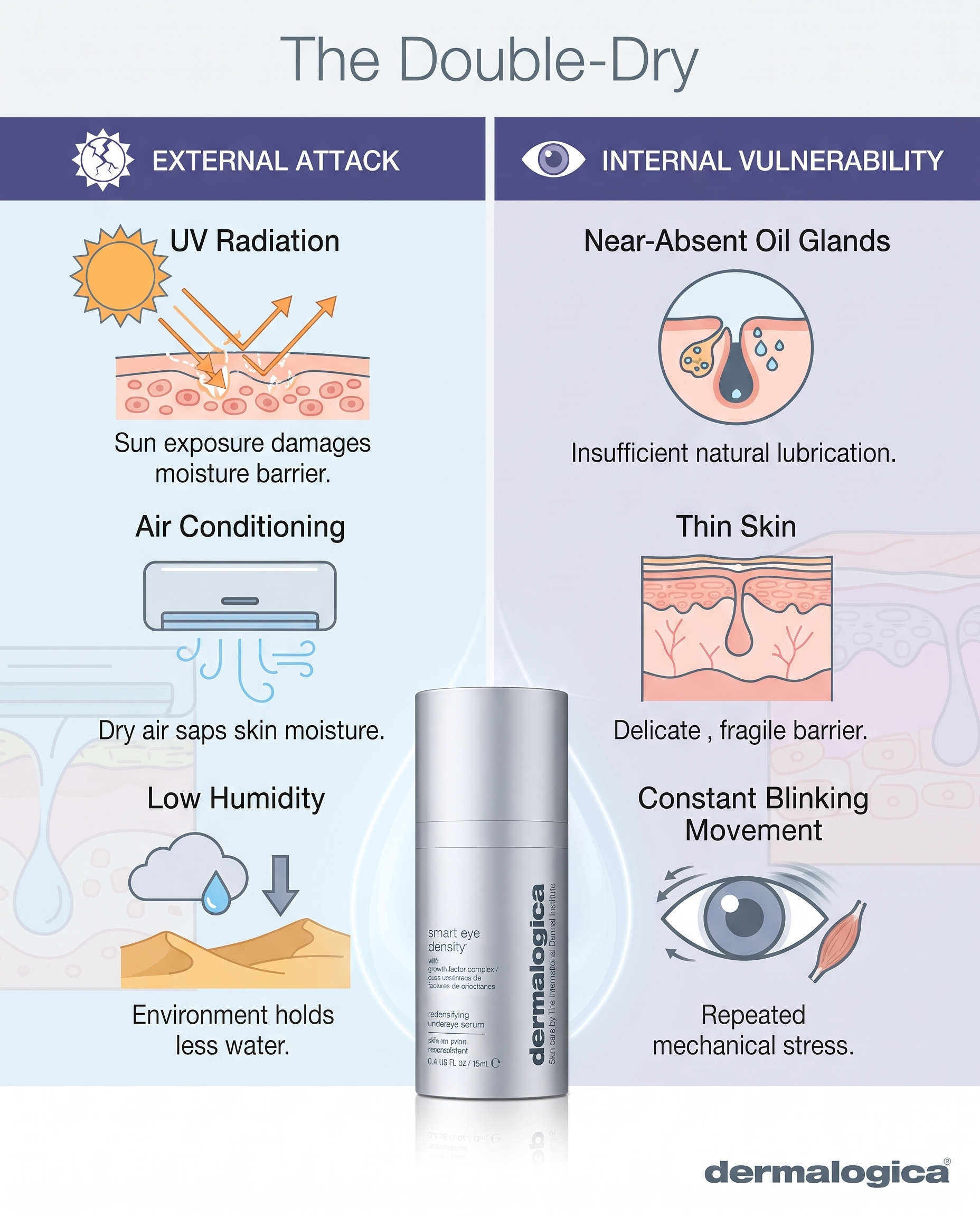
When that barrier weakens, water escapes faster. This process is called transepidermal water loss, or TEWL. Think of it as your skin leaking moisture it cannot afford to lose.
Air conditioning makes this worse. Most Australians spend large parts of the day in air-conditioned offices, cars, and homes. Air conditioning pulls humidity out of the air, which pulls moisture out of your skin at the same time. Central heating in winter does the same thing. The result is a low-humidity environment almost year-round for many people, especially in southern states during winter and in offices during summer.
The undereye area is especially vulnerable to all of this. The skin there is about 0.5mm thick, roughly one-third the thickness of skin on your cheeks. It has very little fat underneath to cushion it.
And it moves constantly, with blinking happening around 15,000 times a day. Every blink creates tiny mechanical stress on already thin skin. When you add Australian UV and indoor dryness to that, the undereye zone loses moisture faster than almost any other area on your face.
Why the Undereye Area Cannot Hydrate Itself
Most skin on your face has sebaceous glands. These glands produce sebum, a natural oil that sits on the skin surface and slows moisture loss. It is not glamorous, but it is essential. The undereye area has almost none of these glands. That means it produces very little of its own protective oil layer.
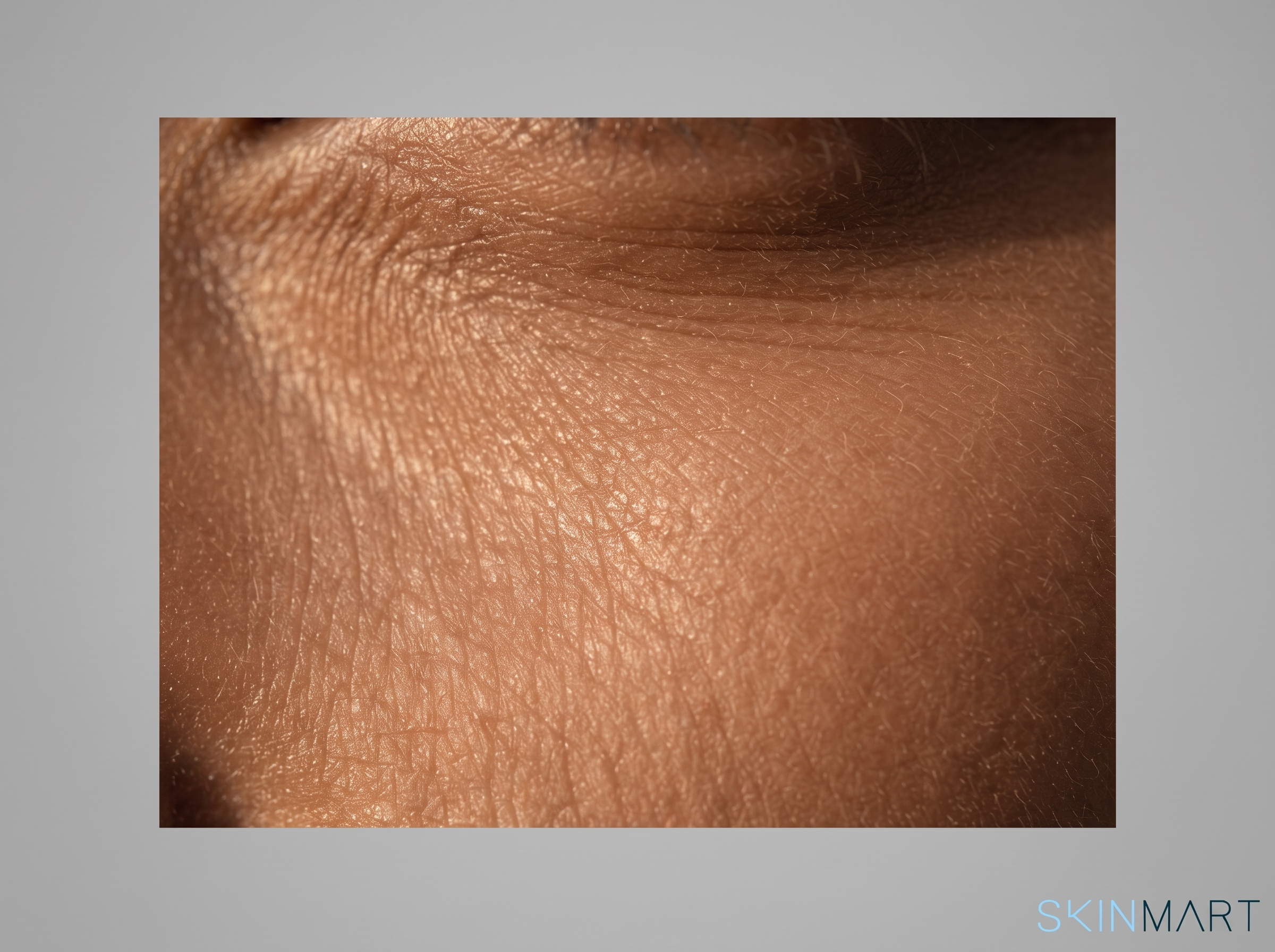
Without that oil layer, moisture evaporates from the surface much more freely. The skin cannot slow the process on its own. This is the internal half of the Double-Dry.
It is not caused by your environment. It is structural. It is simply how that area is built.
This also explains why products that work well on the rest of your face often feel like they disappear around your eyes. A lightweight moisturiser that works beautifully on oily or combination skin may not provide enough barrier support for an area with no natural oil production. The undereye zone needs ingredients that do the job the missing sebum cannot.
Key Takeaways
- The Australian Double-Dry describes how the undereye area faces two separate dehydration forces at once.
- Externally, UV exposure, low humidity, and air conditioning strip moisture from the skin surface.
- Internally, the eye area produces almost no oil, so it has no natural defence against water loss.
- The result is a thinner, drier, more hollow-looking undereye zone.
- Addressing both causes together, with ingredients that attract and seal moisture while rebuilding skin density, produces better r...
What Dehydration Actually Does to the Undereye Area
When the undereye area loses moisture consistently, the effects go beyond surface dryness. The skin loses what clinicians call density, the plumpness and structure that come from healthy, well-hydrated tissue. As density drops, the area starts to look hollow rather than just dry. Fine lines appear sharper. The undereye zone can look shadowed even after a full night of sleep.

This is worth understanding clearly. What many people call wrinkles around the eye area are often not deep structural lines at all. They are the visual result of lost density and dehydration.
When skin lacks water and structural support, light reflects unevenly across the surface. That uneven reflection reads as lines and shadows. Address the density and hydration, and the surface appearance often improves as a consequence.
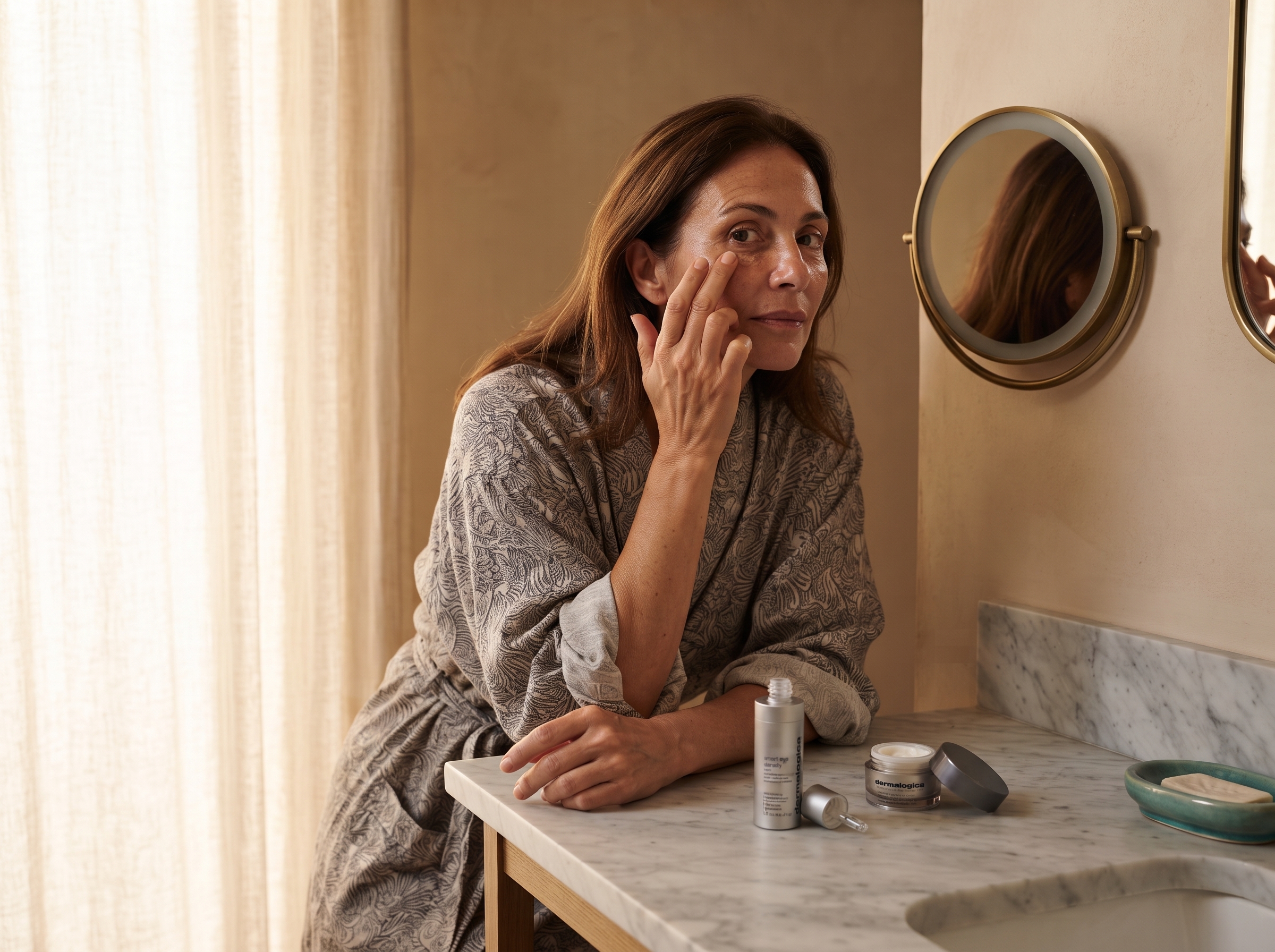
This is the thinking behind the Dermalogica Smart Eye Density Booster. Rather than sitting on the surface, it targets the density of the undereye tissue itself. Ingredients like hyaluronic acid (a humectant, meaning it draws water into the skin and can hold a significant amount relative to its weight) work alongside peptides (short chains of amino acids that support the skin's structural proteins) to rebuild the kind of plumpness that reflects light evenly. The result is not a dramatic transformation. It is a structural one, and that is what makes it last.
How to Tell If You Have Dehydration, Dryness, or Both
Dryness and dehydration are often used as if they mean the same thing. They do not. Dry skin lacks oil. Dehydrated skin lacks water.
You can have oily skin that is also dehydrated. You can have dry skin that is also dehydrated. Around the eyes, most people have both at once, hence the Double-Dry.
A simple way to assess: press gently on the undereye area with one finger and hold for a few seconds. When you release, does the skin spring back quickly, or does it look slightly creased and slow to recover? Slow recovery often points to dehydration. Now look in good natural light.
Does the skin look dull and flat rather than reflective? That also points to dehydration. Fine lines that seem worse in the afternoon than the morning, after a day of air conditioning, are another strong signal.
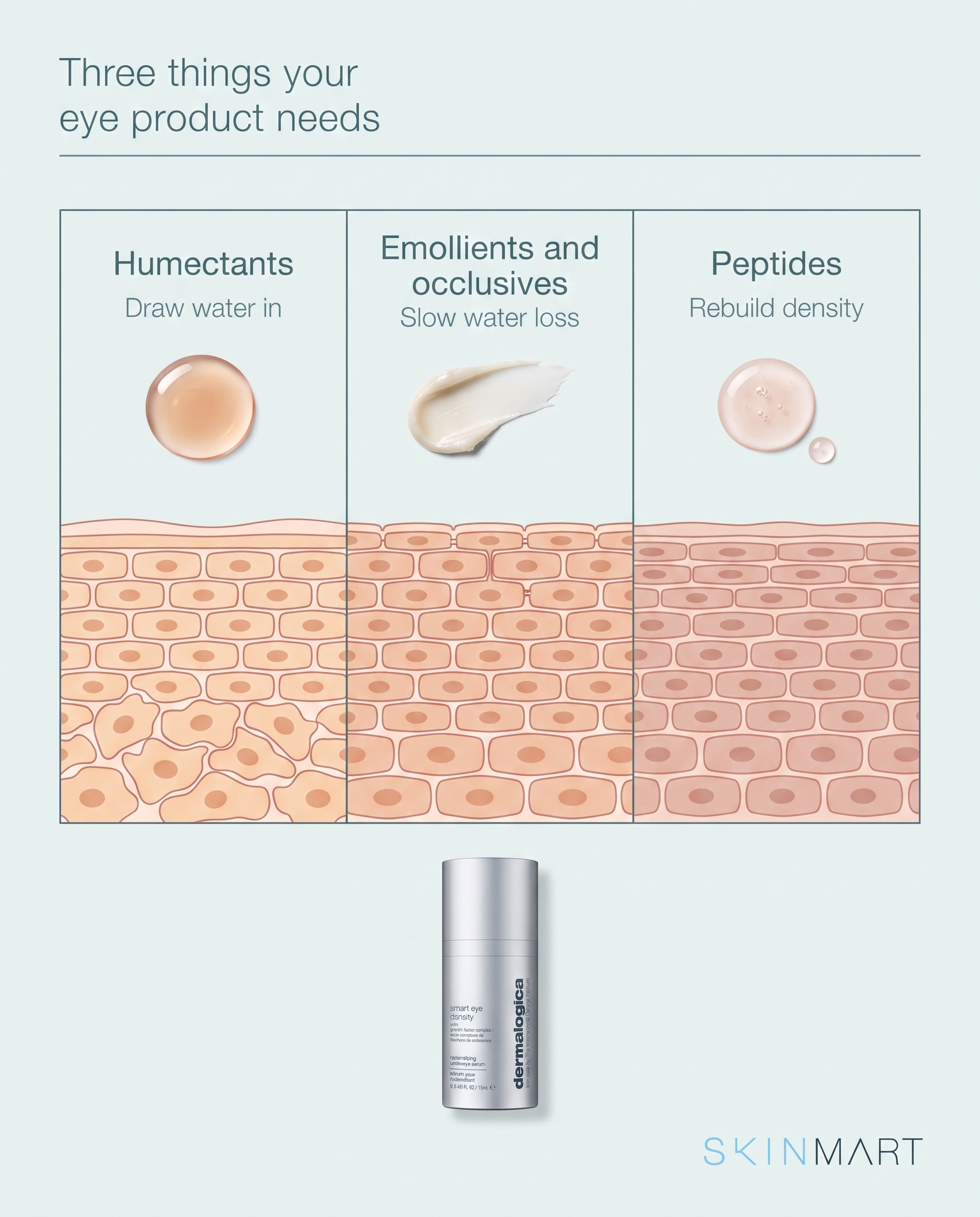
If the area also feels tight or rough to the touch, or if you notice flaking at the outer corners, you are likely dealing with dryness alongside dehydration. That combination needs both humectant ingredients to draw water in and occlusive or emollient ingredients to slow the loss. A single-mechanism product will only address half the problem.

Featured: Medik8 Daily Radiance Vitamin C
Tetrahexyldecyl Ascorbate penetrates the skin barrier more effectively than L-ascorbic acid and converts to active vitamin C within the skin.
Shop NowWhat to Look for in an Eye Product for the Double-Dry
Not all eye products are built for this specific problem. Many focus on one mechanism only. Here is what to look for when you are dealing with both environmental and structural dehydration.
Humectants attract water into the skin. Hyaluronic acid is the most well-known, but look for multiple molecular weights, larger molecules sit on the surface and slow evaporation. Meanwhile, smaller ones can penetrate deeper into the outer skin layers. Glycerin is another strong humectant with good clinical support for improving skin hydration over time.
Emollients and occlusives slow the rate at which water escapes. These are especially important in the undereye area because of its low oil production. Ingredients like squalane (a lightweight plant-derived oil) and ceramides (natural fats found in the skin barrier) help fill the gaps the missing sebum would normally cover.
Peptides support the skin's own structural proteins, including collagen (the protein that gives skin its firmness and bounce). Over time, well-formulated peptide complexes can help rebuild the density that dehydration has reduced. The Dermalogica Smart Eye Density Booster combines these mechanisms in a single step, which matters for an area where layering multiple products can cause irritation.
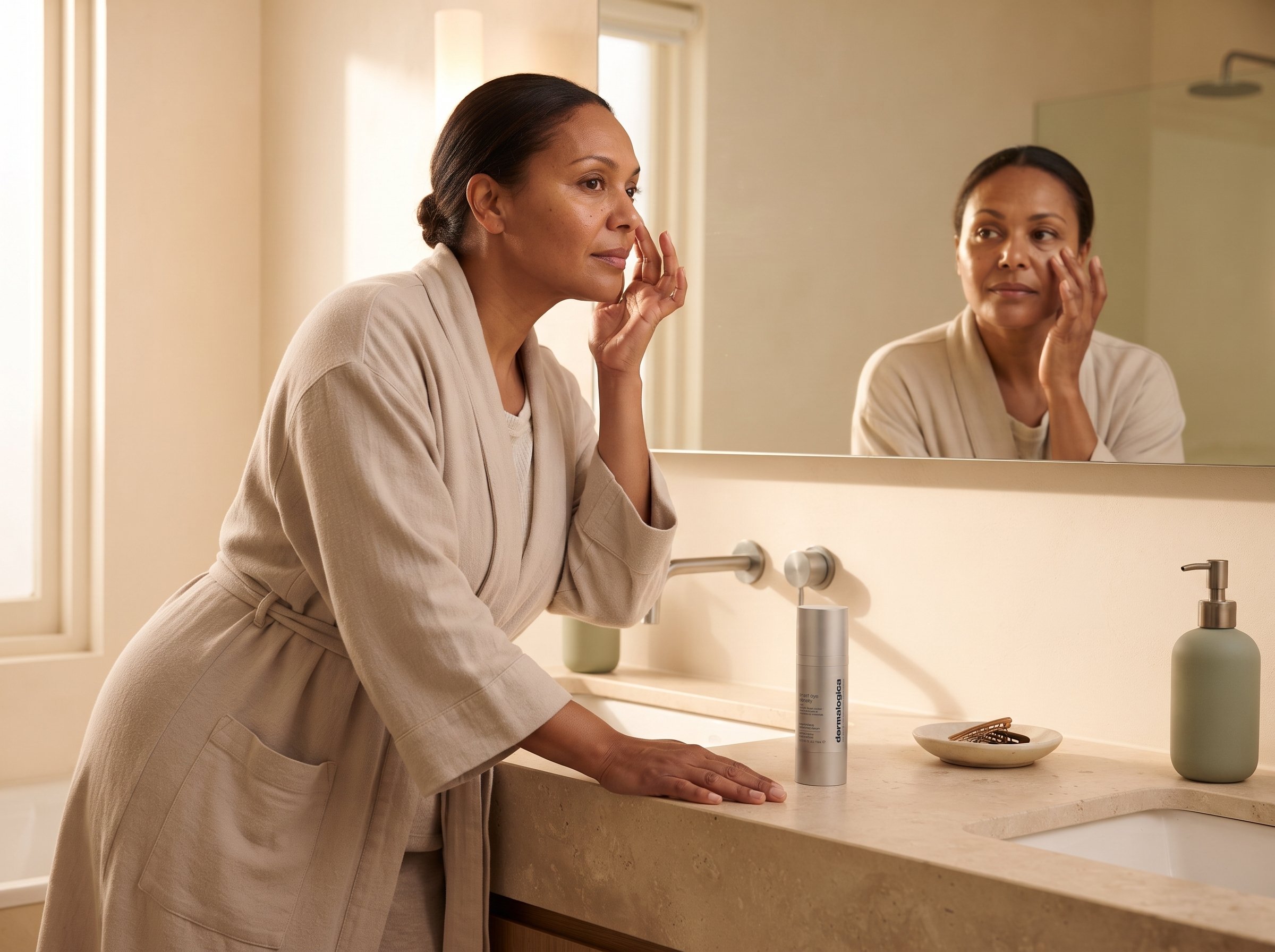
Application method also makes a difference. Use your ring finger, it applies the least pressure of any finger. Tap gently from the inner corner outward, following the direction of lymphatic flow. This reduces puffiness and helps the product absorb without pulling on fragile skin.
Building a Routine That Addresses the Double-Dry
The most effective approach to undereye dehydration in Australian conditions is layered and consistent. No single application will reverse ongoing moisture loss. The goal is to reduce daily TEWL while giving the skin the ingredients it needs to rebuild density over time.
Morning is when UV and environmental protection matter most. Apply your eye product before SPF. Make sure your sunscreen reaches close to the orbital bone, most people leave a gap around the eyes. This means the most UV-sensitive skin gets no protection at all. Broad-spectrum SPF 50+ is the standard in Australia, and the TGA (Therapeutic Goods Administration) sets strict requirements for products making sunscreen claims here.
At night, the skin repairs and rebuilds. This is when humectant and density-supporting ingredients work hardest. A slightly richer formulation at night, or a second application of your density serum, can make a meaningful difference over weeks of consistent use. Clinical evidence shows that barrier and hydration improvements in the stratum corneum (the outermost skin layer. This acts as the primary barrier against moisture loss) become measurable at around two to four weeks with consistent application.
If your skin is also experiencing dryness in other areas, it is worth reading about how barrier function affects the whole face and whether your cleanser's pH might be working against your hydration efforts. The undereye area does not exist in isolation, what happens across your full routine has a direct effect on how well the eye area holds moisture.

Featured: Medik8 Advanced Night Eye
Caffeine visibly reduces puffiness and the appearance of dark circles by constricting blood vessels and reducing fluid accumulation under the eye.
Shop NowThe undereye area is not dry because you are doing something wrong. It is dry because it is structurally different from the rest of your face. And because Australian conditions push that vulnerability harder than most climates in the world. The Double-Dry is real, it is specific, and it responds best when you address both causes at once.
If your undereye area has felt persistently dry, hollow, or harder to treat than the rest of your skin, this is a good place to start. Book a skin consultation if you would like a full picture of what your skin actually needs first.


