
Your skin feels oily. Maybe a little tight, too. You are likely thinking those two things cannot happen at the same time. But they can, and in autumn, they often do. The reason comes down to a simple mix-up that catches a lot of people out: dehydrated skin and dry skin are not the same thing.
If you spent summer outdoors in the Australian sun, your skin may have been quietly losing water for months. By the time autumn arrives, that loss starts showing in ways that look nothing like dehydration. More oil.
Duller skin. A tight feeling after cleansing. Understanding what is actually happening beneath the surface is the first step to giving your skin what it genuinely needs.
What Is the Difference Between Dry Skin and Dehydrated Skin?
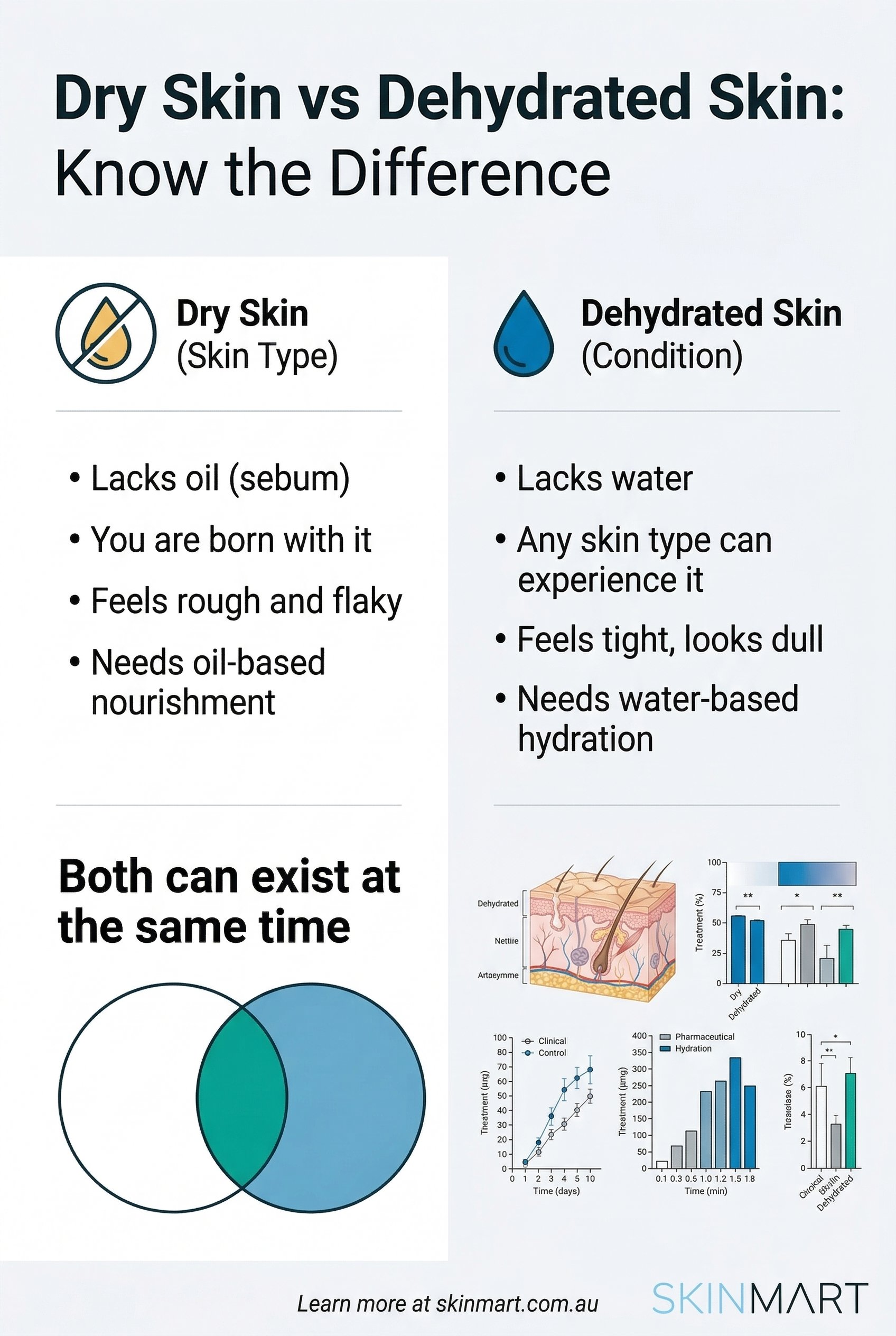
This is where most people get confused, and it is worth getting clear on. Dry skin is a skin type. It means your skin naturally produces less oil (sebum) than average. You are born with it. It tends to feel rough, flaky, and tight. Dry skin lacks oil.
Dehydrated skin is a condition. It means your skin is short on water, not oil. Anyone can feel it, regardless of their skin type. That includes oily skin. That includes combination skin. Even skin that looks shiny and congested can be seriously short on water.
Both can exist at the same time. You can have a dry skin type that is also dehydrated. You can have oily skin that is dehydrated. The distinction matters because the solutions are completely different. Learn more about the dry vs dehydrated skin distinction and how to tell which one you are dealing with.
Key Takeaways
- Dehydrated skin lacks water, while dry skin is a skin type that lacks oil.
- These are two different things, and they can both exist at once.
- Oily skin can absolutely be dehydrated.
- Summer UV exposure quietly drains your skin's water reserves, and by autumn, the effects show up as excess oil, tight skin, and a dull complexion.
- The fix is not a mattifying product.
How Does Summer UV Exposure Lead to Autumn Dehydration?
Here is something most people do not realise. UV exposure does not just cause sunburn. It actively breaks down your skin's ability to hold onto water. Ultraviolet radiation damages the proteins and lipids (natural fats) in your outer skin layer. This weakens what is called the skin barrier, the protective layer that keeps moisture in and irritants out.
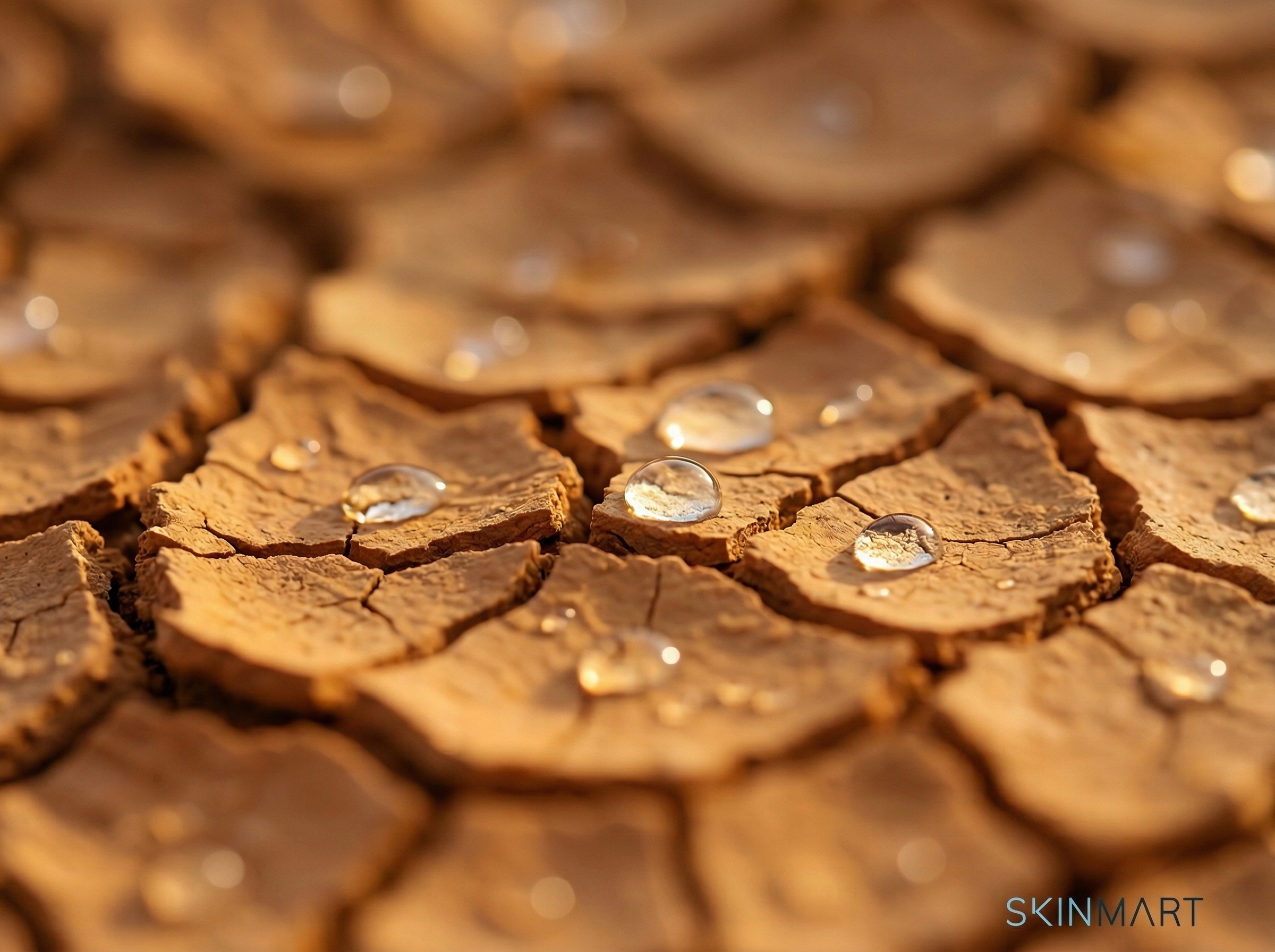
When the barrier is damaged, water escapes through the skin surface always. This process is called trans-epidermal water loss (TEWL). Think of it like a cracked water tank.
The water does not disappear all at once. It seeps out slowly, over weeks. So the dehydration you feel in March or April may have started building in January.
Research published in the Journal of Investigative Dermatology confirms that UV exposure raises TEWL greatly, even without visible sunburn. Your skin can look fine on the surface while quietly losing its water reserves underneath. By the time autumn rolls around and the air gets drier, your skin has far less water to work with than it did at the start of summer.
This is also why UV protection matters year-round, not just when you are at the beach.

Why Does Dehydrated Oily Skin Produce Even More Oil?
This is the part that surprises most people. When your skin loses water, it does not just sit quietly and wait. Your sebaceous glands (the oil-producing glands in your skin) respond to the imbalance. They sense that the skin surface is compromised and produce more sebum to try to compensate.
The result? Skin that looks oilier than ever, but still feels tight and uncomfortable. This is sometimes called the dehydration-oil cycle. Your skin is not producing too much oil because it is inherently oily. It is producing more oil because it has lost water and is trying to protect itself.
Reaching for a mattifying product at this point makes the problem worse. Stripping oil away signals the skin to produce even more. What the skin actually needs is water, delivered in a form it can absorb and use. Understanding what oily skin actually needs from a moisturiser can completely change how you approach this cycle.
How Can You Tell If Your Skin Is Dehydrated?
Dehydrated skin has some clear signals, once you know what to look for. The most common signs include a tight or uncomfortable feeling after cleansing, skin that looks dull or lacks its usual glow. And fine lines that appear more visible than usual, especially around the eyes and mouth. You might also notice your skin absorbs products faster than it used to.

A simple at-home check is the pinch test. Gently pinch a small section of skin on your cheek and hold it for two seconds. If it springs back right away, your skin has good water content. If it takes a moment to settle back, or holds its shape briefly, your skin may be dehydrated. This is not a clinical test, but it gives you a useful starting point.
It is also worth thinking about your recent history. Have you spent a lot of time outdoors this summer? Have you been travelling, flying, or spending long hours in air-conditioned spaces? All of these raise TEWL and deplete your skin's water reserves over time. Your daily environment and routine rhythms affect your skin more than most people realise.
What Does Your Skin Actually Need When It Is Dehydrated?
The answer is water-based hydration, not more oil. The goal is to deliver water to the skin and then help it stay there. This is a two-step idea. First, you attract water to the skin. Then, you seal it in so TEWL stays low.
Humectants are ingredients that pull water toward the skin. Hyaluronic acid is the most well-known example. It can hold up to 1,000 times its own weight in water, which is why it is so effective for boosting skin hydration. Glycerin works in a similar way and is gentle enough for almost every skin type.
Once water is in the skin, you need something to slow its escape. This is where occlusives and barrier-supporting ingredients come in. Ceramides (natural fats found in your skin barrier) act like mortar between skin cells. They fill the gaps that UV damage and environmental stress create. Without enough ceramides, water escapes faster than you can replace it.
The key point for oily skin types is this: water-based formulas do not add oil to your skin. A lightweight hydrating serum or gel moisturiser can restore water without clogging pores or increasing shine. The goal is balance, not stripping or over-loading. If you are not sure where to start with building a routine around this, this guide to building a stronger skincare routine is a good next step.
Dehydration does not look the way most people expect. It does not always mean flaky, tight, visibly parched skin. Sometimes it looks like excess oil, a dull complexion, and fine lines that seem deeper than they used to be. And for a lot of Australians, autumn is when months of summer UV exposure finally shows up on the surface.
The most important thing to take away is this: oily skin needs water too. Dry skin and dehydrated skin are different problems with different solutions. When you understand what your skin is actually having, rather than what it looks like on the surface, you can make choices that genuinely support it. That is what good skincare knowledge looks like in practice. If you want to understand your skin more deeply and get guidance built around you just, starting your Skin Blueprint is the clearest next step.


